












Friday, February 20, 2026
ISSN 2765-8767
  • Survey
  • Podcast
  • Write for Us
  • My Account
  • Log In
Daily Remedy
  • Home
  • Articles
  • Podcasts
    Debunking Myths About GLP-1 Medications

    Debunking Myths About GLP-1 Medications

    February 16, 2026
    The Future of LLMs in Healthcare

    The Future of LLMs in Healthcare

    January 26, 2026
    The Future of Healthcare Consumerism

    The Future of Healthcare Consumerism

    January 22, 2026
    Your Body, Your Health Care: A Conversation with Dr. Jeffrey Singer

    Your Body, Your Health Care: A Conversation with Dr. Jeffrey Singer

    July 1, 2025

    The cost structure of hospitals nearly doubles

    July 1, 2025
    Navigating the Medical Licensing Maze

    The Fight Against Healthcare Fraud: Dr. Rafai’s Story

    April 8, 2025
  • Surveys

    Surveys

    How Confident Are You in RFK Jr.’s Health Leadership?

    How Confident Are You in RFK Jr.’s Health Leadership?

    February 16, 2026
    AI in Healthcare Decision-Making

    AI in Healthcare Decision-Making

    February 1, 2026

    Survey Results

    Can you tell when your provider does not trust you?

    Can you tell when your provider does not trust you?

    January 18, 2026
    Do you believe national polls on health issues are accurate

    National health polls: trust in healthcare system accuracy?

    May 8, 2024
    Which health policy issues matter the most to Republican voters in the primaries?

    Which health policy issues matter the most to Republican voters in the primaries?

    May 14, 2024
    How strongly do you believe that you can tell when your provider does not trust you?

    How strongly do you believe that you can tell when your provider does not trust you?

    May 7, 2024
  • Courses
  • About Us
  • Contact us
  • Support Us
  • Official Learner
No Result
View All Result
  • Home
  • Articles
  • Podcasts
    Debunking Myths About GLP-1 Medications

    Debunking Myths About GLP-1 Medications

    February 16, 2026
    The Future of LLMs in Healthcare

    The Future of LLMs in Healthcare

    January 26, 2026
    The Future of Healthcare Consumerism

    The Future of Healthcare Consumerism

    January 22, 2026
    Your Body, Your Health Care: A Conversation with Dr. Jeffrey Singer

    Your Body, Your Health Care: A Conversation with Dr. Jeffrey Singer

    July 1, 2025

    The cost structure of hospitals nearly doubles

    July 1, 2025
    Navigating the Medical Licensing Maze

    The Fight Against Healthcare Fraud: Dr. Rafai’s Story

    April 8, 2025
  • Surveys

    Surveys

    How Confident Are You in RFK Jr.’s Health Leadership?

    How Confident Are You in RFK Jr.’s Health Leadership?

    February 16, 2026
    AI in Healthcare Decision-Making

    AI in Healthcare Decision-Making

    February 1, 2026

    Survey Results

    Can you tell when your provider does not trust you?

    Can you tell when your provider does not trust you?

    January 18, 2026
    Do you believe national polls on health issues are accurate

    National health polls: trust in healthcare system accuracy?

    May 8, 2024
    Which health policy issues matter the most to Republican voters in the primaries?

    Which health policy issues matter the most to Republican voters in the primaries?

    May 14, 2024
    How strongly do you believe that you can tell when your provider does not trust you?

    How strongly do you believe that you can tell when your provider does not trust you?

    May 7, 2024
  • Courses
  • About Us
  • Contact us
  • Support Us
  • Official Learner
No Result
View All Result
Daily Remedy
No Result
View All Result
Home Uncertainty & Complexity

War Elephants of Healthcare

Daily Remedy by Daily Remedy
May 2, 2024
in Uncertainty & Complexity
0

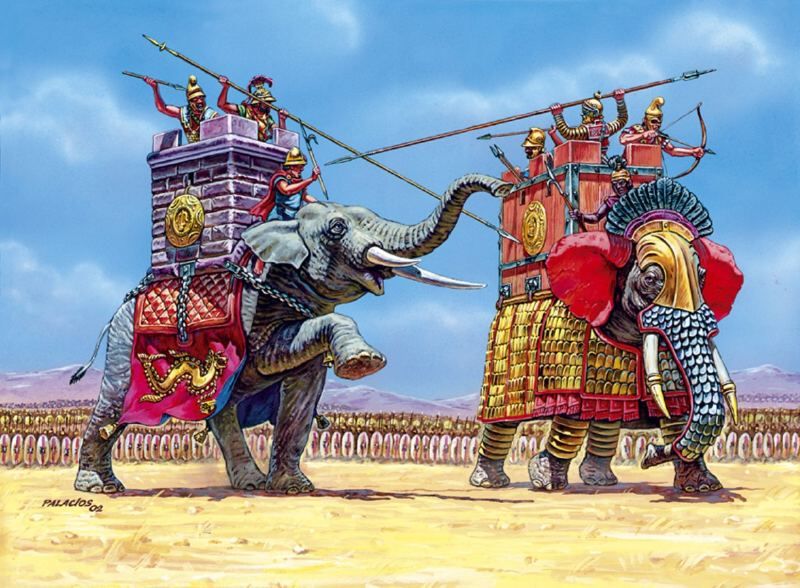
The war elephant was the heavy artillery tank of antiquity. Some of history’s greatest empires, from the Carthaginians of North Africa to the Mauryans of India, utilized the war elephant to devastating effects.

But for all their strengths, the war elephant had one fatal flaw – it was unable to confront uncertainty. Daring soldiers would approach with torches most elephants have never seen or produce unfamiliar, raspy sounds to frighten the animal – with surprising effectiveness.

In the end the uncertainty overcame the strength of the war elephant. And what appeared as an insurmountable weapon of war deteriorated into an unwieldy beast, as capable of exacting self-inflicted wounds as casualties to the enemy.

This is the nature of uncertainty, capable of transforming perceived strengths into actual weaknesses when approached by something new or unfamiliar.

Something many of us experienced during the COVID-19 pandemic. Uncertainty crippled massive healthcare systems into debt ridden organizations living and dying through government aid. It destroyed the belief that patients will always seek care, whether in good times or bad. And it eroded trust in federal healthcare institutions that long served as the voice for healthcare public policy.

Uncertainty is an inescapable reality of healthcare that we have largely ignored, until we could no longer afford to. The impact of the pandemic became too much to bear. And if we are to truly implement the lessons learned from the pandemic towards the future of healthcare, then we need to integrate frameworks of uncertainty into healthcare system management.

But healthcare is already rife with frameworks. You could even say the field has too many frameworks already. Whether it is creating protocols for patient care, or designing algorithms to streamline clinical decision-making for routine patient care, healthcare – more often than not – has a framework for most situations.

But it is a framework for the unfamiliar, unknown situation that can add the greatest value. Whether it is a protocol to handle uncertainty, or a database for reporting unknown presenting symptoms, we need to systematize the reporting and management of uncertainty  in healthcare system management.

This requires a shift in culture. Not unlike the shift towards acknowledging and reporting errors. For decades, healthcare had created a culture of Darwinian, intellectual competitiveness. In which an error was seen as a sign of weakness, or of a weak mind that, conceivably, a smarter physician or nurse would not have made. Yet instead of eliminating errors, this culture simply swept errors under the table, denying their presence altogether.

But once committing an error became culturally acceptable, we began to find errors more easily, and address them more effectively.

Uncertainty is not much different from errors. It is simply a matter of semantics. Uncertainty produces errors, as errors come from situations in which what is unknown exceeds what is known, and the uncertainty overwhelms the decision-making – leading to a wrong decision.

In this manner, uncertainty can be seen as a cause for many errors. And if we are acknowledging errors to be inherent in healthcare, then we should acknowledge uncertainty to be inherent in many decisions that lead to healthcare error.

Study uncertainty as a discipline within healthcare much like it is studied in engineering. Most engineering fields acknowledge error and have developed sophisticated risk and error minimization frameworks which acknowledge uncertainty. And by acknowledging uncertainty, engineers optimize it.

In healthcare we do not even acknowledge uncertainty. As a result, we have no means to optimize it. If we encounter a patient with fatigue, pale composure, and dizziness, then we may reflexively consider anemia as a possible diagnosis and initiate a work up that involves drawing lab values such as serum hemoglobin. Depending on the acuity and severity of the symptoms, we may consider a cardiovascular or neurovascular work up for a heart attack (myocardial infarction) or a stroke, respectively.

We use the uncertainty of the symptoms, balancing the acuity, severity, alongside the constellation of symptoms to determine what course of action to take. This line of thinking predisposes to action, meaning we address uncertainty incrementally, trying to eliminate it by ordering test after test, imaging after imaging.

Some is good, more is better. But whatever we do, we tend to overdo.

The problem is that we never actually address the uncertainty. We merely wish it away by ordering and testing, hoping we understand the presenting symptoms well enough to know what the treatment should be.

Most of the time, this approach actually works. But in those rare moments when it does not work, we will find ourselves confronting a war elephant of healthcare. A situation in which the uncertainty overwhelms what we think we know.

The rare moment when the blood work and imaging work up produces something other than anemia or some cardiovascular or neurovascular disease. The rare moment when what we assume to be true or certain is anything but that.

Those are the moments when we need to rely on frameworks of uncertainty to standardize our approach to what we do not know. Every aspect of healthcare has established standards of care through which we think through an issue – a presenting set of symptoms, a public policy issue, or a hospital guideline.

These standards structure clinical thinking to eliminate uncertainty overtime decision over decision, which mostly has worked quite effectively. Until they do not. Until we meet a war elephant.

We need to add provisions in these standards and protocols to account for uncertainty. Make uncertainty an acceptable aspect of real-time decision-making in healthcare, and not a last resort default when all other viable options have been exhausted.

Many forward thinking medical schools train students to think about the cost-effectiveness of ordering a test or an imaging study, balancing the value of a test or study relative to its cost – as an opportunity cost. We can easily incorporate uncertainty into a comparable opportunity cost framework. Openly discuss the perceived value of ordering something or taking some action relative to the uncertainty addressed through that order or action.

From that shift in perspective, we can create new frameworks or modify existing frameworks that encourage us to think in terms of uncertainty. And embrace it as an integral part of healthcare.

So we will be ready for the war elephants of healthcare.

ShareTweet
Daily Remedy

Daily Remedy

Dr. Jay K Joshi serves as the editor-in-chief of Daily Remedy. He is a serial entrepreneur and sought after thought-leader for matters related to healthcare innovation and medical jurisprudence. He has published articles on a variety of healthcare topics in both peer-reviewed journals and trade publications. His legal writings include amicus curiae briefs prepared for prominent federal healthcare cases.

Leave a Reply Cancel reply

Your email address will not be published. Required fields are marked *

Videos

This conversation focuses on debunking myths surrounding GLP-1 medications, particularly the misinformation about their association with pancreatic cancer. The speaker emphasizes the importance of understanding clinical study designs, especially the distinction between observational studies and randomized controlled trials. The discussion highlights the need for patients to critically evaluate the sources of information regarding medication side effects and to empower themselves in their healthcare decisions.

Takeaways
GLP-1 medications are not linked to pancreatic cancer.
Peer-reviewed studies debunk misinformation about GLP-1s.
Anecdotal evidence is not reliable for general conclusions.
Observational studies have limitations in generalizability.
Understanding study design is crucial for evaluating claims.
Symptoms should be discussed in the context of clinical conditions.
Not all side effects reported are relevant to every patient.
Observational studies can provide valuable insights but are context-specific.
Patients should critically assess the relevance of studies to their own experiences.
Engagement in discussions about specific studies can enhance understanding

Chapters
00:00
Debunking GLP-1 Medication Myths
02:56
Understanding Clinical Study Designs
05:54
The Role of Observational Studies in Healthcare
Debunking Myths About GLP-1 Medications
YouTube Video DM9Do_V6_sU
Subscribe

2027 Medicare Advantage & Part D Advance Notice

Clinical Reads

BIIB080 in Mild Alzheimer’s Disease: What a Phase 1b Exploratory Clinical Analysis Can—and Cannot—Tell Us

BIIB080 in Mild Alzheimer’s Disease: What a Phase 1b Exploratory Clinical Analysis Can—and Cannot—Tell Us

by Daily Remedy
February 15, 2026
0

Can lowering tau biology translate into a clinically meaningful slowing of decline in people with early symptomatic Alzheimer’s disease? That is the practical question behind BIIB080, an intrathecal antisense therapy designed to reduce production of tau protein by targeting the tau gene transcript. In a phase 1b program originally designed for safety and dosing, investigators later examined cognitive, functional, and global outcomes as exploratory endpoints. The clinical question matters because current disease-modifying options primarily target amyloid, while tau pathology tracks...

Read more

Join Our Newsletter!

Twitter Updates

Tweets by TheDailyRemedy

Popular

  • The Prevention Gap in Dementia Care

    The Prevention Gap in Dementia Care

    0 shares
    Share 0 Tweet 0
  • Healthcare Natural Rights

    0 shares
    Share 0 Tweet 0
  • Healthcare in Space

    1 shares
    Share 0 Tweet 0
  • Heat Safety Tips Every Pregnant Mother Should Know

    0 shares
    Share 0 Tweet 0
  • The Staffing Equation That Doesn’t Balance

    0 shares
    Share 0 Tweet 0
  • 628 Followers

Daily Remedy

Daily Remedy offers the best in healthcare information and healthcare editorial content. We take pride in consistently delivering only the highest quality of insight and analysis to ensure our audience is well-informed about current healthcare topics - beyond the traditional headlines.

Daily Remedy website services, content, and products are for informational purposes only. We do not provide medical advice, diagnosis, or treatment. All rights reserved.

Important Links

  • Support Us
  • About Us
  • Contact us
  • Privacy Policy
  • Terms and Conditions

Join Our Newsletter!

  • Survey
  • Podcast
  • About Us
  • Contact us

© 2026 Daily Remedy

No Result
View All Result
  • Home
  • Articles
  • Podcasts
  • Surveys
  • Courses
  • About Us
  • Contact us
  • Support Us
  • Official Learner

© 2026 Daily Remedy

