












Sunday, February 15, 2026
ISSN 2765-8767
  • Survey
  • Podcast
  • Write for Us
  • My Account
  • Log In
Daily Remedy
  • Home
  • Articles
  • Podcasts
    The Future of LLMs in Healthcare

    The Future of LLMs in Healthcare

    January 26, 2026
    The Future of Healthcare Consumerism

    The Future of Healthcare Consumerism

    January 22, 2026
    Your Body, Your Health Care: A Conversation with Dr. Jeffrey Singer

    Your Body, Your Health Care: A Conversation with Dr. Jeffrey Singer

    July 1, 2025

    The cost structure of hospitals nearly doubles

    July 1, 2025
    Navigating the Medical Licensing Maze

    The Fight Against Healthcare Fraud: Dr. Rafai’s Story

    April 8, 2025
    Navigating the Medical Licensing Maze

    Navigating the Medical Licensing Maze

    April 4, 2025
  • Surveys

    Surveys

    AI in Healthcare Decision-Making

    AI in Healthcare Decision-Making

    February 1, 2026
    Patient Survey: Understanding Healthcare Consumerism

    Patient Survey: Understanding Healthcare Consumerism

    January 18, 2026

    Survey Results

    Can you tell when your provider does not trust you?

    Can you tell when your provider does not trust you?

    January 18, 2026
    Do you believe national polls on health issues are accurate

    National health polls: trust in healthcare system accuracy?

    May 8, 2024
    Which health policy issues matter the most to Republican voters in the primaries?

    Which health policy issues matter the most to Republican voters in the primaries?

    May 14, 2024
    How strongly do you believe that you can tell when your provider does not trust you?

    How strongly do you believe that you can tell when your provider does not trust you?

    May 7, 2024
  • Courses
  • About Us
  • Contact us
  • Support Us
  • Official Learner
No Result
View All Result
  • Home
  • Articles
  • Podcasts
    The Future of LLMs in Healthcare

    The Future of LLMs in Healthcare

    January 26, 2026
    The Future of Healthcare Consumerism

    The Future of Healthcare Consumerism

    January 22, 2026
    Your Body, Your Health Care: A Conversation with Dr. Jeffrey Singer

    Your Body, Your Health Care: A Conversation with Dr. Jeffrey Singer

    July 1, 2025

    The cost structure of hospitals nearly doubles

    July 1, 2025
    Navigating the Medical Licensing Maze

    The Fight Against Healthcare Fraud: Dr. Rafai’s Story

    April 8, 2025
    Navigating the Medical Licensing Maze

    Navigating the Medical Licensing Maze

    April 4, 2025
  • Surveys

    Surveys

    AI in Healthcare Decision-Making

    AI in Healthcare Decision-Making

    February 1, 2026
    Patient Survey: Understanding Healthcare Consumerism

    Patient Survey: Understanding Healthcare Consumerism

    January 18, 2026

    Survey Results

    Can you tell when your provider does not trust you?

    Can you tell when your provider does not trust you?

    January 18, 2026
    Do you believe national polls on health issues are accurate

    National health polls: trust in healthcare system accuracy?

    May 8, 2024
    Which health policy issues matter the most to Republican voters in the primaries?

    Which health policy issues matter the most to Republican voters in the primaries?

    May 14, 2024
    How strongly do you believe that you can tell when your provider does not trust you?

    How strongly do you believe that you can tell when your provider does not trust you?

    May 7, 2024
  • Courses
  • About Us
  • Contact us
  • Support Us
  • Official Learner
No Result
View All Result
Daily Remedy
No Result
View All Result
Home Uncertainty & Complexity

The Psychology of Time

Daily Remedy by Daily Remedy
August 8, 2021
in Uncertainty & Complexity
0

Predictions of doom and gloom are as old as humanity. Every civilization, culture, and religion have their own apocalyptic tale of how the world will end or when all that is known will unravel. And typically, the tales has an associated date or presumed triggering event – something for us to predict when what is foretold will come to pass.

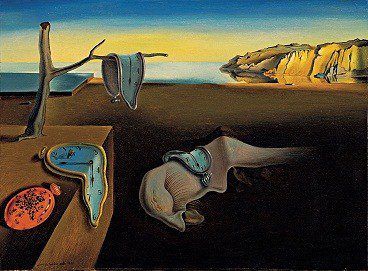
And as obsessed as we are with these stories, there is something underlying these stories that we are even more obsessed with – time.

In fact, we are wired to obsess over time. We know there are twenty-four hours in a day, we know how long our favorite Netflix show lasts, and we always know how many days are left until the weekend. But that obsession is very much the proverbial double-edged sword – on one hand it keeps us punctual and efficient throughout the day, but on the other hand, it serves a major source of angst and stress as well.

Like an apocalyptic tale.

Which makes the next few months more dangerous than we could imagine. The perception that COVID-19 has ruined the year 2020 is largely tempered by the belief that it is just one ruined year. But the Institute for Health Metrics and Evaluation (IHME) – one of the most widely cited source for COVID-19 projections – finds that the viral outbreak will not only worsen in December, the last month of this year, but will actually worsen from December into January, the first month of next year.

Prompting another series of hospital bed shortages, medical supply constraints, and politicking and blame-shifting. But more importantly, prompt another round of rationalizations among the American public.

While in the strictly temporal sense, January is only a month after December. But in the perceptual world of subjective emotions and beliefs, which is really the world we all live in, January is worlds apart from December. And the psychological toll COVID-19 will take on the public will heighten significantly as it encroaches further into 2021.

The public has already begun to become numb, almost nihilistic to the virus, and progressively deteriorating in their compliance with social distancing policies, masking requirements, and other provisions that can hinder the spread of the virus.

A trend that will appear insidiously, with no one individual admitting their growing disinterest, but will be seen through the rising mortality statistics. A trend we see in behaviors when people engage in unhealthy, self-destructive behaviors during moments of stress. I know it may seem insensitive to compare a viral outbreak to binging on food, but the underlying patterns of behavior are the same.

It is well known that a major disconnect exists between how we perceive ourselves and how others perceive us – and that gap is a function of many factors. Many studies suggest that stress and the perception of a potentially significant loss play a major role in increasing that gap.

When applied to COVID-19, suggests that the longer and worse COVID-19 gets, the bigger the gap will become. And the greater the disconnect between the perception of our behaviors, and the actual ramifications of our behaviors. And given the preponderance of false narratives and bias riddled data, it almost becomes unimaginable how much more chaotic things can become.

But if we had to identify two inflection points in which the collective mental angst – the zeitgeist, to borrow from German philosophy – would predispose individuals to behave self-destructively, widening the perception gap, it would be the Election Day and New Year’s Eve.

On Election Day, the country will be facing incredible stresses. COVID-19 will continue its rise from October and the political pressures that are tearing the fabric of this country would be coming to a head. Fundamental issues such as whether healthcare is an individual right or a collective responsibility will be weighing on the minds of each voter. And the winner of the election will serve as a proxy for the political and social issues far larger than either candidate could have imagined.

If Biden wins, there will be enormous pressure to adhere to social norms and stricter pressure to maintain social distancing and precautionary guidelines. If Trump wins, there will be equal pressure in the opposite direction, favoring more individual choice and less oversight or restrictions.

And while neither candidate really understands the consequences of the healthcare perceptions associated to them, the mere fact that they won will appear to legitimize the healthcare position they claim to represent.

Prompting reactions and agitations among the losing side, further dividing the nation, and hampering any attempt at a unified approach to combating the pandemic.

On New Year’s Eve, the country will already be at peak hedonistic levels, now add to it the fatalistic allure of a prolonged pandemic, and you have the makings of true self-destructive behavior. I have no doubt that state and local officials will be weary of and protect against rioting and criminal proper damage, but the more concerning self-destructive behavior is the lack of regard for safety protocols with respect to COVID-19.

Super-spreaders have been known to disseminate the virus through social gatherings, and as people hop from bar to bar, and club to club, the rates of dissemination will increase exponentially. People will justify the last night of the year as an excuse to throw caution to the wind, and through that perception, justify high risk behavior that they would not have done otherwise.

This is nothing new. In fact, anybody can predict that New Year’s Eve will be will a super-spreader event. We know all the major holiday events carry an uptick in incidence in the days to weeks that follow. It is not the knowing part – it is the caring part – as hardly any will admit to overtly disregarding social distancing rules, but will tacitly disobey the rules in order to prioritize their need to celebrate the end of the year. The proverbial saying one thing while doing another. A perception gap that will, ironically, only worsen things for the start of 2021. And the larger this gap, the greater the impact of the night on the months to come.

Making the existential angst of the zeitgeist a self-fulfilling prophesy. By allowing our political discontent impact our health decisions, we will make Election Day an inflection point in the resurgence of COVID-19. By giving in to our desire to celebrate, our innate escapism, we will make New Year’s Day a launching point to determine how severe and prolonged COVID-19 will be going into 2021.

And the combination of these two days, Election Day and New Year’s Eve, and the perception shift that will take place over these two days, will significantly influence the viral trends for the upcoming year.


ShareTweet
Daily Remedy

Daily Remedy

Dr. Jay K Joshi serves as the editor-in-chief of Daily Remedy. He is a serial entrepreneur and sought after thought-leader for matters related to healthcare innovation and medical jurisprudence. He has published articles on a variety of healthcare topics in both peer-reviewed journals and trade publications. His legal writings include amicus curiae briefs prepared for prominent federal healthcare cases.

Leave a Reply Cancel reply

Your email address will not be published. Required fields are marked *

Videos

In this episode, the host discusses the significance of large language models (LLMs) in healthcare, their applications, and the challenges they face. The conversation highlights the importance of simplicity in model design and the necessity of integrating patient feedback to enhance the effectiveness of LLMs in clinical settings.

Takeaways
LLMs are becoming integral in healthcare.
They can help determine costs and service options.
Hallucination in LLMs can lead to misinformation.
LLMs can produce inconsistent answers based on input.
Simplicity in LLMs is often more effective than complexity.
Patient behavior should guide LLM development.
Integrating patient feedback is crucial for accuracy.
Pre-training models with patient input enhances relevance.
Healthcare providers must understand LLM limitations.
The best LLMs will focus on patient-centered care.

Chapters

00:00 Introduction to LLMs in Healthcare
05:16 The Importance of Simplicity in LLMs
The Future of LLMs in HealthcareDaily Remedy
YouTube Video U1u-IYdpeEk
Subscribe

2027 Medicare Advantage & Part D Advance Notice

Clinical Reads

BIIB080 in Mild Alzheimer’s Disease: What a Phase 1b Exploratory Clinical Analysis Can—and Cannot—Tell Us

BIIB080 in Mild Alzheimer’s Disease: What a Phase 1b Exploratory Clinical Analysis Can—and Cannot—Tell Us

by Daily Remedy
February 15, 2026
0

Can lowering tau biology translate into a clinically meaningful slowing of decline in people with early symptomatic Alzheimer’s disease? That is the practical question behind BIIB080, an intrathecal antisense therapy designed to reduce production of tau protein by targeting the tau gene transcript. In a phase 1b program originally designed for safety and dosing, investigators later examined cognitive, functional, and global outcomes as exploratory endpoints. The clinical question matters because current disease-modifying options primarily target amyloid, while tau pathology tracks...

Read more

Join Our Newsletter!

Twitter Updates

Tweets by TheDailyRemedy

Popular

  • The Information Epidemic: How Digital Health Misinformation Is Rewiring Clinical Risk

    The Information Epidemic: How Digital Health Misinformation Is Rewiring Clinical Risk

    0 shares
    Share 0 Tweet 0
  • Child Health Is Now a Platform Issue

    0 shares
    Share 0 Tweet 0
  • Prevention Is Having a Moment and a Measurement Problem

    0 shares
    Share 0 Tweet 0
  • Behavioral Health Is Now a Network Phenomenon

    0 shares
    Share 0 Tweet 0
  • The Breach Is the Diagnosis: Cybersecurity Has Become a Clinical Risk Variable

    0 shares
    Share 0 Tweet 0
  • 628 Followers

Daily Remedy

Daily Remedy offers the best in healthcare information and healthcare editorial content. We take pride in consistently delivering only the highest quality of insight and analysis to ensure our audience is well-informed about current healthcare topics - beyond the traditional headlines.

Daily Remedy website services, content, and products are for informational purposes only. We do not provide medical advice, diagnosis, or treatment. All rights reserved.

Important Links

  • Support Us
  • About Us
  • Contact us
  • Privacy Policy
  • Terms and Conditions

Join Our Newsletter!

  • Survey
  • Podcast
  • About Us
  • Contact us

© 2026 Daily Remedy

No Result
View All Result
  • Home
  • Articles
  • Podcasts
  • Surveys
  • Courses
  • About Us
  • Contact us
  • Support Us
  • Official Learner

© 2026 Daily Remedy
