












Sunday, April 5, 2026
ISSN 2765-8767
  • Survey
  • Podcast
  • Write for Us
  • My Account
  • Log In
Daily Remedy
  • Home
  • Articles
  • Podcasts
    The Hidden Costs Employers Don’t See in Traditional Health Plans

    The Hidden Costs Employers Don’t See in Traditional Health Plans

    March 22, 2026
    The Impact of COVID-19 on Patient Trust

    The Impact of COVID-19 on Patient Trust

    March 3, 2026
    Debunking Myths About GLP-1 Medications

    Debunking Myths About GLP-1 Medications

    February 16, 2026
    The Future of LLMs in Healthcare

    The Future of LLMs in Healthcare

    January 26, 2026
    The Future of Healthcare Consumerism

    The Future of Healthcare Consumerism

    January 22, 2026
    Your Body, Your Health Care: A Conversation with Dr. Jeffrey Singer

    Your Body, Your Health Care: A Conversation with Dr. Jeffrey Singer

    July 1, 2025
  • Surveys

    Surveys

    Understanding of Clinical Evidence in Peptide and Hormone Use

    Understanding of Clinical Evidence in Peptide and Hormone Use

    March 30, 2026
    Public Sentiment on the Future of Peptides and Hormone Therapies in U.S. Medicine

    Public Sentiment on the Future of Peptides and Hormone Therapies in U.S. Medicine

    March 17, 2026

    Survey Results

    Can you tell when your provider does not trust you?

    Can you tell when your provider does not trust you?

    January 18, 2026
    Do you believe national polls on health issues are accurate

    National health polls: trust in healthcare system accuracy?

    May 8, 2024
    Which health policy issues matter the most to Republican voters in the primaries?

    Which health policy issues matter the most to Republican voters in the primaries?

    May 14, 2024
    How strongly do you believe that you can tell when your provider does not trust you?

    How strongly do you believe that you can tell when your provider does not trust you?

    May 7, 2024
  • Courses
  • About Us
  • Contact us
  • Support Us
  • Official Learner
No Result
View All Result
  • Home
  • Articles
  • Podcasts
    The Hidden Costs Employers Don’t See in Traditional Health Plans

    The Hidden Costs Employers Don’t See in Traditional Health Plans

    March 22, 2026
    The Impact of COVID-19 on Patient Trust

    The Impact of COVID-19 on Patient Trust

    March 3, 2026
    Debunking Myths About GLP-1 Medications

    Debunking Myths About GLP-1 Medications

    February 16, 2026
    The Future of LLMs in Healthcare

    The Future of LLMs in Healthcare

    January 26, 2026
    The Future of Healthcare Consumerism

    The Future of Healthcare Consumerism

    January 22, 2026
    Your Body, Your Health Care: A Conversation with Dr. Jeffrey Singer

    Your Body, Your Health Care: A Conversation with Dr. Jeffrey Singer

    July 1, 2025
  • Surveys

    Surveys

    Understanding of Clinical Evidence in Peptide and Hormone Use

    Understanding of Clinical Evidence in Peptide and Hormone Use

    March 30, 2026
    Public Sentiment on the Future of Peptides and Hormone Therapies in U.S. Medicine

    Public Sentiment on the Future of Peptides and Hormone Therapies in U.S. Medicine

    March 17, 2026

    Survey Results

    Can you tell when your provider does not trust you?

    Can you tell when your provider does not trust you?

    January 18, 2026
    Do you believe national polls on health issues are accurate

    National health polls: trust in healthcare system accuracy?

    May 8, 2024
    Which health policy issues matter the most to Republican voters in the primaries?

    Which health policy issues matter the most to Republican voters in the primaries?

    May 14, 2024
    How strongly do you believe that you can tell when your provider does not trust you?

    How strongly do you believe that you can tell when your provider does not trust you?

    May 7, 2024
  • Courses
  • About Us
  • Contact us
  • Support Us
  • Official Learner
No Result
View All Result
Daily Remedy
No Result
View All Result
Home Uncertainty & Complexity

Declare Pandemic Uncertainty

Enough time has passed to where we are reflecting on the pandemic for a sense of closure.

Daily Remedy by Daily Remedy
November 14, 2022
in Uncertainty & Complexity
0
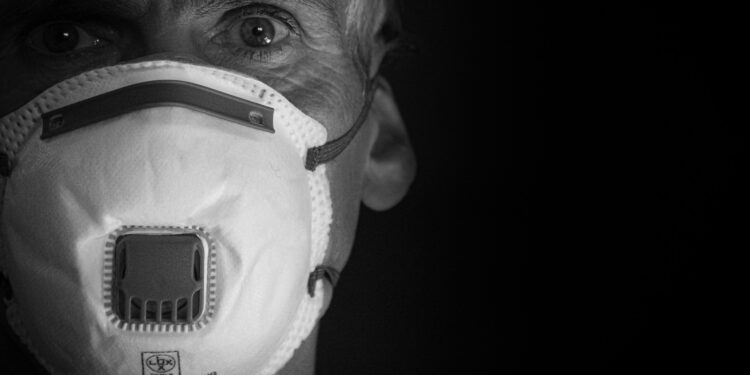
Declare Pandemic Uncertainty

Creative Commons

Some say we should declare amnesty. Others demand a mea culpa. Let’s forgo both and simply declare pandemic uncertainty. Acknowledge the vast unknown that surrounds everything we know in medicine.

It’s hard for us to understand uncertainty. We process it in stages. First comes the fear. The fear turns into anger and then we look for places to release that anger. That triggers the never ending blame game.

At the start of the COVID-19 pandemic, we watched our favorite restaurants shut down, small businesses either close or go under, and mortality inch upward. By focusing attention on the growing incidence of infections, we gave rise to a pandemic of fear that emerged alongside the actual virus. It turned a public health crisis into an existential crisis affecting every aspect of this country.

We looked for something or someone to blame. Some blamed the delayed response and insufficient resources, while others blamed the novelty of the virus and the unforeseen intensity.

Despite the wide-ranging interpretations and reactions, one trend seemed to hold true. A large population in a country would get infected, political leaders would get blamed, and then people started counting the lives – lives affected and lives lost.

The more we counted, the more we feared – soon the fear overtook our behavior. We began asking for more tests. We demanded them without realizing that regardless of the results, the treatment would be the same: quarantining. We clamored for tests even after knowing the results could be wrong.

We treated our fears like a symptom, right alongside cough and fever. By curing our fears, we acted as though we treated the virus. It was fear that led physicians to self-prescribe 55,000 scripts of hydroxychloroquine, forgoing medical ethics for the irrationality of fear.

Fears made worst case scenarios the likely scenarios leading cities to demand medical supplies and ventilators in excess of what COVID-19 models projected the cities would need. No one can say whether these reactions were an appropriate reaction or an overreaction. They’re a subjective reaction to the fear of uncertainty.

Uncertainties appear differently in the moment and after the fact. Studying the difference in these perceptions helps to understand how to approach similar uncertainties in the future. Demanding apologies or declaring all as forgiven misses the mark. It’s far more important to study our tendencies in an objective light, to make sense of why we behaved as we did. If we’re being honest, our collective reactions to the pandemic created as much harm as the pandemic itself. There’s no one to blame, only a need for self-analysis.

Milton Friedman alluded to this when he warned of overreactions in healthcare: “[the] cure is worse than the disease”.

Health policy experts reacted with extreme lockdowns, using fear as a tool to contain the virus. They didn’t think the public would understand the importance of quarantining or of behavioral modifications like mask wearing, so they told “noble lies”. The public saw fear as a mechanism of control and grew to mistrust policy-makers. Once the mistrust grew, the reactions became increasingly chaotic and self-destructive – from both the public and policy experts.

Frightened patients purchased test kits lacking FDA approval in large quantities online, bypassing all regulatory oversight designed to avoid clinically harmful behavior. But the public’s fear of the virus overtook any regard for the regulatory process, which ironically became mostly ineffective in the most critical of times.

What emerged instead were a series of reactions to facts as they emerged. We attributed cause and effect without knowing the full cause of the pandemic, and struggled to make sense of what was transpiring, even though we knew all the relevant facts had not yet fully appeared.

We saw this with the COVID-19 vaccines. Everyone had a view on vaccines, regardless of how much they knew about them. Each argument, no matter how eloquent, centered on individual rights versus collective benefits. Those for individual rights focused on the risk of receiving a vaccine injection. Those for collective safety focused on the risk of being infected by diseases the vaccine intends to protect against.

At face value, arguments on both sides are justified as they are both partially true: each vaccine injection carries an individual risk and vaccines in aggregate provide a collective benefit. Those who are against vaccines focus on the individual risk while those who are in favor focus on the widespread immunization. As uncertainty grows, mistrust grows along with it. So it makes sense that few trusted the vaccines at first. There was just too much uncertainty. In fact, we can trace the uncertainty over the pandemic and see how public perception of vaccines changed.

At first, public sentiment for vaccines was high because the vaccine was perceived to be a solution to COVID-19 in a broad, generalized sense. This perception changed when vaccines became available. It turned into an individual decision to get it or not. The perception changed because the uncertainty changed. Now, instead of looking at the vaccine as a general form of treatment, people viewed the vaccine relative to individual benefit and risk.

Our minds gravitate toward what we know. But our reactions are constantly in response to what we don’t know. Fear is funny like that. It ignores the facts and reacts to the uncertainty. And when the uncertainty changes, so do our perceptions.

This is nothing to be ashamed of, or to moralize upon after the fact. It is something to be studied absent any pretense of retroactive sanctimony.

We shouldn’t apologize for reacting to things we didn’t know about. Nor should we self-righteously forgive others for things they did in the grips of fear. We should absolve ourselves of this desire to characterize our behavior within the framework of an apology.

Uncertainty is one of the most difficult things for us to understand. Yet, it’s the most important thing to appreciate about the pandemic.


ShareTweet
Daily Remedy

Daily Remedy

Dr. Jay K Joshi serves as the editor-in-chief of Daily Remedy. He is a serial entrepreneur and sought after thought-leader for matters related to healthcare innovation and medical jurisprudence. He has published articles on a variety of healthcare topics in both peer-reviewed journals and trade publications. His legal writings include amicus curiae briefs prepared for prominent federal healthcare cases.

Leave a Reply Cancel reply

Your email address will not be published. Required fields are marked *

Videos

Most employers are unknowingly steering their health plans toward higher costs and reduced control — until they understand how fiduciary missteps and anti-competitive contracts bleed their budgets dry. Katie Talento, a recognized health policy leader, reveals how shifting the network paradigm can save millions by emphasizing independent providers, direct contracting, and innovative tiering models.

Grounded in real-world case studies like Harris Rosen’s community-driven initiative, this episode dives deep into practical strategies to realign incentives—focusing on primary care, specialty care, and transparent vendor relationships. You'll discover how traditional carrier networks are often Trojan horses, locking employers into costly, opaque arrangements that undermine fiduciary duties. Katie breaks down simple yet powerful reforms: owning your data, eliminating conflicts of interest, and outlawing anti-competitive contract clauses.

We explore how a post-network framework—where patients are free to choose providers without restrictive network barriers—can massively reduce costs and improve health outcomes. You'll learn why independent, locally owned providers are vital to rebuilding trust, reducing unnecessary procedures, and reinvesting savings into the community. This conversation offers clarity on the unseen legal landmines employers face and actionable ways to craft health plans built on transparency, independence, and aligned incentives.

Perfect for HR pros, benefits advisors, physicians, and employer leaders committed to transforming healthcare from the ground up. If you’re tired of broken healthcare models draining your budget and frustrating your staff, this episode will empower you to take control by understanding and reshaping the very foundations of employer-sponsored health. Discover the blueprint for smarter, fairer, and more sustainable benefits.

Visit katytalento.com or allbetter.health to connect directly and explore how these innovations can work for your organization. Your path toward a healthier, more cost-effective future starts here.

Chapters

00:00 Introduction to Employer-Sponsored Health Plans
02:50 Understanding ERISA and Fiduciary Responsibilities
06:08 The Misalignment of Clinical and Financial Interests
08:54 Enforcement and Legal Implications for Employers
11:49 Redefining Networks: The Post-Network Framework
25:34 Navigating Healthcare Contracts and Cash Payments
27:31 Understanding Employer Health Plan Structures
28:04 The Role of Benefits Advisors in Health Plans
30:45 Governance and Data Ownership in Health Plans
37:05 Case Study: The Rosen Hotels' Health Model
41:33 Incentivizing Healthy Choices in Healthcare
47:22 Empowering Primary Care and Independent Providers
The Hidden Costs Employers Don’t See in Traditional Health Plans
YouTube Video xhks7YbmBoY
Subscribe

Policy Shift in Peptide Regulation

Clinical Reads

Semaglutide and the Expansion Problem: When One Trial Becomes a Platform

Semaglutide and the Expansion Problem: When One Trial Becomes a Platform

by Daily Remedy
March 30, 2026
0

Semaglutide has moved beyond its original indication and now sits at the center of a widening set of clinical questions: cardiovascular risk, kidney disease progression, and even neurodegeneration. The question is no longer whether the drug lowers glucose or reduces weight—it does—but how far those effects extend across systems, and whether evidence from one population can be translated into another without distortion. Large, well-powered trials have produced consistent signals, yet those signals are now being applied in contexts that were...

Read more

Join Our Newsletter!

Twitter Updates

Tweets by TheDailyRemedy

Popular

  • Neuralink's Healthcare Ambitions

    Neuralink’s Healthcare Ambitions

    1 shares
    Share 0 Tweet 0
  • A Two Headed Monster – State Attorneys General and the Drug Enforcement Agency

    3 shares
    Share 0 Tweet 0
  • Rise of Cash Pay Drugs

    1 shares
    Share 0 Tweet 0
  • Emerson Fought the Materialists

    0 shares
    Share 0 Tweet 0
  • What’s Next for the Obesity Industrial Complex

    0 shares
    Share 0 Tweet 0
  • 628 Followers

Daily Remedy

Daily Remedy offers the best in healthcare information and healthcare editorial content. We take pride in consistently delivering only the highest quality of insight and analysis to ensure our audience is well-informed about current healthcare topics - beyond the traditional headlines.

Daily Remedy website services, content, and products are for informational purposes only. We do not provide medical advice, diagnosis, or treatment. All rights reserved.

Important Links

  • Support Us
  • About Us
  • Contact us
  • Privacy Policy
  • Terms and Conditions

Join Our Newsletter!

  • Survey
  • Podcast
  • About Us
  • Contact us

© 2026 Daily Remedy

No Result
View All Result
  • Home
  • Articles
  • Podcasts
  • Surveys
  • Courses
  • About Us
  • Contact us
  • Support Us
  • Official Learner

© 2026 Daily Remedy