













Wednesday, March 4, 2026
ISSN 2765-8767
  • Survey
  • Podcast
  • Write for Us
  • My Account
  • Log In
Daily Remedy
  • Home
  • Articles
  • Podcasts
    The Impact of COVID-19 on Patient Trust

    The Impact of COVID-19 on Patient Trust

    March 3, 2026
    Debunking Myths About GLP-1 Medications

    Debunking Myths About GLP-1 Medications

    February 16, 2026
    The Future of LLMs in Healthcare

    The Future of LLMs in Healthcare

    January 26, 2026
    The Future of Healthcare Consumerism

    The Future of Healthcare Consumerism

    January 22, 2026
    Your Body, Your Health Care: A Conversation with Dr. Jeffrey Singer

    Your Body, Your Health Care: A Conversation with Dr. Jeffrey Singer

    July 1, 2025

    The cost structure of hospitals nearly doubles

    July 1, 2025
  • Surveys

    Surveys

    Perceptions of Viral Wellness Practices on Social Media: A Likert-Scale Survey for Informed Readers

    Perceptions of Viral Wellness Practices on Social Media: A Likert-Scale Survey for Informed Readers

    March 1, 2026
    How Confident Are You in RFK Jr.’s Health Leadership?

    How Confident Are You in RFK Jr.’s Health Leadership?

    February 16, 2026

    Survey Results

    Can you tell when your provider does not trust you?

    Can you tell when your provider does not trust you?

    January 18, 2026
    Do you believe national polls on health issues are accurate

    National health polls: trust in healthcare system accuracy?

    May 8, 2024
    Which health policy issues matter the most to Republican voters in the primaries?

    Which health policy issues matter the most to Republican voters in the primaries?

    May 14, 2024
    How strongly do you believe that you can tell when your provider does not trust you?

    How strongly do you believe that you can tell when your provider does not trust you?

    May 7, 2024
  • Courses
  • About Us
  • Contact us
  • Support Us
  • Official Learner
No Result
View All Result
  • Home
  • Articles
  • Podcasts
    The Impact of COVID-19 on Patient Trust

    The Impact of COVID-19 on Patient Trust

    March 3, 2026
    Debunking Myths About GLP-1 Medications

    Debunking Myths About GLP-1 Medications

    February 16, 2026
    The Future of LLMs in Healthcare

    The Future of LLMs in Healthcare

    January 26, 2026
    The Future of Healthcare Consumerism

    The Future of Healthcare Consumerism

    January 22, 2026
    Your Body, Your Health Care: A Conversation with Dr. Jeffrey Singer

    Your Body, Your Health Care: A Conversation with Dr. Jeffrey Singer

    July 1, 2025

    The cost structure of hospitals nearly doubles

    July 1, 2025
  • Surveys

    Surveys

    Perceptions of Viral Wellness Practices on Social Media: A Likert-Scale Survey for Informed Readers

    Perceptions of Viral Wellness Practices on Social Media: A Likert-Scale Survey for Informed Readers

    March 1, 2026
    How Confident Are You in RFK Jr.’s Health Leadership?

    How Confident Are You in RFK Jr.’s Health Leadership?

    February 16, 2026

    Survey Results

    Can you tell when your provider does not trust you?

    Can you tell when your provider does not trust you?

    January 18, 2026
    Do you believe national polls on health issues are accurate

    National health polls: trust in healthcare system accuracy?

    May 8, 2024
    Which health policy issues matter the most to Republican voters in the primaries?

    Which health policy issues matter the most to Republican voters in the primaries?

    May 14, 2024
    How strongly do you believe that you can tell when your provider does not trust you?

    How strongly do you believe that you can tell when your provider does not trust you?

    May 7, 2024
  • Courses
  • About Us
  • Contact us
  • Support Us
  • Official Learner
No Result
View All Result
Daily Remedy
No Result
View All Result
Home Perspectives
Trending

Frozen Progress: The Short- and Long-Term Fallout of the NIH Freeze

Trump’s COVID revenge begins

Jay K Joshi by Jay K Joshi
January 27, 2025
in Perspectives
0
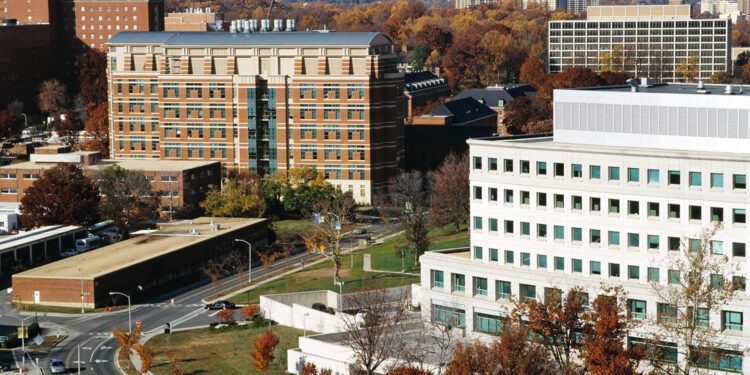
NIH  037

The Trump administration’s sweeping freeze on National Institutes of Health (NIH) operations and federal health agency communications has plunged the scientific community into chaos. The abrupt halt to grant approvals, research reviews, and external communications isn’t just an inconvenience—it’s a crisis that could have devastating consequences for both public health and the future of American innovation.

“This is nothing short of a disaster for ongoing research projects,” said Dr. Linda Harper, a cancer researcher at Johns Hopkins University. “We’ve had to suspend critical clinical trials, and every day lost could mean setbacks measured in years.” Harper’s team, which had been testing a promising new treatment for pancreatic cancer, is just one example of the countless researchers now in limbo. “The people who will pay the price for this freeze are the patients,” she added.

In the short term, the disruption is glaringly obvious. Cancer research trials are on hold. Grant reviews—an essential mechanism for funding life-saving studies—are canceled. Even responses to immediate health crises, like the H5N1 bird flu outbreak, are being stymied by travel and communication restrictions. This isn’t streamlining; it’s paralyzing. “We’re losing valuable time,” said Dr. Michael Levine, a virologist at the CDC. “Outbreaks don’t wait for bureaucratic pauses.”

Federal health agencies like the CDC, FDA, and NIH have long operated with a degree of independence necessary for their mission to protect public health. Imposing White House approval on communications and decisions—especially under the guise of “policy alignment”—risks politicizing science. Decisions that should be driven by data and expertise are now subject to potential delays and ideological interference. “This policy sends a chilling message,” said Dr. Allison Vega, a former NIH official. “Scientific independence is being sacrificed on the altar of politics.”

The long-term implications are equally troubling. The freeze undermines the trust of researchers and institutions reliant on federal funding, potentially driving talent and innovation overseas. Universities and hospitals that depend on NIH grants to sustain labs and employ scientists face financial instability, jeopardizing the continuity of essential research.

“We’re already seeing early-career researchers reconsidering their futures,” said Dr. Julia Franklin, president of the American Association of University Professors. “Without reliable funding, the U.S. risks losing an entire generation of scientists.” This brain drain, she warned, could benefit competitors like China and the European Union, where government support for science has remained robust.

Global health partnerships, painstakingly cultivated over decades, are also at risk. The sudden cessation of checks for international projects sends a chilling message to allies and collaborators: the United States can no longer be relied upon. Such erosion of trust will take years, if not decades, to repair. “Global health is a team effort,” said Dr. Anwar Singh, a WHO advisor. “When one player steps back, everyone suffers.”

Most alarming, however, is the message this freeze sends about the administration’s priorities. Health and science appear expendable in a bid for control and cost-cutting. The U.S. risks losing its standing as a global leader in scientific innovation, ceding ground to competitors like China and the European Union.

“The NIH is not just a national treasure; it’s a global leader in advancing human health,” said Dr. Elena Marquez, a Harvard epidemiologist. “This freeze jeopardizes everything it stands for.”

In sum, this freeze is not just a temporary hiccup; it’s a self-inflicted wound. The cost of these delays will be measured not just in missed opportunities but in human lives—a price too high for any administration to justify.


ShareTweet
Jay K Joshi

Jay K Joshi

Dr. Joshi is the founding editor of Daily Remedy.

Leave a Reply Cancel reply

Your email address will not be published. Required fields are marked *

Videos

In this episode of the Daily Remedy Podcast, Tiffany Ryder discusses her insights on healthcare messaging, the impact of COVID-19 on patient trust, and the importance of transparency in health policy. She emphasizes the need for clear communication in the face of divisiveness and explores the complexities surrounding the estrogen debate. Additionally, Tiffany highlights positive developments in health policy and the necessity of effectively conveying these changes to the public.

Tiffany Ryder is a political commentator and public health policy thought leader who publishes the Substack newsletter Signal and Noise: https://signalandnoise.online/


Chapters

00:00 Introduction to Healthcare Conversations
02:58 Signal and Noise: Understanding Healthcare Communication
05:56 The Storytelling Problem in Healthcare
08:58 Navigating Political Divisiveness in Health Policy
11:55 The Role of Media in Health Policy
15:03 Bias in Health Reporting
17:56 Estrogen and Health Policy: A Case Study
24:00 Positive Developments in Health Policy
27:03 Looking Ahead: Future of Health Policy
31:49 Communicating Health Policy Effectively
The Impact of COVID-19 on Patient Trust
YouTube Video ujzgl7HDlsw
Subscribe

2027 Medicare Advantage & Part D Advance Notice

Clinical Reads

GLP-1 Drugs Have Moved Past Weight Loss. Medicine Has Not Fully Caught Up.

Glucagon-Like Peptide–Based Therapies and Longevity: Clinical Implications from Emerging Evidence

by Daily Remedy
March 1, 2026
0

Glucagon-like peptide–based therapies are increasingly used for weight management and glycemic control, but their potential impact on long-term survival remains uncertain. The clinical question addressed in this report is whether treatment with glucagon-like peptide receptor agonists is associated with reductions in all-cause mortality and age-related morbidity beyond their established metabolic effects. This question matters because these agents are now prescribed across broad patient populations, including individuals without diabetes, and long-term exposure may influence cardiovascular, oncologic, and neurodegenerative outcomes. Understanding whether...

Read more

Join Our Newsletter!

Twitter Updates

Tweets by TheDailyRemedy

Popular

  • When Prognosis Becomes Probabilistic

    When Prognosis Becomes Probabilistic

    0 shares
    Share 0 Tweet 0
  • Gaming Therapy

    0 shares
    Share 0 Tweet 0
  • Healthcare Journalists are Suffering

    0 shares
    Share 0 Tweet 0
  • Healthcare Trends

    0 shares
    Share 0 Tweet 0
  • When the Algorithm Is Right

    0 shares
    Share 0 Tweet 0
  • 628 Followers

Daily Remedy

Daily Remedy offers the best in healthcare information and healthcare editorial content. We take pride in consistently delivering only the highest quality of insight and analysis to ensure our audience is well-informed about current healthcare topics - beyond the traditional headlines.

Daily Remedy website services, content, and products are for informational purposes only. We do not provide medical advice, diagnosis, or treatment. All rights reserved.

Important Links

  • Support Us
  • About Us
  • Contact us
  • Privacy Policy
  • Terms and Conditions

Join Our Newsletter!

  • Survey
  • Podcast
  • About Us
  • Contact us

© 2026 Daily Remedy

No Result
View All Result
  • Home
  • Articles
  • Podcasts
  • Surveys
  • Courses
  • About Us
  • Contact us
  • Support Us
  • Official Learner

© 2026 Daily Remedy
