













Saturday, February 14, 2026
ISSN 2765-8767
  • Survey
  • Podcast
  • Write for Us
  • My Account
  • Log In
Daily Remedy
  • Home
  • Articles
  • Podcasts
    The Future of LLMs in Healthcare

    The Future of LLMs in Healthcare

    January 26, 2026
    The Future of Healthcare Consumerism

    The Future of Healthcare Consumerism

    January 22, 2026
    Your Body, Your Health Care: A Conversation with Dr. Jeffrey Singer

    Your Body, Your Health Care: A Conversation with Dr. Jeffrey Singer

    July 1, 2025

    The cost structure of hospitals nearly doubles

    July 1, 2025
    Navigating the Medical Licensing Maze

    The Fight Against Healthcare Fraud: Dr. Rafai’s Story

    April 8, 2025
    Navigating the Medical Licensing Maze

    Navigating the Medical Licensing Maze

    April 4, 2025
  • Surveys

    Surveys

    AI in Healthcare Decision-Making

    AI in Healthcare Decision-Making

    February 1, 2026
    Patient Survey: Understanding Healthcare Consumerism

    Patient Survey: Understanding Healthcare Consumerism

    January 18, 2026

    Survey Results

    Can you tell when your provider does not trust you?

    Can you tell when your provider does not trust you?

    January 18, 2026
    Do you believe national polls on health issues are accurate

    National health polls: trust in healthcare system accuracy?

    May 8, 2024
    Which health policy issues matter the most to Republican voters in the primaries?

    Which health policy issues matter the most to Republican voters in the primaries?

    May 14, 2024
    How strongly do you believe that you can tell when your provider does not trust you?

    How strongly do you believe that you can tell when your provider does not trust you?

    May 7, 2024
  • Courses
  • About Us
  • Contact us
  • Support Us
  • Official Learner
No Result
View All Result
  • Home
  • Articles
  • Podcasts
    The Future of LLMs in Healthcare

    The Future of LLMs in Healthcare

    January 26, 2026
    The Future of Healthcare Consumerism

    The Future of Healthcare Consumerism

    January 22, 2026
    Your Body, Your Health Care: A Conversation with Dr. Jeffrey Singer

    Your Body, Your Health Care: A Conversation with Dr. Jeffrey Singer

    July 1, 2025

    The cost structure of hospitals nearly doubles

    July 1, 2025
    Navigating the Medical Licensing Maze

    The Fight Against Healthcare Fraud: Dr. Rafai’s Story

    April 8, 2025
    Navigating the Medical Licensing Maze

    Navigating the Medical Licensing Maze

    April 4, 2025
  • Surveys

    Surveys

    AI in Healthcare Decision-Making

    AI in Healthcare Decision-Making

    February 1, 2026
    Patient Survey: Understanding Healthcare Consumerism

    Patient Survey: Understanding Healthcare Consumerism

    January 18, 2026

    Survey Results

    Can you tell when your provider does not trust you?

    Can you tell when your provider does not trust you?

    January 18, 2026
    Do you believe national polls on health issues are accurate

    National health polls: trust in healthcare system accuracy?

    May 8, 2024
    Which health policy issues matter the most to Republican voters in the primaries?

    Which health policy issues matter the most to Republican voters in the primaries?

    May 14, 2024
    How strongly do you believe that you can tell when your provider does not trust you?

    How strongly do you believe that you can tell when your provider does not trust you?

    May 7, 2024
  • Courses
  • About Us
  • Contact us
  • Support Us
  • Official Learner
No Result
View All Result
Daily Remedy
No Result
View All Result
Home Perspectives
Trending

Frozen Progress: The Short- and Long-Term Fallout of the NIH Freeze

Trump’s COVID revenge begins

Jay K Joshi by Jay K Joshi
January 27, 2025
in Perspectives
0
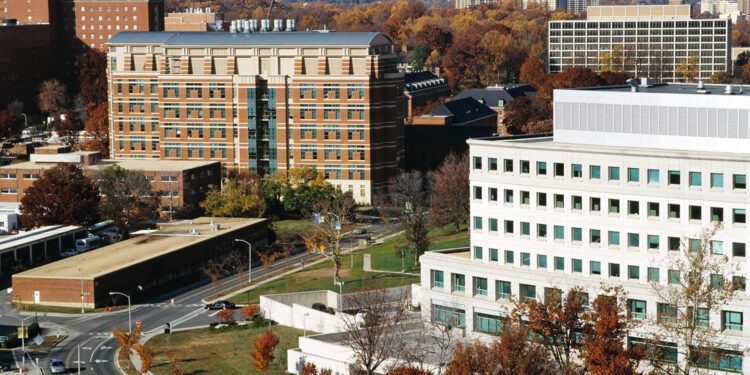
NIH  037

The Trump administration’s sweeping freeze on National Institutes of Health (NIH) operations and federal health agency communications has plunged the scientific community into chaos. The abrupt halt to grant approvals, research reviews, and external communications isn’t just an inconvenience—it’s a crisis that could have devastating consequences for both public health and the future of American innovation.

“This is nothing short of a disaster for ongoing research projects,” said Dr. Linda Harper, a cancer researcher at Johns Hopkins University. “We’ve had to suspend critical clinical trials, and every day lost could mean setbacks measured in years.” Harper’s team, which had been testing a promising new treatment for pancreatic cancer, is just one example of the countless researchers now in limbo. “The people who will pay the price for this freeze are the patients,” she added.

In the short term, the disruption is glaringly obvious. Cancer research trials are on hold. Grant reviews—an essential mechanism for funding life-saving studies—are canceled. Even responses to immediate health crises, like the H5N1 bird flu outbreak, are being stymied by travel and communication restrictions. This isn’t streamlining; it’s paralyzing. “We’re losing valuable time,” said Dr. Michael Levine, a virologist at the CDC. “Outbreaks don’t wait for bureaucratic pauses.”

Federal health agencies like the CDC, FDA, and NIH have long operated with a degree of independence necessary for their mission to protect public health. Imposing White House approval on communications and decisions—especially under the guise of “policy alignment”—risks politicizing science. Decisions that should be driven by data and expertise are now subject to potential delays and ideological interference. “This policy sends a chilling message,” said Dr. Allison Vega, a former NIH official. “Scientific independence is being sacrificed on the altar of politics.”

The long-term implications are equally troubling. The freeze undermines the trust of researchers and institutions reliant on federal funding, potentially driving talent and innovation overseas. Universities and hospitals that depend on NIH grants to sustain labs and employ scientists face financial instability, jeopardizing the continuity of essential research.

“We’re already seeing early-career researchers reconsidering their futures,” said Dr. Julia Franklin, president of the American Association of University Professors. “Without reliable funding, the U.S. risks losing an entire generation of scientists.” This brain drain, she warned, could benefit competitors like China and the European Union, where government support for science has remained robust.

Global health partnerships, painstakingly cultivated over decades, are also at risk. The sudden cessation of checks for international projects sends a chilling message to allies and collaborators: the United States can no longer be relied upon. Such erosion of trust will take years, if not decades, to repair. “Global health is a team effort,” said Dr. Anwar Singh, a WHO advisor. “When one player steps back, everyone suffers.”

Most alarming, however, is the message this freeze sends about the administration’s priorities. Health and science appear expendable in a bid for control and cost-cutting. The U.S. risks losing its standing as a global leader in scientific innovation, ceding ground to competitors like China and the European Union.

“The NIH is not just a national treasure; it’s a global leader in advancing human health,” said Dr. Elena Marquez, a Harvard epidemiologist. “This freeze jeopardizes everything it stands for.”

In sum, this freeze is not just a temporary hiccup; it’s a self-inflicted wound. The cost of these delays will be measured not just in missed opportunities but in human lives—a price too high for any administration to justify.


ShareTweet
Jay K Joshi

Jay K Joshi

Dr. Joshi is the founding editor of Daily Remedy.

Leave a Reply Cancel reply

Your email address will not be published. Required fields are marked *

Videos

In this episode, the host discusses the significance of large language models (LLMs) in healthcare, their applications, and the challenges they face. The conversation highlights the importance of simplicity in model design and the necessity of integrating patient feedback to enhance the effectiveness of LLMs in clinical settings.

Takeaways
LLMs are becoming integral in healthcare.
They can help determine costs and service options.
Hallucination in LLMs can lead to misinformation.
LLMs can produce inconsistent answers based on input.
Simplicity in LLMs is often more effective than complexity.
Patient behavior should guide LLM development.
Integrating patient feedback is crucial for accuracy.
Pre-training models with patient input enhances relevance.
Healthcare providers must understand LLM limitations.
The best LLMs will focus on patient-centered care.

Chapters

00:00 Introduction to LLMs in Healthcare
05:16 The Importance of Simplicity in LLMs
The Future of LLMs in HealthcareDaily Remedy
YouTube Video U1u-IYdpeEk
Subscribe

AI Regulation and Deployment Is Now a Core Healthcare Issue

Clinical Reads

Ambient Artificial Intelligence Clinical Documentation: Workflow Support with Emerging Governance Risk

Ambient Artificial Intelligence Clinical Documentation: Workflow Support with Emerging Governance Risk

by Daily Remedy
February 1, 2026
0

Health systems are increasingly deploying ambient artificial intelligence tools that listen to clinical encounters and automatically generate draft visit notes. These systems are intended to reduce documentation burden and allow clinicians to focus more directly on patient interaction. At the same time, they raise unresolved questions about patient consent, data handling, factual accuracy, and legal responsibility for machine‑generated records. Recent policy discussions and legal actions suggest that adoption is moving faster than formal oversight frameworks. The practical clinical question is...

Read more

Join Our Newsletter!

Twitter Updates

Tweets by TheDailyRemedy

Popular

  • The Information Epidemic: How Digital Health Misinformation Is Rewiring Clinical Risk

    The Information Epidemic: How Digital Health Misinformation Is Rewiring Clinical Risk

    0 shares
    Share 0 Tweet 0
  • Prevention Is Having a Moment and a Measurement Problem

    0 shares
    Share 0 Tweet 0
  • Behavioral Health Is Now a Network Phenomenon

    0 shares
    Share 0 Tweet 0
  • The Breach Is the Diagnosis: Cybersecurity Has Become a Clinical Risk Variable

    0 shares
    Share 0 Tweet 0
  • Health Technology Assessment Is Moving Upstream

    0 shares
    Share 0 Tweet 0
  • 628 Followers

Daily Remedy

Daily Remedy offers the best in healthcare information and healthcare editorial content. We take pride in consistently delivering only the highest quality of insight and analysis to ensure our audience is well-informed about current healthcare topics - beyond the traditional headlines.

Daily Remedy website services, content, and products are for informational purposes only. We do not provide medical advice, diagnosis, or treatment. All rights reserved.

Important Links

  • Support Us
  • About Us
  • Contact us
  • Privacy Policy
  • Terms and Conditions

Join Our Newsletter!

  • Survey
  • Podcast
  • About Us
  • Contact us

© 2026 Daily Remedy

No Result
View All Result
  • Home
  • Articles
  • Podcasts
  • Surveys
  • Courses
  • About Us
  • Contact us
  • Support Us
  • Official Learner

© 2026 Daily Remedy
