







Friday, March 6, 2026
ISSN 2765-8767
  • Survey
  • Podcast
  • Write for Us
  • My Account
  • Log In
Daily Remedy
  • Home
  • Articles
  • Podcasts
    The Impact of COVID-19 on Patient Trust

    The Impact of COVID-19 on Patient Trust

    March 3, 2026
    Debunking Myths About GLP-1 Medications

    Debunking Myths About GLP-1 Medications

    February 16, 2026
    The Future of LLMs in Healthcare

    The Future of LLMs in Healthcare

    January 26, 2026
    The Future of Healthcare Consumerism

    The Future of Healthcare Consumerism

    January 22, 2026
    Your Body, Your Health Care: A Conversation with Dr. Jeffrey Singer

    Your Body, Your Health Care: A Conversation with Dr. Jeffrey Singer

    July 1, 2025

    The cost structure of hospitals nearly doubles

    July 1, 2025
  • Surveys

    Surveys

    Perceptions of Viral Wellness Practices on Social Media: A Likert-Scale Survey for Informed Readers

    Perceptions of Viral Wellness Practices on Social Media: A Likert-Scale Survey for Informed Readers

    March 1, 2026
    How Confident Are You in RFK Jr.’s Health Leadership?

    How Confident Are You in RFK Jr.’s Health Leadership?

    February 16, 2026

    Survey Results

    Can you tell when your provider does not trust you?

    Can you tell when your provider does not trust you?

    January 18, 2026
    Do you believe national polls on health issues are accurate

    National health polls: trust in healthcare system accuracy?

    May 8, 2024
    Which health policy issues matter the most to Republican voters in the primaries?

    Which health policy issues matter the most to Republican voters in the primaries?

    May 14, 2024
    How strongly do you believe that you can tell when your provider does not trust you?

    How strongly do you believe that you can tell when your provider does not trust you?

    May 7, 2024
  • Courses
  • About Us
  • Contact us
  • Support Us
  • Official Learner
No Result
View All Result
  • Home
  • Articles
  • Podcasts
    The Impact of COVID-19 on Patient Trust

    The Impact of COVID-19 on Patient Trust

    March 3, 2026
    Debunking Myths About GLP-1 Medications

    Debunking Myths About GLP-1 Medications

    February 16, 2026
    The Future of LLMs in Healthcare

    The Future of LLMs in Healthcare

    January 26, 2026
    The Future of Healthcare Consumerism

    The Future of Healthcare Consumerism

    January 22, 2026
    Your Body, Your Health Care: A Conversation with Dr. Jeffrey Singer

    Your Body, Your Health Care: A Conversation with Dr. Jeffrey Singer

    July 1, 2025

    The cost structure of hospitals nearly doubles

    July 1, 2025
  • Surveys

    Surveys

    Perceptions of Viral Wellness Practices on Social Media: A Likert-Scale Survey for Informed Readers

    Perceptions of Viral Wellness Practices on Social Media: A Likert-Scale Survey for Informed Readers

    March 1, 2026
    How Confident Are You in RFK Jr.’s Health Leadership?

    How Confident Are You in RFK Jr.’s Health Leadership?

    February 16, 2026

    Survey Results

    Can you tell when your provider does not trust you?

    Can you tell when your provider does not trust you?

    January 18, 2026
    Do you believe national polls on health issues are accurate

    National health polls: trust in healthcare system accuracy?

    May 8, 2024
    Which health policy issues matter the most to Republican voters in the primaries?

    Which health policy issues matter the most to Republican voters in the primaries?

    May 14, 2024
    How strongly do you believe that you can tell when your provider does not trust you?

    How strongly do you believe that you can tell when your provider does not trust you?

    May 7, 2024
  • Courses
  • About Us
  • Contact us
  • Support Us
  • Official Learner
No Result
View All Result
Daily Remedy
No Result
View All Result
Home Politics & Law

When Distrust Becomes Identity

Vaccine hesitancy, herd immunity, and the institutional consequences of politicized public health.

Kumar Ramalingam by Kumar Ramalingam
March 6, 2026
in Politics & Law
0

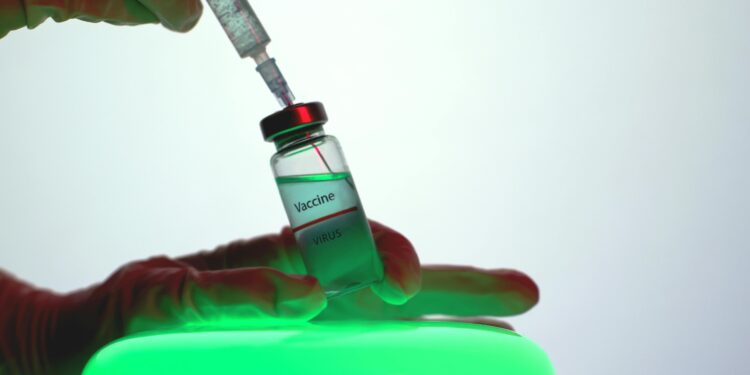
Vaccine hesitancy in the United States has shifted from episodic skepticism to a more durable cultural posture, reshaping immunization coverage rates, regulatory debates, and the stability of public health infrastructure. For physician-executives, healthcare investors, and policy-literate readers, the central issue is not the immunologic principle of herd protection—well described in epidemiologic literature and summarized by the Centers for Disease Control and Prevention at https://www.cdc.gov/vaccines/vac-gen/immunity-types.htm—but what happens when distrust becomes an organizing identity rather than a transient concern.

National immunization coverage among kindergarteners has declined modestly but persistently in recent years, with the CDC reporting increased exemption rates in its annual SchoolVaxView assessments (https://www.cdc.gov/vaccines/imz-managers/coverage/schoolvaxview/index.html). The aggregate percentages remain high by historical standards. Yet herd immunity operates at thresholds sensitive to local clustering. A statewide rate of 93 percent may conceal counties well below that mark. Outbreaks follow geography, not averages.

The Political Codification of Exemption

Exemptions were once largely medical. Over time, religious and philosophical exemptions expanded through legislative action. In some states, tightening of nonmedical exemptions followed outbreaks, as seen in California after the 2014–2015 measles resurgence. In others, political momentum has moved in the opposite direction, framing mandates as overreach.

Legal scholars have long recognized vaccination requirements as exercises of state police power, grounded in precedent such as Jacobson v. Massachusetts. The jurisprudence remains intact. What has shifted is the political valence. Vaccine refusal now functions, in certain communities, as a signal of broader institutional skepticism—toward federal agencies, pharmaceutical manufacturers, and academic medicine.

Once distrust is identity-coded, persuasion becomes less effective. Public health messaging competes not merely with misinformation but with affiliation. The World Health Organization has identified vaccine hesitancy as a top global health threat (https://www.who.int/news-room/spotlight/ten-threats-to-global-health-in-2019), yet technical clarity alone does not reverse identity formation.

Infrastructure Under Stress

Public health infrastructure depends on routine compliance. Immunization programs are logistically efficient when participation is normative. As opt-out behavior increases, the administrative burden rises: more follow-up, more documentation, more legal review.

Local health departments operate within constrained budgets. The Prevention and Public Health Fund and related federal appropriations provide baseline support, but workforce shortages persist. When outbreaks occur—measles, pertussis—resources shift abruptly from preventive services to containment. Contact tracing, isolation guidance, and community outreach divert personnel from chronic disease initiatives.

The economic effect is asymmetric. Prevention savings are diffuse; outbreak response costs are immediate and visible. For hospital systems, even small outbreaks can generate uncompensated care and reputational strain. Pediatric practices face the ethical and operational dilemma of whether to dismiss unvaccinated families, balancing community protection against continuity of care.

Capital Markets and Immunization Economics

Vaccines historically represent a modest share of pharmaceutical revenue relative to chronic disease therapeutics. They are episodic, often publicly purchased, and priced under scrutiny. Yet their public health value is disproportionate, as documented in cost-effectiveness analyses across decades.

If hesitancy erodes uptake, manufacturers face a paradox. Lower volume can reduce revenue, but outbreaks may trigger surge demand. Predictability diminishes. Investors evaluating vaccine portfolios must factor political volatility alongside scientific risk.

The federal government, through programs such as Vaccines for Children (https://www.cdc.gov/vaccines/programs/vfc/index.html), acts as a major purchaser. Policy shifts affecting mandate enforcement or reimbursement could alter procurement dynamics. The private market for adult vaccines may also fragment if employer mandates recede.

 Clinical Encounters in an Identity Landscape

For practicing clinicians, vaccine counseling has evolved from routine recommendation to extended negotiation. Motivational interviewing techniques can improve acceptance in some contexts. In others, refusal is declarative rather than deliberative.

The time cost is nontrivial. Primary care appointments absorb lengthy discussions that displace other preventive services. Documentation requirements expand in litigious climates. Burnout literature seldom quantifies the cumulative strain of repeated epistemic conflict, yet anecdotal reports suggest it contributes meaningfully to professional fatigue.

There is a counterintuitive effect worth noting. As distrust consolidates among a subset of patients, vaccination rates among the remaining population may remain robust or even increase, reflecting polarization rather than universal decline. The epidemiologic risk concentrates geographically and demographically.

Public Health as Cultural Proxy

Vaccination debates increasingly function as proxies for broader disputes over federal authority, corporate influence, and media credibility. The Food and Drug Administration’s advisory committee proceedings are publicly accessible (https://www.fda.gov/advisory-committees), yet transparency does not uniformly translate into trust. In some cases, visibility amplifies selective interpretation.

Policy responses risk overcorrection. Heavy-handed mandates can harden opposition. Excessive accommodation can undermine collective protection. The balance is unstable. Public health agencies must operate within statutory limits while navigating political headwinds that fluctuate with election cycles.

Second-order effects extend beyond vaccines. If institutional distrust generalizes, uptake of other preventive interventions—screening programs, new therapeutics—may suffer collateral impact. Trust is not modular; it rarely confines itself to a single product category.

The Fragile Equilibrium

Herd immunity is not solely a biological threshold; it is a social contract. When participation declines because distrust confers belonging, the contract frays unevenly. Some communities maintain high coverage and low outbreak risk. Others experience periodic resurgence.

The public health system was designed for compliance as default. It adapts imperfectly to pluralism in which refusal is principled and publicly celebrated. Physician-executives must anticipate localized volatility in service demand. Investors must account for regulatory unpredictability. Policymakers must navigate constitutional constraints without eroding legitimacy further.

Distrust, once embedded in identity, is resilient. It does not respond quickly to fact sheets or advisory committee votes. It reshapes behavior quietly—through exemption forms filed, appointments declined, conversations that end without agreement.

Herd immunity will not vanish overnight. But its maintenance now depends on a social architecture more fragile than epidemiologic models alone would suggest.


ShareTweet
Kumar Ramalingam

Kumar Ramalingam

Kumar Ramalingam is a writer focused on the intersection of science, health, and policy, translating complex issues into accessible insights.

Leave a Reply Cancel reply

Your email address will not be published. Required fields are marked *

Videos

In this episode of the Daily Remedy Podcast, Tiffany Ryder discusses her insights on healthcare messaging, the impact of COVID-19 on patient trust, and the importance of transparency in health policy. She emphasizes the need for clear communication in the face of divisiveness and explores the complexities surrounding the estrogen debate. Additionally, Tiffany highlights positive developments in health policy and the necessity of effectively conveying these changes to the public.

Tiffany Ryder is a political commentator and public health policy thought leader who publishes the Substack newsletter Signal and Noise: https://signalandnoise.online/


Chapters

00:00 Introduction to Healthcare Conversations
02:58 Signal and Noise: Understanding Healthcare Communication
05:56 The Storytelling Problem in Healthcare
08:58 Navigating Political Divisiveness in Health Policy
11:55 The Role of Media in Health Policy
15:03 Bias in Health Reporting
17:56 Estrogen and Health Policy: A Case Study
24:00 Positive Developments in Health Policy
27:03 Looking Ahead: Future of Health Policy
31:49 Communicating Health Policy Effectively
The Impact of COVID-19 on Patient Trust
YouTube Video ujzgl7HDlsw
Subscribe

2027 Medicare Advantage & Part D Advance Notice

Clinical Reads

GLP-1 Drugs Have Moved Past Weight Loss. Medicine Has Not Fully Caught Up.

Glucagon-Like Peptide–Based Therapies and Longevity: Clinical Implications from Emerging Evidence

by Daily Remedy
March 1, 2026
0

Glucagon-like peptide–based therapies are increasingly used for weight management and glycemic control, but their potential impact on long-term survival remains uncertain. The clinical question addressed in this report is whether treatment with glucagon-like peptide receptor agonists is associated with reductions in all-cause mortality and age-related morbidity beyond their established metabolic effects. This question matters because these agents are now prescribed across broad patient populations, including individuals without diabetes, and long-term exposure may influence cardiovascular, oncologic, and neurodegenerative outcomes. Understanding whether...

Read more

Join Our Newsletter!

Twitter Updates

Tweets by TheDailyRemedy

Popular

  • When Prognosis Becomes Probabilistic

    When Prognosis Becomes Probabilistic

    0 shares
    Share 0 Tweet 0
  • Healthcare Trends

    0 shares
    Share 0 Tweet 0
  • Gaming Therapy

    0 shares
    Share 0 Tweet 0
  • Healthcare Journalists are Suffering

    0 shares
    Share 0 Tweet 0
  • The Second Brain Goes Viral

    0 shares
    Share 0 Tweet 0
  • 628 Followers

Daily Remedy

Daily Remedy offers the best in healthcare information and healthcare editorial content. We take pride in consistently delivering only the highest quality of insight and analysis to ensure our audience is well-informed about current healthcare topics - beyond the traditional headlines.

Daily Remedy website services, content, and products are for informational purposes only. We do not provide medical advice, diagnosis, or treatment. All rights reserved.

Important Links

  • Support Us
  • About Us
  • Contact us
  • Privacy Policy
  • Terms and Conditions

Join Our Newsletter!

  • Survey
  • Podcast
  • About Us
  • Contact us

© 2026 Daily Remedy

No Result
View All Result
  • Home
  • Articles
  • Podcasts
  • Surveys
  • Courses
  • About Us
  • Contact us
  • Support Us
  • Official Learner

© 2026 Daily Remedy