












Sunday, February 15, 2026
ISSN 2765-8767
  • Survey
  • Podcast
  • Write for Us
  • My Account
  • Log In
Daily Remedy
  • Home
  • Articles
  • Podcasts
    The Future of LLMs in Healthcare

    The Future of LLMs in Healthcare

    January 26, 2026
    The Future of Healthcare Consumerism

    The Future of Healthcare Consumerism

    January 22, 2026
    Your Body, Your Health Care: A Conversation with Dr. Jeffrey Singer

    Your Body, Your Health Care: A Conversation with Dr. Jeffrey Singer

    July 1, 2025

    The cost structure of hospitals nearly doubles

    July 1, 2025
    Navigating the Medical Licensing Maze

    The Fight Against Healthcare Fraud: Dr. Rafai’s Story

    April 8, 2025
    Navigating the Medical Licensing Maze

    Navigating the Medical Licensing Maze

    April 4, 2025
  • Surveys

    Surveys

    AI in Healthcare Decision-Making

    AI in Healthcare Decision-Making

    February 1, 2026
    Patient Survey: Understanding Healthcare Consumerism

    Patient Survey: Understanding Healthcare Consumerism

    January 18, 2026

    Survey Results

    Can you tell when your provider does not trust you?

    Can you tell when your provider does not trust you?

    January 18, 2026
    Do you believe national polls on health issues are accurate

    National health polls: trust in healthcare system accuracy?

    May 8, 2024
    Which health policy issues matter the most to Republican voters in the primaries?

    Which health policy issues matter the most to Republican voters in the primaries?

    May 14, 2024
    How strongly do you believe that you can tell when your provider does not trust you?

    How strongly do you believe that you can tell when your provider does not trust you?

    May 7, 2024
  • Courses
  • About Us
  • Contact us
  • Support Us
  • Official Learner
No Result
View All Result
  • Home
  • Articles
  • Podcasts
    The Future of LLMs in Healthcare

    The Future of LLMs in Healthcare

    January 26, 2026
    The Future of Healthcare Consumerism

    The Future of Healthcare Consumerism

    January 22, 2026
    Your Body, Your Health Care: A Conversation with Dr. Jeffrey Singer

    Your Body, Your Health Care: A Conversation with Dr. Jeffrey Singer

    July 1, 2025

    The cost structure of hospitals nearly doubles

    July 1, 2025
    Navigating the Medical Licensing Maze

    The Fight Against Healthcare Fraud: Dr. Rafai’s Story

    April 8, 2025
    Navigating the Medical Licensing Maze

    Navigating the Medical Licensing Maze

    April 4, 2025
  • Surveys

    Surveys

    AI in Healthcare Decision-Making

    AI in Healthcare Decision-Making

    February 1, 2026
    Patient Survey: Understanding Healthcare Consumerism

    Patient Survey: Understanding Healthcare Consumerism

    January 18, 2026

    Survey Results

    Can you tell when your provider does not trust you?

    Can you tell when your provider does not trust you?

    January 18, 2026
    Do you believe national polls on health issues are accurate

    National health polls: trust in healthcare system accuracy?

    May 8, 2024
    Which health policy issues matter the most to Republican voters in the primaries?

    Which health policy issues matter the most to Republican voters in the primaries?

    May 14, 2024
    How strongly do you believe that you can tell when your provider does not trust you?

    How strongly do you believe that you can tell when your provider does not trust you?

    May 7, 2024
  • Courses
  • About Us
  • Contact us
  • Support Us
  • Official Learner
No Result
View All Result
Daily Remedy
No Result
View All Result
Home Politics & Law

Trumpism, Post-Pandemic

Daily Remedy by Daily Remedy
August 9, 2021
in Politics & Law
0

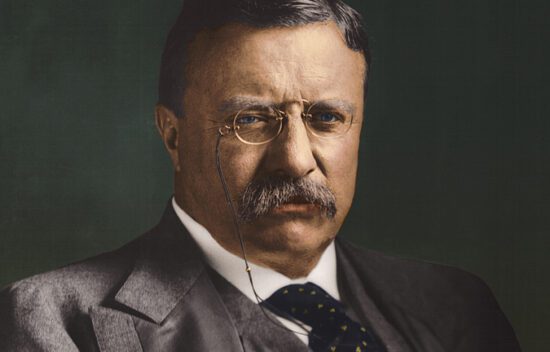
Theodore Roosevelt, the archetype of rugged individualism, once withstood a bullet wound in the chest to give a speech in front of a general assembly.

After he told his captivated audience of his recent injury, being shot mere minutes before he was set to speak, he reassured them that he would be fine, proclaiming, “it takes more than that to kill a bull moose”, before completing an abbreviated version of his set speech.

Such tales epitomize Roosevelt, the most American of American Presidents, who once marched uphill onto incoming gun fire during the Spanish-American War, who nearly died while on a post-Presidency expedition in the backwaters of the Brazilian Amazon basin, and who simultaneously altered American geopolitics and boasted America’s Naval superiority while carving a canal into the heart of Central America’s Panama.

The latter is considered a modern engineering marvel, and something that former President Trump has commended on multiple occasions. But the two men’s affinity for large scale construction projects is not the only thing they share. In fact, many historians have often compared the two, noting their similar penchant for the spotlight, bucking convention, and garnering staunch allies and enemies.

There is another similarity between the two, one shared among much of the population – a sense of individualism. But not traditional American individualism as we know it, the veritable can do attitude, but a specific type of individualism, one characterized by conscious disobedience.

This type of individualism has appeared among prominent thought leaders throughout American history. Henry David Thoreau advocated civil disobedience against what he termed unnatural laws, which in modern times manifests as resistance to overt injustices perpetuated by the government, whether that is suppression of human rights or systemic racism.

But this type of individualism also appears in more destructive ways, as seen in the perpetual rise and fall of counter-cultural movements. We saw strict Christian denominations of the nineteenth century often blur the distinction between austere and authoritarian. We saw organized crime bosses ingratiate criminality into the zeitgeist of American society. And we saw former President Trump turn an election loss into a nascent occult movement. One in which loyalty to a set of beliefs literally trumps any institution, political belief, or cultural affiliation.

This is the modern manifestation of the same individualism first espoused by Roosevelt, and now carried forward by Trump. A rugged individualism defined by disobedience, cynicism, and individual willpower over everything else. We lauded such notions when Roosevelt defied death and deferred medical care to speak. But such notions when taken to extremes, and permeated across society to be adopted among the masses, quickly fall from inspirational heights to cautionary depths.

This is precipice in which we currently find ourselves. A world mired in individualism, disobedient and discontent, zealously adhering to an ever polarizing set of beliefs – now codified by the term, Trumpism.

A world that has redefined healthcare policy, transforming mask-mandates and vaccinations into statements of individual free will. We tend to believe this is a pandemic-specific phenomenon, a largely fringe notion popularized over the course of the pandemic, that will subside once the pandemic has run its course.

We should be leery to think this way.

This modern manifestation of individualism initially arose before the pandemic, and was largely responsible for Trump’s political ascendency. It grew exponentially during the pandemic, and it remains ever pervasive so long as Trump looms large in the country’s ethos.

And this notion will continue to permeate healthcare post-pandemic, long after mask-mandates have been relegated to the history books.

Trumpism, post-pandemic will manifest as generalized discontent and non-adherence to traditional healthcare policies.

We will see patients bucking conventionally held notions of healthcare, challenging traditional medical care, and frequently turning to alternative forms of medicine. We will see a rise in counter-cultural medical practices, led by individuals posing as some combination of physician-priests eschewing traditional medicine for a more individualized, counter-cultural form of healthcare.

A similar trend arose during the Roosevelt’s administration that was subsequently rebuked by the Flexner Report in 1910. Commissioned by the Carnegie Foundation, and supported by Roosevelt, this report standardized medical research and medical care, paving the way for modern medicine and modern healthcare as we currently understand it. And for all its detractors, the report did much to standardize and regulate healthcare – for the benefit of patients.

Unfortunately, for all the similarities between Roosevelt and Trump, they have one difference – Trump, unlike Roosevelt, not only engages counter-cultural healthcare beliefs, he advocates and broadcasts them. Trump was the one advocating for UV therapy in the early days of the pandemic, and he had a dangerous tendency of aligning himself with self-serving soothsayers who promised all forms of quackery as therapy.

The implications of which were disastrous. We saw mask-mandates turn into town hall referendums on personal rights and vaccine hesitancy destroy any chance at herd immunity.

These counter-cultural beliefs will continue, inspired by Trump and spurred on by Trump’s insistence in conspiratorial beliefs.

We will see a rise in counter-cultural medications and generalized distrust in traditional medicine. Providers will have to convince patients to trust traditional medicine while treating them. And individualized conspiratorial beliefs will influence patient decision-making as much as the guidance of a provider.

Healthcare will be bound to the roots of this modern individualism, marked by discontent and disobedience, with different populations fixated on their own self of beliefs and disbeliefs – forming over time a new type of healthcare disparity.

One defined by Trumpism, post-pandemic.

ShareTweet
Daily Remedy

Daily Remedy

Dr. Jay K Joshi serves as the editor-in-chief of Daily Remedy. He is a serial entrepreneur and sought after thought-leader for matters related to healthcare innovation and medical jurisprudence. He has published articles on a variety of healthcare topics in both peer-reviewed journals and trade publications. His legal writings include amicus curiae briefs prepared for prominent federal healthcare cases.

Comments 0

  1. David Acevedo says:
    5 years ago

    How disastrous to the opiate recovery effort are the new found, yet unfounded, confidences in “Kratom” and marijuana as “alternatives” for severe pain control.

    Reply

Leave a Reply Cancel reply

Your email address will not be published. Required fields are marked *

Videos

In this episode, the host discusses the significance of large language models (LLMs) in healthcare, their applications, and the challenges they face. The conversation highlights the importance of simplicity in model design and the necessity of integrating patient feedback to enhance the effectiveness of LLMs in clinical settings.

Takeaways
LLMs are becoming integral in healthcare.
They can help determine costs and service options.
Hallucination in LLMs can lead to misinformation.
LLMs can produce inconsistent answers based on input.
Simplicity in LLMs is often more effective than complexity.
Patient behavior should guide LLM development.
Integrating patient feedback is crucial for accuracy.
Pre-training models with patient input enhances relevance.
Healthcare providers must understand LLM limitations.
The best LLMs will focus on patient-centered care.

Chapters

00:00 Introduction to LLMs in Healthcare
05:16 The Importance of Simplicity in LLMs
The Future of LLMs in HealthcareDaily Remedy
YouTube Video U1u-IYdpeEk
Subscribe

AI Regulation and Deployment Is Now a Core Healthcare Issue

Clinical Reads

Ambient Artificial Intelligence Clinical Documentation: Workflow Support with Emerging Governance Risk

Ambient Artificial Intelligence Clinical Documentation: Workflow Support with Emerging Governance Risk

by Daily Remedy
February 1, 2026
0

Health systems are increasingly deploying ambient artificial intelligence tools that listen to clinical encounters and automatically generate draft visit notes. These systems are intended to reduce documentation burden and allow clinicians to focus more directly on patient interaction. At the same time, they raise unresolved questions about patient consent, data handling, factual accuracy, and legal responsibility for machine‑generated records. Recent policy discussions and legal actions suggest that adoption is moving faster than formal oversight frameworks. The practical clinical question is...

Read more

Join Our Newsletter!

Twitter Updates

Tweets by TheDailyRemedy

Popular

  • The Information Epidemic: How Digital Health Misinformation Is Rewiring Clinical Risk

    The Information Epidemic: How Digital Health Misinformation Is Rewiring Clinical Risk

    0 shares
    Share 0 Tweet 0
  • Child Health Is Now a Platform Issue

    0 shares
    Share 0 Tweet 0
  • Prevention Is Having a Moment and a Measurement Problem

    0 shares
    Share 0 Tweet 0
  • Behavioral Health Is Now a Network Phenomenon

    0 shares
    Share 0 Tweet 0
  • The Breach Is the Diagnosis: Cybersecurity Has Become a Clinical Risk Variable

    0 shares
    Share 0 Tweet 0
  • 628 Followers

Daily Remedy

Daily Remedy offers the best in healthcare information and healthcare editorial content. We take pride in consistently delivering only the highest quality of insight and analysis to ensure our audience is well-informed about current healthcare topics - beyond the traditional headlines.

Daily Remedy website services, content, and products are for informational purposes only. We do not provide medical advice, diagnosis, or treatment. All rights reserved.

Important Links

  • Support Us
  • About Us
  • Contact us
  • Privacy Policy
  • Terms and Conditions

Join Our Newsletter!

  • Survey
  • Podcast
  • About Us
  • Contact us

© 2026 Daily Remedy

No Result
View All Result
  • Home
  • Articles
  • Podcasts
  • Surveys
  • Courses
  • About Us
  • Contact us
  • Support Us
  • Official Learner

© 2026 Daily Remedy

