













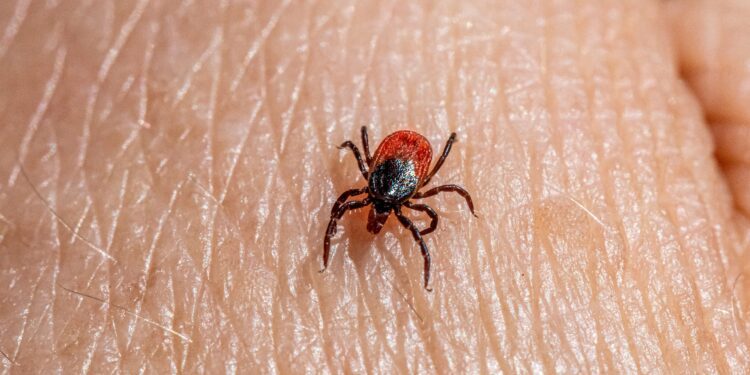
A single tick bite on a New England hiking trail may soon resemble the risk once confined to lower latitudes or forested valleys. Warming winters and milder summers enable ticks to establish in regions previously inhospitable, carrying pathogens such as Lyme disease and Powassan virus into new human populations. Public health institutions now confront the imperative to shift surveillance, prevention and treatment resources across geography and season in response to this inexorable expansion.
Climate Change as a Health Driver
Climate change operates as a force multiplier for infectious diseases. The Centers for Disease Control and Prevention observes that rising temperatures, altered precipitation patterns and extended growing seasons produce more favorable conditions for ticks to survive and reproduce. Warmer winters reduce tick mortality, enabling populations to persist through cooler months. Increased humidity and milder springs permit earlier larval activity. Consequently, both the blacklegged tick (Ixodes scapularis) in eastern North America and the lone star tick (Amblyomma americanum) in the south have migrated northward into Canada and higher elevations in Appalachia and New England.
These shifts carry tangible health consequences. Lyme disease cases in Canada have risen more than tenfold over the past decade, with Ontario and Quebec reporting significant increases in incidence. In the United States, the geographic footprint of Lyme disease now encompasses over 80 percent of counties in the Northeast and Upper Midwest, up from 46 percent in the late 1990s. Concurrently, emerging tick-borne pathogens such as Borrelia miyamotoi and Heartland virus compound the complexity of diagnosis and treatment.
Reallocating Surveillance and Testing Capacity
Faced with migrating vectors, public health agencies must redirect surveillance budgets and laboratory capacity. The U.S. Epidemiology and Laboratory Capacity (ELC) grant program historically prioritised mosquito-borne illnesses and foodborne pathogens. In response to tick expansion, the CDC reprogrammed a portion of ELC funds toward supporting state health department tick surveillance initiatives, enabling procurement of drag-sampling equipment, training of field entomologists and expansion of molecular diagnostic assays for emerging pathogens.
States in the Northeast and Upper Midwest have established dedicated tick-borne disease surveillance units. For example, Vermont’s Department of Health launched a community-science program, enlisting volunteers to submit tick specimens for testing. This initiative required the reallocation of laboratory staff and the installation of an additional real-time PCR instrument at the state public health laboratory. In Minnesota, the health department augmented its arbovirus and vector laboratory by hiring two entomologists and purchasing geographic information system software to map tick hotspots and predict seasonal abundance.
Expanding Clinical Resources and Provider Education
As tick-borne diseases emerge in new areas, clinicians unfamiliar with presentation patterns face diagnostic delays. Public health entities have collaborated with medical societies to convene webinars and develop continuing medical education modules on early recognition of Lyme disease, ehrlichiosis and babesiosis. In Canada, the Public Health Agency funded a pan-provincial online platform to train rural physicians in tick-borne disease management, supported by a consortium of infectious-disease specialists.
Pharmacies and clinics in newly affected regions have also reallocated inventory to stock alternatives for doxycycline and amoxicillin, first-line treatments for early Lyme disease. Some hospitals in the Upper Midwest instituted automatic tick-borne panel orders for patients presenting with febrile illness and potential tick exposure during summer months. Laboratory information systems were updated to flag such cases, ensuring rapid testing and result reporting.
Revising Prevention Strategies
Prevention programs must adapt to altered tick seasonality. Many jurisdictions historically concentrated educational campaigns in June and July. Now, extended nymph activity into late spring and adult longevity into autumn necessitate year-round outreach. The Connecticut Department of Public Health extended its “Check for Ticks” campaign from May through October, adding social-media messaging in November to caution on lingering adult tick activity. Parks departments adjusted mowing schedules and brush-clearing cycles to reduce tick habitat near trails, reallocating seasonal maintenance budgets accordingly.
Land-management grants, often originating from environmental agencies, have been channeled toward suburban and peri-urban tick-control projects. For instance, the Pennsylvania Department of Conservation and Natural Resources provided funds to local municipalities for controlled burning and acaricide applications in overgrown public spaces. These interventions required shifting budget lines from recreational development to vector-control measures, a reorientation driven by public health priorities.
Addressing Equity and Access
Tick-borne diseases do not affect all populations equally. Communities with limited access to green spaces may lack exposure but face higher vulnerability when expansion occurs near under-funded areas. Public health agencies have partnered with community health centers in northern Ontario and upstate New York to integrate tick-borne disease screening into routine primary care visits. Mobile clinics offering free testing were deployed to remote Indigenous reserves in Canada, funded through federal First Nations and Inuit Health Branch programs that reallocated pandemic response funds toward vector-borne disease preparedness.
Similarly, charity clinics in Appalachia have absorbed increased patient loads seeking diagnosis and treatment for tick-borne illnesses. To manage costs, these clinics received supplemental federal grants originally earmarked for opioid response, repurposed to cover antibiotic therapy and laboratory testing for uninsured patients. This shift highlights the necessity of flexible funding streams to address emerging climate-driven health threats.
Modeling Future Resource Needs
Effective planning demands predictive modeling. The U.S. Geological Survey’s Vector Modeling Framework integrates climate projections, land-use data and tick life-cycle parameters to forecast range expansions under various warming scenarios. Public health planners use these outputs to anticipate hotspots and preemptively allocate resources. For example, Maine’s health department adjusted its laboratory testing budget to accommodate a projected 25 percent rise in tick specimens by 2030.
In Europe, where Ixodes ricinus ticks spread north into Scandinavia, the European Centre for Disease Prevention and Control developed a pan-EU tick-risk atlas. Member states receive risk maps that inform national resource allocation, guiding surveillance intensity and public-awareness investments. Sweden reallocated a portion of its mosquito surveillance budget to support field teams in Norrland, a region now reporting increased Lyme cases.
Challenges and Opportunities
Resource reallocation poses budgetary and logistical challenges. Redirecting funds can delay other public health programs, creating tension between emerging and endemic threats. Moreover, training entomologists, epidemiologists and clinicians requires time and sustained investment. Supply-chain constraints for PCR reagents and acaricides have emerged as tick-surveillance efforts expanded, necessitating advance procurement and inter-agency coordination.
Nevertheless, this period of transition offers opportunities for system strengthening. Integrated vector-management frameworks that address ticks, mosquitoes and other pests can leverage common infrastructure and workforce. Shared laboratory platforms and multiplex assays enhance efficiency. Cross-border collaboration, exemplified by joint U.S.-Canada tick surveillance pilot projects, fosters regional preparedness for a warming world.
Conclusion
Climate change is a public health issue writ large in the movement of ticks across latitudes and altitudes. The resultant spread of Lyme disease, ehrlichiosis, babesiosis and other infections compels health institutions to reallocate surveillance, clinical and preventive resources. From state laboratory expansions to rural clinic support and dynamic modeling exercises, agencies are rewriting the playbook for vector-borne disease control. As warming trends persist, adaptive resource allocation will remain central to protecting populations and preserving public health in an era defined by shifting disease frontiers.



