












Sunday, February 22, 2026
ISSN 2765-8767
  • Survey
  • Podcast
  • Write for Us
  • My Account
  • Log In
Daily Remedy
  • Home
  • Articles
  • Podcasts
    Debunking Myths About GLP-1 Medications

    Debunking Myths About GLP-1 Medications

    February 16, 2026
    The Future of LLMs in Healthcare

    The Future of LLMs in Healthcare

    January 26, 2026
    The Future of Healthcare Consumerism

    The Future of Healthcare Consumerism

    January 22, 2026
    Your Body, Your Health Care: A Conversation with Dr. Jeffrey Singer

    Your Body, Your Health Care: A Conversation with Dr. Jeffrey Singer

    July 1, 2025

    The cost structure of hospitals nearly doubles

    July 1, 2025
    Navigating the Medical Licensing Maze

    The Fight Against Healthcare Fraud: Dr. Rafai’s Story

    April 8, 2025
  • Surveys

    Surveys

    How Confident Are You in RFK Jr.’s Health Leadership?

    How Confident Are You in RFK Jr.’s Health Leadership?

    February 16, 2026
    AI in Healthcare Decision-Making

    AI in Healthcare Decision-Making

    February 1, 2026

    Survey Results

    Can you tell when your provider does not trust you?

    Can you tell when your provider does not trust you?

    January 18, 2026
    Do you believe national polls on health issues are accurate

    National health polls: trust in healthcare system accuracy?

    May 8, 2024
    Which health policy issues matter the most to Republican voters in the primaries?

    Which health policy issues matter the most to Republican voters in the primaries?

    May 14, 2024
    How strongly do you believe that you can tell when your provider does not trust you?

    How strongly do you believe that you can tell when your provider does not trust you?

    May 7, 2024
  • Courses
  • About Us
  • Contact us
  • Support Us
  • Official Learner
No Result
View All Result
  • Home
  • Articles
  • Podcasts
    Debunking Myths About GLP-1 Medications

    Debunking Myths About GLP-1 Medications

    February 16, 2026
    The Future of LLMs in Healthcare

    The Future of LLMs in Healthcare

    January 26, 2026
    The Future of Healthcare Consumerism

    The Future of Healthcare Consumerism

    January 22, 2026
    Your Body, Your Health Care: A Conversation with Dr. Jeffrey Singer

    Your Body, Your Health Care: A Conversation with Dr. Jeffrey Singer

    July 1, 2025

    The cost structure of hospitals nearly doubles

    July 1, 2025
    Navigating the Medical Licensing Maze

    The Fight Against Healthcare Fraud: Dr. Rafai’s Story

    April 8, 2025
  • Surveys

    Surveys

    How Confident Are You in RFK Jr.’s Health Leadership?

    How Confident Are You in RFK Jr.’s Health Leadership?

    February 16, 2026
    AI in Healthcare Decision-Making

    AI in Healthcare Decision-Making

    February 1, 2026

    Survey Results

    Can you tell when your provider does not trust you?

    Can you tell when your provider does not trust you?

    January 18, 2026
    Do you believe national polls on health issues are accurate

    National health polls: trust in healthcare system accuracy?

    May 8, 2024
    Which health policy issues matter the most to Republican voters in the primaries?

    Which health policy issues matter the most to Republican voters in the primaries?

    May 14, 2024
    How strongly do you believe that you can tell when your provider does not trust you?

    How strongly do you believe that you can tell when your provider does not trust you?

    May 7, 2024
  • Courses
  • About Us
  • Contact us
  • Support Us
  • Official Learner
No Result
View All Result
Daily Remedy
No Result
View All Result
Home Politics & Law

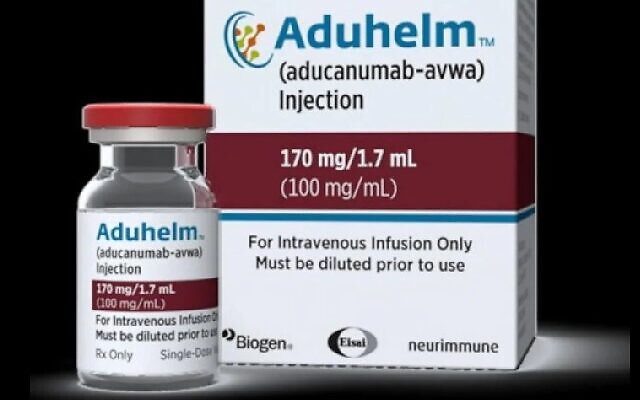
Much Ado About Aduhelm

Daily Remedy by Daily Remedy
March 27, 2022
in Politics & Law
0
Much Ado About Aduhelm

Truth, according to philosopher Immanuel Kant, is not a set of objective facts. It is not logical consistency either. As Kant wrote, it is an “agreement of cognition”, a state where facts and logic coalesce into a belief.

While Kant has mostly been relegated to the annals of philosophical theory, his treatise on truth remains applicable today in healthcare, particularly as it concerns the embattled Alzheimer’s drug, Aduhelm.

“We are pleased that the peer-reviewed manuscript is now available to provide physicians with a greater understanding of the appropriate use of Aduhelm,” said Samantha Haeberlein, Head of Neurodegeneration Development at the biotechnology firm, Biogen, which manufactures the drug.

The study, published in mid-March, monitored patients with Alzheimer’s disease for over two years to demonstrate the clinical benefits of Aduhelm – though the FDA has already approved it in 2021 as a form of treatment. Despite existing data and FDA approval, many physicians still do not understand how the drug confers any actual benefit to patients. To which Biogen responded with additional data.

But the study does little to address the original misunderstanding – does the drug address the symptoms of patients with Alzheimer’s disease – and instead continues to claim clinical benefits in the most abstruse of ways.

Biogen says Aduhelm treats Alzheimer’s disease by reducing the levels of proteins in the brain associated with the disease, the most well-known being tau-amyloid, though other forms of amyloid proteins are involved as well. By reducing these proteins, Biogen claims the drug treats dementia. Preliminary data proved that protein concentrations reduced when patients took the drug, but physicians were unsure of how that benefited the clinical progression of the disease symptomatically.

This latest study tries to clarify the relationship between lower amyloid protein concentrations and symptomatic improvements. They followed patients in the original study for an additional two years, monitoring for clinical changes. Even with the prolonged period, the authors selected a bizarrely precise point in time to prove that the drug indeed slows the progression of Alzheimer’s disease.

Specifically, at week 78, patients who showed a reduction in the amyloid proteins had slower clinical progression across all measurements of cognition function in the study. And patients who had reduced amyloid levels at week 78 also had greater decreases in week 128.

By that logic, Biogen would have you believe that Aduhelm provides clinical benefits to patients with severe Alzheimer’s disease. The data has repeatedly shown to reduce amyloid protein concentrations. Since the patho-physiology of dementia involves a buildup of these proteins in the brain, it would appear the facts and logic are in agreement – meeting the Kantian requirements of truth.

But truth in medicine can be tricky. It is a world where facts can rapidly descend into fiction and theories once taboo can quickly gain mainstream credibility. In reality, there are no causal relationships in healthcare. Everything is correlative, which means they are usually true, but not always. And it is this inconsistency that gives every assumed truth just enough error to be questioned.

Previous studies that have examined the relationship between amyloids proteins in the cognitively impaired, and the degree of impairment, suggest that elevated protein concentrations are associated with cognitive decline, but the strength of association differs based on cognitive status and the duration of follow-up.

This makes the oddly precise dates of 78 and 128 weeks tantalizingly deceptive. The dates selected seem deliberate; almost a willful attempt to create the impression that Aduhelm stops the progression of dementia. What if we select a different set of dates, or continue the study even longer?

Any clinical study with a long term follow-up, known as a longitudinal study, can be manipulated to present any predetermined outcome. All you need to do is select the right time horizon – like an oddly precise number of weeks – to demonstrate a particular outcome in the trending data, regardless of whether it is a statistical aberration or a clinically meaningful relationship.

This is why longitudinal studies hardly ever conclude with causal relationships; the trends are always correlative, always appearing with just enough error to remind that correlation is not causation. And like many appearances, it can be deceiving, like Biogen’s latest clinical study.

It tries to show how Aduhelm treats Alzheimer’s disease, but in reality it shows how easily data can be manipulated.


ShareTweet
Daily Remedy

Daily Remedy

Dr. Jay K Joshi serves as the editor-in-chief of Daily Remedy. He is a serial entrepreneur and sought after thought-leader for matters related to healthcare innovation and medical jurisprudence. He has published articles on a variety of healthcare topics in both peer-reviewed journals and trade publications. His legal writings include amicus curiae briefs prepared for prominent federal healthcare cases.

Leave a Reply Cancel reply

Your email address will not be published. Required fields are marked *

Videos

This conversation focuses on debunking myths surrounding GLP-1 medications, particularly the misinformation about their association with pancreatic cancer. The speaker emphasizes the importance of understanding clinical study designs, especially the distinction between observational studies and randomized controlled trials. The discussion highlights the need for patients to critically evaluate the sources of information regarding medication side effects and to empower themselves in their healthcare decisions.

Takeaways
GLP-1 medications are not linked to pancreatic cancer.
Peer-reviewed studies debunk misinformation about GLP-1s.
Anecdotal evidence is not reliable for general conclusions.
Observational studies have limitations in generalizability.
Understanding study design is crucial for evaluating claims.
Symptoms should be discussed in the context of clinical conditions.
Not all side effects reported are relevant to every patient.
Observational studies can provide valuable insights but are context-specific.
Patients should critically assess the relevance of studies to their own experiences.
Engagement in discussions about specific studies can enhance understanding

Chapters
00:00
Debunking GLP-1 Medication Myths
02:56
Understanding Clinical Study Designs
05:54
The Role of Observational Studies in Healthcare
Debunking Myths About GLP-1 Medications
YouTube Video DM9Do_V6_sU
Subscribe

2027 Medicare Advantage & Part D Advance Notice

Clinical Reads

BIIB080 in Mild Alzheimer’s Disease: What a Phase 1b Exploratory Clinical Analysis Can—and Cannot—Tell Us

BIIB080 in Mild Alzheimer’s Disease: What a Phase 1b Exploratory Clinical Analysis Can—and Cannot—Tell Us

by Daily Remedy
February 15, 2026
0

Can lowering tau biology translate into a clinically meaningful slowing of decline in people with early symptomatic Alzheimer’s disease? That is the practical question behind BIIB080, an intrathecal antisense therapy designed to reduce production of tau protein by targeting the tau gene transcript. In a phase 1b program originally designed for safety and dosing, investigators later examined cognitive, functional, and global outcomes as exploratory endpoints. The clinical question matters because current disease-modifying options primarily target amyloid, while tau pathology tracks...

Read more

Join Our Newsletter!

Twitter Updates

Tweets by TheDailyRemedy

Popular

  • The Prevention Gap in Dementia Care

    The Prevention Gap in Dementia Care

    0 shares
    Share 0 Tweet 0
  • Healthcare Natural Rights

    0 shares
    Share 0 Tweet 0
  • The Staffing Equation That Doesn’t Balance

    0 shares
    Share 0 Tweet 0
  • Heat Safety Tips Every Pregnant Mother Should Know

    0 shares
    Share 0 Tweet 0
  • Healthcare in Space

    1 shares
    Share 0 Tweet 0
  • 628 Followers

Daily Remedy

Daily Remedy offers the best in healthcare information and healthcare editorial content. We take pride in consistently delivering only the highest quality of insight and analysis to ensure our audience is well-informed about current healthcare topics - beyond the traditional headlines.

Daily Remedy website services, content, and products are for informational purposes only. We do not provide medical advice, diagnosis, or treatment. All rights reserved.

Important Links

  • Support Us
  • About Us
  • Contact us
  • Privacy Policy
  • Terms and Conditions

Join Our Newsletter!

  • Survey
  • Podcast
  • About Us
  • Contact us

© 2026 Daily Remedy

No Result
View All Result
  • Home
  • Articles
  • Podcasts
  • Surveys
  • Courses
  • About Us
  • Contact us
  • Support Us
  • Official Learner

© 2026 Daily Remedy
