













Friday, May 22, 2026
ISSN 2765-8767
  • Survey
  • Podcast
  • Write for Us
  • My Account
  • Log In
Daily Remedy
  • Home
  • Articles
  • Podcasts
    How NADAC, WAC, and ASP Shape Drug Costs

    How NADAC, WAC, and ASP Shape Drug Costs

    April 20, 2026
    The Hidden Costs Employers Don’t See in Traditional Health Plans

    The Hidden Costs Employers Don’t See in Traditional Health Plans

    March 22, 2026
    The Impact of COVID-19 on Patient Trust

    The Impact of COVID-19 on Patient Trust

    March 3, 2026
    Debunking Myths About GLP-1 Medications

    Debunking Myths About GLP-1 Medications

    February 16, 2026
    The Future of LLMs in Healthcare

    The Future of LLMs in Healthcare

    January 26, 2026
    The Future of Healthcare Consumerism

    The Future of Healthcare Consumerism

    January 22, 2026
  • Surveys

    Surveys

    Public Perception of Peptide Regulation and Compounding Practices

    Public Perception of Peptide Regulation and Compounding Practices

    April 19, 2026
    Understanding of Clinical Evidence in Peptide and Hormone Use

    Understanding of Clinical Evidence in Peptide and Hormone Use

    March 30, 2026

    Survey Results

    Can you tell when your provider does not trust you?

    Can you tell when your provider does not trust you?

    January 18, 2026
    Do you believe national polls on health issues are accurate

    National health polls: trust in healthcare system accuracy?

    May 8, 2024
    Which health policy issues matter the most to Republican voters in the primaries?

    Which health policy issues matter the most to Republican voters in the primaries?

    May 14, 2024
    How strongly do you believe that you can tell when your provider does not trust you?

    How strongly do you believe that you can tell when your provider does not trust you?

    May 7, 2024
  • Courses
  • About Us
  • Contact us
  • Support Us
  • Official Learner
No Result
View All Result
  • Home
  • Articles
  • Podcasts
    How NADAC, WAC, and ASP Shape Drug Costs

    How NADAC, WAC, and ASP Shape Drug Costs

    April 20, 2026
    The Hidden Costs Employers Don’t See in Traditional Health Plans

    The Hidden Costs Employers Don’t See in Traditional Health Plans

    March 22, 2026
    The Impact of COVID-19 on Patient Trust

    The Impact of COVID-19 on Patient Trust

    March 3, 2026
    Debunking Myths About GLP-1 Medications

    Debunking Myths About GLP-1 Medications

    February 16, 2026
    The Future of LLMs in Healthcare

    The Future of LLMs in Healthcare

    January 26, 2026
    The Future of Healthcare Consumerism

    The Future of Healthcare Consumerism

    January 22, 2026
  • Surveys

    Surveys

    Public Perception of Peptide Regulation and Compounding Practices

    Public Perception of Peptide Regulation and Compounding Practices

    April 19, 2026
    Understanding of Clinical Evidence in Peptide and Hormone Use

    Understanding of Clinical Evidence in Peptide and Hormone Use

    March 30, 2026

    Survey Results

    Can you tell when your provider does not trust you?

    Can you tell when your provider does not trust you?

    January 18, 2026
    Do you believe national polls on health issues are accurate

    National health polls: trust in healthcare system accuracy?

    May 8, 2024
    Which health policy issues matter the most to Republican voters in the primaries?

    Which health policy issues matter the most to Republican voters in the primaries?

    May 14, 2024
    How strongly do you believe that you can tell when your provider does not trust you?

    How strongly do you believe that you can tell when your provider does not trust you?

    May 7, 2024
  • Courses
  • About Us
  • Contact us
  • Support Us
  • Official Learner
No Result
View All Result
Daily Remedy
No Result
View All Result
Home Trends

Mental Health in 60 Seconds: TikTok, Misinformation, and the Fragile Line Between Help and Harm

As TikTok becomes a go-to destination for mental health guidance, misinformation spreads faster than facts—challenging clinicians, platforms, and the public to rethink digital well-being.

Edebwe Thomas by Edebwe Thomas
June 9, 2025
in Uncategorized
0

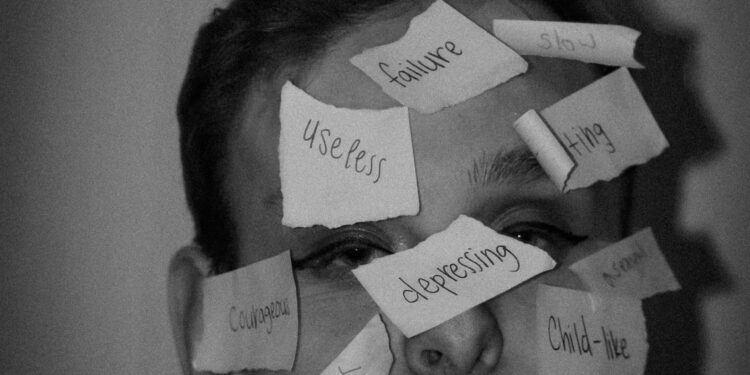
It begins with a swipe. A young person, overwhelmed by school, relationships, or isolation, opens TikTok looking for comfort. Instead, they find confusion, self-diagnosis, and pseudo-psychology masked in pastel fonts and reassuring music.

In what may be one of the most consequential digital developments in modern mental health, platforms like TikTok have become primary sources of information for millions seeking psychological support. Under the hashtag #mentalhealthtips, users can find hundreds of thousands of videos purporting to explain depression, ADHD, anxiety, borderline personality disorder, and more—all often condensed into digestible, 60-second clips.

But according to a recent analysis by the data science firm TTP, over half of the top 100 videos under that very hashtag contain false or misleading information. These include oversimplified symptoms, inaccurate diagnostic criteria, and unvetted “coping strategies” that may, at best, do nothing—or at worst, cause harm.

The Allure of the Quick Fix: Why TikTok Became a Digital Therapist

Why are so many users turning to TikTok for answers about their mental health? The platform’s algorithm is uniquely tailored to personal preference and emotional resonance. TikTok delivers content that “feels” right—even when it isn’t. It encourages the kind of personal storytelling and vulnerability that make mental health videos feel intimate and credible.

According to Pew Research, nearly 95% of U.S. teens use YouTube and TikTok, and a significant portion use it for self-education on sensitive topics like anxiety and depression. In the absence of affordable, accessible, and timely mental health services, TikTok becomes the proxy therapist.

But unlike real therapists, TikTok influencers are not always bound by evidence, ethical standards, or licensing boards.

The Risks of Misinformation: From Diagnosis to Distortion

One of the most pervasive issues is the trend of “DIY diagnosis.” Influencers list symptoms that are often cherry-picked or exaggerated for engagement. “If you hate loud noises and overthink every social interaction, you might have autism,” one trending video claims. Others present symptoms of ADHD, anxiety, or depression in ways that flatten complex clinical profiles into vague behavioral traits.

Dr. Miriam Cross, a clinical psychologist at Columbia University Medical Center, warns that such trends can lead to a dangerous paradox: “People either self-diagnose and avoid treatment, or they assume they have a condition based on incomplete information and pursue treatments that may not be appropriate.”

Even more troubling is the platform’s role in exacerbating stigma. Misrepresentation of disorders like borderline personality disorder or dissociative identity disorder often leads to sensationalized portrayals that reinforce misunderstanding rather than empathy.

TikTok’s Response: Collaborations, Not Censorship

To its credit, TikTok has begun partnering with reputable health organizations, including the National Alliance on Mental Illness (NAMI) and Crisis Text Line, to insert prompts, resources, and content moderation measures. Users searching mental health terms may encounter curated guides or referrals to professional help.

Still, critics argue that these efforts fall short. As long as algorithmic engagement rewards sensationalism and oversimplification, the incentive structure is misaligned with public health.

Content Moderation or Content Education?

What, then, is the path forward? Banning content outright may backfire, further driving misinformation to fringe platforms. Instead, some experts advocate for a layered strategy:

  1. Platform-Level Interventions – Enhance algorithms to deprioritize content flagged by professionals as misleading or dangerous, while promoting verified creators and licensed professionals.
  2. Educational Partnerships – Integrate dynamic educational overlays or real-time myth-busting with content that uses popular hashtags like #mentalhealthtips.
  3. Creator Accountability – Encourage health influencers to disclose credentials or cite evidence-based sources, akin to how financial content is increasingly regulated for accuracy.
  4. Public Literacy Campaigns – Launch media literacy initiatives that target young users, helping them critically assess digital health content.

These interventions need not be adversarial. They can, and must, coexist with TikTok’s core identity: a place of storytelling, creativity, and self-expression. But if that creativity leads to harm, the platform—and its users—must confront that consequence.

The Broader Implications: Misinformation as a Mental Health Barrier

This moment is about more than TikTok. It reflects a deeper structural issue: the mismatch between the demand for mental health support and the supply of credible, accessible care. TikTok misinformation flourishes not because people are gullible, but because they are underserved.

A 2022 report from Mental Health America found that over 50 million Americans experience a mental illness, yet more than half do not receive treatment. For young people, the disparity is even worse.

Until access improves—and digital literacy becomes embedded into educational curricula—we will continue to see platforms fill the vacuum left by systemic gaps.

Conclusion: The Double-Edged Algorithm

TikTok has the power to democratize conversations around mental health. But that power is double-edged. What starts as validation can become confusion. What seems like advocacy can become exploitation. And what feels like therapy can, ultimately, be a performance.

If we are to trust our digital spaces with our mental well-being, then platforms, providers, and the public must demand more transparency, accountability, and integrity. Mental health deserves more than 60 seconds.


ShareTweet
Edebwe Thomas

Edebwe Thomas

Edebwe Thomas explores the dynamic relationship between science, health, and society through insightful, accessible storytelling.

Leave a Reply Cancel reply

Your email address will not be published. Required fields are marked *

Videos

summary

An in-depth exploration of drug pricing, including key databases like NADAC, WAC, and ASP, and how they influence the pharmaceutical supply chain, policy, and patient advocacy. The episode also introduces MedPricer's innovative pricing intelligence platform, offering valuable insights for healthcare professionals, policymakers, and patients.

Chapters

00:00 Understanding Drug Pricing Dynamics
03:52 Exploring the Drug Pricing Database
10:07 Patient Advocacy and Drug Pricing
13:56 Market Intelligence in Drug Pricing
How NADAC, WAC, and ASP Shape Drug CostsDaily Remedy
YouTube Video X-Tfwy7XKEg
Subscribe

Policy Shift in Peptide Regulation

Clinical Reads

FDA Evaluation of Certain Bulk Drug Substances in Compounding: Clinical Interpretation

FDA Evaluation of Certain Bulk Drug Substances in Compounding: Clinical Interpretation

by Daily Remedy
April 19, 2026
0

Clinicians increasingly encounter patients using or requesting peptide-based therapies sourced through compounding pharmacies. The U.S. Food and Drug Administration has identified a subset of bulk drug substances, including certain peptides, that may present significant safety risks when used in compounded formulations. The clinical question is whether these regulatory signals reflect meaningful patient-level risk and how they should influence prescribing behavior. This matters because compounded peptides often sit outside traditional approval pathways, creating uncertainty around quality, dosing consistency, and safety. Understanding...

Read more

Join Our Newsletter!

Twitter Updates

Tweets by TheDailyRemedy

Popular

  • The IRA’s Drug Negotiation Mechanism Meets the Rebate Industrial Complex

    The IRA’s Drug Negotiation Mechanism Meets the Rebate Industrial Complex

    0 shares
    Share 0 Tweet 0
  • One Dose, Many Decades

    0 shares
    Share 0 Tweet 0
  • The Price Is Right, Theoretically: What Turquoise Health Actually Reveals About Hospital Markets

    0 shares
    Share 0 Tweet 0
  • Two Platforms, Two Theories of Change in Hospital Pricing

    0 shares
    Share 0 Tweet 0
  • Will Drug Prices Actually Fall?

    0 shares
    Share 0 Tweet 0
  • 628 Followers

Daily Remedy

Daily Remedy offers the best in healthcare information and healthcare editorial content. We take pride in consistently delivering only the highest quality of insight and analysis to ensure our audience is well-informed about current healthcare topics - beyond the traditional headlines.

Daily Remedy website services, content, and products are for informational purposes only. We do not provide medical advice, diagnosis, or treatment. All rights reserved.

Important Links

  • Support Us
  • About Us
  • Contact us
  • Privacy Policy
  • Terms and Conditions

Join Our Newsletter!

  • Survey
  • Podcast
  • About Us
  • Contact us

© 2026 Daily Remedy

No Result
View All Result
  • Home
  • Articles
  • Podcasts
  • Surveys
  • Courses
  • About Us
  • Contact us
  • Support Us
  • Official Learner

© 2026 Daily Remedy
