












Saturday, February 21, 2026
ISSN 2765-8767
  • Survey
  • Podcast
  • Write for Us
  • My Account
  • Log In
Daily Remedy
  • Home
  • Articles
  • Podcasts
    Debunking Myths About GLP-1 Medications

    Debunking Myths About GLP-1 Medications

    February 16, 2026
    The Future of LLMs in Healthcare

    The Future of LLMs in Healthcare

    January 26, 2026
    The Future of Healthcare Consumerism

    The Future of Healthcare Consumerism

    January 22, 2026
    Your Body, Your Health Care: A Conversation with Dr. Jeffrey Singer

    Your Body, Your Health Care: A Conversation with Dr. Jeffrey Singer

    July 1, 2025

    The cost structure of hospitals nearly doubles

    July 1, 2025
    Navigating the Medical Licensing Maze

    The Fight Against Healthcare Fraud: Dr. Rafai’s Story

    April 8, 2025
  • Surveys

    Surveys

    How Confident Are You in RFK Jr.’s Health Leadership?

    How Confident Are You in RFK Jr.’s Health Leadership?

    February 16, 2026
    AI in Healthcare Decision-Making

    AI in Healthcare Decision-Making

    February 1, 2026

    Survey Results

    Can you tell when your provider does not trust you?

    Can you tell when your provider does not trust you?

    January 18, 2026
    Do you believe national polls on health issues are accurate

    National health polls: trust in healthcare system accuracy?

    May 8, 2024
    Which health policy issues matter the most to Republican voters in the primaries?

    Which health policy issues matter the most to Republican voters in the primaries?

    May 14, 2024
    How strongly do you believe that you can tell when your provider does not trust you?

    How strongly do you believe that you can tell when your provider does not trust you?

    May 7, 2024
  • Courses
  • About Us
  • Contact us
  • Support Us
  • Official Learner
No Result
View All Result
  • Home
  • Articles
  • Podcasts
    Debunking Myths About GLP-1 Medications

    Debunking Myths About GLP-1 Medications

    February 16, 2026
    The Future of LLMs in Healthcare

    The Future of LLMs in Healthcare

    January 26, 2026
    The Future of Healthcare Consumerism

    The Future of Healthcare Consumerism

    January 22, 2026
    Your Body, Your Health Care: A Conversation with Dr. Jeffrey Singer

    Your Body, Your Health Care: A Conversation with Dr. Jeffrey Singer

    July 1, 2025

    The cost structure of hospitals nearly doubles

    July 1, 2025
    Navigating the Medical Licensing Maze

    The Fight Against Healthcare Fraud: Dr. Rafai’s Story

    April 8, 2025
  • Surveys

    Surveys

    How Confident Are You in RFK Jr.’s Health Leadership?

    How Confident Are You in RFK Jr.’s Health Leadership?

    February 16, 2026
    AI in Healthcare Decision-Making

    AI in Healthcare Decision-Making

    February 1, 2026

    Survey Results

    Can you tell when your provider does not trust you?

    Can you tell when your provider does not trust you?

    January 18, 2026
    Do you believe national polls on health issues are accurate

    National health polls: trust in healthcare system accuracy?

    May 8, 2024
    Which health policy issues matter the most to Republican voters in the primaries?

    Which health policy issues matter the most to Republican voters in the primaries?

    May 14, 2024
    How strongly do you believe that you can tell when your provider does not trust you?

    How strongly do you believe that you can tell when your provider does not trust you?

    May 7, 2024
  • Courses
  • About Us
  • Contact us
  • Support Us
  • Official Learner
No Result
View All Result
Daily Remedy
No Result
View All Result
Home Perspectives

From Healthy Births to Sustainable Management

Daily Remedy by Daily Remedy
April 3, 2024
in Perspectives
0
From Healthy Births to Sustainable Management

5 essential reads on the fascinating and complex vagina
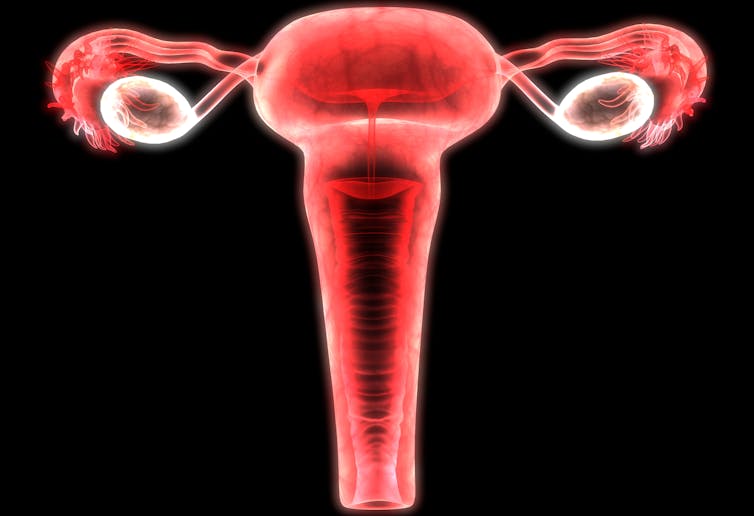
vagina diagram
The vagina is a muscular tube that can maintain itself and be beneficial to babies.
magicmine/iStock via Getty Images Plus

Leah Samuel, The Conversation

As the most common route for arriving into the world, the human vagina has, of course, existed for as long as there have been people. Despite the name, however, it’s not so much a “sheath” – the Latin meaning of “vagina” – as it is a muscular tube of varying shapes and lengths, contained unseen within the pelvis. The vagina is actually a hardworking organ in its own right, with its own ecosystem.

So The Conversation presents a selection of stories from the archive that offer insights into the once mysterious, often maligned and still misunderstood vagina.

1. Passing through a vagina can make you healthier

If you’re a baby, that is. Newborns traveling the birth canal to their parents’ homes instead of the hospital are exposed to more bacteria in the vagina, which could be beneficial to them, suggested Joan Combellick, an assistant clinical professor of midwifery at Yale.

Hospital sterility measures eliminate a lot of the potentially helpful bacteria, Combellick suggested in her research, which showed that babies born at home have more opportunity for exposure to their moms’ vaginal microbiomes.

2. Other species’ vaginas can be just as beneficial

Researchers have observed that the offspring of mice and other animals derive other health benefits from passing through the vagina. Helen Vuong, a postdoctoral scholar studying integrative biology and physiology at UCLA, shared her research on maternal microbiology.

“Specifically, my study identified how a mouse mother’s microbiome influences the formation of axons – long nerve fibers that project from a neuron – in her offspring, affecting its ability to sense its environment,” Vuong wrote. Axons are important for relaying sensory information, such as sounds and scents, allowing the mice to hear a potential predator approaching or to smell when food is nearby. The study does not indicate whether humans benefit in the same way.
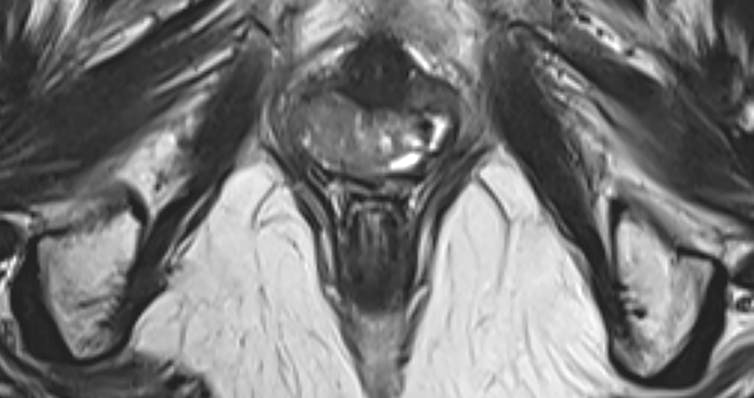
Black and white magnetic resonance images showing the female reproductive system with the vagina at center.
This MRI of the vagina shows it connected to the uterus via the cervix. The vagina aids the uterus in menstruation and likely gets assistance in providing sexual pleasure because of nerves in the cervix.
Paul Biris/Moment via Getty Images

3. Vaginal role in menstruation can be managed sustainably

When the body finds that there’s no baby on board this month, that in-case-of-pregnancy uterine buildup of blood and other material isn’t needed after all. At that point the uterus tosses it all, quite literally, down the chute. Assisting with menstruation is one of the vagina’s messier duties. Containing the mess, however, doesn’t have to take a toll on the environment, wrote Susan Powers, a professor of sustainable environmental systems at Clarkson University.

Using numbers from a media survey, Powers determined the average woman responding to the survey uses 240 tampons or maxi pads in a year, which is only 10% of a menstrual cup’s 10-year lifespan. In addition to being reusable, however, the cup also has one-tenth of the overall manufacturing and disposal impact of tampons or pads.

4. Vaginas don’t work alone

At the internal end of the vagina is the cervix, which could be a major source of vaginal sexual pleasure, wrote Rutgers University-Newark psychologist Barry Komisaruk. He and psychobiology professor María Cruz Rodríguez del Cerro highlighted the 1953 book “Sexual Behavior in the Human Female” by Alfred Kinsey.

Komisaruk and del Cerro pointed to one of the Kinsey researchers’ lesser-known findings: When investigators stimulated women’s cervixes with “distinct pressure” using “an object larger than a probe,” 84% of those women said they could feel it. The scholars suggested that nerve connections in the cervix and vagina could be the reason that women whose cervixes had been surgically altered or removed reported losing erotic feeling in their vaginas.

5. ‘Vagina’ is not the final word on gender identity

Lots of people have vaginas. But not all vagina owners think of themselves as girls, women or even female, according to Boston University professor of medicine Carl Streed and Harvard University assistant professor of gynecology Frances Grimstad.

They wrote that some people born with vaginas also have testes, or that they “produce significant amounts of testosterone,” the hormone associated with male sexual development. Such cases, the professors wrote, suggest that sex designation exists on a spectrum and that binary categories of male and female are “incomplete and inaccurate” for determining gender.
So, a vagina alone can’t determine who’s a woman. Some women don’t have vaginas, and some people who do aren’t women.

Editor’s note: This story is a roundup of articles from The Conversation’s archives.

Leah Samuel, Health + Equity Editor, The Conversation

This article is republished from The Conversation under a Creative Commons license. Read the original article.


ShareTweet
Daily Remedy

Daily Remedy

Dr. Jay K Joshi serves as the editor-in-chief of Daily Remedy. He is a serial entrepreneur and sought after thought-leader for matters related to healthcare innovation and medical jurisprudence. He has published articles on a variety of healthcare topics in both peer-reviewed journals and trade publications. His legal writings include amicus curiae briefs prepared for prominent federal healthcare cases.

Leave a Reply Cancel reply

Your email address will not be published. Required fields are marked *

Videos

This conversation focuses on debunking myths surrounding GLP-1 medications, particularly the misinformation about their association with pancreatic cancer. The speaker emphasizes the importance of understanding clinical study designs, especially the distinction between observational studies and randomized controlled trials. The discussion highlights the need for patients to critically evaluate the sources of information regarding medication side effects and to empower themselves in their healthcare decisions.

Takeaways
GLP-1 medications are not linked to pancreatic cancer.
Peer-reviewed studies debunk misinformation about GLP-1s.
Anecdotal evidence is not reliable for general conclusions.
Observational studies have limitations in generalizability.
Understanding study design is crucial for evaluating claims.
Symptoms should be discussed in the context of clinical conditions.
Not all side effects reported are relevant to every patient.
Observational studies can provide valuable insights but are context-specific.
Patients should critically assess the relevance of studies to their own experiences.
Engagement in discussions about specific studies can enhance understanding

Chapters
00:00
Debunking GLP-1 Medication Myths
02:56
Understanding Clinical Study Designs
05:54
The Role of Observational Studies in Healthcare
Debunking Myths About GLP-1 Medications
YouTube Video DM9Do_V6_sU
Subscribe

2027 Medicare Advantage & Part D Advance Notice

Clinical Reads

BIIB080 in Mild Alzheimer’s Disease: What a Phase 1b Exploratory Clinical Analysis Can—and Cannot—Tell Us

BIIB080 in Mild Alzheimer’s Disease: What a Phase 1b Exploratory Clinical Analysis Can—and Cannot—Tell Us

by Daily Remedy
February 15, 2026
0

Can lowering tau biology translate into a clinically meaningful slowing of decline in people with early symptomatic Alzheimer’s disease? That is the practical question behind BIIB080, an intrathecal antisense therapy designed to reduce production of tau protein by targeting the tau gene transcript. In a phase 1b program originally designed for safety and dosing, investigators later examined cognitive, functional, and global outcomes as exploratory endpoints. The clinical question matters because current disease-modifying options primarily target amyloid, while tau pathology tracks...

Read more

Join Our Newsletter!

Twitter Updates

Tweets by TheDailyRemedy

Popular

  • The Prevention Gap in Dementia Care

    The Prevention Gap in Dementia Care

    0 shares
    Share 0 Tweet 0
  • Healthcare in Space

    1 shares
    Share 0 Tweet 0
  • Healthcare Natural Rights

    0 shares
    Share 0 Tweet 0
  • Heat Safety Tips Every Pregnant Mother Should Know

    0 shares
    Share 0 Tweet 0
  • Tapping Into the Mind Body Connection

    0 shares
    Share 0 Tweet 0
  • 628 Followers

Daily Remedy

Daily Remedy offers the best in healthcare information and healthcare editorial content. We take pride in consistently delivering only the highest quality of insight and analysis to ensure our audience is well-informed about current healthcare topics - beyond the traditional headlines.

Daily Remedy website services, content, and products are for informational purposes only. We do not provide medical advice, diagnosis, or treatment. All rights reserved.

Important Links

  • Support Us
  • About Us
  • Contact us
  • Privacy Policy
  • Terms and Conditions

Join Our Newsletter!

  • Survey
  • Podcast
  • About Us
  • Contact us

© 2026 Daily Remedy

No Result
View All Result
  • Home
  • Articles
  • Podcasts
  • Surveys
  • Courses
  • About Us
  • Contact us
  • Support Us
  • Official Learner

© 2026 Daily Remedy
