













Monday, March 23, 2026
ISSN 2765-8767
  • Survey
  • Podcast
  • Write for Us
  • My Account
  • Log In
Daily Remedy
  • Home
  • Articles
  • Podcasts
    The Hidden Costs Employers Don’t See in Traditional Health Plans

    The Hidden Costs Employers Don’t See in Traditional Health Plans

    March 22, 2026
    The Impact of COVID-19 on Patient Trust

    The Impact of COVID-19 on Patient Trust

    March 3, 2026
    Debunking Myths About GLP-1 Medications

    Debunking Myths About GLP-1 Medications

    February 16, 2026
    The Future of LLMs in Healthcare

    The Future of LLMs in Healthcare

    January 26, 2026
    The Future of Healthcare Consumerism

    The Future of Healthcare Consumerism

    January 22, 2026
    Your Body, Your Health Care: A Conversation with Dr. Jeffrey Singer

    Your Body, Your Health Care: A Conversation with Dr. Jeffrey Singer

    July 1, 2025
  • Surveys

    Surveys

    Public Sentiment on the Future of Peptides and Hormone Therapies in U.S. Medicine

    Public Sentiment on the Future of Peptides and Hormone Therapies in U.S. Medicine

    March 17, 2026
    Perceptions of Viral Wellness Practices on Social Media: A Likert-Scale Survey for Informed Readers

    Perceptions of Viral Wellness Practices on Social Media: A Likert-Scale Survey for Informed Readers

    March 1, 2026

    Survey Results

    Can you tell when your provider does not trust you?

    Can you tell when your provider does not trust you?

    January 18, 2026
    Do you believe national polls on health issues are accurate

    National health polls: trust in healthcare system accuracy?

    May 8, 2024
    Which health policy issues matter the most to Republican voters in the primaries?

    Which health policy issues matter the most to Republican voters in the primaries?

    May 14, 2024
    How strongly do you believe that you can tell when your provider does not trust you?

    How strongly do you believe that you can tell when your provider does not trust you?

    May 7, 2024
  • Courses
  • About Us
  • Contact us
  • Support Us
  • Official Learner
No Result
View All Result
  • Home
  • Articles
  • Podcasts
    The Hidden Costs Employers Don’t See in Traditional Health Plans

    The Hidden Costs Employers Don’t See in Traditional Health Plans

    March 22, 2026
    The Impact of COVID-19 on Patient Trust

    The Impact of COVID-19 on Patient Trust

    March 3, 2026
    Debunking Myths About GLP-1 Medications

    Debunking Myths About GLP-1 Medications

    February 16, 2026
    The Future of LLMs in Healthcare

    The Future of LLMs in Healthcare

    January 26, 2026
    The Future of Healthcare Consumerism

    The Future of Healthcare Consumerism

    January 22, 2026
    Your Body, Your Health Care: A Conversation with Dr. Jeffrey Singer

    Your Body, Your Health Care: A Conversation with Dr. Jeffrey Singer

    July 1, 2025
  • Surveys

    Surveys

    Public Sentiment on the Future of Peptides and Hormone Therapies in U.S. Medicine

    Public Sentiment on the Future of Peptides and Hormone Therapies in U.S. Medicine

    March 17, 2026
    Perceptions of Viral Wellness Practices on Social Media: A Likert-Scale Survey for Informed Readers

    Perceptions of Viral Wellness Practices on Social Media: A Likert-Scale Survey for Informed Readers

    March 1, 2026

    Survey Results

    Can you tell when your provider does not trust you?

    Can you tell when your provider does not trust you?

    January 18, 2026
    Do you believe national polls on health issues are accurate

    National health polls: trust in healthcare system accuracy?

    May 8, 2024
    Which health policy issues matter the most to Republican voters in the primaries?

    Which health policy issues matter the most to Republican voters in the primaries?

    May 14, 2024
    How strongly do you believe that you can tell when your provider does not trust you?

    How strongly do you believe that you can tell when your provider does not trust you?

    May 7, 2024
  • Courses
  • About Us
  • Contact us
  • Support Us
  • Official Learner
No Result
View All Result
Daily Remedy
No Result
View All Result
Home Perspectives

Do You Need a Second Booster Shot?

The Conversation by The Conversation
April 3, 2024
in Perspectives
0
Do You Need a Second Booster Shot

Do you need a second booster shot? An epidemiologist scoured the latest research and has some answers
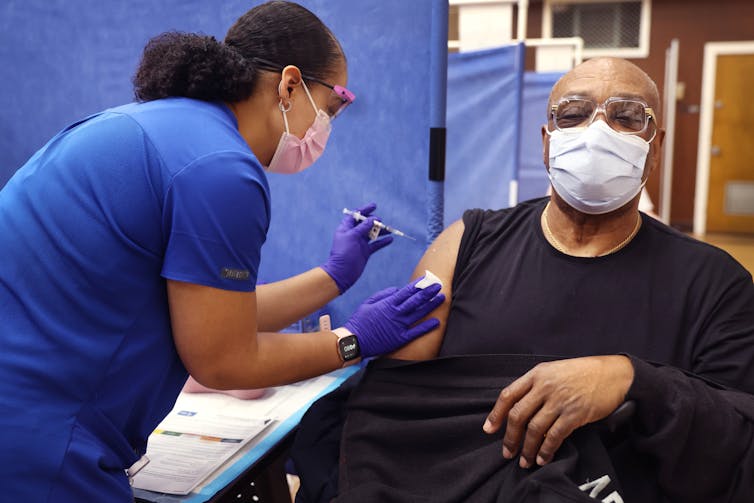
Man taking vaccination Img 2
The CDC recommends the second booster for those over 50 who received their initial booster shot at least four months earlier.
Scott Olson via Getty Images News

Katelyn Jetelina, University of Texas Health Science Center at Houston

In late March 2022, the U.S. Food and Drug Administration authorized a second booster shot of COVID-19 vaccines for vulnerable populations in the U.S., a move that was soon after endorsed by the Centers for Disease Control and Prevention. People ages 50 years and older and certain immunocompromised individuals who are at higher risk for severe disease, hospitalization and death are eligible four months after receiving the initial booster shot.

A second booster shot is equivalent to a fourth dose for people who received a Pfizer-BioNTech or Moderna mRNA series or a third dose for those who received the single-shot Johnson & Johnson vaccine.

In Israel, people in these same vulnerable categories began receiving fourth doses in January 2022. The U.K. recently started administering a fourth dose for people 75 years and older and coined it a “spring booster.” In Germany, those over 60 years old are now eligible for a fourth shot of the mRNA series.

I am an epidemiologist at the University of Texas Health Science Center School of Public Health and founder and author of Your Local Epidemiologist, a newsletter translating the latest public health science for everyday use.

The latest recommendations have left many wondering about the importance of boosters for protection against COVID-19. Does the third shot wane over time? Is a fourth dose necessary? What if you’ve had a previous infection?

After reviewing the mounting body of research on how the immune system shifts over time following each dose, it is clear that another booster for vulnerable populations has meaningful benefit with very little risk.

The FDA’s authorization provides the option of a second booster shot for vulnerable populations, but the agency stopped short of making it a broad recommendation.

Vaccine effectiveness following the first booster dose

There is clear evidence that a third dose of the mRNA series – or the first booster dose – was and still is critical for ensuring a robust immune response against the omicron variant for all age groups. This is in part because the immune response wanes over time and also in part because omicron has proved to be partially effective at evading immunity from the existing COVID-19 vaccines and from prior infections.

But then the question becomes: How well is immunity from the first booster holding up over time?

The best real-time data to follow on vaccine effectiveness over time is in the U.K. The U.K. Health Security Agency currently has follow-up data for 15 weeks after the third dose, or first booster shot. In its latest report, the effectiveness of vaccines against infection wanes significantly after a third dose. In the U.K. report, vaccine effectiveness against hospitalization is holding up much better compared to effectiveness against infection. But even protection against hospitalization is slightly decreasing over time. While this data is insightful, 15 weeks of follow-up data isn’t very helpful in the U.S. because many Americans got their third dose up to 24 weeks ago.

A recent study assessed the durability of a Moderna third dose after six months. Researchers found waning levels of neutralizing antibodies six months after the booster. The CDC also found significant waning protection against emergency department and urgent care visits five months after the first booster. Vaccine effectiveness against hospitalization decreased a little but largely held up five months after the booster.

The studies mentioned above pooled all age groups. But researchers know that older adults don’t mount as durable an immune response as younger people. This explains why breakthrough infections have occurred at a much higher rate among people ages 65 and up. A recent study in the Lancet assessed the durability of a third dose among people ages 76 to 96 years old. Researchers found that the third dose improved neutralizing antibodies, but in the face of omicron, antibodies still dropped substantially following a booster.

President Biden gets his second booster shot on camera, and Dr. Anthony Fauci discusses the benefits of a booster.

Data on the second booster dose/fourth shot

Now that Israel has been delivering a fourth dose for several months, researchers have some data to rely on to assess its effectiveness. There are three studies that have been released so far, one which has not yet been peer-reviewed.

In one study published in the New England Journal of Medicine, scientists assessed the rates of infection and severe illness after a fourth dose – or second booster – among more than a million people ages 60 and older in Israel. The researchers found that after a fourth dose, the rate of COVID-19 infection was two times lower than after a third dose. However, this protection quickly waned after six weeks. They also found the rate of severe disease was four times lower compared to those who received only three doses. It’s important to note, though, that hospitalizations among both groups were very low.

Importantly, another study assessed the effectiveness of a fourth dose among younger health care workers in Israel. The results confirmed that antibody levels dropped significantly five months after the third dose. Unfortunately, the effectiveness of the fourth dose was no different from the effectiveness of a third dose in this population of younger health care workers. In other words, there may not be meaningful benefit of a second booster of the same formula for young, healthy populations.

Researchers carried out a third study, one that has not yet been peer-reviewed, at a large health care system in Israel among people aged 60 to 100 years. Among 563,465 patients in the health care system, 58% received a second booster. During the study period, 92 people who received the second booster died compared to 232 people who had only the first booster. In other words, the second booster equated to a 78% reduction in death compared to the first booster alone.

What if you had a COVID-19 infection with omicron?

The combination of being both vaccinated and having experienced a COVID-19 infection is called “hybrid immunity.” More than 35 studies have shown that hybrid immunity offers complimentary and broad protection. This is because immunity from the vaccines targets the spike protein – after which the COVID-19 vaccines were designed – and infection-induced immunity aims more broadly at the whole virus.

[Over 150,000 readers rely on The Conversation’s newsletters to understand the world. Sign up today.]

So, it is not unreasonable to skip a second booster with a confirmed infection of omicron. This doesn’t mean that people should purposefully get SARS-CoV-2, the virus that causes COVID-19. But it is clear that hybrid immunity is a viable path to protection.

In short, there is strong evidence that a fourth dose – or second booster – provides meaningful protection among vulnerable populations, including people over 60. So another booster is reasonable for some groups. And while a fourth dose may benefit a select group, it is far more important that people receive their first, second and third doses.

Katelyn Jetelina, Assistant Professor of Epidemiology, University of Texas Health Science Center at Houston

This article is republished from The Conversation under a Creative Commons license. Read the original article.




ShareTweet
The Conversation

The Conversation

Leave a Reply Cancel reply

Your email address will not be published. Required fields are marked *

Videos

summary

This episode explores deceptive pricing strategies in the GLP-1 medication market, highlighting how healthcare consumerism influences patient decisions and how to recognize and protect against misleading practices.

 key  topics

Deceptive pricing strategies in healthcare
The role of brand perception and pricing manipulation
The concept of drip pricing and hidden costs
The rise of healthcare consumerism and patient agency
Strategies for patients to identify and avoid deceptive practices

Chapters

00:00 The Evolution of the GLP-1 Telemedicine Market
01:12 How Pricing Is Obscured and Perceived Discounts Are Created
02:11 TrumpRx: Coupon Aggregator or Discount Store?
03:12 Why Price Deception Thrives in Healthcare
04:12 The Membership Fee Illusion and Hidden Costs
05:10 Brand Recognition and Drip Pricing Strategies
06:17 The Impact of Brand and Anchor Pricing on Perceived Value
07:16 The Role of Price Drip Strategies in Healthcare Pricing
08:15 The Rise of Healthcare Consumerism and Patient Agency
09:14 How to Protect Yourself from Deceptive Pricing Practices
10:09 Conclusion: Empowering Patients in a Complex Pricing Landscape
Unmasking Deceptive Pricing in Healthcare: What Patients Need to Know
YouTube Video zZgo1nLZVrY
Subscribe

Policy Shift in Peptide Regulation

Clinical Reads

GLP-1 Drugs Have Moved Past Weight Loss. Medicine Has Not Fully Caught Up.

Glucagon-Like Peptide–Based Therapies and Longevity: Clinical Implications from Emerging Evidence

by Daily Remedy
March 1, 2026
0

Glucagon-like peptide–based therapies are increasingly used for weight management and glycemic control, but their potential impact on long-term survival remains uncertain. The clinical question addressed in this report is whether treatment with glucagon-like peptide receptor agonists is associated with reductions in all-cause mortality and age-related morbidity beyond their established metabolic effects. This question matters because these agents are now prescribed across broad patient populations, including individuals without diabetes, and long-term exposure may influence cardiovascular, oncologic, and neurodegenerative outcomes. Understanding whether...

Read more

Join Our Newsletter!

Twitter Updates

Tweets by TheDailyRemedy

Popular

  • Retatrutide and the Acceleration of Metabolic Medicine

    Retatrutide and the Acceleration of Metabolic Medicine

    0 shares
    Share 0 Tweet 0
  • The Grey Market of Weight Loss: How Compounded GLP-1 Medications Continue Despite FDA Crackdowns

    0 shares
    Share 0 Tweet 0
  • A Generation in Distress: New CDC Findings Reveal Worsening Mental Health Among Teen Girls

    0 shares
    Share 0 Tweet 0
  • Healthcare Laws are Oaths

    0 shares
    Share 0 Tweet 0
  • From Patient Advocate to Subject Matter Expert

    2 shares
    Share 0 Tweet 0
  • 628 Followers

Daily Remedy

Daily Remedy offers the best in healthcare information and healthcare editorial content. We take pride in consistently delivering only the highest quality of insight and analysis to ensure our audience is well-informed about current healthcare topics - beyond the traditional headlines.

Daily Remedy website services, content, and products are for informational purposes only. We do not provide medical advice, diagnosis, or treatment. All rights reserved.

Important Links

  • Support Us
  • About Us
  • Contact us
  • Privacy Policy
  • Terms and Conditions

Join Our Newsletter!

  • Survey
  • Podcast
  • About Us
  • Contact us

© 2026 Daily Remedy

No Result
View All Result
  • Home
  • Articles
  • Podcasts
  • Surveys
  • Courses
  • About Us
  • Contact us
  • Support Us
  • Official Learner

© 2026 Daily Remedy