














Wednesday, April 15, 2026
ISSN 2765-8767
  • Survey
  • Podcast
  • Write for Us
  • My Account
  • Log In
Daily Remedy
  • Home
  • Articles
  • Podcasts
    The Hidden Costs Employers Don’t See in Traditional Health Plans

    The Hidden Costs Employers Don’t See in Traditional Health Plans

    March 22, 2026
    The Impact of COVID-19 on Patient Trust

    The Impact of COVID-19 on Patient Trust

    March 3, 2026
    Debunking Myths About GLP-1 Medications

    Debunking Myths About GLP-1 Medications

    February 16, 2026
    The Future of LLMs in Healthcare

    The Future of LLMs in Healthcare

    January 26, 2026
    The Future of Healthcare Consumerism

    The Future of Healthcare Consumerism

    January 22, 2026
    Your Body, Your Health Care: A Conversation with Dr. Jeffrey Singer

    Your Body, Your Health Care: A Conversation with Dr. Jeffrey Singer

    July 1, 2025
  • Surveys

    Surveys

    Understanding of Clinical Evidence in Peptide and Hormone Use

    Understanding of Clinical Evidence in Peptide and Hormone Use

    March 30, 2026
    Public Sentiment on the Future of Peptides and Hormone Therapies in U.S. Medicine

    Public Sentiment on the Future of Peptides and Hormone Therapies in U.S. Medicine

    March 17, 2026

    Survey Results

    Can you tell when your provider does not trust you?

    Can you tell when your provider does not trust you?

    January 18, 2026
    Do you believe national polls on health issues are accurate

    National health polls: trust in healthcare system accuracy?

    May 8, 2024
    Which health policy issues matter the most to Republican voters in the primaries?

    Which health policy issues matter the most to Republican voters in the primaries?

    May 14, 2024
    How strongly do you believe that you can tell when your provider does not trust you?

    How strongly do you believe that you can tell when your provider does not trust you?

    May 7, 2024
  • Courses
  • About Us
  • Contact us
  • Support Us
  • Official Learner
No Result
View All Result
  • Home
  • Articles
  • Podcasts
    The Hidden Costs Employers Don’t See in Traditional Health Plans

    The Hidden Costs Employers Don’t See in Traditional Health Plans

    March 22, 2026
    The Impact of COVID-19 on Patient Trust

    The Impact of COVID-19 on Patient Trust

    March 3, 2026
    Debunking Myths About GLP-1 Medications

    Debunking Myths About GLP-1 Medications

    February 16, 2026
    The Future of LLMs in Healthcare

    The Future of LLMs in Healthcare

    January 26, 2026
    The Future of Healthcare Consumerism

    The Future of Healthcare Consumerism

    January 22, 2026
    Your Body, Your Health Care: A Conversation with Dr. Jeffrey Singer

    Your Body, Your Health Care: A Conversation with Dr. Jeffrey Singer

    July 1, 2025
  • Surveys

    Surveys

    Understanding of Clinical Evidence in Peptide and Hormone Use

    Understanding of Clinical Evidence in Peptide and Hormone Use

    March 30, 2026
    Public Sentiment on the Future of Peptides and Hormone Therapies in U.S. Medicine

    Public Sentiment on the Future of Peptides and Hormone Therapies in U.S. Medicine

    March 17, 2026

    Survey Results

    Can you tell when your provider does not trust you?

    Can you tell when your provider does not trust you?

    January 18, 2026
    Do you believe national polls on health issues are accurate

    National health polls: trust in healthcare system accuracy?

    May 8, 2024
    Which health policy issues matter the most to Republican voters in the primaries?

    Which health policy issues matter the most to Republican voters in the primaries?

    May 14, 2024
    How strongly do you believe that you can tell when your provider does not trust you?

    How strongly do you believe that you can tell when your provider does not trust you?

    May 7, 2024
  • Courses
  • About Us
  • Contact us
  • Support Us
  • Official Learner
No Result
View All Result
Daily Remedy
No Result
View All Result
Home Uncertainty & Complexity

Racism Affects Neuroanatomy

Racism promotes health inequities.

Negar Fani by Negar Fani
December 20, 2023
in Uncertainty & Complexity
0
Racism Affects Neuroanatomy

Planet Volumes

The U.S. is in the midst of a racial reckoning. The COVID-19 pandemic, which took a particularly heavy toll on Black communities, turned a harsh spotlight on long-standing health disparities that the public could no longer overlook.

Although the health disparities for Black communities have been well known to researchers for decades, the pandemic put real names and faces to these numbers. Compared with white people, Black people are at much greater risk for developing a range of health problems, including heart disease, diabetes and dementia. For example, Black people are twice as likely as white people to develop Alzheimer’s disease.

A vast and growing body of research shows that racism contributes to systems that promote health inequities. Most recently, our team has also learned that racism directly contributes to these inequities on a neurobiological level.

We are clinical neuroscientists who study the multifaceted ways in which racism affects how our brains develop and function. We use brain imaging to study how trauma such as sexual assault or racial discrimination can cause stress that leads to mental health disorders like depression and post-traumatic stress disorder, or PTSD.

We have studied trauma in the context of a study known as the Grady Trauma Project, which has been running for nearly 20 years. This study is largely focused on the trauma and stress of Black people in the metropolitan Atlanta, Georgia, community.

How discrimination alters the brain

Racial discrimination is commonly experienced through subtle indignities: a woman clutching her purse as a Black man walks by on the sidewalk, a shopkeeper keeping close watch on a Black woman shopping in a clothing store, a comment about a Black employee being a “diversity hire.” These slights are often referred to as microaggressions.

Decades of research has shown that the everyday burden of these race-related threats, slights and exclusions in day-to-day life translates into a real increase in disease risk. But researchers are only beginning to understand how these forms of discrimination affect a person’s biology and overall health.

Our team’s research shows that the everyday burden of racism affects the function and structure of the brain. In turn, these changes play a major role in risk for health problems.

For instance, our studies show that racial discrimination increases the activity of brain regions, such as the prefrontal cortex, that are involved in regulating emotions.

Scientist and technologist view brain images.
Negar Fani and a team member view brain images.
Patrick Heagney

This increased activity in prefrontal brain regions occurs because responding to these types of affronts requires high-effort coping strategies, such as suppressing emotions. People who have experienced more racial discrimination also show more activation in brain regions that enable them to inhibit and suppress anger, shock or sadness so that they can curate a socially acceptable response.

A cost for overcompensating

Despite the fact that high-energy coping allows people to manage a constant barrage of threats, this comes at a cost.

The more brain energy you use to suppress, control or manage your feelings, the more energy you take away from the rest of the body. Over time, and without prolonged periods of rest, relief and restoration, this can contribute to other problems, a process that public health researcher Arline Geronimus termed “weathering.” Having these brain regions in continual overdrive is linked with accelerated biological aging, which can create vulnerability for health problems and early death.

In our research, we have found that this weathering process is evident in the gradual degradation of brain structure, particularly in the heavily myelinated axons of the brain, known as “white matter,” which serve as the brain’s information highways.
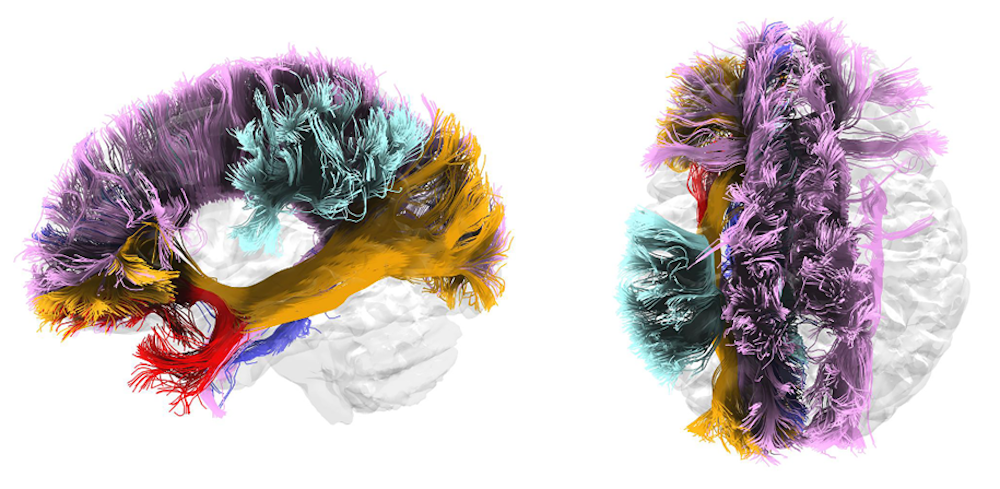
Computer-generated image of white matter tracts in the brain.
Rendering of white matter fibers − shown in color − throughout the brain.
Negar Fani

Myelin is a protective sheath around nerve fibers that allows for improved communication between brain cells. Similar to highways for vehicles, without sufficient maintenance of the myelin, degradation will occur.

Erosion in these brain pathways can affect self-regulation, making a person more vulnerable to developing unhealthy coping strategies for stress, such as emotional eating or substance use. These behaviors, in turn, can increase one’s risk for a wide variety of health problems.

These racism-related changes in the brain, and their direct effects on coping, may help to explain why Black people are twice as likely to develop brain health problems such as Alzheimer’s disease compared with white people.

Recognizing racial gaslighting

In our view, what makes racism particularly insidious and pernicious to the health of Black people is the societal invalidation that accompanies it. This makes racial trauma effectively invisible. Racism, whether it originates from people or from institutional systems, is often rationalized, excused or dismissed.

Such invalidation leads those who experience racism to second-guess themselves: “Am I just being too sensitive?” People who have the temerity to report racist events are often ridiculed or met with skepticism. This extends to academic spheres as well.

This continual questioning and doubting of the circumstances around racist experiences, or racial gaslighting, may be part of what depletes the brain of its resources, causing the weathering that ultimately increases vulnerability to brain health problems.

Interrupting this cycle requires that people learn to identify their biases toward people of color and people in marginalized groups more generally, and to understand how those biases may lead to discriminatory words and behavior. We believe that by finding their blind spots, people can see ways in which their actions and behaviors could be viewed as hurtful, exclusionary or offensive. Through recognition of these experiences as racist, people can become allies rather than skeptics.

Institutions can help to create a culture of healing, validation and support for people of color. A validating, supportive institutional culture may help people of color normalize their reactions to these stressors, in addition to the connection – and restoration – they may find within their communities.

Negar Fani, Associate Professor of Psychiatry and Neuroscience, Emory University and Nathaniel Harnett, Assistant Professor of Psychiatry, Harvard Medical School

This article is republished from The Conversation under a Creative Commons license. Read the original article.


ShareTweet
Negar Fani

Negar Fani

Associate Professor of Psychiatry and Neuroscience, Emory University

Leave a Reply Cancel reply

Your email address will not be published. Required fields are marked *

Videos

Most employers are unknowingly steering their health plans toward higher costs and reduced control — until they understand how fiduciary missteps and anti-competitive contracts bleed their budgets dry. Katie Talento, a recognized health policy leader, reveals how shifting the network paradigm can save millions by emphasizing independent providers, direct contracting, and innovative tiering models.

Grounded in real-world case studies like Harris Rosen’s community-driven initiative, this episode dives deep into practical strategies to realign incentives—focusing on primary care, specialty care, and transparent vendor relationships. You'll discover how traditional carrier networks are often Trojan horses, locking employers into costly, opaque arrangements that undermine fiduciary duties. Katie breaks down simple yet powerful reforms: owning your data, eliminating conflicts of interest, and outlawing anti-competitive contract clauses.

We explore how a post-network framework—where patients are free to choose providers without restrictive network barriers—can massively reduce costs and improve health outcomes. You'll learn why independent, locally owned providers are vital to rebuilding trust, reducing unnecessary procedures, and reinvesting savings into the community. This conversation offers clarity on the unseen legal landmines employers face and actionable ways to craft health plans built on transparency, independence, and aligned incentives.

Perfect for HR pros, benefits advisors, physicians, and employer leaders committed to transforming healthcare from the ground up. If you’re tired of broken healthcare models draining your budget and frustrating your staff, this episode will empower you to take control by understanding and reshaping the very foundations of employer-sponsored health. Discover the blueprint for smarter, fairer, and more sustainable benefits.

Visit katytalento.com or allbetter.health to connect directly and explore how these innovations can work for your organization. Your path toward a healthier, more cost-effective future starts here.

Chapters

00:00 Introduction to Employer-Sponsored Health Plans
02:50 Understanding ERISA and Fiduciary Responsibilities
06:08 The Misalignment of Clinical and Financial Interests
08:54 Enforcement and Legal Implications for Employers
11:49 Redefining Networks: The Post-Network Framework
25:34 Navigating Healthcare Contracts and Cash Payments
27:31 Understanding Employer Health Plan Structures
28:04 The Role of Benefits Advisors in Health Plans
30:45 Governance and Data Ownership in Health Plans
37:05 Case Study: The Rosen Hotels' Health Model
41:33 Incentivizing Healthy Choices in Healthcare
47:22 Empowering Primary Care and Independent Providers
The Hidden Costs Employers Don’t See in Traditional Health Plans
YouTube Video xhks7YbmBoY
Subscribe

Policy Shift in Peptide Regulation

Clinical Reads

Semaglutide and the Expansion Problem: When One Trial Becomes a Platform

Semaglutide and the Expansion Problem: When One Trial Becomes a Platform

by Daily Remedy
March 30, 2026
0

Semaglutide has moved beyond its original indication and now sits at the center of a widening set of clinical questions: cardiovascular risk, kidney disease progression, and even neurodegeneration. The question is no longer whether the drug lowers glucose or reduces weight—it does—but how far those effects extend across systems, and whether evidence from one population can be translated into another without distortion. Large, well-powered trials have produced consistent signals, yet those signals are now being applied in contexts that were...

Read more

Join Our Newsletter!

Twitter Updates

Tweets by TheDailyRemedy

Popular

  • A woman with tied up hair is sitting at a desk and is looking at a computer screen. She is wearing white clothes.

    Common Data Breach Risks in the Healthcare Industry

    0 shares
    Share 0 Tweet 0
  • The Economics of Pollen

    0 shares
    Share 0 Tweet 0
  • Lonely During the Holidays? You’re Not Alone.

    3 shares
    Share 0 Tweet 0
  • Algorithmic Appetite

    0 shares
    Share 0 Tweet 0
  • The Outlier Problem

    0 shares
    Share 0 Tweet 0
  • 628 Followers

Daily Remedy

Daily Remedy offers the best in healthcare information and healthcare editorial content. We take pride in consistently delivering only the highest quality of insight and analysis to ensure our audience is well-informed about current healthcare topics - beyond the traditional headlines.

Daily Remedy website services, content, and products are for informational purposes only. We do not provide medical advice, diagnosis, or treatment. All rights reserved.

Important Links

  • Support Us
  • About Us
  • Contact us
  • Privacy Policy
  • Terms and Conditions

Join Our Newsletter!

  • Survey
  • Podcast
  • About Us
  • Contact us

© 2026 Daily Remedy

No Result
View All Result
  • Home
  • Articles
  • Podcasts
  • Surveys
  • Courses
  • About Us
  • Contact us
  • Support Us
  • Official Learner

© 2026 Daily Remedy