












Sunday, February 22, 2026
ISSN 2765-8767
  • Survey
  • Podcast
  • Write for Us
  • My Account
  • Log In
Daily Remedy
  • Home
  • Articles
  • Podcasts
    Debunking Myths About GLP-1 Medications

    Debunking Myths About GLP-1 Medications

    February 16, 2026
    The Future of LLMs in Healthcare

    The Future of LLMs in Healthcare

    January 26, 2026
    The Future of Healthcare Consumerism

    The Future of Healthcare Consumerism

    January 22, 2026
    Your Body, Your Health Care: A Conversation with Dr. Jeffrey Singer

    Your Body, Your Health Care: A Conversation with Dr. Jeffrey Singer

    July 1, 2025

    The cost structure of hospitals nearly doubles

    July 1, 2025
    Navigating the Medical Licensing Maze

    The Fight Against Healthcare Fraud: Dr. Rafai’s Story

    April 8, 2025
  • Surveys

    Surveys

    How Confident Are You in RFK Jr.’s Health Leadership?

    How Confident Are You in RFK Jr.’s Health Leadership?

    February 16, 2026
    AI in Healthcare Decision-Making

    AI in Healthcare Decision-Making

    February 1, 2026

    Survey Results

    Can you tell when your provider does not trust you?

    Can you tell when your provider does not trust you?

    January 18, 2026
    Do you believe national polls on health issues are accurate

    National health polls: trust in healthcare system accuracy?

    May 8, 2024
    Which health policy issues matter the most to Republican voters in the primaries?

    Which health policy issues matter the most to Republican voters in the primaries?

    May 14, 2024
    How strongly do you believe that you can tell when your provider does not trust you?

    How strongly do you believe that you can tell when your provider does not trust you?

    May 7, 2024
  • Courses
  • About Us
  • Contact us
  • Support Us
  • Official Learner
No Result
View All Result
  • Home
  • Articles
  • Podcasts
    Debunking Myths About GLP-1 Medications

    Debunking Myths About GLP-1 Medications

    February 16, 2026
    The Future of LLMs in Healthcare

    The Future of LLMs in Healthcare

    January 26, 2026
    The Future of Healthcare Consumerism

    The Future of Healthcare Consumerism

    January 22, 2026
    Your Body, Your Health Care: A Conversation with Dr. Jeffrey Singer

    Your Body, Your Health Care: A Conversation with Dr. Jeffrey Singer

    July 1, 2025

    The cost structure of hospitals nearly doubles

    July 1, 2025
    Navigating the Medical Licensing Maze

    The Fight Against Healthcare Fraud: Dr. Rafai’s Story

    April 8, 2025
  • Surveys

    Surveys

    How Confident Are You in RFK Jr.’s Health Leadership?

    How Confident Are You in RFK Jr.’s Health Leadership?

    February 16, 2026
    AI in Healthcare Decision-Making

    AI in Healthcare Decision-Making

    February 1, 2026

    Survey Results

    Can you tell when your provider does not trust you?

    Can you tell when your provider does not trust you?

    January 18, 2026
    Do you believe national polls on health issues are accurate

    National health polls: trust in healthcare system accuracy?

    May 8, 2024
    Which health policy issues matter the most to Republican voters in the primaries?

    Which health policy issues matter the most to Republican voters in the primaries?

    May 14, 2024
    How strongly do you believe that you can tell when your provider does not trust you?

    How strongly do you believe that you can tell when your provider does not trust you?

    May 7, 2024
  • Courses
  • About Us
  • Contact us
  • Support Us
  • Official Learner
No Result
View All Result
Daily Remedy
No Result
View All Result
Home Perspectives

Abortion Pills are Just as Safe to Prescribe Online as After an In-person Exam

The Conversation by The Conversation
April 3, 2024
in Perspectives
0
Abortion Pills are Just as Safe to Prescribe Online as After an In-person Exam

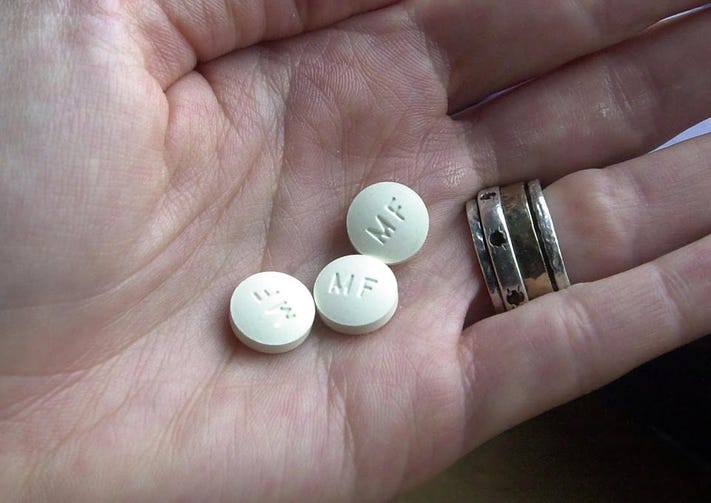
Abortion pills are just as safe to prescribe based on a patient’s medical history as after an in-person exam, new research finds

Removing ultrasound and pelvic exam requirements for medication abortion could help expand access to care.
Oleg Rebrik/iStock via Getty Images Plus

Ushma Upadhyay, University of California, San Francisco

For many people, accessing abortion care can be a major challenge. Abortion services are usually only available in certain clinics with specialized equipment like ultrasounds, often requiring long-distance travel to get there. When medication abortion, or abortion with pills, was introduced to the U.S. in 2000, it offered a more accessible option to end pregnancy.

However, medication abortion was initially highly regulated and could only be dispensed in person at abortion clinics. Guidelines also required an ultrasound to confirm that the patient was less than 11 weeks pregnant and not ectopic, meaning having a pregnancy where the fertilized egg implants outside the uterus and can result in a life-threatening miscarriage.

Due to the pandemic, however, a new screening model emerged that relies only on a patient’s medical history to confirm their eligibility for medication abortion. This means that patients don’t need to undergo an in-person pelvic exam or ultrasound. They can even have their medication mailed to them after a remote telehealth consultation with a clinician. The U.S. Food and Drug Administration also permanently allowed mail-order pharmacies to ship abortion medications to patients.

As a public health social scientist who has studied abortion safety and access for over a decade, I wanted to see how this new care model compared to its predecessor. In our new study, my colleagues and I found that screening for a patient’s eligibility based on their medical history instead of physical exam or ultrasound was just as safe and effective as in-person tests and exams.

In December 2021, the FDA permanently ruled that medication abortion could be received by mail after a remote telehealth consultation.

The data on remote telehealth consultations

To compare the safety and effectiveness of these two care models, my colleagues and I collected the medical chart data of nearly 3,800 patients from 14 clinics across the U.S. About 66% of the patients saw a clinician in person and picked up their medication at the clinic, while 34% had a remote telehealth visit and received their medications via mail. None of the patients in either group received a screening physical exam or ultrasound.

We reviewed the data for any adverse events or problems patients may have had after taking the abortion pills. Overall, we found that 95% of patients completed their abortions without additional intervention. This is comparable to completion rates from previous studies on medication abortion prescribed after in-person ultrasounds and exams. Only 0.5% of patients experienced a serious adverse event, also comparable to previously reported rates after in-person exams.

We also found no significant difference in effectiveness or safety between the group that picked up their abortion pills in person and those who received them by mail after a telehealth consultation.

Overall, we found that medication abortions dispensed after reviewing a patient’s medical history are just as safe and effective as those prescribed after an in-person pelvic exam and ultrasound.
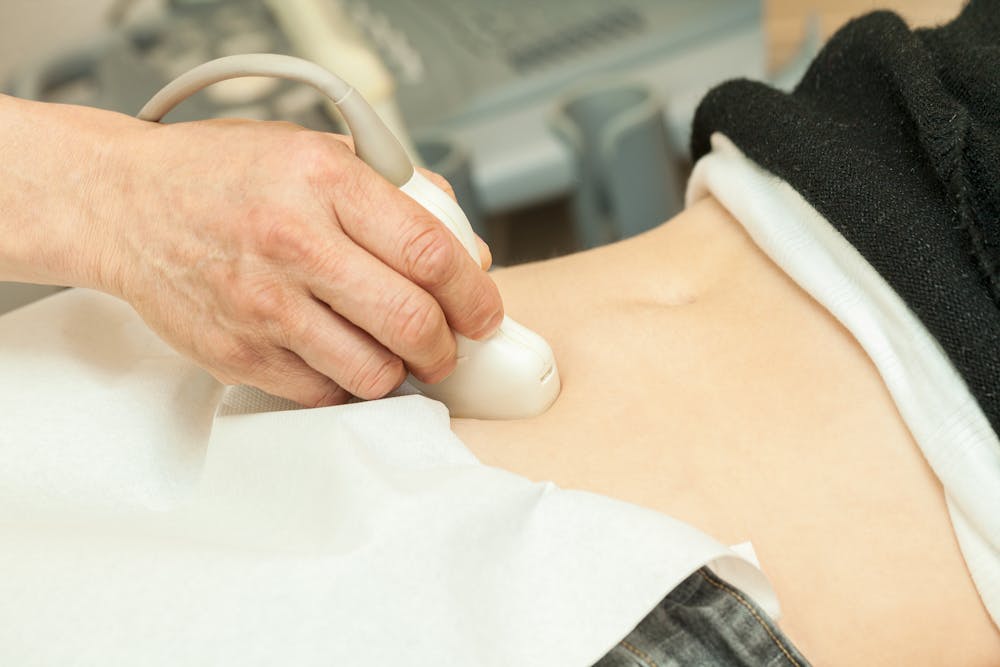
Close-up of person receiving abdominal ultrasound exam.
Medication abortion can be prescribed safely without an ultrasound.
svega/iStock via Getty Images Plus

Expanding access to equitable care

With a limited number of clinics and providers, insurance coverage bans and state restrictions, people seeking abortions face significant barriers to obtaining the care they need. These barriers disproportionately affect people of color, low-income groups and other marginalized people.

If Roe v. Wade is overturned or significantly altered, almost half the country will face even more difficulties accessing abortion care.

Minimizing in-person tests by shifting toward remote screening, however, could expand access to abortion care to more patients. Because no special equipment like ultrasound machines are needed, more clinicians can write a prescription for the pills. Primary care providers who work in rural, low-income and other marginalized communities could conduct medication abortion screening and increase equitable access to abortion care.

The American College of Obstetricians and Gynecologists and the National Abortion Federation have already updated their guidelines to reflect the fact that medical history review without an in-person pelvic exam and ultrasound is sufficient to confirm medication abortion eligibility.

But it is important to note that state restrictions prevent this new care model from being implemented nationwide. Some states legally require ultrasounds, and other states either require an in-person visit or prohibit telehealth screenings. As the high safety and effectiveness rates from our study and other ones show, these laws are not based on scientific evidence and medical necessity as they claim.

While this new model was originally introduced to reduce physical contact during the pandemic, it could help remove barriers to medication abortion and expand access to equitable care for all patients.

[Understand new developments in science, health and technology, each week. Subscribe to The Conversation’s science newsletter.]

Ushma Upadhyay, Associate Professor of Obstetrics, Gynecology & Reproductive Science, University of California, San Francisco

This article is republished from The Conversation under a Creative Commons license. Read the original article.


ShareTweet
The Conversation

The Conversation

Leave a Reply Cancel reply

Your email address will not be published. Required fields are marked *

Videos

This conversation focuses on debunking myths surrounding GLP-1 medications, particularly the misinformation about their association with pancreatic cancer. The speaker emphasizes the importance of understanding clinical study designs, especially the distinction between observational studies and randomized controlled trials. The discussion highlights the need for patients to critically evaluate the sources of information regarding medication side effects and to empower themselves in their healthcare decisions.

Takeaways
GLP-1 medications are not linked to pancreatic cancer.
Peer-reviewed studies debunk misinformation about GLP-1s.
Anecdotal evidence is not reliable for general conclusions.
Observational studies have limitations in generalizability.
Understanding study design is crucial for evaluating claims.
Symptoms should be discussed in the context of clinical conditions.
Not all side effects reported are relevant to every patient.
Observational studies can provide valuable insights but are context-specific.
Patients should critically assess the relevance of studies to their own experiences.
Engagement in discussions about specific studies can enhance understanding

Chapters
00:00
Debunking GLP-1 Medication Myths
02:56
Understanding Clinical Study Designs
05:54
The Role of Observational Studies in Healthcare
Debunking Myths About GLP-1 Medications
YouTube Video DM9Do_V6_sU
Subscribe

2027 Medicare Advantage & Part D Advance Notice

Clinical Reads

BIIB080 in Mild Alzheimer’s Disease: What a Phase 1b Exploratory Clinical Analysis Can—and Cannot—Tell Us

BIIB080 in Mild Alzheimer’s Disease: What a Phase 1b Exploratory Clinical Analysis Can—and Cannot—Tell Us

by Daily Remedy
February 15, 2026
0

Can lowering tau biology translate into a clinically meaningful slowing of decline in people with early symptomatic Alzheimer’s disease? That is the practical question behind BIIB080, an intrathecal antisense therapy designed to reduce production of tau protein by targeting the tau gene transcript. In a phase 1b program originally designed for safety and dosing, investigators later examined cognitive, functional, and global outcomes as exploratory endpoints. The clinical question matters because current disease-modifying options primarily target amyloid, while tau pathology tracks...

Read more

Join Our Newsletter!

Twitter Updates

Tweets by TheDailyRemedy

Popular

  • The Prevention Gap in Dementia Care

    The Prevention Gap in Dementia Care

    0 shares
    Share 0 Tweet 0
  • Healthcare Natural Rights

    0 shares
    Share 0 Tweet 0
  • The Staffing Equation That Doesn’t Balance

    0 shares
    Share 0 Tweet 0
  • Heat Safety Tips Every Pregnant Mother Should Know

    0 shares
    Share 0 Tweet 0
  • Healthcare in Space

    1 shares
    Share 0 Tweet 0
  • 628 Followers

Daily Remedy

Daily Remedy offers the best in healthcare information and healthcare editorial content. We take pride in consistently delivering only the highest quality of insight and analysis to ensure our audience is well-informed about current healthcare topics - beyond the traditional headlines.

Daily Remedy website services, content, and products are for informational purposes only. We do not provide medical advice, diagnosis, or treatment. All rights reserved.

Important Links

  • Support Us
  • About Us
  • Contact us
  • Privacy Policy
  • Terms and Conditions

Join Our Newsletter!

  • Survey
  • Podcast
  • About Us
  • Contact us

© 2026 Daily Remedy

No Result
View All Result
  • Home
  • Articles
  • Podcasts
  • Surveys
  • Courses
  • About Us
  • Contact us
  • Support Us
  • Official Learner

© 2026 Daily Remedy
