













Wednesday, January 28, 2026
ISSN 2765-8767
  • Survey
  • Podcast
  • Write for Us
  • My Account
  • Log In
Daily Remedy
  • Home
  • Articles
  • Podcasts
    The Future of LLMs in Healthcare

    The Future of LLMs in Healthcare

    January 26, 2026
    The Future of Healthcare Consumerism

    The Future of Healthcare Consumerism

    January 22, 2026
    Your Body, Your Health Care: A Conversation with Dr. Jeffrey Singer

    Your Body, Your Health Care: A Conversation with Dr. Jeffrey Singer

    July 1, 2025

    The cost structure of hospitals nearly doubles

    July 1, 2025
    Navigating the Medical Licensing Maze

    The Fight Against Healthcare Fraud: Dr. Rafai’s Story

    April 8, 2025
    Navigating the Medical Licensing Maze

    Navigating the Medical Licensing Maze

    April 4, 2025
  • Surveys

    Surveys

    Patient Survey: Understanding Healthcare Consumerism

    Patient Survey: Understanding Healthcare Consumerism

    January 18, 2026
    Public Confidence in Proposed Changes to U.S. Vaccine Policy

    Public Confidence in Proposed Changes to U.S. Vaccine Policy

    January 3, 2026

    Survey Results

    Can you tell when your provider does not trust you?

    Can you tell when your provider does not trust you?

    January 18, 2026
    Do you believe national polls on health issues are accurate

    National health polls: trust in healthcare system accuracy?

    May 8, 2024
    Which health policy issues matter the most to Republican voters in the primaries?

    Which health policy issues matter the most to Republican voters in the primaries?

    May 14, 2024
    How strongly do you believe that you can tell when your provider does not trust you?

    How strongly do you believe that you can tell when your provider does not trust you?

    May 7, 2024
  • Courses
  • About Us
  • Contact us
  • Support Us
  • Official Learner
No Result
View All Result
  • Home
  • Articles
  • Podcasts
    The Future of LLMs in Healthcare

    The Future of LLMs in Healthcare

    January 26, 2026
    The Future of Healthcare Consumerism

    The Future of Healthcare Consumerism

    January 22, 2026
    Your Body, Your Health Care: A Conversation with Dr. Jeffrey Singer

    Your Body, Your Health Care: A Conversation with Dr. Jeffrey Singer

    July 1, 2025

    The cost structure of hospitals nearly doubles

    July 1, 2025
    Navigating the Medical Licensing Maze

    The Fight Against Healthcare Fraud: Dr. Rafai’s Story

    April 8, 2025
    Navigating the Medical Licensing Maze

    Navigating the Medical Licensing Maze

    April 4, 2025
  • Surveys

    Surveys

    Patient Survey: Understanding Healthcare Consumerism

    Patient Survey: Understanding Healthcare Consumerism

    January 18, 2026
    Public Confidence in Proposed Changes to U.S. Vaccine Policy

    Public Confidence in Proposed Changes to U.S. Vaccine Policy

    January 3, 2026

    Survey Results

    Can you tell when your provider does not trust you?

    Can you tell when your provider does not trust you?

    January 18, 2026
    Do you believe national polls on health issues are accurate

    National health polls: trust in healthcare system accuracy?

    May 8, 2024
    Which health policy issues matter the most to Republican voters in the primaries?

    Which health policy issues matter the most to Republican voters in the primaries?

    May 14, 2024
    How strongly do you believe that you can tell when your provider does not trust you?

    How strongly do you believe that you can tell when your provider does not trust you?

    May 7, 2024
  • Courses
  • About Us
  • Contact us
  • Support Us
  • Official Learner
No Result
View All Result
Daily Remedy
No Result
View All Result
Home Innovations & Investing

Wearables Are Becoming Clinical Instruments. AI Is the Engine.

Consumer devices now generate medical-grade questions about accuracy, regulation, and responsibility.

Kumar Ramalingam by Kumar Ramalingam
January 26, 2026
in Innovations & Investing
0

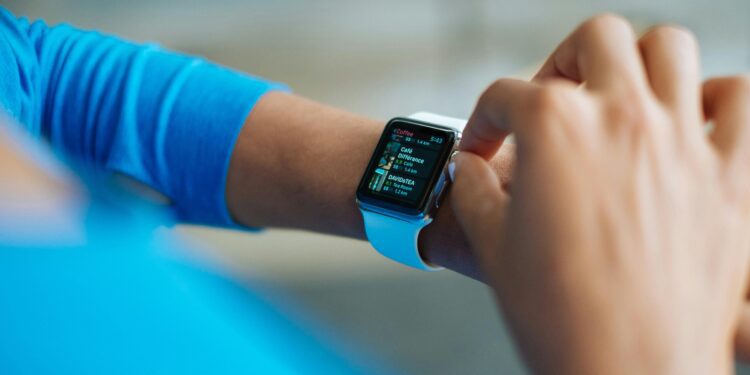
A decade ago, a smartwatch was a pedometer with ambitions. Today, wearables are producing physiologic traces that clinicians recognize as actionable, and the shift is being driven by machine learning that turns noisy signals into coherent narratives. Social feeds present these devices as self mastery tools, yet the deeper story is institutional. Hospitals, regulators, and insurers are beginning to treat consumer sensors as inputs into care delivery, and the stakes now resemble clinical medicine rather than lifestyle coaching.

From steps to signals: why AI changed the category

The earliest consumer wearables focused on step counts and basic heart rate. The current generation emphasizes digital biomarkers: arrhythmia detection, sleep staging, oxygen saturation, stress proxies, and continuous glucose trends. These outputs are algorithmic. They are not raw measurements, and that matters when users assume the device is a miniature ICU.

Machine learning increased the value of wearables by improving pattern recognition. It can reduce motion artifacts, infer physiologic state from multiple sensors, and generate alerts that feel medically meaningful. Yet algorithms can also invite false confidence. The question is not whether wearables can detect something. The question is whether the detection performs reliably across skin tones, body types, age groups, and comorbidities, and whether it reduces harm rather than shifting it into anxiety and unnecessary testing.

Validation is the quiet determinant of trust

Clinical practice relies on instruments whose error profiles are understood. Wearables enter the market with heterogeneous validation. Some features are extensively studied, while others are marketed with thinner evidence. Even sleep, which appears simple, can be technically complex. A Nature analysis of sleep stage accuracy illustrates the limitations of consumer devices in reproducing polysomnography standards, as discussed in Nature’s review of wearable sleep stage accuracy. When a device reports “deep sleep” as a single nightly number, it compresses uncertainty into a confident label.

Cardiac features show the same tension. Apple Watch ECG capabilities have been studied in clinical contexts, with accessible summaries and primary reports available through sources such as the PMC article on Apple Watch ECG validation. A validation study does not, by itself, justify population scale screening. It clarifies performance characteristics, and those characteristics must then be mapped to use cases. Screening low-risk individuals differs from monitoring patients with established atrial fibrillation.

Regulation is being rewritten in real time

The United States has historically managed consumer wellness tools with a flexible posture, while applying tighter oversight to devices making diagnostic or therapeutic claims. That boundary is under strain because consumer devices increasingly resemble medical tools. In January 2026, the FDA updated guidance clarifying its compliance policy for low risk wellness products, described in the agency’s General Wellness guidance page. Reporting around the same period described the agency’s intent to limit regulation of certain wellness wearables, emphasizing a focus on claims and safety concerns, as noted in Reuters coverage of the FDA posture on wearables.

This guidance does not eliminate risk. It clarifies category. A wearable can be functionally influential even if it is not regulated as a medical device. If a device nudges a patient to adjust insulin dosing based on an unvalidated glucose estimate, the practical risk looks clinical. Regulatory categories and lived experience can diverge.

The FDA’s clinical decision support guidance adds another layer. Many wearables now offer recommendations rather than measurements. The agency’s clinical decision support guidance reminds developers and clinicians that decision support can cross into regulated territory when it substitutes for professional judgment.

OTC continuous glucose monitoring will reshape consumer expectations

The most consequential shift in 2024 and 2025 may be the emergence of over the counter CGMs for people without insulin-dependent diabetes. In March 2024, the FDA announced clearance of the first OTC continuous glucose monitoring system, described in the agency’s press release on OTC CGM. The promise is clear: broader access to glucose trend data can support lifestyle change, identify dysglycemia, and encourage earlier clinical evaluation.

The risk is interpretive. Glucose is a dynamic variable influenced by stress, sleep, illness, menstrual cycles, and short term dietary composition. Social media often turns CGM traces into moral theater, with foods framed as “good” or “bad” based on transient spikes. The clinical use case is more nuanced. Trend data can guide conversation about meal composition, fiber timing, and overall metabolic resilience. It can also provoke unnecessary dietary restriction and reinforce disordered eating patterns if used without context.

Clinicians will need a new competency: helping people interpret CGM data that was never ordered by a clinician. Health systems that ignore this will cede the interpretive space to influencers and product marketers.

AI wearables are becoming a data infrastructure problem

The next phase is less about the device and more about where the data goes. When wearable outputs flow into patient portals or EHRs, they become part of medical documentation. That raises questions about liability, triage workflows, and clinician burden. A health system that receives 10,000 daily wearable alerts needs governance that resembles a lab management program, including thresholds, escalation pathways, and patient education.

Data privacy is equally central. Wearables collect sensitive behavioral data. Even when that data is outside HIPAA, it can be exploited through advertising and data brokerage ecosystems. Governance must therefore treat consumer data rights as a health issue, not a tech issue.

Investment has shifted from hardware to interpretation

From a market perspective, the durable advantage often lies in algorithms and integrations rather than in sensor hardware. Hardware can be copied. Clinical trust is harder to reproduce. Partnerships with health systems, validation studies, and regulatory clarity function as moats.

This is also why payers and employers are experimenting with subsidized wearables. The devices promise engagement, and engagement can reduce downstream cost if it is paired with clinical workflows. Yet engagement without guidance can inflate utilization. A wearable that identifies “abnormalities” without a care pathway can turn worried well users into frequent testers.

A responsible adoption curve is available, if institutions choose it

Wearables can widen access to early warning signals, especially for people who rarely touch the healthcare system. They can support remote monitoring for chronic disease and reduce friction in preventive care. They can also amplify anxiety, reinforce inequity through differential access, and burden clinicians with unfiltered data.

A responsible framework is pragmatic. It emphasizes validated use cases. It uses clear communication about error profiles. It integrates decision support that can be explained, rather than treated as an oracle. It also respects the boundary between patient curiosity and clinical obligation.

The wrist may be starting to behave like a clinic. The governance must catch up before the expectations harden into disappointment.

ShareTweet
Kumar Ramalingam

Kumar Ramalingam

Kumar Ramalingam is a writer focused on the intersection of science, health, and policy, translating complex issues into accessible insights.

Leave a Reply Cancel reply

Your email address will not be published. Required fields are marked *

Videos

In this episode, the host discusses the significance of large language models (LLMs) in healthcare, their applications, and the challenges they face. The conversation highlights the importance of simplicity in model design and the necessity of integrating patient feedback to enhance the effectiveness of LLMs in clinical settings.

Takeaways
LLMs are becoming integral in healthcare.
They can help determine costs and service options.
Hallucination in LLMs can lead to misinformation.
LLMs can produce inconsistent answers based on input.
Simplicity in LLMs is often more effective than complexity.
Patient behavior should guide LLM development.
Integrating patient feedback is crucial for accuracy.
Pre-training models with patient input enhances relevance.
Healthcare providers must understand LLM limitations.
The best LLMs will focus on patient-centered care.

Chapters

00:00 Introduction to LLMs in Healthcare
05:16 The Importance of Simplicity in LLMs
The Future of LLMs in HealthcareDaily Remedy
YouTube Video U1u-IYdpeEk
Subscribe

Large Language Models in Healthcare

Clinical Reads

What the Most-Cited LLM-in-Medicine Papers Reveal—and What They Miss

What the Most-Cited LLM-in-Medicine Papers Reveal—and What They Miss

by Daily Remedy
January 25, 2026
0

In just over two years, papers on large language models (LLMs) in medicine have accumulated nearly fifteen thousand citations, creating an academic canon that is already shaping funding decisions, regulatory conversations, and clinical experimentation. This study dissects the 100 most-cited LLM-in-medicine papers to show who is driving the field, which applications dominate attention, and where the evidence remains dangerously thin. What emerges is a picture of rapid intellectual consolidation—paired with a widening gap between technical promise and clinical reality. The...

Read more

Twitter Updates

Tweets by DailyRemedy1

Newsletter

Start your Daily Remedy journey

Cultivate your knowledge of current healthcare events and ensure you receive the most accurate, insightful healthcare news and editorials.

*we hate spam as much as you do

Popular

  • GLP-1 Drugs Have Moved Past Weight Loss. Medicine Has Not Fully Caught Up.

    GLP-1 Drugs Have Moved Past Weight Loss. Medicine Has Not Fully Caught Up.

    0 shares
    Share 0 Tweet 0
  • Why Investors Now Care About Patient Experience

    0 shares
    Share 0 Tweet 0
  • Effective Tips for Cleaning Up Family Sick Messes

    0 shares
    Share 0 Tweet 0
  • Don’t Fall for Political Hate on Health Policy

    0 shares
    Share 0 Tweet 0
  • The Algorithm of Doubt: How Health Misinformation Flourishes on Social Media

    2 shares
    Share 0 Tweet 0
  • 628 Followers

Daily Remedy

Daily Remedy offers the best in healthcare information and healthcare editorial content. We take pride in consistently delivering only the highest quality of insight and analysis to ensure our audience is well-informed about current healthcare topics - beyond the traditional headlines.

Daily Remedy website services, content, and products are for informational purposes only. We do not provide medical advice, diagnosis, or treatment. All rights reserved.

Important Links

  • Support Us
  • About Us
  • Contact us
  • Privacy Policy
  • Terms and Conditions

Newsletter

Start your Daily Remedy journey

Cultivate your knowledge of current healthcare events and ensure you receive the most accurate, insightful healthcare news and editorials.

*we hate spam as much as you do

  • Survey
  • Podcast
  • About Us
  • Contact us

© 2026 Daily Remedy

No Result
View All Result
  • Home
  • Articles
  • Podcasts
  • Surveys
  • Courses
  • About Us
  • Contact us
  • Support Us
  • Official Learner

© 2026 Daily Remedy

Start your Daily Remedy journey

Cultivate your knowledge of current healthcare events and ensure you receive the most accurate, insightful healthcare news and editorials.

*we hate spam as much as you do