












Thursday, February 5, 2026
ISSN 2765-8767
  • Survey
  • Podcast
  • Write for Us
  • My Account
  • Log In
Daily Remedy
  • Home
  • Articles
  • Podcasts
    The Future of LLMs in Healthcare

    The Future of LLMs in Healthcare

    January 26, 2026
    The Future of Healthcare Consumerism

    The Future of Healthcare Consumerism

    January 22, 2026
    Your Body, Your Health Care: A Conversation with Dr. Jeffrey Singer

    Your Body, Your Health Care: A Conversation with Dr. Jeffrey Singer

    July 1, 2025

    The cost structure of hospitals nearly doubles

    July 1, 2025
    Navigating the Medical Licensing Maze

    The Fight Against Healthcare Fraud: Dr. Rafai’s Story

    April 8, 2025
    Navigating the Medical Licensing Maze

    Navigating the Medical Licensing Maze

    April 4, 2025
  • Surveys

    Surveys

    AI in Healthcare Decision-Making

    AI in Healthcare Decision-Making

    February 1, 2026
    Patient Survey: Understanding Healthcare Consumerism

    Patient Survey: Understanding Healthcare Consumerism

    January 18, 2026

    Survey Results

    Can you tell when your provider does not trust you?

    Can you tell when your provider does not trust you?

    January 18, 2026
    Do you believe national polls on health issues are accurate

    National health polls: trust in healthcare system accuracy?

    May 8, 2024
    Which health policy issues matter the most to Republican voters in the primaries?

    Which health policy issues matter the most to Republican voters in the primaries?

    May 14, 2024
    How strongly do you believe that you can tell when your provider does not trust you?

    How strongly do you believe that you can tell when your provider does not trust you?

    May 7, 2024
  • Courses
  • About Us
  • Contact us
  • Support Us
  • Official Learner
No Result
View All Result
  • Home
  • Articles
  • Podcasts
    The Future of LLMs in Healthcare

    The Future of LLMs in Healthcare

    January 26, 2026
    The Future of Healthcare Consumerism

    The Future of Healthcare Consumerism

    January 22, 2026
    Your Body, Your Health Care: A Conversation with Dr. Jeffrey Singer

    Your Body, Your Health Care: A Conversation with Dr. Jeffrey Singer

    July 1, 2025

    The cost structure of hospitals nearly doubles

    July 1, 2025
    Navigating the Medical Licensing Maze

    The Fight Against Healthcare Fraud: Dr. Rafai’s Story

    April 8, 2025
    Navigating the Medical Licensing Maze

    Navigating the Medical Licensing Maze

    April 4, 2025
  • Surveys

    Surveys

    AI in Healthcare Decision-Making

    AI in Healthcare Decision-Making

    February 1, 2026
    Patient Survey: Understanding Healthcare Consumerism

    Patient Survey: Understanding Healthcare Consumerism

    January 18, 2026

    Survey Results

    Can you tell when your provider does not trust you?

    Can you tell when your provider does not trust you?

    January 18, 2026
    Do you believe national polls on health issues are accurate

    National health polls: trust in healthcare system accuracy?

    May 8, 2024
    Which health policy issues matter the most to Republican voters in the primaries?

    Which health policy issues matter the most to Republican voters in the primaries?

    May 14, 2024
    How strongly do you believe that you can tell when your provider does not trust you?

    How strongly do you believe that you can tell when your provider does not trust you?

    May 7, 2024
  • Courses
  • About Us
  • Contact us
  • Support Us
  • Official Learner
No Result
View All Result
Daily Remedy
No Result
View All Result
Home Perspectives

The Problem of Celebrity Patients

A narrative is worth a thousand perceptions

Daily Remedy by Daily Remedy
May 10, 2024
in Perspectives
0
The Problem of Celebrity Patients

We are curiously obsessed with celebrities. They wield significant influence in modern society, extending even into healthcare policy and healthcare system management. The aristocrats of today, celebrities possess an unnaturally large influence on modern society. And it extends into healthcare.

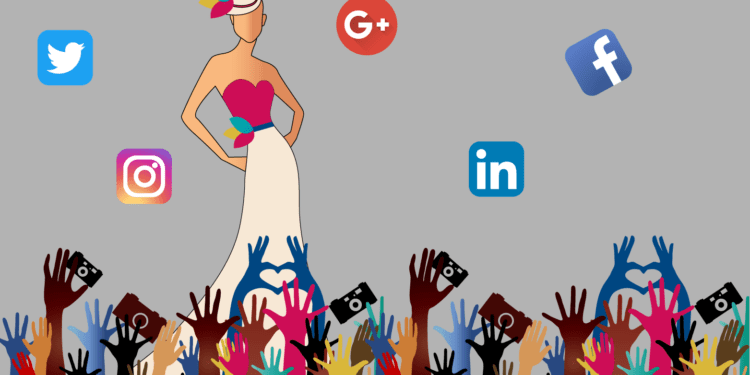
Just look at the scores of celebrity patients rushing to social media to display their newfound diagnosis and take the mantle of patient advocate, as though their personal affliction offers some semblance of expertise. Oddly enough, in the minds of the public, it does. We inquire about their conditions, which hospital they visited, and we internalize their stories as our own.

In a world where fifteen seconds of video garners more attention than fifteen years of clinical research, celebrity patients have an outsized role in shaping the narrative on many clinical diseases – just by associating their celebrity identity with a particular disease.

By fostering a healthcare system that prioritizes evidence-based practices and critical thinking, we can mitigate the influence of celebrity endorsements on healthcare narratives and ensure that patient care remains grounded in modern medicine and all about health.


It explains why despite the lack of research proving the existence of Chronic Lyme’s Disease, it remains a popular disease among the self-diagnosed. Famed musician Justin Bieber recently attributed his fatigue to the disease, claiming he was diagnosed in secret by a trusted source.

Rather than challenge the authenticity of his claim, media outlets rushed to bemoan the difficulties in diagnosing Lyme’s Disease in a timely manner. It happened so reflexively, so instinctively, that we failed to see what happened: In one moment, through one announcement, a non-clinically trained celebrity refuted years of established clinical research and altered the perception of a disease and its diagnosis.

Sadly, this is not an isolated incident. Rather, it’s a repeated pattern where we accept the clinical course of disease endured by a celebrity as the standard narrative for how the disease should be understood. In healthcare, perception drives patient behavior far more than any clinical study could ever hope for. And the influence celebrity patients have on public perception has become so outsized, so impactful, that it appears downright formulaic.

A celebrity makes an announcement about a new diagnosis or the worsening of a symptom. The internet runs ablaze. Social media chatter turns into clamor for patient advocacy. Search engines rev up a never ending feast of articles for an all too eager audience to consume. It’s as though by internalizing the celebrity’s disease through a common narrative, we identify with the celebrity. Healthcare insurance and Healthcare policy should be guided by modern medicine and innovations in healthcare, rather than celebrity endorsements or popular narratives.

This is akin to the days of watching royal processions and mimicking the outfits and stylistic mannerisms of the regal class. Only now we apply it to celebrities in healthcare, which turns a harmless infatuation into an unintended form of misinformation. Take the following celebrities and the ensuing online behavior that came from their personal medical revelations.

Justin Bieber’s wife, Haley Bieber, suffered a transient ischemic attack in May of 2022. She called it a mini-stroke, a term Neurologists loathe, and shared pivotal moments in her recovery process with her fan base. It provided an opportunity for her to relate to her fans, but it led to misunderstandings about the risk factors of transient ischemic attacks.

Country singer Alan Jackson was diagnosed with Charcot-Marie-Tooth disease, a neurological disease that develops slowly over time, usually with mild symptoms. When he became symptomatic, online searches for the disease exploded. In fact, trending the disease on Google shows a noticeable spike along the same time news reports of Jackson’s symptoms broke. This is no coincidence. Charcot-Marie-Tooth disease went from a rare neurological disorder to an under-diagnosed condition that apparently warrants additional study by the medical community.

These oft repeated patterns reveal much about how we consume and accept medical information. We may listen to the data, but we hear the stories, and we accept them as gospel when they come from celebrities. When data disagree with the stories, we discard data without much more than a cursory glance. The stories are what matter, data be damned.

When singer Toby Keith was diagnosed with stomach cancer, he kept it hidden from public eye for nearly a year. When his symptoms worsened despite chemotherapy, he went public with his condition. Rather than rushing to console him, his fans wondered why he waited so long to disclose his condition. They felt Keith had robbed them of a journey, walking together along the course of his clinical care.

Stories have a profound effect on our lives. They are the narrative of our personal experiences. The medical stories of celebrities influence how we perceive our own health. It goes beyond data, beyond rational thought, into the world of subtle cognition – where we make implicit assumptions about what to believe and how to think.

We even prioritize celebrity stories over our own clinical experiences: the interactions with our physicians, families, and loved ones. When we see a celebrity recover from a transient ischemic attack, we wonder why we didn’t. When our own clinical course deviates from that of a celebrity, we wonder why. And we look for things to blame: perhaps it was our physician or the lack of resources at the hospital we went to.

The celebrity patient story sets the context for how we understand our own health. When things do not align, we rationalize why, and we quickly develop irrational ideas about what went right or wrong – all to justify what we already believe implicitly.

This is the power of perception. It is how we understand our health. And it reveals the power of celebrity on our perceptions of health.


ShareTweet
Daily Remedy

Daily Remedy

Dr. Jay K Joshi serves as the editor-in-chief of Daily Remedy. He is a serial entrepreneur and sought after thought-leader for matters related to healthcare innovation and medical jurisprudence. He has published articles on a variety of healthcare topics in both peer-reviewed journals and trade publications. His legal writings include amicus curiae briefs prepared for prominent federal healthcare cases.

Leave a Reply Cancel reply

Your email address will not be published. Required fields are marked *

Videos

In this episode, the host discusses the significance of large language models (LLMs) in healthcare, their applications, and the challenges they face. The conversation highlights the importance of simplicity in model design and the necessity of integrating patient feedback to enhance the effectiveness of LLMs in clinical settings.

Takeaways
LLMs are becoming integral in healthcare.
They can help determine costs and service options.
Hallucination in LLMs can lead to misinformation.
LLMs can produce inconsistent answers based on input.
Simplicity in LLMs is often more effective than complexity.
Patient behavior should guide LLM development.
Integrating patient feedback is crucial for accuracy.
Pre-training models with patient input enhances relevance.
Healthcare providers must understand LLM limitations.
The best LLMs will focus on patient-centered care.

Chapters

00:00 Introduction to LLMs in Healthcare
05:16 The Importance of Simplicity in LLMs
The Future of LLMs in HealthcareDaily Remedy
YouTube Video U1u-IYdpeEk
Subscribe

AI Regulation and Deployment Is Now a Core Healthcare Issue

Clinical Reads

Ambient Artificial Intelligence Clinical Documentation: Workflow Support with Emerging Governance Risk

Ambient Artificial Intelligence Clinical Documentation: Workflow Support with Emerging Governance Risk

by Daily Remedy
February 1, 2026
0

Health systems are increasingly deploying ambient artificial intelligence tools that listen to clinical encounters and automatically generate draft visit notes. These systems are intended to reduce documentation burden and allow clinicians to focus more directly on patient interaction. At the same time, they raise unresolved questions about patient consent, data handling, factual accuracy, and legal responsibility for machine‑generated records. Recent policy discussions and legal actions suggest that adoption is moving faster than formal oversight frameworks. The practical clinical question is...

Read more

Join Our Newsletter!

Twitter Updates

Tweets by TheDailyRemedy

Popular

  • Powerful Phrases to Tell Patients

    Powerful Phrases to Tell Patients

    0 shares
    Share 0 Tweet 0
  • How Insurers Taught Patients to Shop

    0 shares
    Share 0 Tweet 0
  • Have We Cured Sickle Cell Disease?

    2 shares
    Share 0 Tweet 0
  • How Sterile Environments Save Lives in Healthcare

    0 shares
    Share 0 Tweet 0
  • The Future of Healthcare Law

    0 shares
    Share 0 Tweet 0
  • 628 Followers

Daily Remedy

Daily Remedy offers the best in healthcare information and healthcare editorial content. We take pride in consistently delivering only the highest quality of insight and analysis to ensure our audience is well-informed about current healthcare topics - beyond the traditional headlines.

Daily Remedy website services, content, and products are for informational purposes only. We do not provide medical advice, diagnosis, or treatment. All rights reserved.

Important Links

  • Support Us
  • About Us
  • Contact us
  • Privacy Policy
  • Terms and Conditions

Join Our Newsletter!

  • Survey
  • Podcast
  • About Us
  • Contact us

© 2026 Daily Remedy

No Result
View All Result
  • Home
  • Articles
  • Podcasts
  • Surveys
  • Courses
  • About Us
  • Contact us
  • Support Us
  • Official Learner

© 2026 Daily Remedy