







Tuesday, February 24, 2026
ISSN 2765-8767
  • Survey
  • Podcast
  • Write for Us
  • My Account
  • Log In
Daily Remedy
  • Home
  • Articles
  • Podcasts
    Debunking Myths About GLP-1 Medications

    Debunking Myths About GLP-1 Medications

    February 16, 2026
    The Future of LLMs in Healthcare

    The Future of LLMs in Healthcare

    January 26, 2026
    The Future of Healthcare Consumerism

    The Future of Healthcare Consumerism

    January 22, 2026
    Your Body, Your Health Care: A Conversation with Dr. Jeffrey Singer

    Your Body, Your Health Care: A Conversation with Dr. Jeffrey Singer

    July 1, 2025

    The cost structure of hospitals nearly doubles

    July 1, 2025
    Navigating the Medical Licensing Maze

    The Fight Against Healthcare Fraud: Dr. Rafai’s Story

    April 8, 2025
  • Surveys

    Surveys

    How Confident Are You in RFK Jr.’s Health Leadership?

    How Confident Are You in RFK Jr.’s Health Leadership?

    February 16, 2026
    AI in Healthcare Decision-Making

    AI in Healthcare Decision-Making

    February 1, 2026

    Survey Results

    Can you tell when your provider does not trust you?

    Can you tell when your provider does not trust you?

    January 18, 2026
    Do you believe national polls on health issues are accurate

    National health polls: trust in healthcare system accuracy?

    May 8, 2024
    Which health policy issues matter the most to Republican voters in the primaries?

    Which health policy issues matter the most to Republican voters in the primaries?

    May 14, 2024
    How strongly do you believe that you can tell when your provider does not trust you?

    How strongly do you believe that you can tell when your provider does not trust you?

    May 7, 2024
  • Courses
  • About Us
  • Contact us
  • Support Us
  • Official Learner
No Result
View All Result
  • Home
  • Articles
  • Podcasts
    Debunking Myths About GLP-1 Medications

    Debunking Myths About GLP-1 Medications

    February 16, 2026
    The Future of LLMs in Healthcare

    The Future of LLMs in Healthcare

    January 26, 2026
    The Future of Healthcare Consumerism

    The Future of Healthcare Consumerism

    January 22, 2026
    Your Body, Your Health Care: A Conversation with Dr. Jeffrey Singer

    Your Body, Your Health Care: A Conversation with Dr. Jeffrey Singer

    July 1, 2025

    The cost structure of hospitals nearly doubles

    July 1, 2025
    Navigating the Medical Licensing Maze

    The Fight Against Healthcare Fraud: Dr. Rafai’s Story

    April 8, 2025
  • Surveys

    Surveys

    How Confident Are You in RFK Jr.’s Health Leadership?

    How Confident Are You in RFK Jr.’s Health Leadership?

    February 16, 2026
    AI in Healthcare Decision-Making

    AI in Healthcare Decision-Making

    February 1, 2026

    Survey Results

    Can you tell when your provider does not trust you?

    Can you tell when your provider does not trust you?

    January 18, 2026
    Do you believe national polls on health issues are accurate

    National health polls: trust in healthcare system accuracy?

    May 8, 2024
    Which health policy issues matter the most to Republican voters in the primaries?

    Which health policy issues matter the most to Republican voters in the primaries?

    May 14, 2024
    How strongly do you believe that you can tell when your provider does not trust you?

    How strongly do you believe that you can tell when your provider does not trust you?

    May 7, 2024
  • Courses
  • About Us
  • Contact us
  • Support Us
  • Official Learner
No Result
View All Result
Daily Remedy
No Result
View All Result
Home Uncertainty & Complexity

Silent Scars: Uncovering the Cancer Risk Among U.S. Veterans Exposed to Burn Pits in Iraq

A growing body of evidence links toxic exposure from burn pits to long-term cancer risk — forcing a reckoning in military medicine and veteran care

Rashmi Melhotra by Rashmi Melhotra
April 16, 2025
in Uncertainty & Complexity
0

When U.S. troops were deployed to Iraq in the early 2000s, few could have imagined that the very air they breathed would leave behind the most enduring wounds.

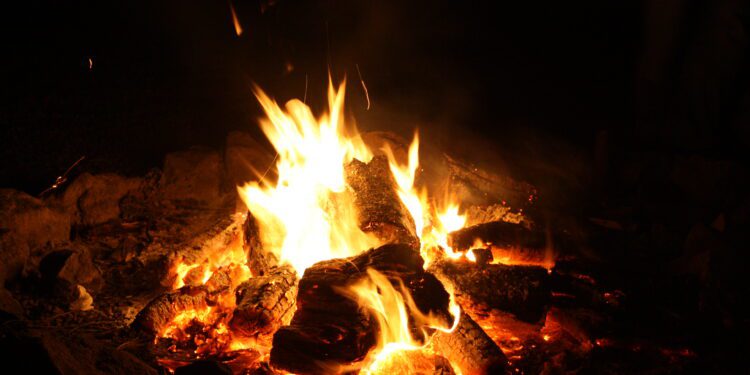
Amid the chaos of war, U.S. military bases often lacked proper waste management infrastructure. In response, the military adopted a controversial solution: burn pits — open-air combustion sites used to dispose of everything from medical waste and vehicle parts to plastics, electronics, and even human waste.

At first glance, these fires were simply a logistical necessity in combat zones. But for many who served nearby, they became an invisible threat — one whose effects are still surfacing decades later in the form of chronic illness and cancer.

A recent cohort study examining active-duty service members who were deployed to Iraq adds new evidence to what veterans and their families have long feared: exposure to burn pits is associated with an increased risk of developing cancer. The findings demand a closer look at the relationship between toxic environmental exposures and long-term health outcomes in military populations.

What Were Burn Pits — and Why Were They Dangerous?

Burn pits were a common fixture at U.S. military installations throughout Iraq and Afghanistan. At their peak, some pits operated around the clock, sending thick plumes of black smoke into the desert air. Materials burned included chemicals, solvents, petroleum products, paint, tires, and discarded equipment — many of which released carcinogenic compounds like benzene, dioxins, and polycyclic aromatic hydrocarbons.

Service members lived, worked, and slept in close proximity to these pits. Many have since reported respiratory issues, fatigue, rashes, and — in some cases — aggressive cancers developing at a young age. While anecdotal for years, these reports are now being substantiated by epidemiological research and long-term health surveillance.

The Cohort Study: Linking Exposure to Elevated Cancer Risk

In the latest study — a large-scale, longitudinal cohort analysis — researchers tracked a population of active-duty service members who were deployed to Iraq between 2003 and 2011. The cohort was divided into two primary groups:

  1. Those stationed in close proximity to burn pit sites
  2. Those stationed at bases with little or no burn pit activity

Researchers controlled for variables such as age, gender, service branch, smoking history, and pre-deployment health status. Over the course of several years, the data revealed a statistically significant increase in the incidence of cancer among the exposed group.

The most commonly observed cancers included:

  • Lung cancer
  • Hematologic malignancies (like leukemia and lymphoma)
  • Head and neck cancers
  • Rare gastrointestinal cancers

While the study stopped short of establishing direct causation — a complex threshold in environmental epidemiology — it clearly demonstrated a strong association between exposure and disease incidence.

A Slow March Toward Recognition

For years, veterans voiced concerns about the health effects of burn pits, but their reports were met with skepticism or bureaucratic inertia. Unlike battlefield injuries, the toxic legacy of burn pits was invisible and delayed. That made it easier to deny — or delay — responsibility.

It wasn’t until public advocacy intensified, supported by mounting scientific studies, that the issue gained national attention. The tipping point came with the 2022 passage of the Honoring Our PACT Act, a landmark piece of legislation that expanded health benefits for veterans exposed to toxic substances, including burn pit emissions.

Still, for many veterans, this acknowledgment came after diagnoses were made — or lives were lost.

Medical Uncertainty and the Long Tail of War

One of the greatest challenges in researching burn pit exposure is the long latency period of many cancers. What begins as a subtle cough in a 35-year-old veteran may not become lung cancer until a decade later. And in the absence of early biomarkers or definitive diagnostic tests, proving exposure as the cause becomes a legal and scientific labyrinth.

That uncertainty is further complicated by incomplete exposure records. Many bases did not monitor air quality consistently. Others lacked documentation of what was burned and how frequently. Veterans themselves were rarely given protective gear or informed about potential risks.

In this context, cohort studies become essential tools. By tracking service members across time and comparing groups based on deployment location, researchers can start to build a clearer picture of environmental health outcomes tied to military service.

The Bigger Picture: Environmental Exposure in Military Medicine

Burn pits are not the first — nor likely the last — environmental hazard linked to military operations. From Agent Orange in Vietnam to depleted uranium in the Gulf War, the U.S. has a long and complex history of toxic exposure among its armed forces.

What makes burn pits unique, however, is the sheer scale of exposure and the variety of materials burned. And unlike other military exposures, burn pit use was widespread even after concerns about toxicity had already been raised.

This raises ethical questions about how decisions are made in combat logistics, and whether enough is done to protect service members from long-term, non-combat risks.

A Call for Lifelong Monitoring and Research

One of the key recommendations to emerge from recent research is the need for lifelong health monitoring of exposed veterans. Cancer risk doesn’t disappear after discharge — it evolves with time. Early detection, access to screenings, and transparent communication about individual risk levels are critical.

There’s also a need for more granular data collection: identifying which materials produce the most harmful emissions, and developing risk profiles based on proximity, duration of exposure, and personal health history.

Equally important is a cultural shift in how the military and Veterans Affairs system view exposure-related illness — not as isolated incidents, but as systemic consequences of operational decisions.

Final Thoughts

The story of burn pits is not just a story about war. It is a story about what we ask of those who serve — and what we owe them in return.

Long after the last flame was extinguished in the sands of Iraq, the embers of exposure continue to burn in the lungs and lives of those who stood nearby. They did not sign up to inhale toxic smoke. They signed up to serve their country.

Now it is the country’s turn to serve them — with clear answers, continuous research, and comprehensive care.


ShareTweet
Rashmi Melhotra

Rashmi Melhotra

Rashmi Melhotra is a freelance journalist who focuses on healthcare news.

Leave a Reply Cancel reply

Your email address will not be published. Required fields are marked *

Videos

This conversation focuses on debunking myths surrounding GLP-1 medications, particularly the misinformation about their association with pancreatic cancer. The speaker emphasizes the importance of understanding clinical study designs, especially the distinction between observational studies and randomized controlled trials. The discussion highlights the need for patients to critically evaluate the sources of information regarding medication side effects and to empower themselves in their healthcare decisions.

Takeaways
GLP-1 medications are not linked to pancreatic cancer.
Peer-reviewed studies debunk misinformation about GLP-1s.
Anecdotal evidence is not reliable for general conclusions.
Observational studies have limitations in generalizability.
Understanding study design is crucial for evaluating claims.
Symptoms should be discussed in the context of clinical conditions.
Not all side effects reported are relevant to every patient.
Observational studies can provide valuable insights but are context-specific.
Patients should critically assess the relevance of studies to their own experiences.
Engagement in discussions about specific studies can enhance understanding

Chapters
00:00
Debunking GLP-1 Medication Myths
02:56
Understanding Clinical Study Designs
05:54
The Role of Observational Studies in Healthcare
Debunking Myths About GLP-1 Medications
YouTube Video DM9Do_V6_sU
Subscribe

2027 Medicare Advantage & Part D Advance Notice

Clinical Reads

BIIB080 in Mild Alzheimer’s Disease: What a Phase 1b Exploratory Clinical Analysis Can—and Cannot—Tell Us

BIIB080 in Mild Alzheimer’s Disease: What a Phase 1b Exploratory Clinical Analysis Can—and Cannot—Tell Us

by Daily Remedy
February 15, 2026
0

Can lowering tau biology translate into a clinically meaningful slowing of decline in people with early symptomatic Alzheimer’s disease? That is the practical question behind BIIB080, an intrathecal antisense therapy designed to reduce production of tau protein by targeting the tau gene transcript. In a phase 1b program originally designed for safety and dosing, investigators later examined cognitive, functional, and global outcomes as exploratory endpoints. The clinical question matters because current disease-modifying options primarily target amyloid, while tau pathology tracks...

Read more

Join Our Newsletter!

Twitter Updates

Tweets by TheDailyRemedy

Popular

  • Healthcare Natural Rights

    Healthcare Natural Rights

    0 shares
    Share 0 Tweet 0
  • The Staffing Equation That Doesn’t Balance

    0 shares
    Share 0 Tweet 0
  • How Clinically Significant is a Healthy Diet?

    0 shares
    Share 0 Tweet 0
  • Common Problems and Solutions With Massage Chairs

    0 shares
    Share 0 Tweet 0
  • What is the 411 on the New 988 Hotline?

    0 shares
    Share 0 Tweet 0
  • 628 Followers

Daily Remedy

Daily Remedy offers the best in healthcare information and healthcare editorial content. We take pride in consistently delivering only the highest quality of insight and analysis to ensure our audience is well-informed about current healthcare topics - beyond the traditional headlines.

Daily Remedy website services, content, and products are for informational purposes only. We do not provide medical advice, diagnosis, or treatment. All rights reserved.

Important Links

  • Support Us
  • About Us
  • Contact us
  • Privacy Policy
  • Terms and Conditions

Join Our Newsletter!

  • Survey
  • Podcast
  • About Us
  • Contact us

© 2026 Daily Remedy

No Result
View All Result
  • Home
  • Articles
  • Podcasts
  • Surveys
  • Courses
  • About Us
  • Contact us
  • Support Us
  • Official Learner

© 2026 Daily Remedy