













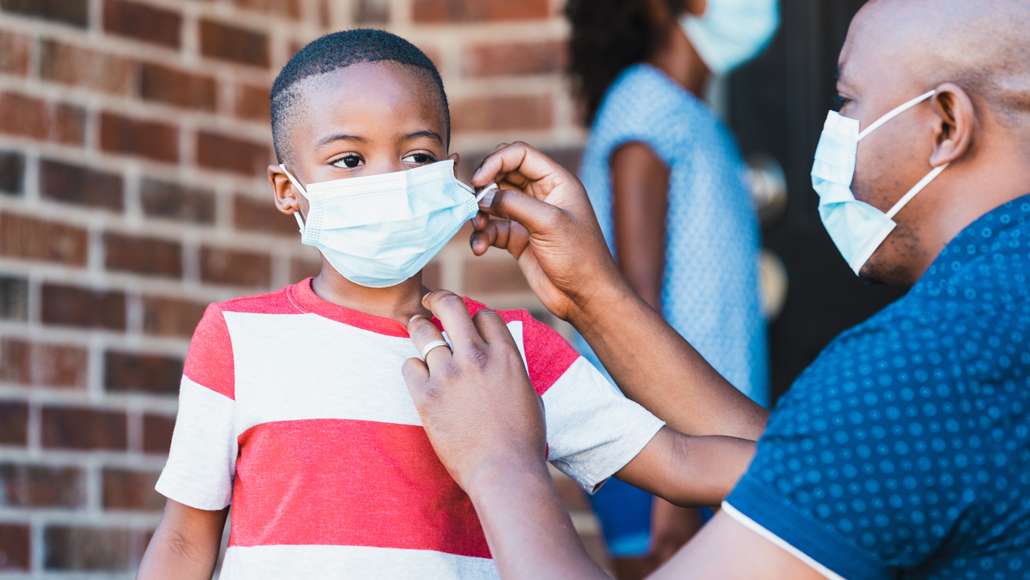
Listening to young people could help reduce pandemic-related harms to children
kali9/E+ via Getty Images
Tammy Chang, University of Michigan and Jonathan Todres, Georgia State University
As the COVID-19 pandemic extends into a third year, experts have gained a much better understanding of its consequences for the health and development of children and adolescents.
They range from learning loss to mental health issues to housing and food insecurity to contracting the virus itself.
We are a law professor who focuses on children’s rights and well-being and a practicing family physician who researches adolescent health. We and other researchers have found that over the past two years, governments have missed opportunities to better understand and address what young people have been going through as they navigate the pandemic.
A better understanding of the pandemic’s effects on young people is essential to developing policy responses that can address the breadth of harms children and adolescents are experiencing.
The pandemic’s impacts on children
Research has found that, on average, K-12 students fell behind by about five months in mathematics and four months in reading during the 2020-2021 school year compared with students before the pandemic. Many students lost the equivalent of half a year or more of learning, with students in low-income and majority-Black schools being hit hardest. This learning loss puts many students at risk of not finishing high school, and it jeopardizes their chances of attending college, all of which has adverse consequences for lifetime earning potential.
The pandemic has also adversely affected children’s mental health. The Centers for Disease Control and Prevention found that 37% of high schoolers reported poor mental health and 44% reported that they “persistently felt sad or hopeless” during the pandemic. Other research, including a recent surgeon general’s advisory on young people’s mental health, has found higher rates of depression, anxiety, loneliness and other social-emotional issues among children since the pandemic.
Basic needs including food and housing have also been put at risk by the pandemic. Job losses, disruptions in school-based meal programs and other adverse impacts on families led to an increase in the number of families experiencing food insecurity, putting children at risk of being unable to get adequate nutrition for healthy development.
In addition, millions of children and their families have experienced housing insecurity. The Eviction Lab, which tracks evictions in six states and 31 U.S. cities, reports that more than 939,000 evictions have occurred since March 2020. Even when families can stave off eviction, housing insecurity adversely affects children’s educational progress and well-being.
Finally, we know that many children have contracted COVID-19 – more than 13 million by official counts – though research suggests the numbers are much higher.
Children should be seen and heard
Policymakers frequently dismiss young people as too immature to participate in the “serious business” of policymaking. This attitude has persisted during the pandemic: Young people have seldom been consulted on public health policy changes that affect them directly, from schools to transportation to public parks.
For example, most decisions regarding moves to virtual schooling and back to in-person learning were made without input from children – the very population most affected by these decisions.
This failure to engage young people stems largely from the conventional view that children and adolescents are “becomings,” not “beings” – that is, because they are developing, they lack maturity to make important decisions and thus should be “seen and not heard.”
However, we have learned through our own research and engagement with young people – as well as through other youth participation projects and reports – that this mindset is outdated and fails to recognize the knowledge young people’s lived experience offers. In our research and partnering with youths, we have found consistently that involving young people at all stages – from identifying issues to designing and implementing projects to developing policy recommendations – improves outcomes.
Why consulting with children matters
The United Nations Convention on the Rights of the Child recognizes that young people have a right to be heard and to participate in decisions that affect their lives. Research shows that that while young people may not want the burden of making the final decision, they do want a say in what happens in their lives and their communities.
Paras Griffin/Contributor via Getty Images North America
Research has found that listening to and engaging young people helps adults better understand the challenges children face. Giving young people meaningful opportunities to participate in decisions that affect their lives can lead to important insights about whether particular options will be effective and can help identify more promising solutions.
In addition, experience shows that involving youths in the development of policies and programs increases the likelihood of better buy-in from young people on the final decisions. In turn, buy-in helps improve outcomes.
For example, while children may not be experts on education theory, they are the only ones alive today who have ever navigated school during a global pandemic. Their lived experience offers expertise that can help inform and improve policies and outcomes.
Moreover, involving young people now will help them develop the skills they need to prepare for adulthood.
Listen, involve and create pathways
Our work suggests that there are various ways adults can partner with children on creating policies and programs during this pandemic, as well as in future public health crises. A few of these include:
– Parents, teachers, school administrators and community leaders can simply listen more often to children. This may best be done by “meeting them where they are,” which can include paying attention to what youths express on social media to connecting with them through text messages or asking them more often how they are doing. Adults can ask them what they’re concerned about or what they want to see happen, or create supportive in-person and virtual groups.
– Adults can actively involve young people in what is happening in their communities and engage them in responses to the pandemic in age-appropriate ways. There are good examples of children having an impact during the pandemic. With ideas originating from youths themselves, young people have taken on leadership roles in their communities, leveraging their skills to do everything from producing mask extenders for health care workers to starting a food delivery business to aid elderly community members.
– Schools, communities and policymakers can create permanent pathways for young people to participate in developing and implementing policies – and don’t have to wait for a pandemic to do it. In Colorado, the Growing Up Boulder initiative has successfully engaged young people on a breadth of policy issues including transportation, urban planning, housing and parks-related projects. Other cities, such as Minneapolis and San Francisco, have established youth commissions and congresses that provide ongoing ways for young people to have a say in their communities.
All three examples – from regular, informal check-ins with youths to official youth commissions – can enable policymakers, parents, teachers and other adults to learn from young people and partner with them to develop more effective responses to the pandemic or any other issue.
Tammy Chang, Associate Professor of Family Medicine, University of Michigan and Jonathan Todres, Distinguished University Professor and Professor of Law, Georgia State University
This article is republished from The Conversation under a Creative Commons license. Read the original article.



