












Sunday, February 8, 2026
ISSN 2765-8767
  • Survey
  • Podcast
  • Write for Us
  • My Account
  • Log In
Daily Remedy
  • Home
  • Articles
  • Podcasts
    The Future of LLMs in Healthcare

    The Future of LLMs in Healthcare

    January 26, 2026
    The Future of Healthcare Consumerism

    The Future of Healthcare Consumerism

    January 22, 2026
    Your Body, Your Health Care: A Conversation with Dr. Jeffrey Singer

    Your Body, Your Health Care: A Conversation with Dr. Jeffrey Singer

    July 1, 2025

    The cost structure of hospitals nearly doubles

    July 1, 2025
    Navigating the Medical Licensing Maze

    The Fight Against Healthcare Fraud: Dr. Rafai’s Story

    April 8, 2025
    Navigating the Medical Licensing Maze

    Navigating the Medical Licensing Maze

    April 4, 2025
  • Surveys

    Surveys

    AI in Healthcare Decision-Making

    AI in Healthcare Decision-Making

    February 1, 2026
    Patient Survey: Understanding Healthcare Consumerism

    Patient Survey: Understanding Healthcare Consumerism

    January 18, 2026

    Survey Results

    Can you tell when your provider does not trust you?

    Can you tell when your provider does not trust you?

    January 18, 2026
    Do you believe national polls on health issues are accurate

    National health polls: trust in healthcare system accuracy?

    May 8, 2024
    Which health policy issues matter the most to Republican voters in the primaries?

    Which health policy issues matter the most to Republican voters in the primaries?

    May 14, 2024
    How strongly do you believe that you can tell when your provider does not trust you?

    How strongly do you believe that you can tell when your provider does not trust you?

    May 7, 2024
  • Courses
  • About Us
  • Contact us
  • Support Us
  • Official Learner
No Result
View All Result
  • Home
  • Articles
  • Podcasts
    The Future of LLMs in Healthcare

    The Future of LLMs in Healthcare

    January 26, 2026
    The Future of Healthcare Consumerism

    The Future of Healthcare Consumerism

    January 22, 2026
    Your Body, Your Health Care: A Conversation with Dr. Jeffrey Singer

    Your Body, Your Health Care: A Conversation with Dr. Jeffrey Singer

    July 1, 2025

    The cost structure of hospitals nearly doubles

    July 1, 2025
    Navigating the Medical Licensing Maze

    The Fight Against Healthcare Fraud: Dr. Rafai’s Story

    April 8, 2025
    Navigating the Medical Licensing Maze

    Navigating the Medical Licensing Maze

    April 4, 2025
  • Surveys

    Surveys

    AI in Healthcare Decision-Making

    AI in Healthcare Decision-Making

    February 1, 2026
    Patient Survey: Understanding Healthcare Consumerism

    Patient Survey: Understanding Healthcare Consumerism

    January 18, 2026

    Survey Results

    Can you tell when your provider does not trust you?

    Can you tell when your provider does not trust you?

    January 18, 2026
    Do you believe national polls on health issues are accurate

    National health polls: trust in healthcare system accuracy?

    May 8, 2024
    Which health policy issues matter the most to Republican voters in the primaries?

    Which health policy issues matter the most to Republican voters in the primaries?

    May 14, 2024
    How strongly do you believe that you can tell when your provider does not trust you?

    How strongly do you believe that you can tell when your provider does not trust you?

    May 7, 2024
  • Courses
  • About Us
  • Contact us
  • Support Us
  • Official Learner
No Result
View All Result
Daily Remedy
No Result
View All Result
Home Trends

How to Introduce the Fourth Booster

Daily Remedy by Daily Remedy
January 9, 2022
in Trends
0
How to Introduce the Fourth Booster

It will begin as whispers. It will grow louder through speculation from policy leaders on media outlets. Then we will hear policy announcements – referencing months old data as though they were recently published.

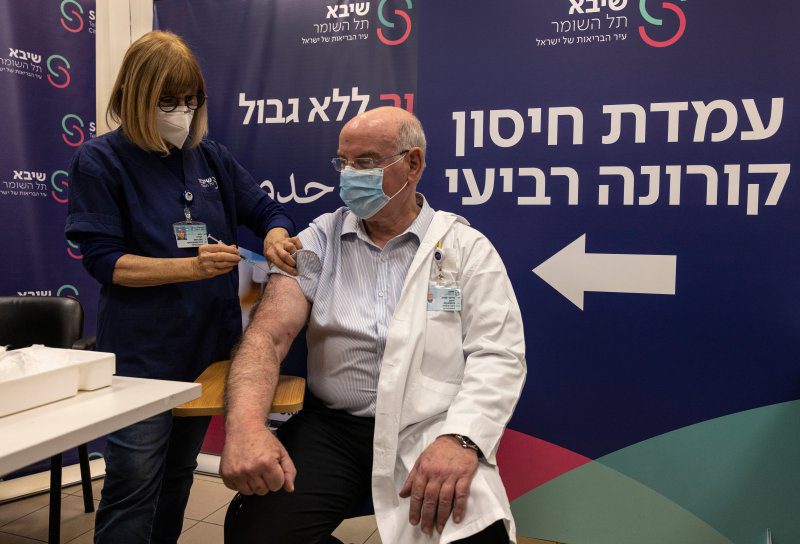
The CDC (Centers for Disease Control and Prevention) recommends a fourth COVID-19 booster.

An announcement we will hear sooner than later. If past patterns hold true, then we will begin to hear the messages sometime after the peak of Omicron, similar to how we were introduced to booster doses after the Delta variant’s peak.

This means the announcement will come sometime in late February or early March, as per current projections by the Institute for Health Metrics and Evaluation (IHME). With that, the patterns will emerge.

We will reference Israeli data on the benefits of a fourth booster. And almost reflexively, we will challenge the value of using Israeli data in the United States. Then there will be discussions about myocarditis risk and about global vaccine equity.

We will hear what we have already heard repackaged in new ways. This time, however, we must resist the urge to react to the messaging and focus on observing the patterns as they appear. The real lesson is in the patterns.

They reveal how our behavior determines our health outcomes. It is that simple and that complex. How we react to new medical information or to ongoing uncertainty determine the medical decisions we make. Effectively, these decisions are our clinical outcomes amortized over time. Only we do not perceive it this way.

The WHO (World Health Organization) has set ambitious goals for 2022. Recently, Director-General Dr. Tedros Ghebreyesus announced the organization will attempt to reach a global vaccination rate of 70% by midyear, ending – in his words – the acute phase of the pandemic.

For the vaccination rate to be realized and for the messaging to hold true, we must believe that the pandemic remains an immediate threat to our collective safety and that global vaccination is the solution. These are two major assumptions which have been repeatedly challenged throughout the pandemic. Through these challenges, we grappled with issues like vaccine hesitancy and government conspiracies.

These issues led to decisions that produced the clinical outcomes we now face. So if we wish to change the outcomes, then we must change the decisions. This starts by recognizing the patterns which will appear when the CDC tries convincing the public to get a fourth booster.

They emerge from the reactions to the messages. Not only what is said, but who said it and how it is conveyed. When Dr. Anthony Fauci boasted that he represents science, people reacted to the perceived arrogance in his words rather than to the authenticity in his efforts throughout the pandemic. Both perspectives may be true, he may be both sincere and arrogant, but people inevitably emphasize one aspect of communication and distill all the verbal and nonverbal cues down to that alone.

To determine whether public health messaging leads to behavioral changes, we must observe the pattern of reactions. The patterns that follow determine its effectiveness. The same patterns that produce fear and hesitancy can be modified to produce trust and cooperation.

Therefore, as policy experts prepare for a new phase of post-Omicron messaging, they would be wise to inject a sense of humility and self-awareness. It would be a refreshing change that would resonate strongly with the public – perhaps strongly enough to change behavior, which is the goal of public policy messaging.

Ultimately, it is about effective messaging, like most things in healthcare. We conflate quality of data with change in behavior when the two have nothing to do with each other. Healthcare is defined by the relationship between effective communication and corresponding medical decisions. A relationship based on patterns of reactions and behavioral responses.

To understand this is to learn the real lesson of the pandemic.

ShareTweet
Daily Remedy

Daily Remedy

Dr. Jay K Joshi serves as the editor-in-chief of Daily Remedy. He is a serial entrepreneur and sought after thought-leader for matters related to healthcare innovation and medical jurisprudence. He has published articles on a variety of healthcare topics in both peer-reviewed journals and trade publications. His legal writings include amicus curiae briefs prepared for prominent federal healthcare cases.

Leave a Reply Cancel reply

Your email address will not be published. Required fields are marked *

Videos

In this episode, the host discusses the significance of large language models (LLMs) in healthcare, their applications, and the challenges they face. The conversation highlights the importance of simplicity in model design and the necessity of integrating patient feedback to enhance the effectiveness of LLMs in clinical settings.

Takeaways
LLMs are becoming integral in healthcare.
They can help determine costs and service options.
Hallucination in LLMs can lead to misinformation.
LLMs can produce inconsistent answers based on input.
Simplicity in LLMs is often more effective than complexity.
Patient behavior should guide LLM development.
Integrating patient feedback is crucial for accuracy.
Pre-training models with patient input enhances relevance.
Healthcare providers must understand LLM limitations.
The best LLMs will focus on patient-centered care.

Chapters

00:00 Introduction to LLMs in Healthcare
05:16 The Importance of Simplicity in LLMs
The Future of LLMs in HealthcareDaily Remedy
YouTube Video U1u-IYdpeEk
Subscribe

AI Regulation and Deployment Is Now a Core Healthcare Issue

Clinical Reads

Ambient Artificial Intelligence Clinical Documentation: Workflow Support with Emerging Governance Risk

Ambient Artificial Intelligence Clinical Documentation: Workflow Support with Emerging Governance Risk

by Daily Remedy
February 1, 2026
0

Health systems are increasingly deploying ambient artificial intelligence tools that listen to clinical encounters and automatically generate draft visit notes. These systems are intended to reduce documentation burden and allow clinicians to focus more directly on patient interaction. At the same time, they raise unresolved questions about patient consent, data handling, factual accuracy, and legal responsibility for machine‑generated records. Recent policy discussions and legal actions suggest that adoption is moving faster than formal oversight frameworks. The practical clinical question is...

Read more

Join Our Newsletter!

Twitter Updates

Tweets by TheDailyRemedy

Popular

  • Powerful Phrases to Tell Patients

    Powerful Phrases to Tell Patients

    0 shares
    Share 0 Tweet 0
  • The Future of Healthcare Law

    0 shares
    Share 0 Tweet 0
  • Positions Currently in High Demand in the Medical Field

    0 shares
    Share 0 Tweet 0
  • How Medical Devices Are Properly Sterilized

    0 shares
    Share 0 Tweet 0
  • Price Transparency Is Rewiring Hospital–Startup Negotiations

    0 shares
    Share 0 Tweet 0
  • 628 Followers

Daily Remedy

Daily Remedy offers the best in healthcare information and healthcare editorial content. We take pride in consistently delivering only the highest quality of insight and analysis to ensure our audience is well-informed about current healthcare topics - beyond the traditional headlines.

Daily Remedy website services, content, and products are for informational purposes only. We do not provide medical advice, diagnosis, or treatment. All rights reserved.

Important Links

  • Support Us
  • About Us
  • Contact us
  • Privacy Policy
  • Terms and Conditions

Join Our Newsletter!

  • Survey
  • Podcast
  • About Us
  • Contact us

© 2026 Daily Remedy

No Result
View All Result
  • Home
  • Articles
  • Podcasts
  • Surveys
  • Courses
  • About Us
  • Contact us
  • Support Us
  • Official Learner

© 2026 Daily Remedy
