












Monday, March 30, 2026
ISSN 2765-8767
  • Survey
  • Podcast
  • Write for Us
  • My Account
  • Log In
Daily Remedy
  • Home
  • Articles
  • Podcasts
    The Hidden Costs Employers Don’t See in Traditional Health Plans

    The Hidden Costs Employers Don’t See in Traditional Health Plans

    March 22, 2026
    The Impact of COVID-19 on Patient Trust

    The Impact of COVID-19 on Patient Trust

    March 3, 2026
    Debunking Myths About GLP-1 Medications

    Debunking Myths About GLP-1 Medications

    February 16, 2026
    The Future of LLMs in Healthcare

    The Future of LLMs in Healthcare

    January 26, 2026
    The Future of Healthcare Consumerism

    The Future of Healthcare Consumerism

    January 22, 2026
    Your Body, Your Health Care: A Conversation with Dr. Jeffrey Singer

    Your Body, Your Health Care: A Conversation with Dr. Jeffrey Singer

    July 1, 2025
  • Surveys

    Surveys

    Public Sentiment on the Future of Peptides and Hormone Therapies in U.S. Medicine

    Public Sentiment on the Future of Peptides and Hormone Therapies in U.S. Medicine

    March 17, 2026
    Perceptions of Viral Wellness Practices on Social Media: A Likert-Scale Survey for Informed Readers

    Perceptions of Viral Wellness Practices on Social Media: A Likert-Scale Survey for Informed Readers

    March 1, 2026

    Survey Results

    Can you tell when your provider does not trust you?

    Can you tell when your provider does not trust you?

    January 18, 2026
    Do you believe national polls on health issues are accurate

    National health polls: trust in healthcare system accuracy?

    May 8, 2024
    Which health policy issues matter the most to Republican voters in the primaries?

    Which health policy issues matter the most to Republican voters in the primaries?

    May 14, 2024
    How strongly do you believe that you can tell when your provider does not trust you?

    How strongly do you believe that you can tell when your provider does not trust you?

    May 7, 2024
  • Courses
  • About Us
  • Contact us
  • Support Us
  • Official Learner
No Result
View All Result
  • Home
  • Articles
  • Podcasts
    The Hidden Costs Employers Don’t See in Traditional Health Plans

    The Hidden Costs Employers Don’t See in Traditional Health Plans

    March 22, 2026
    The Impact of COVID-19 on Patient Trust

    The Impact of COVID-19 on Patient Trust

    March 3, 2026
    Debunking Myths About GLP-1 Medications

    Debunking Myths About GLP-1 Medications

    February 16, 2026
    The Future of LLMs in Healthcare

    The Future of LLMs in Healthcare

    January 26, 2026
    The Future of Healthcare Consumerism

    The Future of Healthcare Consumerism

    January 22, 2026
    Your Body, Your Health Care: A Conversation with Dr. Jeffrey Singer

    Your Body, Your Health Care: A Conversation with Dr. Jeffrey Singer

    July 1, 2025
  • Surveys

    Surveys

    Public Sentiment on the Future of Peptides and Hormone Therapies in U.S. Medicine

    Public Sentiment on the Future of Peptides and Hormone Therapies in U.S. Medicine

    March 17, 2026
    Perceptions of Viral Wellness Practices on Social Media: A Likert-Scale Survey for Informed Readers

    Perceptions of Viral Wellness Practices on Social Media: A Likert-Scale Survey for Informed Readers

    March 1, 2026

    Survey Results

    Can you tell when your provider does not trust you?

    Can you tell when your provider does not trust you?

    January 18, 2026
    Do you believe national polls on health issues are accurate

    National health polls: trust in healthcare system accuracy?

    May 8, 2024
    Which health policy issues matter the most to Republican voters in the primaries?

    Which health policy issues matter the most to Republican voters in the primaries?

    May 14, 2024
    How strongly do you believe that you can tell when your provider does not trust you?

    How strongly do you believe that you can tell when your provider does not trust you?

    May 7, 2024
  • Courses
  • About Us
  • Contact us
  • Support Us
  • Official Learner
No Result
View All Result
Daily Remedy
No Result
View All Result
Home Politics & Law

Healthcare Dies in the Supreme Court

Daily Remedy by Daily Remedy
January 16, 2022
in Politics & Law
0
Healthcare Dies in the Supreme Court

The Supreme Court determines law, not just by what they rule, but in how they think.

How the Justices analyze healthcare law affects its interpretation, and consequently its implementation, throughout the lower courts.

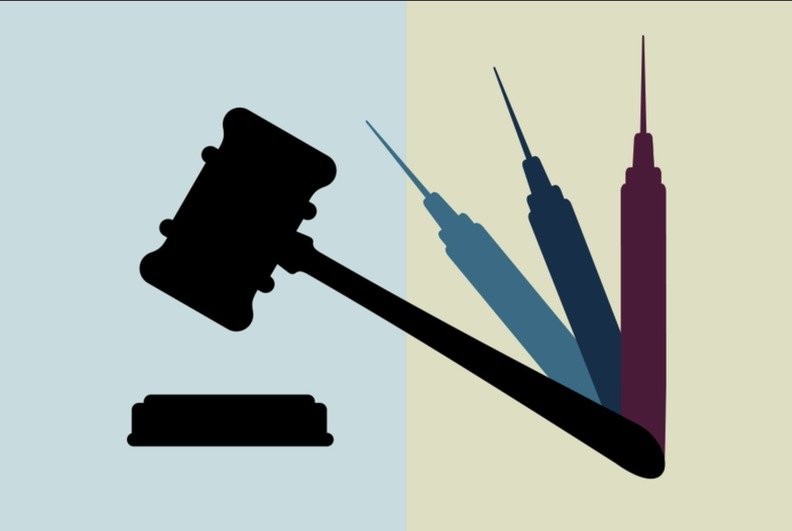
The ruling on vaccine mandates may have fallen along predictable partisan lines, with more conservative Justices ruling against private vaccine mandates and more liberal Justices ruling in favor of them. But the lack of judicial rigor in the decisions creates a concerning precedent for healthcare.

We find judges using preconceived beliefs or political affiliations as a proxy for the healthcare analysis itself. We seem to lack a standard framework to analyze healthcare law.

This was not always the case. In fact, many prominent Supreme Court Justices were known for their astute understanding of healthcare law. The Brandeis Brief, written by Justice Louis D. Brandeis, was known for its scientific rigor and paved the way for non-legal, clinical data to appear in federal courts.

Another prominent Justice who valued science in law, Oliver Wendell Holmes Jr., once wrote, “the life of the law has not been logic, it has been experience.” But his quotation is partially true in medicine, for when we interpret healthcare laws, we must account for the clinical logic underlying the intent of the law, and the experience of those who are most vulnerable to misinterpretations of the law.

We need both, logic and experience, balancing the interpretations of law to address the intended and unintended consequences, while distributing equitably rights afforded and burdens imposed upon those most vulnerable – as they experience the law.

When viewed in this way, healthcare becomes a complex concept similar to Saint Thomas Aquinas’ definition of complex concepts like virtue. Aquinas saw virtue as a complex concept which could manifest in multiple ways, emotional virtue or intellectual virtue, but the various components or attributes of virtue were not to be understood as separate concepts, rather as different manifestations of the same concept.

Hippocrates believed the logic of healthcare should be subservient to the experience of healthcare. When translated into healthcare law, this means laws should be defined primarily by how they affect the patient experience, not by any presumed logic or rationale independent of the patient.

Yet we see examples of misguided logic-driven laws throughout healthcare that fail to account for the experiential nature of healthcare. As a result, we have lost sight of what makes healthcare a fundamental liberty.

We must be weary of healthcare laws that appear logical, but place undue harms on individuals based on the experience they go through. In this manner, experience and logic become concepts to balance against one another, like assumed burdens.

President James Madison noted laws that distribute societal burdens among all equally are constitutionally sound laws. Accordingly, we must interpret healthcare laws that optimize healthcare experiences without incurring government encroachment upon select individuals on the basis of logic alone.

As healthcare advances technologically, the disparity between medicine and law will widen – creating a gap between healthcare behavior, which will grow more complex, and health care law, which will trend towards standardization.

At the center of this disparity resides uncertainty, which becomes more pronounced within the growing disparity of healthcare logic and experience.

In medical uncertainty, you think associatively and prospectively, aggregating clinical data in real time to identify the most likely clinical diagnosis and treatment. In legal uncertainty, you think linearly and retroactively, piecing together evidence after the fact to construct an argument.

Information that is available after the fact is often not available in real-time. More importantly, what is considered important in real-time can be retroactively reinterpreted to be more or less important afterwards – creating a tendency to simplify the complexity of medicine into contrived legal interpretations of clinical actions taken out of its appropriate context.

In law, we similarly simplify legal uncertainty into a decision of guilt or innocence. But legal uncertainty is equally complex and nuanced. It is a series of decisions to determine what specific actions define the whole of behavior. How much of each action influences the overall behavior, and what factors are attributed directly to the behavior in question.

The ability to discern legal uncertainty becomes particularly difficult when addressing individual actions within the complexity of healthcare – with its unique form of uncertainty.

We tend not to think about healthcare law this way, but the fundamental decision of guilt or innocence, of liability or responsibility, is a matter of relative uncertainty that we unconsciously simplify.

When we simplify healthcare behavior into legal interpretations, we tend to misunderstand and misinterpret it.

This is why medicine has always been considered more of an art than science until recent decades. Art is an expression of imagination, which can only be appreciated when viewed in its entirety – whether that is treating the whole patient or analyzing a physician’s decision within the full context of patient care.

Any clinical event, be it a patient encounter or a life threatening pandemic, is more than a series of discrete actions. It is a complex array of clinical decisions and clinical actions that interact in unique, often unpredictable ways. There will always be uncertainty within this complexity.

Indeed, many medical outcomes are only partially predictable and beyond a certain point, uncertainty is inevitable. These unique subtleties distinguishing medical uncertainty from legal uncertainty require us to be especially vigilant in how we understand healthcare law.

Let us hope the Supreme Court comes to recognize these subtleties.

ShareTweet
Daily Remedy

Daily Remedy

Dr. Jay K Joshi serves as the editor-in-chief of Daily Remedy. He is a serial entrepreneur and sought after thought-leader for matters related to healthcare innovation and medical jurisprudence. He has published articles on a variety of healthcare topics in both peer-reviewed journals and trade publications. His legal writings include amicus curiae briefs prepared for prominent federal healthcare cases.

Leave a Reply Cancel reply

Your email address will not be published. Required fields are marked *

Videos

Most employers are unknowingly steering their health plans toward higher costs and reduced control — until they understand how fiduciary missteps and anti-competitive contracts bleed their budgets dry. Katie Talento, a recognized health policy leader, reveals how shifting the network paradigm can save millions by emphasizing independent providers, direct contracting, and innovative tiering models.

Grounded in real-world case studies like Harris Rosen’s community-driven initiative, this episode dives deep into practical strategies to realign incentives—focusing on primary care, specialty care, and transparent vendor relationships. You'll discover how traditional carrier networks are often Trojan horses, locking employers into costly, opaque arrangements that undermine fiduciary duties. Katie breaks down simple yet powerful reforms: owning your data, eliminating conflicts of interest, and outlawing anti-competitive contract clauses.

We explore how a post-network framework—where patients are free to choose providers without restrictive network barriers—can massively reduce costs and improve health outcomes. You'll learn why independent, locally owned providers are vital to rebuilding trust, reducing unnecessary procedures, and reinvesting savings into the community. This conversation offers clarity on the unseen legal landmines employers face and actionable ways to craft health plans built on transparency, independence, and aligned incentives.

Perfect for HR pros, benefits advisors, physicians, and employer leaders committed to transforming healthcare from the ground up. If you’re tired of broken healthcare models draining your budget and frustrating your staff, this episode will empower you to take control by understanding and reshaping the very foundations of employer-sponsored health. Discover the blueprint for smarter, fairer, and more sustainable benefits.

Visit katytalento.com or allbetter.health to connect directly and explore how these innovations can work for your organization. Your path toward a healthier, more cost-effective future starts here.

Chapters

00:00 Introduction to Employer-Sponsored Health Plans
02:50 Understanding ERISA and Fiduciary Responsibilities
06:08 The Misalignment of Clinical and Financial Interests
08:54 Enforcement and Legal Implications for Employers
11:49 Redefining Networks: The Post-Network Framework
25:34 Navigating Healthcare Contracts and Cash Payments
27:31 Understanding Employer Health Plan Structures
28:04 The Role of Benefits Advisors in Health Plans
30:45 Governance and Data Ownership in Health Plans
37:05 Case Study: The Rosen Hotels' Health Model
41:33 Incentivizing Healthy Choices in Healthcare
47:22 Empowering Primary Care and Independent Providers
The Hidden Costs Employers Don’t See in Traditional Health Plans
YouTube Video xhks7YbmBoY
Subscribe

Policy Shift in Peptide Regulation

Clinical Reads

GLP-1 Drugs Have Moved Past Weight Loss. Medicine Has Not Fully Caught Up.

Glucagon-Like Peptide–Based Therapies and Longevity: Clinical Implications from Emerging Evidence

by Daily Remedy
March 1, 2026
0

Glucagon-like peptide–based therapies are increasingly used for weight management and glycemic control, but their potential impact on long-term survival remains uncertain. The clinical question addressed in this report is whether treatment with glucagon-like peptide receptor agonists is associated with reductions in all-cause mortality and age-related morbidity beyond their established metabolic effects. This question matters because these agents are now prescribed across broad patient populations, including individuals without diabetes, and long-term exposure may influence cardiovascular, oncologic, and neurodegenerative outcomes. Understanding whether...

Read more

Join Our Newsletter!

Twitter Updates

Tweets by TheDailyRemedy

Popular

  • Innocent Physician Still Punished

    Innocent Physician Still Punished

    0 shares
    Share 0 Tweet 0
  • The Intimacy Economy

    0 shares
    Share 0 Tweet 0
  • New RSV and Influenza Vaccine Rollout: Confronting Hesitancy, Supply Constraints, and Ethical Imperatives

    0 shares
    Share 0 Tweet 0
  • Dark Side of Medical Research

    1 shares
    Share 0 Tweet 0
  • The Price of Knowing You Might Live Longer

    0 shares
    Share 0 Tweet 0
  • 628 Followers

Daily Remedy

Daily Remedy offers the best in healthcare information and healthcare editorial content. We take pride in consistently delivering only the highest quality of insight and analysis to ensure our audience is well-informed about current healthcare topics - beyond the traditional headlines.

Daily Remedy website services, content, and products are for informational purposes only. We do not provide medical advice, diagnosis, or treatment. All rights reserved.

Important Links

  • Support Us
  • About Us
  • Contact us
  • Privacy Policy
  • Terms and Conditions

Join Our Newsletter!

  • Survey
  • Podcast
  • About Us
  • Contact us

© 2026 Daily Remedy

No Result
View All Result
  • Home
  • Articles
  • Podcasts
  • Surveys
  • Courses
  • About Us
  • Contact us
  • Support Us
  • Official Learner

© 2026 Daily Remedy

