












Saturday, February 14, 2026
ISSN 2765-8767
  • Survey
  • Podcast
  • Write for Us
  • My Account
  • Log In
Daily Remedy
  • Home
  • Articles
  • Podcasts
    The Future of LLMs in Healthcare

    The Future of LLMs in Healthcare

    January 26, 2026
    The Future of Healthcare Consumerism

    The Future of Healthcare Consumerism

    January 22, 2026
    Your Body, Your Health Care: A Conversation with Dr. Jeffrey Singer

    Your Body, Your Health Care: A Conversation with Dr. Jeffrey Singer

    July 1, 2025

    The cost structure of hospitals nearly doubles

    July 1, 2025
    Navigating the Medical Licensing Maze

    The Fight Against Healthcare Fraud: Dr. Rafai’s Story

    April 8, 2025
    Navigating the Medical Licensing Maze

    Navigating the Medical Licensing Maze

    April 4, 2025
  • Surveys

    Surveys

    AI in Healthcare Decision-Making

    AI in Healthcare Decision-Making

    February 1, 2026
    Patient Survey: Understanding Healthcare Consumerism

    Patient Survey: Understanding Healthcare Consumerism

    January 18, 2026

    Survey Results

    Can you tell when your provider does not trust you?

    Can you tell when your provider does not trust you?

    January 18, 2026
    Do you believe national polls on health issues are accurate

    National health polls: trust in healthcare system accuracy?

    May 8, 2024
    Which health policy issues matter the most to Republican voters in the primaries?

    Which health policy issues matter the most to Republican voters in the primaries?

    May 14, 2024
    How strongly do you believe that you can tell when your provider does not trust you?

    How strongly do you believe that you can tell when your provider does not trust you?

    May 7, 2024
  • Courses
  • About Us
  • Contact us
  • Support Us
  • Official Learner
No Result
View All Result
  • Home
  • Articles
  • Podcasts
    The Future of LLMs in Healthcare

    The Future of LLMs in Healthcare

    January 26, 2026
    The Future of Healthcare Consumerism

    The Future of Healthcare Consumerism

    January 22, 2026
    Your Body, Your Health Care: A Conversation with Dr. Jeffrey Singer

    Your Body, Your Health Care: A Conversation with Dr. Jeffrey Singer

    July 1, 2025

    The cost structure of hospitals nearly doubles

    July 1, 2025
    Navigating the Medical Licensing Maze

    The Fight Against Healthcare Fraud: Dr. Rafai’s Story

    April 8, 2025
    Navigating the Medical Licensing Maze

    Navigating the Medical Licensing Maze

    April 4, 2025
  • Surveys

    Surveys

    AI in Healthcare Decision-Making

    AI in Healthcare Decision-Making

    February 1, 2026
    Patient Survey: Understanding Healthcare Consumerism

    Patient Survey: Understanding Healthcare Consumerism

    January 18, 2026

    Survey Results

    Can you tell when your provider does not trust you?

    Can you tell when your provider does not trust you?

    January 18, 2026
    Do you believe national polls on health issues are accurate

    National health polls: trust in healthcare system accuracy?

    May 8, 2024
    Which health policy issues matter the most to Republican voters in the primaries?

    Which health policy issues matter the most to Republican voters in the primaries?

    May 14, 2024
    How strongly do you believe that you can tell when your provider does not trust you?

    How strongly do you believe that you can tell when your provider does not trust you?

    May 7, 2024
  • Courses
  • About Us
  • Contact us
  • Support Us
  • Official Learner
No Result
View All Result
Daily Remedy
No Result
View All Result
Home Perspectives

Gaming Therapy

Daily Remedy by Daily Remedy
August 8, 2021
in Perspectives
0

“From a clinical standpoint, he did the right thing – trust the patient and work to lower the quantity of medications”, Jennings says aloud, mostly to himself but also to his partner Martin, who scowls at the suggestion that the physician they are investigating, Dr. Orlando, may not have been prescribing medications illegally.

The two men hover over a shared rectangular desk, mirroring each other’s pose on opposite sides, with both hands pressed firmly on the table and the weight of their bodies evenly distributed between their legs and their extended arms. Their eyes dart from document to document as scores of papers lay dispersed over the desk, layer upon layer, covering the entire surface.

“Were any medications prescribed?”, Martin retorts with noticeable exacerbation. “Did he absolutely have to prescribe anything? Yes and no – done – that is a crime.” Martin fixes himself to stand erectly as he crosses his arm, prompting a side-eye glance from Jennings.

“Listen, prescribing is not a zero-sum game – it is not a ‘winner take all’. It is a mixed motive game, meaning they –doctor and patient – cooperate on some points, but not on others. Rather than focus on whether anything was prescribed or not prescribed, let’s look at the intention underlying the interaction – what was the motivation of Dr. Orlando – ”

“To illegally prescribe pills – ”, Martin interrupts, prompting an instinctive recoil from Jennings at the emotion underlying the words. “He’s a low life drug dealer masquerading as a physician”, Martin continues again reshuffling his posture as a reflection of his animation. Jennings takes an audible, deep breath, attempting to lower the escalating emotion from Martin, and speaks in a deliberate cadence.

“The basics of cooperation and noncooperation define the interaction”, Jennings continues, clearing his throat. “Let’s focus on where they interacted cooperatively and non-cooperatively, and determine the basis for criminality based upon that logic – how about that?”

Jennings looks directly into Martin’s eyes for any signs of a response, and takes an extra moment to observe any latent disgruntled feelings pent up in Martin’s body posture. After a brief respite, Jennings continues.

“The decision to prescribe was based on the undercover agent saying his leg cramps up, and his history of taking similar medications. Dr. Orlando did a basic overview work up, and then determined to prescribe – ”

“He simply put on a charade and then prescribed something without any legal documentation”, Martin interrupts again, breaking his silence, with much less emotional vigor this time around.

“Yes”, Jennings responds in stride, carrying the same urgency in his tone to match Martin. “Let’s look at the context around the prescribing. Previous cases looked at financial incentives – none – or an absence of a physical exam – which was present here – so we cannot rely on previous guidelines as a reference. And truthfully, most physicians are not stupid enough to blatantly run pill mills anymore. So we can’t just call it a charade and jump on this.”

Martin snorts just before churlishly responding, “so what are you saying – we just stop looking?”

“We change what we look at”, Jennings presses on, with an added emphasis in response to Martin’s tone of speech. “Where did they cooperate, where they did not, what was the basis for the decision, and how did the decision affect the overall care … ”

Jennings continues while Martin looks off, listlessly floating from document to document, seemingly listening but clearly disengaged. The debate between Martin and Jennings reflects an ongoing debate between how law enforcement should look at criminal acts in healthcare – through just the perspective of the act alone, or from the perspective of the entire context around the act.

Martin has been eyeing Dr. Orlando since he received anonymous tips that Dr. Orlando is running a pill mill, and sent an undercover agent to solicit medications – pills – by feigning an injury and acting as a patient. Since Dr. Orlando did indeed prescribe the agent medications, for Martin, that is all the proof he needs that Dr. Orlando is a criminal.

Jennings is not so sure, much to the chagrin of Martin. Jennings believes that additional data is required prior to crafting the narrative of a criminal physician – some breach of clinical protocol, of a guideline violated, something – but absent any true clinical training or medical understanding, Jennings and Martin are left to piece a puzzle with puzzle-pieces lacking any properly defined edges. What constitutes a crime, a violation of civic duty when a physician makes clinical decisions based upon of trust?

With no red-flag, or obvious criminal act found, Jennings and Martin began looking to ascribe possible ulterior motives to Dr. Orlando – shifting their focus from specific acts to defining the criminality by defining the decision-making.

But the analysis so far implicates the opposite – that Dr. Orlando is observing good clinical practice. They first assumed that any patient-physician encounter requires a level of relationship building – trust – and then determined how the basis of trust, or cooperation formed. If Dr. Orlando cooperated with his patients to provide good clinical care, then there is no crime. If he cooperated just to provide medications – pills – then there is a basis for a crime.

“How do we define a basis for cooperation?”, Martin asks, not even attempting to hide his incredulous disposition. “Let’s just plant a few seeds that look good for the undercover video, show that the agent is faking for pills, and see if we can get this doctor to bite.”

Jennings rolls his eyes, not meriting Martin’s comment with a response. He attempts to change the course of the conversation with another audible deep breath, and begins a series of rhetorical questions.

“Why do physicians prescribe medications just on the basis of trust alone? I mean I trust my physician, but I’m a cop, and they know I’m a cop, so does that make the relationship different? Don’t physicians know the legal risk they are putting themselves in just by trusting their patients without requiring legal verification?

They know we’re watching them. If that were the case, and I was a physician, I wouldn’t trust anybody – I would just document everything and have a lawyer regularly review everything.”

“And this Orlando guy didn’t do that – so he’s a criminal”, Martin reasons, attempting to convince Jennings by manipulating Jennings’ line of reasoning. But Jennings remains lost in thought, and begins to shake his head slowly, now talking a bit more softly.

“By altering the basis of communication and redefining the patient-physician encounter, we change the natural behavior of physicians, we’re influencing the act of a crime. Which means we are entrapping by redefining the definition of a crime – but we can’t charge someone for a crime we help create …”

Martin rolls his eyes glaringly so that Jennings can see his frustration. But what Jennings realizes, and Martin fails to realize, is that law was never meant to influence healthcare. Law regulates healthcare without influencing healthcare.

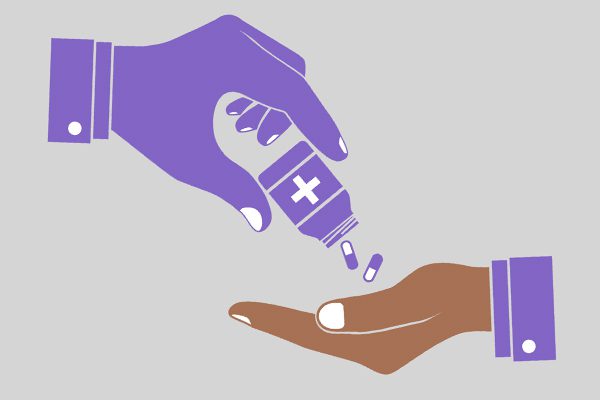
And what Jennings is starting to realize – his eyes widening with the growing understanding – is that trust turns the patient-physician encounter into a nonzero sum game, whereas a traditional drug deal is by nature a zero sum game. The behavioral dynamics for a nonzero sum game are far more complicated and nuanced, and therefore warrant a far more sophisticated approach to investigate.

An approach Jennings realizes he does not have.

But when you are a hammer, everything looks like a nail. And for most agents like Martin, forgoing the complications and the nuances – it is simply about pounding away.


ShareTweet
Daily Remedy

Daily Remedy

Dr. Jay K Joshi serves as the editor-in-chief of Daily Remedy. He is a serial entrepreneur and sought after thought-leader for matters related to healthcare innovation and medical jurisprudence. He has published articles on a variety of healthcare topics in both peer-reviewed journals and trade publications. His legal writings include amicus curiae briefs prepared for prominent federal healthcare cases.

Leave a Reply Cancel reply

Your email address will not be published. Required fields are marked *

Videos

In this episode, the host discusses the significance of large language models (LLMs) in healthcare, their applications, and the challenges they face. The conversation highlights the importance of simplicity in model design and the necessity of integrating patient feedback to enhance the effectiveness of LLMs in clinical settings.

Takeaways
LLMs are becoming integral in healthcare.
They can help determine costs and service options.
Hallucination in LLMs can lead to misinformation.
LLMs can produce inconsistent answers based on input.
Simplicity in LLMs is often more effective than complexity.
Patient behavior should guide LLM development.
Integrating patient feedback is crucial for accuracy.
Pre-training models with patient input enhances relevance.
Healthcare providers must understand LLM limitations.
The best LLMs will focus on patient-centered care.

Chapters

00:00 Introduction to LLMs in Healthcare
05:16 The Importance of Simplicity in LLMs
The Future of LLMs in HealthcareDaily Remedy
YouTube Video U1u-IYdpeEk
Subscribe

AI Regulation and Deployment Is Now a Core Healthcare Issue

Clinical Reads

Ambient Artificial Intelligence Clinical Documentation: Workflow Support with Emerging Governance Risk

Ambient Artificial Intelligence Clinical Documentation: Workflow Support with Emerging Governance Risk

by Daily Remedy
February 1, 2026
0

Health systems are increasingly deploying ambient artificial intelligence tools that listen to clinical encounters and automatically generate draft visit notes. These systems are intended to reduce documentation burden and allow clinicians to focus more directly on patient interaction. At the same time, they raise unresolved questions about patient consent, data handling, factual accuracy, and legal responsibility for machine‑generated records. Recent policy discussions and legal actions suggest that adoption is moving faster than formal oversight frameworks. The practical clinical question is...

Read more

Join Our Newsletter!

Twitter Updates

Tweets by TheDailyRemedy

Popular

  • The Information Epidemic: How Digital Health Misinformation Is Rewiring Clinical Risk

    The Information Epidemic: How Digital Health Misinformation Is Rewiring Clinical Risk

    0 shares
    Share 0 Tweet 0
  • Prevention Is Having a Moment and a Measurement Problem

    0 shares
    Share 0 Tweet 0
  • Health Technology Assessment Is Moving Upstream

    0 shares
    Share 0 Tweet 0
  • Behavioral Health Is Now a Network Phenomenon

    0 shares
    Share 0 Tweet 0
  • The Breach Is the Diagnosis: Cybersecurity Has Become a Clinical Risk Variable

    0 shares
    Share 0 Tweet 0
  • 628 Followers

Daily Remedy

Daily Remedy offers the best in healthcare information and healthcare editorial content. We take pride in consistently delivering only the highest quality of insight and analysis to ensure our audience is well-informed about current healthcare topics - beyond the traditional headlines.

Daily Remedy website services, content, and products are for informational purposes only. We do not provide medical advice, diagnosis, or treatment. All rights reserved.

Important Links

  • Support Us
  • About Us
  • Contact us
  • Privacy Policy
  • Terms and Conditions

Join Our Newsletter!

  • Survey
  • Podcast
  • About Us
  • Contact us

© 2026 Daily Remedy

No Result
View All Result
  • Home
  • Articles
  • Podcasts
  • Surveys
  • Courses
  • About Us
  • Contact us
  • Support Us
  • Official Learner

© 2026 Daily Remedy
