







Friday, February 20, 2026
ISSN 2765-8767
  • Survey
  • Podcast
  • Write for Us
  • My Account
  • Log In
Daily Remedy
  • Home
  • Articles
  • Podcasts
    Debunking Myths About GLP-1 Medications

    Debunking Myths About GLP-1 Medications

    February 16, 2026
    The Future of LLMs in Healthcare

    The Future of LLMs in Healthcare

    January 26, 2026
    The Future of Healthcare Consumerism

    The Future of Healthcare Consumerism

    January 22, 2026
    Your Body, Your Health Care: A Conversation with Dr. Jeffrey Singer

    Your Body, Your Health Care: A Conversation with Dr. Jeffrey Singer

    July 1, 2025

    The cost structure of hospitals nearly doubles

    July 1, 2025
    Navigating the Medical Licensing Maze

    The Fight Against Healthcare Fraud: Dr. Rafai’s Story

    April 8, 2025
  • Surveys

    Surveys

    How Confident Are You in RFK Jr.’s Health Leadership?

    How Confident Are You in RFK Jr.’s Health Leadership?

    February 16, 2026
    AI in Healthcare Decision-Making

    AI in Healthcare Decision-Making

    February 1, 2026

    Survey Results

    Can you tell when your provider does not trust you?

    Can you tell when your provider does not trust you?

    January 18, 2026
    Do you believe national polls on health issues are accurate

    National health polls: trust in healthcare system accuracy?

    May 8, 2024
    Which health policy issues matter the most to Republican voters in the primaries?

    Which health policy issues matter the most to Republican voters in the primaries?

    May 14, 2024
    How strongly do you believe that you can tell when your provider does not trust you?

    How strongly do you believe that you can tell when your provider does not trust you?

    May 7, 2024
  • Courses
  • About Us
  • Contact us
  • Support Us
  • Official Learner
No Result
View All Result
  • Home
  • Articles
  • Podcasts
    Debunking Myths About GLP-1 Medications

    Debunking Myths About GLP-1 Medications

    February 16, 2026
    The Future of LLMs in Healthcare

    The Future of LLMs in Healthcare

    January 26, 2026
    The Future of Healthcare Consumerism

    The Future of Healthcare Consumerism

    January 22, 2026
    Your Body, Your Health Care: A Conversation with Dr. Jeffrey Singer

    Your Body, Your Health Care: A Conversation with Dr. Jeffrey Singer

    July 1, 2025

    The cost structure of hospitals nearly doubles

    July 1, 2025
    Navigating the Medical Licensing Maze

    The Fight Against Healthcare Fraud: Dr. Rafai’s Story

    April 8, 2025
  • Surveys

    Surveys

    How Confident Are You in RFK Jr.’s Health Leadership?

    How Confident Are You in RFK Jr.’s Health Leadership?

    February 16, 2026
    AI in Healthcare Decision-Making

    AI in Healthcare Decision-Making

    February 1, 2026

    Survey Results

    Can you tell when your provider does not trust you?

    Can you tell when your provider does not trust you?

    January 18, 2026
    Do you believe national polls on health issues are accurate

    National health polls: trust in healthcare system accuracy?

    May 8, 2024
    Which health policy issues matter the most to Republican voters in the primaries?

    Which health policy issues matter the most to Republican voters in the primaries?

    May 14, 2024
    How strongly do you believe that you can tell when your provider does not trust you?

    How strongly do you believe that you can tell when your provider does not trust you?

    May 7, 2024
  • Courses
  • About Us
  • Contact us
  • Support Us
  • Official Learner
No Result
View All Result
Daily Remedy
No Result
View All Result
Home Trends

Creatine Isn’t Just for Gym Rats—It Might Be Brain Fuel for the Long Haul

A growing stack of randomized trials and imaging studies suggests creatine monohydrate may sharpen memory, protect aging neurons, and even slow Alzheimer’s—though the data remain a tug-of-war between hope and hype.

Kumar Ramalingam by Kumar Ramalingam
June 20, 2025
in Trends
0

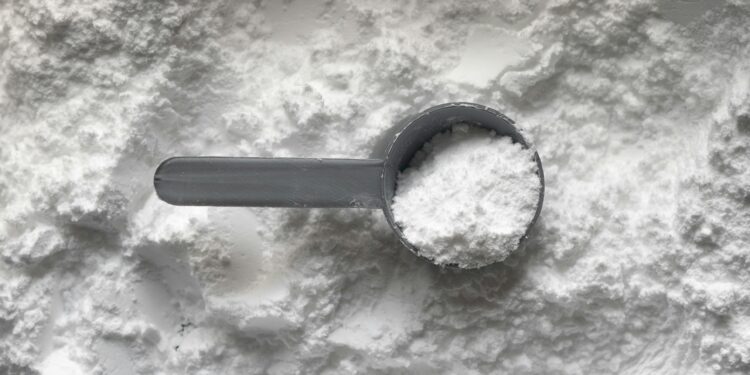
The teaspoon of chalky powder that lifters swirl into a shaker bottle could soon be swirling through neurology clinics.

Creatine monohydrate—icon of weight-room culture and $600-million supplement aisles—has quietly invaded neuroscience journals. The logic feels almost too tidy: if creatine recycles ATP to power a muscle contraction, why couldn’t the same phosphagen circuit rescue neurons laboring through calculus homework or the metabolic stress of aging? Over the past decade, researchers have marched from Petri dishes to phosphorous-31 magnetic resonance spectroscopy (³¹P-MRS), tallying whether extra creatine translates into sharper memory, faster reasoning, or slower cognitive decline. The results are promising enough that Verywell Health recently headlined the compound as a “potential brain booster for stressed or aging neurons” (Verywell Health). Yet meta-analyses caution that benefits hinge on context—age, diet, sleep debt, even dosage timing.

1 | From Bench Curiosity to Double-Blind Trials

The modern trail began in 2003, when Australian neuroscientist Caroline Rae fed 20 grams of creatine per day to vegetarian adults in a crossover, placebo-controlled design and measured a 20 % leap in working-memory scores after six weeks (Rae et al., Proceedings B). Because vegetarians ingest minimal dietary creatine, the study doubled as a “deficiency model,” asserting that brain phosphocreatine stores—and performance—are diet-responsive.

Replication followed in disparate settings:

  • Sleep-Deprivation Model (2024). German investigators dosed healthy adults with a single 35-gram bolus, then kept them awake 21 hours. ³¹P-MRS scans showed preserved ATP and phosphocreatine ratios, while psychomotor vigilance rose 18 % versus placebo (Scientific Reports).
  • Alzheimer’s Pilot (2025). University of Kansas clinicians randomized 26 patients to 20 g/day creatine or placebo for 12 weeks. Feasibility endpoints cleared, and treated patients posted small but significant gains on logical-memory recall (Alzheimer’s & Dementia: TRCI).
  • Systematic Review Signal. A 2022 meta-review in Nutrition Reviews concluded creatine “enhances measures of memory performance, particularly in older adults” (Nutrition Reviews).

But science abhors one-sided stories. A 2023 umbrella review in BMC Medicine found “no robust cognitive effect in young, healthy participants under resting conditions,” pointing to underpowered samples and heterogeneous tasks (BMC Medicine). In other words, creatine may work best when brains are energy-starved—aging, sleep-deprived, or neurodegenerating.

2 | How Researchers Test Brain Creatine—and Why It’s Tricky

2.1 The Phosphagen Circuit

Creatine accepts a phosphate from ATP, becoming phosphocreatine (PCr), which can resupply ADP back to ATP in milliseconds. Neurons—especially hippocampal—are thought to need quick ATP surges during memory encoding.

2.2 ³¹P-MRS Imaging

Unlike muscle biopsies, brains resist needle sticks. Scientists therefore lean on ³¹P-MRS, which quantifies PCr/ATP ratios non-invasively. The German sleep-deprivation study captured metabolic snapshots every three hours, demonstrating that creatine blunted the ATP drop typically seen in sleepless subjects.

2.3 Study-Design Nuts & Bolts

  • Dosing: Trials vary from 5 g/day maintenance to 0.35 g/kg acute loads.
  • Population Filtering: Many exclude habitual meat-eaters to see bigger deltas.
  • Cognitive Batteries: From serial sevens and Raven’s Matrices to complex logical-memory paradigms, heterogeneity muddies pooled analyses.
  • Blinding Challenges: Creatine’s gritty texture and weight gain risk unmasking participants; some teams now use micronized placebo to match mouthfeel.

3 | Mechanistic Theories Beyond ATP

  1. Osmolyte Action. Creatine draws water, potentially stabilizing neuronal membranes and myo-inositol dynamics.
  2. Neurotransmitter Crosstalk. Animal data show up-regulated dopamine and GABA synthesis after supplementation, pathways linked to working memory and mood.
  3. Antioxidant Buffering. By maintaining higher PCr, cells may dampen ROS spikes during metabolic stress—relevant in Alzheimer’s where mitochondrial dysfunction is rife.

4 | Human Stories Behind the Data

  • Dani (Age 22, College Senior). Running on four hours’ sleep before finals, she joined a campus trial testing 20 g creatine for five days. “My stats class felt less foggy,” she recalls. Her Stroop-test latency dropped 60 milliseconds, mirroring cohort averages.
  • Graham (Age 68, Retired Engineer). Diagnosed with mild cognitive impairment, he enrolled in the Kansas pilot. MRI spectroscopy showed a 7 % jump in hippocampal PCr/ATP after six weeks. “I’m still the slowest player at bridge,” he jokes, “but at least I remember trump.”
  • Linda (Age 35, Vegan Marathoner). After persistent runner’s brain fog, she added 5 g/day creatine. Within a month she shaved 30 seconds off a 5 k time trial and scored higher on n-back tasks tracked by her Garmin app.

Anecdotes aren’t evidence, but they animate spreadsheets—reminding scientists that outcome measures translate to lived clarity.

5 | The Skeptics and the Statistical Gray

Critics note that some trials rely on small samples (<30) and p-values hover near 0.05, inviting false-positive worries. A 2024 meta-analysis in Frontiers in Nutrition pooled 11 RCTs and declared “no significant overall effect,” though subgroup parsing hinted benefits in adults over 60 (Frontiers in Nutrition). Meta-analysts flagged publication bias—null studies sit unpublished in file drawers—and called for larger, multisite RCTs with standardized cognitive batteries.

6 | Safety and Dosing: How Much Powder Is Brain-Friendly?

Regulatory agencies class creatine as “generally recognized as safe” up to 5 g/day for healthy kidneys. Yet cognitive studies often push 20 g/day loading phases. Nephrologists remind that high doses transiently raise serum creatinine, risking diagnostic confusion with renal impairment. The EatingWell nutrition desk underscores third-party testing to dodge heavy-metal contaminants (EatingWell).

7 | Economic and Policy Implications

Global creatine sales already top $600 million; a cognitive-health halo could balloon demand, stressing raw-material supply chains mostly concentrated in Germany and China. Public-health strategists debate whether over-the-counter access democratizes brain health or floods the market with under-dosed knock-offs. Meanwhile, NIH’s Nutritional Neuroscience Initiative has earmarked $12 million for a forthcoming Creatine and Aging Memory (CREAM) Trial—600 participants, 12 months, Bayesian adaptive design.

8 | Unanswered Questions Steering the Next Decade

  • Responder Phenotypes: Do APOE ε4 carriers benefit more—or less—from creatine’s mitochondrial support?
  • Synergy With Exercise: Early data suggest aerobic training and creatine may synergize on BDNF up-regulation; mechanism unknown.
  • Microbiome Crosstalk: Gut bacteria metabolize creatine to creatinine—does microbiota composition modulate brain uptake?
  • Longevity Signals: Rodent data hint at lifespan extension via creatine; human trials remain non-existent.

Conclusion | Why a Gym Supplement May Earn a Lab Coat

Creatine’s journey from squat rack to neurology ward exemplifies translational science: an old molecule, new questions, iterative trials. The evidence is neither miracle nor mirage. It suggests a conditional truth: when brains labor under energy debt—be it sleep deprivation, vegetarian diets, or neurodegeneration—creatine can tip the metabolic scales toward clarity. In well-fed, well-rested youth, the powder may do little more than thicken a protein shake.

Still, the prospect of a cheap, safe compound that widens the brain’s energy margin is hard to ignore. As large-scale trials recruit, one takeaway endures: cognition, like muscle, thrives on fuel. Perhaps the age-old gym motto—“feed the gains”—was always half-right. It’s time to see whether the mind can flex, too, on a scoop of creatine.


ShareTweet
Kumar Ramalingam

Kumar Ramalingam

Kumar Ramalingam is a writer focused on the intersection of science, health, and policy, translating complex issues into accessible insights.

Leave a Reply Cancel reply

Your email address will not be published. Required fields are marked *

Videos

This conversation focuses on debunking myths surrounding GLP-1 medications, particularly the misinformation about their association with pancreatic cancer. The speaker emphasizes the importance of understanding clinical study designs, especially the distinction between observational studies and randomized controlled trials. The discussion highlights the need for patients to critically evaluate the sources of information regarding medication side effects and to empower themselves in their healthcare decisions.

Takeaways
GLP-1 medications are not linked to pancreatic cancer.
Peer-reviewed studies debunk misinformation about GLP-1s.
Anecdotal evidence is not reliable for general conclusions.
Observational studies have limitations in generalizability.
Understanding study design is crucial for evaluating claims.
Symptoms should be discussed in the context of clinical conditions.
Not all side effects reported are relevant to every patient.
Observational studies can provide valuable insights but are context-specific.
Patients should critically assess the relevance of studies to their own experiences.
Engagement in discussions about specific studies can enhance understanding

Chapters
00:00
Debunking GLP-1 Medication Myths
02:56
Understanding Clinical Study Designs
05:54
The Role of Observational Studies in Healthcare
Debunking Myths About GLP-1 Medications
YouTube Video DM9Do_V6_sU
Subscribe

2027 Medicare Advantage & Part D Advance Notice

Clinical Reads

BIIB080 in Mild Alzheimer’s Disease: What a Phase 1b Exploratory Clinical Analysis Can—and Cannot—Tell Us

BIIB080 in Mild Alzheimer’s Disease: What a Phase 1b Exploratory Clinical Analysis Can—and Cannot—Tell Us

by Daily Remedy
February 15, 2026
0

Can lowering tau biology translate into a clinically meaningful slowing of decline in people with early symptomatic Alzheimer’s disease? That is the practical question behind BIIB080, an intrathecal antisense therapy designed to reduce production of tau protein by targeting the tau gene transcript. In a phase 1b program originally designed for safety and dosing, investigators later examined cognitive, functional, and global outcomes as exploratory endpoints. The clinical question matters because current disease-modifying options primarily target amyloid, while tau pathology tracks...

Read more

Join Our Newsletter!

Twitter Updates

Tweets by TheDailyRemedy

Popular

  • The Prevention Gap in Dementia Care

    The Prevention Gap in Dementia Care

    0 shares
    Share 0 Tweet 0
  • Healthcare Natural Rights

    0 shares
    Share 0 Tweet 0
  • Healthcare in Space

    1 shares
    Share 0 Tweet 0
  • Heat Safety Tips Every Pregnant Mother Should Know

    0 shares
    Share 0 Tweet 0
  • What is the 411 on the New 988 Hotline?

    0 shares
    Share 0 Tweet 0
  • 628 Followers

Daily Remedy

Daily Remedy offers the best in healthcare information and healthcare editorial content. We take pride in consistently delivering only the highest quality of insight and analysis to ensure our audience is well-informed about current healthcare topics - beyond the traditional headlines.

Daily Remedy website services, content, and products are for informational purposes only. We do not provide medical advice, diagnosis, or treatment. All rights reserved.

Important Links

  • Support Us
  • About Us
  • Contact us
  • Privacy Policy
  • Terms and Conditions

Join Our Newsletter!

  • Survey
  • Podcast
  • About Us
  • Contact us

© 2026 Daily Remedy

No Result
View All Result
  • Home
  • Articles
  • Podcasts
  • Surveys
  • Courses
  • About Us
  • Contact us
  • Support Us
  • Official Learner

© 2026 Daily Remedy