












Saturday, February 21, 2026
ISSN 2765-8767
  • Survey
  • Podcast
  • Write for Us
  • My Account
  • Log In
Daily Remedy
  • Home
  • Articles
  • Podcasts
    Debunking Myths About GLP-1 Medications

    Debunking Myths About GLP-1 Medications

    February 16, 2026
    The Future of LLMs in Healthcare

    The Future of LLMs in Healthcare

    January 26, 2026
    The Future of Healthcare Consumerism

    The Future of Healthcare Consumerism

    January 22, 2026
    Your Body, Your Health Care: A Conversation with Dr. Jeffrey Singer

    Your Body, Your Health Care: A Conversation with Dr. Jeffrey Singer

    July 1, 2025

    The cost structure of hospitals nearly doubles

    July 1, 2025
    Navigating the Medical Licensing Maze

    The Fight Against Healthcare Fraud: Dr. Rafai’s Story

    April 8, 2025
  • Surveys

    Surveys

    How Confident Are You in RFK Jr.’s Health Leadership?

    How Confident Are You in RFK Jr.’s Health Leadership?

    February 16, 2026
    AI in Healthcare Decision-Making

    AI in Healthcare Decision-Making

    February 1, 2026

    Survey Results

    Can you tell when your provider does not trust you?

    Can you tell when your provider does not trust you?

    January 18, 2026
    Do you believe national polls on health issues are accurate

    National health polls: trust in healthcare system accuracy?

    May 8, 2024
    Which health policy issues matter the most to Republican voters in the primaries?

    Which health policy issues matter the most to Republican voters in the primaries?

    May 14, 2024
    How strongly do you believe that you can tell when your provider does not trust you?

    How strongly do you believe that you can tell when your provider does not trust you?

    May 7, 2024
  • Courses
  • About Us
  • Contact us
  • Support Us
  • Official Learner
No Result
View All Result
  • Home
  • Articles
  • Podcasts
    Debunking Myths About GLP-1 Medications

    Debunking Myths About GLP-1 Medications

    February 16, 2026
    The Future of LLMs in Healthcare

    The Future of LLMs in Healthcare

    January 26, 2026
    The Future of Healthcare Consumerism

    The Future of Healthcare Consumerism

    January 22, 2026
    Your Body, Your Health Care: A Conversation with Dr. Jeffrey Singer

    Your Body, Your Health Care: A Conversation with Dr. Jeffrey Singer

    July 1, 2025

    The cost structure of hospitals nearly doubles

    July 1, 2025
    Navigating the Medical Licensing Maze

    The Fight Against Healthcare Fraud: Dr. Rafai’s Story

    April 8, 2025
  • Surveys

    Surveys

    How Confident Are You in RFK Jr.’s Health Leadership?

    How Confident Are You in RFK Jr.’s Health Leadership?

    February 16, 2026
    AI in Healthcare Decision-Making

    AI in Healthcare Decision-Making

    February 1, 2026

    Survey Results

    Can you tell when your provider does not trust you?

    Can you tell when your provider does not trust you?

    January 18, 2026
    Do you believe national polls on health issues are accurate

    National health polls: trust in healthcare system accuracy?

    May 8, 2024
    Which health policy issues matter the most to Republican voters in the primaries?

    Which health policy issues matter the most to Republican voters in the primaries?

    May 14, 2024
    How strongly do you believe that you can tell when your provider does not trust you?

    How strongly do you believe that you can tell when your provider does not trust you?

    May 7, 2024
  • Courses
  • About Us
  • Contact us
  • Support Us
  • Official Learner
No Result
View All Result
Daily Remedy
No Result
View All Result
Home Financial Markets

COVID’s K-Shaped Recovery

Daily Remedy by Daily Remedy
August 8, 2021
in Financial Markets
0

Famed economist John Maynard Keynes described the economy as a social organism, alluding to the vast interdependent network of industries that depend upon one another. Like all organisms, economies adjust, thriving in favorable environments, and evolving in unfavorable ones. Well ahead of his time, Keynes noted that to truly understand how economies adjust to changing circumstances over time, we must account for the social and psychological elements that influence the behavior of the public.

A lesson not lost upon economists today, as many are developing models to predict how economies will rebound post-pandemic by accounting for post-pandemic consumer behavior in their models. While most project an optimistic 2021, there are a few economists taking a more nuanced approach in projecting post-pandemic economic growth.

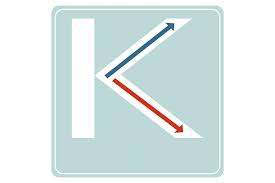
Leading economists within the International Monetary Fund and JP Morgan are predicting a K-shaped recovery, which derives its name from the diverging paths taken by different parts of the economy, resembling the two arms of the Roman letter “K” when charted over time.

According to a report by JP Morgan, K-shaped recoveries occur when different parts of the economy recover at different rates – which are in contrast with a more uniform recovery across different industries within the economy. A K-shaped recovery implies that there will be structural changes in the economy or within the broader society due to fundamental changes in the economy transpiring over the course of the K-shaped recovery.

Early in the pandemic we realized that economic recovery may be slow and may lag the initial, more optimistic projections by months. Late in the pandemic we found that while recovery may be slower than other non-pandemic recessions, recovery also appears to be disjointed, that certain parts of the economy are recovering faster than other parts.

Something not normally seen in most recessions, but commonly seen when the economy is undergoing fundamental, structural changes in the process of recovering from the recession. And when we examine the fundamental, structural changes currently taking place in our economy, the most immediate, apparent change is the change in patient behavior.

When observed in aggregate, changing patient behavior predicts changing consumer behavior, and changing consumer behavior changes spending behavior across various industries within the economy.

Simply put, people are now prioritizing – more than ever before – their basic health when making fundamental economic decisions.

A shift not yet appreciated among foremost economic leaders. The World Economic Forum seems to believe that the diverging patterns of economic recovery are demarcated along traditional lines of economic recovery, the commonly observed split between large corporate conglomerates and individual consumers. Through this belief, the forum argues that economic aid to individuals would help spur economic growth where it is most vulnerable.

Yet we have seen what most consumers do when offered economic aid in the form of stimulus packages during the pandemic – they save, they do not spend. This means they do not contribute to economic growth, since economic growth comes from spending, whether that is spending as consumers or spending as small businesses.

According to the National Bureau of Economic Research, 60% of the stimulus spending from the Coronavirus Aid, Relief, and Economic Security (CARES) Act went to pay off debt or was saved, with 20% using nearly all the stimulus payments to pay off debts. Of the roughly 40% that was spent on goods and services, consumers favored food and beauty products rather than large durables goods like cars or appliances – the latter of which would have maximized the positive impact on the economy.

The counterintuitive effects of the stimulus were surprising, though not entirely unexpected, as many economists have argued that a pandemic-driven recession is different than a traditional recession – which means the economic tools that can encourage recovery out of this pandemic must also be different.

To understand these tools, we must change how we perceive consumers, and incorporate a heightened emphasis on public health in consumer decision-making – merging the perceptions of patients and consumers into a new combined entity, called healthcare consumerism.

And consequently, view economic recovery in terms of healthcare consumerism, modeling consumer behavior in lieu of their behavior as patients.

An analysis conducted by the Boston Consulting Group seems to corroborate this notion. In a recent white paper, the firm compared how various industries have been affected by the current pandemic-led recession relative to the Great Recession just over a decade ago, and found the greatest disparity came from the healthcare sectors. While nearly all industries showed different degrees of losses in both recessions, the biopharma, medtech, and healthcare provider sectors demonstrated positive growth during this current recession, while showing losses similar to other sectors during the Great Recession.

While the reasons for the disparity may seem obvious – after all it was a viral pandemic that caused the current economic downturn – the disparity should have prompted new insights into post-pandemic consumer spending, which should have then prompted new solutions to promote consumer spending. Yet it did not. We still tried the same methods with considerably less effectiveness.

Healthcare consumer behavior is distinct from traditional consumer behavior. The fear of public health risks upon individual decision-making – whether it is deciding what job to take or where to vacation with friends – is far more pronounced in healthcare consumer behavior.

Something manifestly apparent as we look across our society, we see certain groups thriving while others are still struggling even in the latter days of the pandemic. Employees able to work from home have maintained jobs and income, accumulating more savings while others have lost their jobs and income, or closed businesses and have struggled to household expenses.

This disparity is the real divide creating the diverging patterns in the K-shaped curve – which we can analyze by studying the changing consumption patterns among healthcare consumers.

Through our own internal surveys and by referencing data derived from the McKinsey Global Institute, we were able to decipher certain patterns of behavior that are likely to persist, and certain patterns of behavior that are likely to fade once the pandemic passes into the annals of history. And by studying the patterns of behavior, we can predict the parts of the economy that are likely to grow.

Behaviors that will become increasingly prevalent – online grocery shopping, virtual healthcare experiences, home goods and services

Behaviors that will become less common – live entertainment, virtual education, restaurant dining

The distinguishing factor to determine whether a particular behavior will become more or less prevalent is to compare the health risk relative to the value gleaned per behavior. Those behaviors that put individuals at a greater health risk without a commensurate increase in value to the consumer will become less common.

But other behaviors, such as virtual health, which provides healthcare engagements at the convenience of home, or without the normally abhorrent wait times, provides minimal health risk while maximizing the value of convenience to the consumer.

Post-pandemic healthcare consumerism is a relatively new trend which will define public consumption patterns for years to come. While we are still learning how these trends will play out, we can safety surmise that studying healthcare consumerism as a ratio – health risk to value gleaned – will predict the likely trend for that behavior.

Revealing how the social organism will adjust to the post-pandemic economy.

ShareTweet
Daily Remedy

Daily Remedy

Dr. Jay K Joshi serves as the editor-in-chief of Daily Remedy. He is a serial entrepreneur and sought after thought-leader for matters related to healthcare innovation and medical jurisprudence. He has published articles on a variety of healthcare topics in both peer-reviewed journals and trade publications. His legal writings include amicus curiae briefs prepared for prominent federal healthcare cases.

Leave a Reply Cancel reply

Your email address will not be published. Required fields are marked *

Videos

This conversation focuses on debunking myths surrounding GLP-1 medications, particularly the misinformation about their association with pancreatic cancer. The speaker emphasizes the importance of understanding clinical study designs, especially the distinction between observational studies and randomized controlled trials. The discussion highlights the need for patients to critically evaluate the sources of information regarding medication side effects and to empower themselves in their healthcare decisions.

Takeaways
GLP-1 medications are not linked to pancreatic cancer.
Peer-reviewed studies debunk misinformation about GLP-1s.
Anecdotal evidence is not reliable for general conclusions.
Observational studies have limitations in generalizability.
Understanding study design is crucial for evaluating claims.
Symptoms should be discussed in the context of clinical conditions.
Not all side effects reported are relevant to every patient.
Observational studies can provide valuable insights but are context-specific.
Patients should critically assess the relevance of studies to their own experiences.
Engagement in discussions about specific studies can enhance understanding

Chapters
00:00
Debunking GLP-1 Medication Myths
02:56
Understanding Clinical Study Designs
05:54
The Role of Observational Studies in Healthcare
Debunking Myths About GLP-1 Medications
YouTube Video DM9Do_V6_sU
Subscribe

2027 Medicare Advantage & Part D Advance Notice

Clinical Reads

BIIB080 in Mild Alzheimer’s Disease: What a Phase 1b Exploratory Clinical Analysis Can—and Cannot—Tell Us

BIIB080 in Mild Alzheimer’s Disease: What a Phase 1b Exploratory Clinical Analysis Can—and Cannot—Tell Us

by Daily Remedy
February 15, 2026
0

Can lowering tau biology translate into a clinically meaningful slowing of decline in people with early symptomatic Alzheimer’s disease? That is the practical question behind BIIB080, an intrathecal antisense therapy designed to reduce production of tau protein by targeting the tau gene transcript. In a phase 1b program originally designed for safety and dosing, investigators later examined cognitive, functional, and global outcomes as exploratory endpoints. The clinical question matters because current disease-modifying options primarily target amyloid, while tau pathology tracks...

Read more

Join Our Newsletter!

Twitter Updates

Tweets by TheDailyRemedy

Popular

  • The Prevention Gap in Dementia Care

    The Prevention Gap in Dementia Care

    0 shares
    Share 0 Tweet 0
  • Healthcare Natural Rights

    0 shares
    Share 0 Tweet 0
  • The Staffing Equation That Doesn’t Balance

    0 shares
    Share 0 Tweet 0
  • Healthcare in Space

    1 shares
    Share 0 Tweet 0
  • Heat Safety Tips Every Pregnant Mother Should Know

    0 shares
    Share 0 Tweet 0
  • 628 Followers

Daily Remedy

Daily Remedy offers the best in healthcare information and healthcare editorial content. We take pride in consistently delivering only the highest quality of insight and analysis to ensure our audience is well-informed about current healthcare topics - beyond the traditional headlines.

Daily Remedy website services, content, and products are for informational purposes only. We do not provide medical advice, diagnosis, or treatment. All rights reserved.

Important Links

  • Support Us
  • About Us
  • Contact us
  • Privacy Policy
  • Terms and Conditions

Join Our Newsletter!

  • Survey
  • Podcast
  • About Us
  • Contact us

© 2026 Daily Remedy

No Result
View All Result
  • Home
  • Articles
  • Podcasts
  • Surveys
  • Courses
  • About Us
  • Contact us
  • Support Us
  • Official Learner

© 2026 Daily Remedy

