












Saturday, February 21, 2026
ISSN 2765-8767
  • Survey
  • Podcast
  • Write for Us
  • My Account
  • Log In
Daily Remedy
  • Home
  • Articles
  • Podcasts
    Debunking Myths About GLP-1 Medications

    Debunking Myths About GLP-1 Medications

    February 16, 2026
    The Future of LLMs in Healthcare

    The Future of LLMs in Healthcare

    January 26, 2026
    The Future of Healthcare Consumerism

    The Future of Healthcare Consumerism

    January 22, 2026
    Your Body, Your Health Care: A Conversation with Dr. Jeffrey Singer

    Your Body, Your Health Care: A Conversation with Dr. Jeffrey Singer

    July 1, 2025

    The cost structure of hospitals nearly doubles

    July 1, 2025
    Navigating the Medical Licensing Maze

    The Fight Against Healthcare Fraud: Dr. Rafai’s Story

    April 8, 2025
  • Surveys

    Surveys

    How Confident Are You in RFK Jr.’s Health Leadership?

    How Confident Are You in RFK Jr.’s Health Leadership?

    February 16, 2026
    AI in Healthcare Decision-Making

    AI in Healthcare Decision-Making

    February 1, 2026

    Survey Results

    Can you tell when your provider does not trust you?

    Can you tell when your provider does not trust you?

    January 18, 2026
    Do you believe national polls on health issues are accurate

    National health polls: trust in healthcare system accuracy?

    May 8, 2024
    Which health policy issues matter the most to Republican voters in the primaries?

    Which health policy issues matter the most to Republican voters in the primaries?

    May 14, 2024
    How strongly do you believe that you can tell when your provider does not trust you?

    How strongly do you believe that you can tell when your provider does not trust you?

    May 7, 2024
  • Courses
  • About Us
  • Contact us
  • Support Us
  • Official Learner
No Result
View All Result
  • Home
  • Articles
  • Podcasts
    Debunking Myths About GLP-1 Medications

    Debunking Myths About GLP-1 Medications

    February 16, 2026
    The Future of LLMs in Healthcare

    The Future of LLMs in Healthcare

    January 26, 2026
    The Future of Healthcare Consumerism

    The Future of Healthcare Consumerism

    January 22, 2026
    Your Body, Your Health Care: A Conversation with Dr. Jeffrey Singer

    Your Body, Your Health Care: A Conversation with Dr. Jeffrey Singer

    July 1, 2025

    The cost structure of hospitals nearly doubles

    July 1, 2025
    Navigating the Medical Licensing Maze

    The Fight Against Healthcare Fraud: Dr. Rafai’s Story

    April 8, 2025
  • Surveys

    Surveys

    How Confident Are You in RFK Jr.’s Health Leadership?

    How Confident Are You in RFK Jr.’s Health Leadership?

    February 16, 2026
    AI in Healthcare Decision-Making

    AI in Healthcare Decision-Making

    February 1, 2026

    Survey Results

    Can you tell when your provider does not trust you?

    Can you tell when your provider does not trust you?

    January 18, 2026
    Do you believe national polls on health issues are accurate

    National health polls: trust in healthcare system accuracy?

    May 8, 2024
    Which health policy issues matter the most to Republican voters in the primaries?

    Which health policy issues matter the most to Republican voters in the primaries?

    May 14, 2024
    How strongly do you believe that you can tell when your provider does not trust you?

    How strongly do you believe that you can tell when your provider does not trust you?

    May 7, 2024
  • Courses
  • About Us
  • Contact us
  • Support Us
  • Official Learner
No Result
View All Result
Daily Remedy
No Result
View All Result
Home Contrarian

Countries with Low Vaccination Rates Show Unusually Negative Attitudes to Vaccines on Twitter

The Conversation by The Conversation
April 3, 2024
in Contrarian
0
Countries with Low Vaccination Rates Show Unusually Negative Attitudes to Vaccines on Twitter

Countries with lower-than-expected vaccination rates show unusually negative attitudes to vaccines on Twitter

vaccination injection
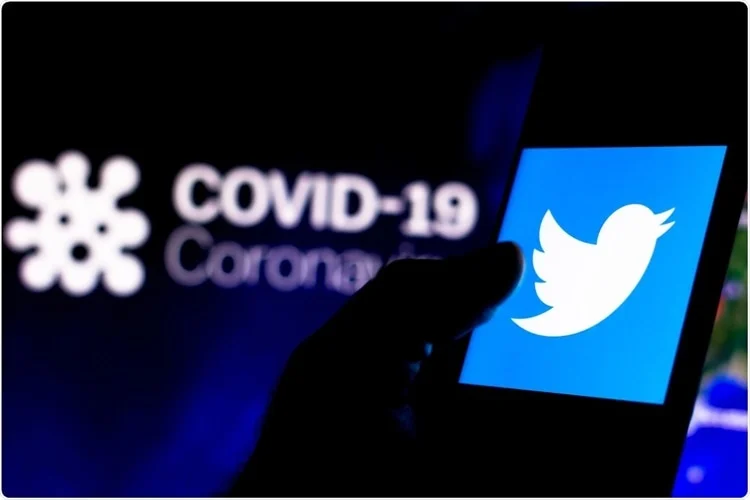
Social media sites like Twitter have been a major source of both true and false information regarding COVID-19 vaccines.
MicroStockHub/iStock via Getty Images

Jungmi Jun, University of South Carolina and Ali Zain, University of South Carolina

The Research Brief is a short take about interesting academic work.

The big idea

In countries with lower-than-expected COVID-19 vaccination rates, mentions of side effects and negative emotions dominated overall social media discourses on COVID-19 vaccines, according to our new research published in the journal Vaccines.

Our team wanted to understand whether the tone of social media conversations around the world matched differing country-level vaccination rates. To do this, we analyzed more than 21.3 million tweets in 33 languages from 192 countries posted between November 2020 and August 2021, searching any tweet that mentioned “COVID-19” and “vaccine” or “vaccination.” We then calculated percentages of these tweets that mentioned keywords signifying adverse events of vaccination, such as side effects, blood clots or death.

In addition, we used an artificial intelligence algorithm to analyze the sentiment and emotional tone of tweets. This algorithm can identify positive and negative sentiment as well as emotions in language – such as joy, fear, sadness or anger. We applied the algorithm to tweets mentioning COVID-19 vaccines, allowing us to measure the general emotional trends of different countries on Twitter.

Prior research has shown that emotions toward vaccines may influence whether a person decides to get a COVID-19 vaccination. Our study allowed us to examine this theory at national scales.

Globally, 1.15% of tweets related to COVID-19 vaccines mentioned side effects. Sentiments toward vaccines were on average more negative than positive, with nearly two times more negative tweets than positive ones. But interestingly, negative emotions like fear, sadness or anger appeared only 0.7 times as often as joy worldwide. Using these numbers as baselines, our analysis controlled for national socioeconomic characteristics as well as numbers of COVID-19 cases and deaths and then compared countries’ Twitter trends and vaccination rates to global averages. We removed ads and spam from our analysis, but did not remove tweets that may be posted by bots, as they are a part of the Twitter landscape.

We found that when social media discourse on vaccination is more negative than the global average in a country, the vaccination rate tends to be lower than expected.

In particular, a high prevalence of tweets mentioning “side effects” or displaying fear, sadness or anger were predictive of low vaccination rates. For example, 1.42% of tweets from South Africa mentioned “side effects” – higher than the global average of 1.15% – and negative emotions appeared in tweets 1.55 times as often as joy – more than double the global average. At the time of our analysis, South Africa reported a vaccination rate of 30%, lower than other countries with similar characteristics.

We found similar correlations between negative Twitter sentiments and lower-than-expected vaccination rates in many other countries, including Namibia, Ukraine, Croatia, Poland, Mexico, the Philippines and Burma.

In the U.S., fear, sadness or anger appeared almost as often as joy – showing more negativity than the global average. At the time of the analysis, the vaccination rate in the U.S. was 72%, lower than the 80% or above in many other high-income countries, like Germany and Canada.

A drawing of a person holding a phone with lots of images related to COVID-19 coming out of the back of their head.
Negative emotions toward vaccines are tied to lower vaccination rates for individuals, and this research shows the trend holds at national level, too.
Pict Rider/iStock via Getty Images

Why it matters

In most developed countries – including the U.S. – many individuals are refusing vaccines even though vaccines are plentiful and easy to access.

Social media has been a critical means of disseminating COVID-19 information. But Twitter, Facebook and other platforms have also been flooded with misinformation and disinformation – as well as people’s personal sentiments on vaccination – since the beginning of the pandemic. Research shows that the more information about COVID-19 people are exposed to via social media, the less accurate their knowledge about COVID-19.

Our research expands on these individual-level findings and shows social media discourses are also associated with vaccination behavior at the national level.

What still isn’t known

Our findings show a correlation between social media discourse and vaccination, but this type of analysis cannot identify causality. We also did not explore the reasons behind why some countries show more negative emotions in tweets than others. This might be linked to cultural differences among countries.

Another limitation is due to the vagueness of language. The AI system we used is relatively good at characterizing sentiments and emotions in a tweet, but not 100% accurate. Additionally, the AI is not as strong when analyzing tweets in languages other than English.

What’s next

The World Health Organization has declared the widespread misinformation about COVID-19 an infodemic, and 132 countries have agreed to combat it. Our findings support the idea that global efforts to combat misinformation, address negative emotions and promote positive language surrounding COVID-19 vaccination on social media may help boost global vaccination rates.

Jungmi Jun, Associate Professor of Information and Communications, University of South Carolina and Ali Zain, Ph.D. Student of Mass Communication, University of South Carolina

This article is republished from The Conversation under a Creative Commons license. Read the original article.


ShareTweet
The Conversation

The Conversation

Leave a Reply Cancel reply

Your email address will not be published. Required fields are marked *

Videos

This conversation focuses on debunking myths surrounding GLP-1 medications, particularly the misinformation about their association with pancreatic cancer. The speaker emphasizes the importance of understanding clinical study designs, especially the distinction between observational studies and randomized controlled trials. The discussion highlights the need for patients to critically evaluate the sources of information regarding medication side effects and to empower themselves in their healthcare decisions.

Takeaways
GLP-1 medications are not linked to pancreatic cancer.
Peer-reviewed studies debunk misinformation about GLP-1s.
Anecdotal evidence is not reliable for general conclusions.
Observational studies have limitations in generalizability.
Understanding study design is crucial for evaluating claims.
Symptoms should be discussed in the context of clinical conditions.
Not all side effects reported are relevant to every patient.
Observational studies can provide valuable insights but are context-specific.
Patients should critically assess the relevance of studies to their own experiences.
Engagement in discussions about specific studies can enhance understanding

Chapters
00:00
Debunking GLP-1 Medication Myths
02:56
Understanding Clinical Study Designs
05:54
The Role of Observational Studies in Healthcare
Debunking Myths About GLP-1 Medications
YouTube Video DM9Do_V6_sU
Subscribe

2027 Medicare Advantage & Part D Advance Notice

Clinical Reads

BIIB080 in Mild Alzheimer’s Disease: What a Phase 1b Exploratory Clinical Analysis Can—and Cannot—Tell Us

BIIB080 in Mild Alzheimer’s Disease: What a Phase 1b Exploratory Clinical Analysis Can—and Cannot—Tell Us

by Daily Remedy
February 15, 2026
0

Can lowering tau biology translate into a clinically meaningful slowing of decline in people with early symptomatic Alzheimer’s disease? That is the practical question behind BIIB080, an intrathecal antisense therapy designed to reduce production of tau protein by targeting the tau gene transcript. In a phase 1b program originally designed for safety and dosing, investigators later examined cognitive, functional, and global outcomes as exploratory endpoints. The clinical question matters because current disease-modifying options primarily target amyloid, while tau pathology tracks...

Read more

Join Our Newsletter!

Twitter Updates

Tweets by TheDailyRemedy

Popular

  • The Prevention Gap in Dementia Care

    The Prevention Gap in Dementia Care

    0 shares
    Share 0 Tweet 0
  • Healthcare in Space

    1 shares
    Share 0 Tweet 0
  • Healthcare Natural Rights

    0 shares
    Share 0 Tweet 0
  • Heat Safety Tips Every Pregnant Mother Should Know

    0 shares
    Share 0 Tweet 0
  • Vaccine or Treatment

    0 shares
    Share 0 Tweet 0
  • 628 Followers

Daily Remedy

Daily Remedy offers the best in healthcare information and healthcare editorial content. We take pride in consistently delivering only the highest quality of insight and analysis to ensure our audience is well-informed about current healthcare topics - beyond the traditional headlines.

Daily Remedy website services, content, and products are for informational purposes only. We do not provide medical advice, diagnosis, or treatment. All rights reserved.

Important Links

  • Support Us
  • About Us
  • Contact us
  • Privacy Policy
  • Terms and Conditions

Join Our Newsletter!

  • Survey
  • Podcast
  • About Us
  • Contact us

© 2026 Daily Remedy

No Result
View All Result
  • Home
  • Articles
  • Podcasts
  • Surveys
  • Courses
  • About Us
  • Contact us
  • Support Us
  • Official Learner

© 2026 Daily Remedy
