













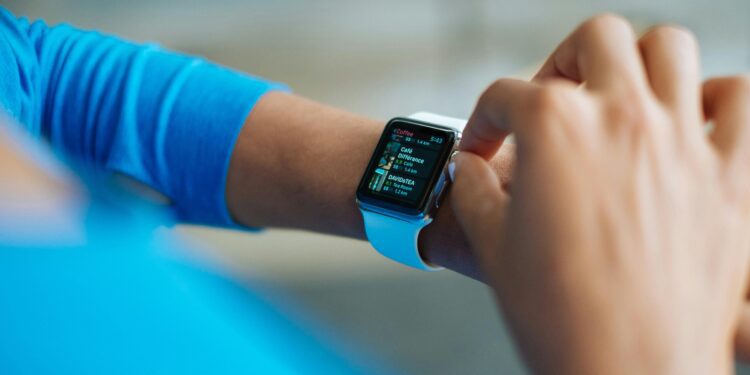
A decade ago, a smartwatch was a pedometer with ambitions. Today, wearables are producing physiologic traces that clinicians recognize as actionable, and the shift is being driven by machine learning that turns noisy signals into coherent narratives. Social feeds present these devices as self mastery tools, yet the deeper story is institutional. Hospitals, regulators, and insurers are beginning to treat consumer sensors as inputs into care delivery, and the stakes now resemble clinical medicine rather than lifestyle coaching.
From steps to signals: why AI changed the category
The earliest consumer wearables focused on step counts and basic heart rate. The current generation emphasizes digital biomarkers: arrhythmia detection, sleep staging, oxygen saturation, stress proxies, and continuous glucose trends. These outputs are algorithmic. They are not raw measurements, and that matters when users assume the device is a miniature ICU.
Machine learning increased the value of wearables by improving pattern recognition. It can reduce motion artifacts, infer physiologic state from multiple sensors, and generate alerts that feel medically meaningful. Yet algorithms can also invite false confidence. The question is not whether wearables can detect something. The question is whether the detection performs reliably across skin tones, body types, age groups, and comorbidities, and whether it reduces harm rather than shifting it into anxiety and unnecessary testing.
Validation is the quiet determinant of trust
Clinical practice relies on instruments whose error profiles are understood. Wearables enter the market with heterogeneous validation. Some features are extensively studied, while others are marketed with thinner evidence. Even sleep, which appears simple, can be technically complex. A Nature analysis of sleep stage accuracy illustrates the limitations of consumer devices in reproducing polysomnography standards, as discussed in Nature’s review of wearable sleep stage accuracy. When a device reports “deep sleep” as a single nightly number, it compresses uncertainty into a confident label.
Cardiac features show the same tension. Apple Watch ECG capabilities have been studied in clinical contexts, with accessible summaries and primary reports available through sources such as the PMC article on Apple Watch ECG validation. A validation study does not, by itself, justify population scale screening. It clarifies performance characteristics, and those characteristics must then be mapped to use cases. Screening low-risk individuals differs from monitoring patients with established atrial fibrillation.
Regulation is being rewritten in real time
The United States has historically managed consumer wellness tools with a flexible posture, while applying tighter oversight to devices making diagnostic or therapeutic claims. That boundary is under strain because consumer devices increasingly resemble medical tools. In January 2026, the FDA updated guidance clarifying its compliance policy for low risk wellness products, described in the agency’s General Wellness guidance page. Reporting around the same period described the agency’s intent to limit regulation of certain wellness wearables, emphasizing a focus on claims and safety concerns, as noted in Reuters coverage of the FDA posture on wearables.
This guidance does not eliminate risk. It clarifies category. A wearable can be functionally influential even if it is not regulated as a medical device. If a device nudges a patient to adjust insulin dosing based on an unvalidated glucose estimate, the practical risk looks clinical. Regulatory categories and lived experience can diverge.
The FDA’s clinical decision support guidance adds another layer. Many wearables now offer recommendations rather than measurements. The agency’s clinical decision support guidance reminds developers and clinicians that decision support can cross into regulated territory when it substitutes for professional judgment.
OTC continuous glucose monitoring will reshape consumer expectations
The most consequential shift in 2024 and 2025 may be the emergence of over the counter CGMs for people without insulin-dependent diabetes. In March 2024, the FDA announced clearance of the first OTC continuous glucose monitoring system, described in the agency’s press release on OTC CGM. The promise is clear: broader access to glucose trend data can support lifestyle change, identify dysglycemia, and encourage earlier clinical evaluation.
The risk is interpretive. Glucose is a dynamic variable influenced by stress, sleep, illness, menstrual cycles, and short term dietary composition. Social media often turns CGM traces into moral theater, with foods framed as “good” or “bad” based on transient spikes. The clinical use case is more nuanced. Trend data can guide conversation about meal composition, fiber timing, and overall metabolic resilience. It can also provoke unnecessary dietary restriction and reinforce disordered eating patterns if used without context.
Clinicians will need a new competency: helping people interpret CGM data that was never ordered by a clinician. Health systems that ignore this will cede the interpretive space to influencers and product marketers.
AI wearables are becoming a data infrastructure problem
The next phase is less about the device and more about where the data goes. When wearable outputs flow into patient portals or EHRs, they become part of medical documentation. That raises questions about liability, triage workflows, and clinician burden. A health system that receives 10,000 daily wearable alerts needs governance that resembles a lab management program, including thresholds, escalation pathways, and patient education.
Data privacy is equally central. Wearables collect sensitive behavioral data. Even when that data is outside HIPAA, it can be exploited through advertising and data brokerage ecosystems. Governance must therefore treat consumer data rights as a health issue, not a tech issue.
Investment has shifted from hardware to interpretation
From a market perspective, the durable advantage often lies in algorithms and integrations rather than in sensor hardware. Hardware can be copied. Clinical trust is harder to reproduce. Partnerships with health systems, validation studies, and regulatory clarity function as moats.
This is also why payers and employers are experimenting with subsidized wearables. The devices promise engagement, and engagement can reduce downstream cost if it is paired with clinical workflows. Yet engagement without guidance can inflate utilization. A wearable that identifies “abnormalities” without a care pathway can turn worried well users into frequent testers.
A responsible adoption curve is available, if institutions choose it
Wearables can widen access to early warning signals, especially for people who rarely touch the healthcare system. They can support remote monitoring for chronic disease and reduce friction in preventive care. They can also amplify anxiety, reinforce inequity through differential access, and burden clinicians with unfiltered data.
A responsible framework is pragmatic. It emphasizes validated use cases. It uses clear communication about error profiles. It integrates decision support that can be explained, rather than treated as an oracle. It also respects the boundary between patient curiosity and clinical obligation.
The wrist may be starting to behave like a clinic. The governance must catch up before the expectations harden into disappointment.



