












Wednesday, February 18, 2026
ISSN 2765-8767
  • Survey
  • Podcast
  • Write for Us
  • My Account
  • Log In
Daily Remedy
  • Home
  • Articles
  • Podcasts
    Debunking Myths About GLP-1 Medications

    Debunking Myths About GLP-1 Medications

    February 16, 2026
    The Future of LLMs in Healthcare

    The Future of LLMs in Healthcare

    January 26, 2026
    The Future of Healthcare Consumerism

    The Future of Healthcare Consumerism

    January 22, 2026
    Your Body, Your Health Care: A Conversation with Dr. Jeffrey Singer

    Your Body, Your Health Care: A Conversation with Dr. Jeffrey Singer

    July 1, 2025

    The cost structure of hospitals nearly doubles

    July 1, 2025
    Navigating the Medical Licensing Maze

    The Fight Against Healthcare Fraud: Dr. Rafai’s Story

    April 8, 2025
  • Surveys

    Surveys

    How Confident Are You in RFK Jr.’s Health Leadership?

    How Confident Are You in RFK Jr.’s Health Leadership?

    February 16, 2026
    AI in Healthcare Decision-Making

    AI in Healthcare Decision-Making

    February 1, 2026

    Survey Results

    Can you tell when your provider does not trust you?

    Can you tell when your provider does not trust you?

    January 18, 2026
    Do you believe national polls on health issues are accurate

    National health polls: trust in healthcare system accuracy?

    May 8, 2024
    Which health policy issues matter the most to Republican voters in the primaries?

    Which health policy issues matter the most to Republican voters in the primaries?

    May 14, 2024
    How strongly do you believe that you can tell when your provider does not trust you?

    How strongly do you believe that you can tell when your provider does not trust you?

    May 7, 2024
  • Courses
  • About Us
  • Contact us
  • Support Us
  • Official Learner
No Result
View All Result
  • Home
  • Articles
  • Podcasts
    Debunking Myths About GLP-1 Medications

    Debunking Myths About GLP-1 Medications

    February 16, 2026
    The Future of LLMs in Healthcare

    The Future of LLMs in Healthcare

    January 26, 2026
    The Future of Healthcare Consumerism

    The Future of Healthcare Consumerism

    January 22, 2026
    Your Body, Your Health Care: A Conversation with Dr. Jeffrey Singer

    Your Body, Your Health Care: A Conversation with Dr. Jeffrey Singer

    July 1, 2025

    The cost structure of hospitals nearly doubles

    July 1, 2025
    Navigating the Medical Licensing Maze

    The Fight Against Healthcare Fraud: Dr. Rafai’s Story

    April 8, 2025
  • Surveys

    Surveys

    How Confident Are You in RFK Jr.’s Health Leadership?

    How Confident Are You in RFK Jr.’s Health Leadership?

    February 16, 2026
    AI in Healthcare Decision-Making

    AI in Healthcare Decision-Making

    February 1, 2026

    Survey Results

    Can you tell when your provider does not trust you?

    Can you tell when your provider does not trust you?

    January 18, 2026
    Do you believe national polls on health issues are accurate

    National health polls: trust in healthcare system accuracy?

    May 8, 2024
    Which health policy issues matter the most to Republican voters in the primaries?

    Which health policy issues matter the most to Republican voters in the primaries?

    May 14, 2024
    How strongly do you believe that you can tell when your provider does not trust you?

    How strongly do you believe that you can tell when your provider does not trust you?

    May 7, 2024
  • Courses
  • About Us
  • Contact us
  • Support Us
  • Official Learner
No Result
View All Result
Daily Remedy
No Result
View All Result
Home Politics & Law

Health Misinformation is on the Ballot

And it's winning

Jay K Joshi by Jay K Joshi
February 22, 2024
in Politics & Law
0
Health Misinformation is on the Ballot

Alex Shuper

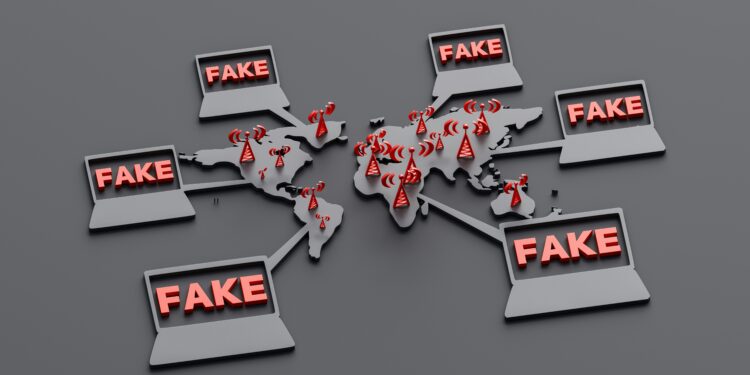
Election cycles are particularly notable for the spread of misinformation. This year, we will see an unprecedented rise in health misinformation – and it won’t go away when the elections are over.

Health misinformation is more pernicious compared to other forms of misinformation because it’s not topical. It remains etched in the public ethos because it’s attached to our most precious asset – our bodies. We’re reminded of it every time we look at ourselves and manage our health.

What’s most concerning is the lack of recognition when it comes to health misinformation. Most can see misinformation when it appears for political news or commentary. But health misinformation seems more adept at camouflaging itself as true, or at least as verifiable. We have a greater tendency to believe health misinformation because we have a greater tendency to distrust healthcare institutions.

This isn’t just a COVID related phenomenon. The pandemic simply made grossly apparent what was always present in the minds of the American public: our health institutions, whether they’re public or private, are exploiting us.

The CDC and NIH have hidden agendas. The pharmaceutical companies see patients as nothing more than profit margins. So when some politician spouts some health related misinformation, we gravitate toward it.

And the cycle begins. A politician, seeking to gain voters and win the election, will make some outlandish claim evoking populist sentiment. It’s all too easy when it comes to healthcare. Take some data or health policy, find an angle to spin, take the medicine out, and put the faux outrage in.

Then the masses respond. They spread the misinformation. In part because they believe it; but mostly because they’re unsure whether they shouldn’t believe it. The uncertainty becomes part of the allure. And in today’s politics, the allure of sensationalism has overtaken the moral compass of pragmatism.

Unfortunately, this is now a global phenomenon. What likely began in 2016 during the rise of the Trump era is now a tried and true playbook repeated across the world. Shock the masses with something that might be true and they’ll love you for it.

The best health misinformation contains all the elements of Gladwell’s criteria for virality. Contain enough of the truth to avoid being discredited. And selectively lie to enhance the most poignant aspects of the misinformation.

This is why vaccine skeptics never go away. They’re not wholly wrong. Vaccine risks have been downplayed. And the medical establishment has done a great injustice in denying the risks. As a result, misinformation propagandists highlight the risks and spin it as though the risks are being covered up to harm you – the patient.

For those interested in cultivating new medical misinformation, look no further than how vaccine misinformation spreads. It’s the perfect blend of a conveniently justifiable truth and a selectively sensationalized lie. This is the cocktail for health misinformation. And it’s something most people already know and are keenly aware of – particularly politicians during election years.

But there’s another element to why political misinformation on health policy resonates. It’s stickiness – to use a behavioral economics term – is particularly strong compared to other types of misinformation. People can’t help it. Their default instinct is to glean some element of truth and believe it, even more so than other forms of misinformation.

In a flash poll conducted on a Daily Remedy platform, we surveyed readers to glean their thoughts on whether they will see an increase, decrease, or no change in health misinformation during this election year.

Not surprisingly, the majority said there will be an increase. Of the 146 responses, 35% said there’ll be an increase, 42% said there’ll be a conditional increase (depending on who gets elected), and 22% said there’ll be no effect.

The latter number is the most interesting. One out of five respondents believe there’ll be no change. This contrasts many studies that correlate health misinformation with the amount of health information exchange on social media. Basically, the more people talk about healthcare on social media, the more misinformation spreads.

But a sizable population won’t see it as misinformation. This is because health misinformation lacks a consistent definition. It varies per topic and how it’s constructed – which elements are truthful and which are overly sensationalized. The uniqueness makes it more difficult to characterize and therefore, more difficult to recognize.

According to the studies reviewed, the greatest challenge lies in the difficulty of characterizing and evaluating the quality of the information on social media. Knowing the prevalence of health misinformation and the methods used for its study, as well as the present knowledge gaps in this field will help us to guide future studies and, specifically, to develop evidence-based digital policy action plans aimed at combating this public health problem through different social media platforms.

As we run through the array of elections across the world, people will discuss pertinent issues. The health misinformation will spread. Unfortunately, after this year, the elections will be over. But the health misinformation will linger on – because people will continue to believe it, or rather, refuse to not believe it.


ShareTweet
Jay K Joshi

Jay K Joshi

Dr. Jay K Joshi is the founding editor of Daily Remedy

Leave a Reply Cancel reply

Your email address will not be published. Required fields are marked *

Videos

This conversation focuses on debunking myths surrounding GLP-1 medications, particularly the misinformation about their association with pancreatic cancer. The speaker emphasizes the importance of understanding clinical study designs, especially the distinction between observational studies and randomized controlled trials. The discussion highlights the need for patients to critically evaluate the sources of information regarding medication side effects and to empower themselves in their healthcare decisions.

Takeaways
GLP-1 medications are not linked to pancreatic cancer.
Peer-reviewed studies debunk misinformation about GLP-1s.
Anecdotal evidence is not reliable for general conclusions.
Observational studies have limitations in generalizability.
Understanding study design is crucial for evaluating claims.
Symptoms should be discussed in the context of clinical conditions.
Not all side effects reported are relevant to every patient.
Observational studies can provide valuable insights but are context-specific.
Patients should critically assess the relevance of studies to their own experiences.
Engagement in discussions about specific studies can enhance understanding

Chapters
00:00
Debunking GLP-1 Medication Myths
02:56
Understanding Clinical Study Designs
05:54
The Role of Observational Studies in Healthcare
Debunking Myths About GLP-1 Medications
YouTube Video DM9Do_V6_sU
Subscribe

2027 Medicare Advantage & Part D Advance Notice

Clinical Reads

BIIB080 in Mild Alzheimer’s Disease: What a Phase 1b Exploratory Clinical Analysis Can—and Cannot—Tell Us

BIIB080 in Mild Alzheimer’s Disease: What a Phase 1b Exploratory Clinical Analysis Can—and Cannot—Tell Us

by Daily Remedy
February 15, 2026
0

Can lowering tau biology translate into a clinically meaningful slowing of decline in people with early symptomatic Alzheimer’s disease? That is the practical question behind BIIB080, an intrathecal antisense therapy designed to reduce production of tau protein by targeting the tau gene transcript. In a phase 1b program originally designed for safety and dosing, investigators later examined cognitive, functional, and global outcomes as exploratory endpoints. The clinical question matters because current disease-modifying options primarily target amyloid, while tau pathology tracks...

Read more

Join Our Newsletter!

Twitter Updates

Tweets by TheDailyRemedy

Popular

  • The Prevention Gap in Dementia Care

    The Prevention Gap in Dementia Care

    0 shares
    Share 0 Tweet 0
  • Healthcare in Space

    1 shares
    Share 0 Tweet 0
  • Heat Safety Tips Every Pregnant Mother Should Know

    0 shares
    Share 0 Tweet 0
  • Child Health Is Now a Platform Issue

    0 shares
    Share 0 Tweet 0
  • The Quiet Clinical Coup of Artificial Intelligence

    0 shares
    Share 0 Tweet 0
  • 628 Followers

Daily Remedy

Daily Remedy offers the best in healthcare information and healthcare editorial content. We take pride in consistently delivering only the highest quality of insight and analysis to ensure our audience is well-informed about current healthcare topics - beyond the traditional headlines.

Daily Remedy website services, content, and products are for informational purposes only. We do not provide medical advice, diagnosis, or treatment. All rights reserved.

Important Links

  • Support Us
  • About Us
  • Contact us
  • Privacy Policy
  • Terms and Conditions

Join Our Newsletter!

  • Survey
  • Podcast
  • About Us
  • Contact us

© 2026 Daily Remedy

No Result
View All Result
  • Home
  • Articles
  • Podcasts
  • Surveys
  • Courses
  • About Us
  • Contact us
  • Support Us
  • Official Learner

© 2026 Daily Remedy

