












Thursday, February 5, 2026
ISSN 2765-8767
  • Survey
  • Podcast
  • Write for Us
  • My Account
  • Log In
Daily Remedy
  • Home
  • Articles
  • Podcasts
    The Future of LLMs in Healthcare

    The Future of LLMs in Healthcare

    January 26, 2026
    The Future of Healthcare Consumerism

    The Future of Healthcare Consumerism

    January 22, 2026
    Your Body, Your Health Care: A Conversation with Dr. Jeffrey Singer

    Your Body, Your Health Care: A Conversation with Dr. Jeffrey Singer

    July 1, 2025

    The cost structure of hospitals nearly doubles

    July 1, 2025
    Navigating the Medical Licensing Maze

    The Fight Against Healthcare Fraud: Dr. Rafai’s Story

    April 8, 2025
    Navigating the Medical Licensing Maze

    Navigating the Medical Licensing Maze

    April 4, 2025
  • Surveys

    Surveys

    AI in Healthcare Decision-Making

    AI in Healthcare Decision-Making

    February 1, 2026
    Patient Survey: Understanding Healthcare Consumerism

    Patient Survey: Understanding Healthcare Consumerism

    January 18, 2026

    Survey Results

    Can you tell when your provider does not trust you?

    Can you tell when your provider does not trust you?

    January 18, 2026
    Do you believe national polls on health issues are accurate

    National health polls: trust in healthcare system accuracy?

    May 8, 2024
    Which health policy issues matter the most to Republican voters in the primaries?

    Which health policy issues matter the most to Republican voters in the primaries?

    May 14, 2024
    How strongly do you believe that you can tell when your provider does not trust you?

    How strongly do you believe that you can tell when your provider does not trust you?

    May 7, 2024
  • Courses
  • About Us
  • Contact us
  • Support Us
  • Official Learner
No Result
View All Result
  • Home
  • Articles
  • Podcasts
    The Future of LLMs in Healthcare

    The Future of LLMs in Healthcare

    January 26, 2026
    The Future of Healthcare Consumerism

    The Future of Healthcare Consumerism

    January 22, 2026
    Your Body, Your Health Care: A Conversation with Dr. Jeffrey Singer

    Your Body, Your Health Care: A Conversation with Dr. Jeffrey Singer

    July 1, 2025

    The cost structure of hospitals nearly doubles

    July 1, 2025
    Navigating the Medical Licensing Maze

    The Fight Against Healthcare Fraud: Dr. Rafai’s Story

    April 8, 2025
    Navigating the Medical Licensing Maze

    Navigating the Medical Licensing Maze

    April 4, 2025
  • Surveys

    Surveys

    AI in Healthcare Decision-Making

    AI in Healthcare Decision-Making

    February 1, 2026
    Patient Survey: Understanding Healthcare Consumerism

    Patient Survey: Understanding Healthcare Consumerism

    January 18, 2026

    Survey Results

    Can you tell when your provider does not trust you?

    Can you tell when your provider does not trust you?

    January 18, 2026
    Do you believe national polls on health issues are accurate

    National health polls: trust in healthcare system accuracy?

    May 8, 2024
    Which health policy issues matter the most to Republican voters in the primaries?

    Which health policy issues matter the most to Republican voters in the primaries?

    May 14, 2024
    How strongly do you believe that you can tell when your provider does not trust you?

    How strongly do you believe that you can tell when your provider does not trust you?

    May 7, 2024
  • Courses
  • About Us
  • Contact us
  • Support Us
  • Official Learner
No Result
View All Result
Daily Remedy
No Result
View All Result
Home Contrarian

Emerson Fought the Materialists

Daily Remedy by Daily Remedy
September 6, 2022
in Contrarian
0
Emerson Fought the Materialists

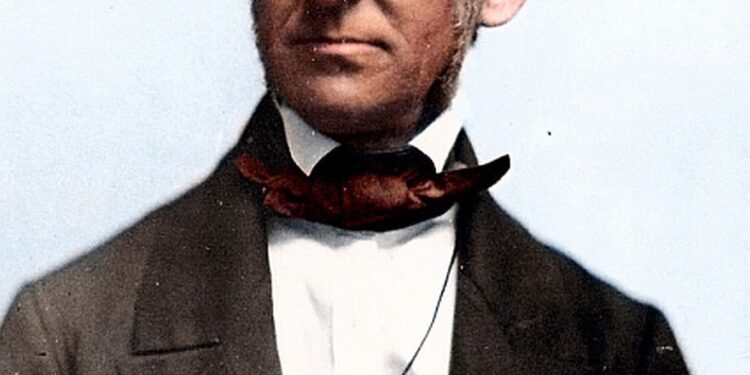
There are few Americans more beloved than Ralph Waldo Emerson. Even those who know nothing of him claim to adore him. His name lives in American lore. But it would surprise most to learn of his views on medicine.

“I distrust the medical facts”, succinctly encapsulate it. Emerson was decidedly against the materialists of his day: individuals who believed they could reduce medicine into biological functions and that diseases were nothing more than a collection of symptoms. He fought them the only way he knew how: through his words.

He warned what would happen should medicine succumb to materialist beliefs: we would gain knowledge, but we would lose the patient. Most in his day did not listen, save for one physician, Dr. William Osler, the father of modern American medicine.

He advocated for experiential medicine, knowledge gleaned through direct interactions with the patient. He coined the phrase bedside medicine. We teach it ad nauseam in medical school. Medical students earn accolades discussing Osler, Emerson, and experiential medicine. And then we forget it all.

We relegate Emerson to the history books and Osler to the medical schools. Once we graduate, we forget what they stood for. We then praise their virtues while lying in bed with their intellectual adversaries, the materialists. The irony is palpable, yet we remain dull to its touch.

These are the consequences of operating within our current healthcare system. We follow the tendencies of a system, not the diligence of individual patient care. This is what Emerson fought against in his writings and what Osler cautioned in his teachings. And today, while we study their words, we cannot grasp their message.

In healthcare, we are adept at separating the ideal from the realistic. We know most chronic diseases can be treated through diet and exercise, but we jump to prescribing medications. When patients complain the medications are not working, we reflexively raise the dose or add another to the cocktail.

We never parse through the details of compliance, never ask what behavioral or lifestyle modifications could improve a patient’s clinical outcome. It would take too much time. And time is money – at least according to the reimbursement rates set by health insurance companies.

But those details matter to patients, far more than any medication. Think from the perspective of a patient. It takes less than a minute to ingest medications prior to breakfast. But it takes an entire day’s worth of disciplined decision-making to avoid eating foods that produce a spike in blood sugar or blood pressure. From the patient’s vantage point, the decisions make all the difference.

But in the current healthcare system, we relegate these matters to the realm of patient counseling or discard it as taking up too much time. That single difference in perspective defines the dichotomy between the idealistic and the realistic in medicine. It was what Emerson fought against.

He fought the reductionist belief that medicine is an offshoot of science. He fought for humanity in healthcare, to unite the ideals of experiential medicine with the realities of a healthcare system. He fought for a particular mindset. One we find in physicians like Osler.

We laud those who sacrifice for an ideal, the ones who fight the good fight. But most would rather not be those individuals. It is safer to conform. After all, it is a more realistic approach to healthcare.

But when we all do it, we succumb to the base tendencies of a system. It is time enough. We now need individuals who will rise to Osler’s ideals of individual patient care. Buck the trends of a system designed to standardize care instead of treating individual patients.

Most dare not try. The few who do will stop at the first signs of resistance. Even fewer will bear the consequences. But those are the ones we will remember.

Emerson lost trying to fight the materialists. Yet we remember his name. And no one remembers the winners he fought against. That tells you everything you need to know.


ShareTweet
Daily Remedy

Daily Remedy

Dr. Jay K Joshi serves as the editor-in-chief of Daily Remedy. He is a serial entrepreneur and sought after thought-leader for matters related to healthcare innovation and medical jurisprudence. He has published articles on a variety of healthcare topics in both peer-reviewed journals and trade publications. His legal writings include amicus curiae briefs prepared for prominent federal healthcare cases.

Leave a Reply Cancel reply

Your email address will not be published. Required fields are marked *

Videos

In this episode, the host discusses the significance of large language models (LLMs) in healthcare, their applications, and the challenges they face. The conversation highlights the importance of simplicity in model design and the necessity of integrating patient feedback to enhance the effectiveness of LLMs in clinical settings.

Takeaways
LLMs are becoming integral in healthcare.
They can help determine costs and service options.
Hallucination in LLMs can lead to misinformation.
LLMs can produce inconsistent answers based on input.
Simplicity in LLMs is often more effective than complexity.
Patient behavior should guide LLM development.
Integrating patient feedback is crucial for accuracy.
Pre-training models with patient input enhances relevance.
Healthcare providers must understand LLM limitations.
The best LLMs will focus on patient-centered care.

Chapters

00:00 Introduction to LLMs in Healthcare
05:16 The Importance of Simplicity in LLMs
The Future of LLMs in HealthcareDaily Remedy
YouTube Video U1u-IYdpeEk
Subscribe

AI Regulation and Deployment Is Now a Core Healthcare Issue

Clinical Reads

Ambient Artificial Intelligence Clinical Documentation: Workflow Support with Emerging Governance Risk

Ambient Artificial Intelligence Clinical Documentation: Workflow Support with Emerging Governance Risk

by Daily Remedy
February 1, 2026
0

Health systems are increasingly deploying ambient artificial intelligence tools that listen to clinical encounters and automatically generate draft visit notes. These systems are intended to reduce documentation burden and allow clinicians to focus more directly on patient interaction. At the same time, they raise unresolved questions about patient consent, data handling, factual accuracy, and legal responsibility for machine‑generated records. Recent policy discussions and legal actions suggest that adoption is moving faster than formal oversight frameworks. The practical clinical question is...

Read more

Join Our Newsletter!

Twitter Updates

Tweets by TheDailyRemedy

Popular

  • Powerful Phrases to Tell Patients

    Powerful Phrases to Tell Patients

    0 shares
    Share 0 Tweet 0
  • Have We Cured Sickle Cell Disease?

    2 shares
    Share 0 Tweet 0
  • How Insurers Taught Patients to Shop

    0 shares
    Share 0 Tweet 0
  • The Future of Healthcare Law

    0 shares
    Share 0 Tweet 0
  • Positions Currently in High Demand in the Medical Field

    0 shares
    Share 0 Tweet 0
  • 628 Followers

Daily Remedy

Daily Remedy offers the best in healthcare information and healthcare editorial content. We take pride in consistently delivering only the highest quality of insight and analysis to ensure our audience is well-informed about current healthcare topics - beyond the traditional headlines.

Daily Remedy website services, content, and products are for informational purposes only. We do not provide medical advice, diagnosis, or treatment. All rights reserved.

Important Links

  • Support Us
  • About Us
  • Contact us
  • Privacy Policy
  • Terms and Conditions

Join Our Newsletter!

  • Survey
  • Podcast
  • About Us
  • Contact us

© 2026 Daily Remedy

No Result
View All Result
  • Home
  • Articles
  • Podcasts
  • Surveys
  • Courses
  • About Us
  • Contact us
  • Support Us
  • Official Learner

© 2026 Daily Remedy