












Saturday, February 28, 2026
ISSN 2765-8767
  • Survey
  • Podcast
  • Write for Us
  • My Account
  • Log In
Daily Remedy
  • Home
  • Articles
  • Podcasts
    Debunking Myths About GLP-1 Medications

    Debunking Myths About GLP-1 Medications

    February 16, 2026
    The Future of LLMs in Healthcare

    The Future of LLMs in Healthcare

    January 26, 2026
    The Future of Healthcare Consumerism

    The Future of Healthcare Consumerism

    January 22, 2026
    Your Body, Your Health Care: A Conversation with Dr. Jeffrey Singer

    Your Body, Your Health Care: A Conversation with Dr. Jeffrey Singer

    July 1, 2025

    The cost structure of hospitals nearly doubles

    July 1, 2025
    Navigating the Medical Licensing Maze

    The Fight Against Healthcare Fraud: Dr. Rafai’s Story

    April 8, 2025
  • Surveys

    Surveys

    How Confident Are You in RFK Jr.’s Health Leadership?

    How Confident Are You in RFK Jr.’s Health Leadership?

    February 16, 2026
    AI in Healthcare Decision-Making

    AI in Healthcare Decision-Making

    February 1, 2026

    Survey Results

    Can you tell when your provider does not trust you?

    Can you tell when your provider does not trust you?

    January 18, 2026
    Do you believe national polls on health issues are accurate

    National health polls: trust in healthcare system accuracy?

    May 8, 2024
    Which health policy issues matter the most to Republican voters in the primaries?

    Which health policy issues matter the most to Republican voters in the primaries?

    May 14, 2024
    How strongly do you believe that you can tell when your provider does not trust you?

    How strongly do you believe that you can tell when your provider does not trust you?

    May 7, 2024
  • Courses
  • About Us
  • Contact us
  • Support Us
  • Official Learner
No Result
View All Result
  • Home
  • Articles
  • Podcasts
    Debunking Myths About GLP-1 Medications

    Debunking Myths About GLP-1 Medications

    February 16, 2026
    The Future of LLMs in Healthcare

    The Future of LLMs in Healthcare

    January 26, 2026
    The Future of Healthcare Consumerism

    The Future of Healthcare Consumerism

    January 22, 2026
    Your Body, Your Health Care: A Conversation with Dr. Jeffrey Singer

    Your Body, Your Health Care: A Conversation with Dr. Jeffrey Singer

    July 1, 2025

    The cost structure of hospitals nearly doubles

    July 1, 2025
    Navigating the Medical Licensing Maze

    The Fight Against Healthcare Fraud: Dr. Rafai’s Story

    April 8, 2025
  • Surveys

    Surveys

    How Confident Are You in RFK Jr.’s Health Leadership?

    How Confident Are You in RFK Jr.’s Health Leadership?

    February 16, 2026
    AI in Healthcare Decision-Making

    AI in Healthcare Decision-Making

    February 1, 2026

    Survey Results

    Can you tell when your provider does not trust you?

    Can you tell when your provider does not trust you?

    January 18, 2026
    Do you believe national polls on health issues are accurate

    National health polls: trust in healthcare system accuracy?

    May 8, 2024
    Which health policy issues matter the most to Republican voters in the primaries?

    Which health policy issues matter the most to Republican voters in the primaries?

    May 14, 2024
    How strongly do you believe that you can tell when your provider does not trust you?

    How strongly do you believe that you can tell when your provider does not trust you?

    May 7, 2024
  • Courses
  • About Us
  • Contact us
  • Support Us
  • Official Learner
No Result
View All Result
Daily Remedy
No Result
View All Result
Home Trends

Selective Outrage in Healthcare, RaDonda Vaught vs. William Husel

Daily Remedy by Daily Remedy
April 24, 2022
in Trends
0
Selective Outrage in Healthcare, RaDonda Vaught vs. William Husel

We lie all the time.

We pretend to care about things we really do not and we pretend not to care about things that we really do. We have no consistent parameters guiding our behavior.

We watch identical acts of injustice or see similar tragedies unfolding and have vastly different perceptions. Behavioral economists call this the empathy gap.

We underestimate the influence of subjective beliefs on our own behavior and make decisions that only satisfy our current perceptions. It explains why the loss of European lives in Ukraine attracts greater media attention than the loss of lives of Central Asians in Afghanistan. This is not a new phenomenon.

But it appears in healthcare in uniquely unprecedented ways. The increasing government encroachment into healthcare has led to a slew of highly publicized criminal cases that were previously addressed more privately as regulatory concerns. Now medical errors are criminal acts.

This may be tragic enough, but our wavering response to these tragedies adds a veneer of shame to a dark time in healthcare, and will prove to be an indelible stain on our medical history.

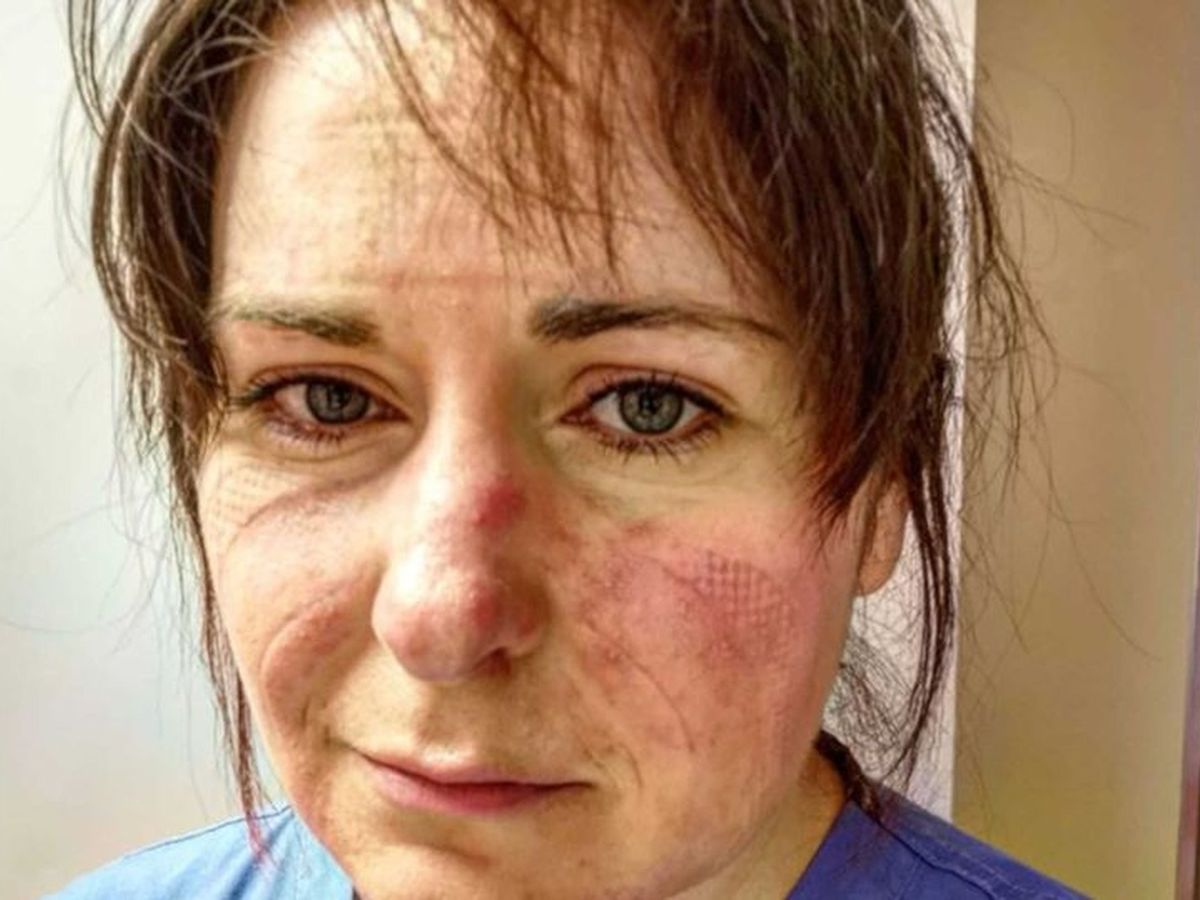
Recently, a nurse in Tennessee named RaDonda Vaught was convicted for murder for what otherwise would be deemed a medical error. While a fatal error, it was an error nonetheless, that took place over the course of patient care. It should have been handled by the state’s medical licensing board and nurse oversight committees.

Instead, local prosecutors took it upon themselves to indict and inflict a vicious display of retaliatory justice in which Vaught found herself convicted by a jury for a medical error. The ramifications were quick and powerful.

Nurses all over the country shouted in protest. Nurses quit. The American Nurses Association issued a statement of concern:

“The nursing profession is already extremely short-staffed, strained and facing immense pressure – an unfortunate multi-year trend that was further exacerbated by the effects of the pandemic. This ruling will have a long-lasting negative impact on the profession.”

The outrage in support for Vaught was commendable. It shows a strong sense of solidarity in support of one healthcare worker. Such displays of support are sorely needed. And have strong reason to believe the government encroachment that led to Vaught’s conviction will be challenged. We likely have not heard the last of this case.

What we have not heard of is another ruling, that of an acquittal, for a physician who was indicted for prescribing fentanyl as a form of palliative care for hospice patients under his care. Dr. William Husel was indicted on fourteen counts of murder for treating patients with fentanyl to relieve their pain in the last days of their lives.

He violated no protocol. He adhered to clinical standards of care. He simply prescribed fentanyl at a dose that a non-medically trained prosecutor somehow believed to be excessive and therefore criminal. There was no clinical or legal basis for the charges. Yet he was made to endure a two month trial for what amounts to practicing clinical medicine.

Yet there is no outrage against the prosecutors in this case. No congratulatory support for the physician who risked life imprisonment to challenge bogus claims of criminality.

Why the glaring difference in response from the public?

At least in the cause of Vaught, an error took place. But Dr. Husel committed no error and ensured a pain-free quality of life for patients at the end of their lives. We clamor for justice in one case, and remain silent for the other.

This is what the empathy gap looks like in healthcare. And it is why little has been done to reign in government encroachment in healthcare. We have no consistent response to individual acts of injustice and therefore no consistent means of challenging government misconduct. Shakespeare recognized as much centuries ago when he wrote the following lines in The Merchant of Venice:

If you prick us, do we not bleed?

If you tickle us, do we not laugh?

If you poison us, do we not die?

The lines allude to the lack of compassion we hold for some but carry in abundance for others. It shows how empathy waxes and wanes and leads to different reactions to similar events. It is why Vaught’s conviction led to national outrage and why Husel’s acquittal hardly registered a blip on the national radar.

Healthcare is facing unprecedented pressure from a government encroaching more and more into healthcare. It has induced a state of fear and artificial conformity – a veritable state of Medical McCarthyism.

It manifests when we see errors become crimes. Yet, our inconsistent responses have allowed this to go on. We feign selective outrage when we see someone we can relate to being attacked. We ignore or show disdain when we see someone we cannot relate to being attacked.

Accordingly, our perceptions flutter. Of course, the physician deserved to be indicted. Of course, the physician got away with it. But the poor nurse, she must be a victim. Even if she made an error, she should not be criminalized for an error that could have happened to anyone.

We attribute systemic errors to the individual when convenient. And we remember the nuance in systemic problems when we can identify with the individual. There are no consistent parameters in our response.

It all depends on the perceptions we hold, fluttering amidst the winds of outrage, emerging out of the void of the unknown, where we find the empathy gap.


ShareTweet
Daily Remedy

Daily Remedy

Dr. Jay K Joshi serves as the editor-in-chief of Daily Remedy. He is a serial entrepreneur and sought after thought-leader for matters related to healthcare innovation and medical jurisprudence. He has published articles on a variety of healthcare topics in both peer-reviewed journals and trade publications. His legal writings include amicus curiae briefs prepared for prominent federal healthcare cases.

Comments 0

  1. Pingback: » 21st century healthcare: Medical McCarthyism, when errors become crimes PHARMACIST STEVE

Leave a Reply Cancel reply

Your email address will not be published. Required fields are marked *

Videos

This conversation focuses on debunking myths surrounding GLP-1 medications, particularly the misinformation about their association with pancreatic cancer. The speaker emphasizes the importance of understanding clinical study designs, especially the distinction between observational studies and randomized controlled trials. The discussion highlights the need for patients to critically evaluate the sources of information regarding medication side effects and to empower themselves in their healthcare decisions.

Takeaways
GLP-1 medications are not linked to pancreatic cancer.
Peer-reviewed studies debunk misinformation about GLP-1s.
Anecdotal evidence is not reliable for general conclusions.
Observational studies have limitations in generalizability.
Understanding study design is crucial for evaluating claims.
Symptoms should be discussed in the context of clinical conditions.
Not all side effects reported are relevant to every patient.
Observational studies can provide valuable insights but are context-specific.
Patients should critically assess the relevance of studies to their own experiences.
Engagement in discussions about specific studies can enhance understanding

Chapters
00:00
Debunking GLP-1 Medication Myths
02:56
Understanding Clinical Study Designs
05:54
The Role of Observational Studies in Healthcare
Debunking Myths About GLP-1 Medications
YouTube Video DM9Do_V6_sU
Subscribe

2027 Medicare Advantage & Part D Advance Notice

Clinical Reads

BIIB080 in Mild Alzheimer’s Disease: What a Phase 1b Exploratory Clinical Analysis Can—and Cannot—Tell Us

BIIB080 in Mild Alzheimer’s Disease: What a Phase 1b Exploratory Clinical Analysis Can—and Cannot—Tell Us

by Daily Remedy
February 15, 2026
0

Can lowering tau biology translate into a clinically meaningful slowing of decline in people with early symptomatic Alzheimer’s disease? That is the practical question behind BIIB080, an intrathecal antisense therapy designed to reduce production of tau protein by targeting the tau gene transcript. In a phase 1b program originally designed for safety and dosing, investigators later examined cognitive, functional, and global outcomes as exploratory endpoints. The clinical question matters because current disease-modifying options primarily target amyloid, while tau pathology tracks...

Read more

Join Our Newsletter!

Twitter Updates

Tweets by TheDailyRemedy

Popular

  • When Health Records Become Hostage: The Rise of Espionage in Healthcare Data Breaches

    When Health Records Become Hostage: The Rise of Espionage in Healthcare Data Breaches

    1 shares
    Share 0 Tweet 0
  • Abortion’s Precedent

    0 shares
    Share 0 Tweet 0
  • Alternative Medications Might Help With Chronic Pain

    0 shares
    Share 0 Tweet 0
  • Narratives – The Future of Healthcare

    0 shares
    Share 0 Tweet 0
  • The Hormone Reckoning

    0 shares
    Share 0 Tweet 0
  • 628 Followers

Daily Remedy

Daily Remedy offers the best in healthcare information and healthcare editorial content. We take pride in consistently delivering only the highest quality of insight and analysis to ensure our audience is well-informed about current healthcare topics - beyond the traditional headlines.

Daily Remedy website services, content, and products are for informational purposes only. We do not provide medical advice, diagnosis, or treatment. All rights reserved.

Important Links

  • Support Us
  • About Us
  • Contact us
  • Privacy Policy
  • Terms and Conditions

Join Our Newsletter!

  • Survey
  • Podcast
  • About Us
  • Contact us

© 2026 Daily Remedy

No Result
View All Result
  • Home
  • Articles
  • Podcasts
  • Surveys
  • Courses
  • About Us
  • Contact us
  • Support Us
  • Official Learner

© 2026 Daily Remedy