












Sunday, February 15, 2026
ISSN 2765-8767
  • Survey
  • Podcast
  • Write for Us
  • My Account
  • Log In
Daily Remedy
  • Home
  • Articles
  • Podcasts
    The Future of LLMs in Healthcare

    The Future of LLMs in Healthcare

    January 26, 2026
    The Future of Healthcare Consumerism

    The Future of Healthcare Consumerism

    January 22, 2026
    Your Body, Your Health Care: A Conversation with Dr. Jeffrey Singer

    Your Body, Your Health Care: A Conversation with Dr. Jeffrey Singer

    July 1, 2025

    The cost structure of hospitals nearly doubles

    July 1, 2025
    Navigating the Medical Licensing Maze

    The Fight Against Healthcare Fraud: Dr. Rafai’s Story

    April 8, 2025
    Navigating the Medical Licensing Maze

    Navigating the Medical Licensing Maze

    April 4, 2025
  • Surveys

    Surveys

    AI in Healthcare Decision-Making

    AI in Healthcare Decision-Making

    February 1, 2026
    Patient Survey: Understanding Healthcare Consumerism

    Patient Survey: Understanding Healthcare Consumerism

    January 18, 2026

    Survey Results

    Can you tell when your provider does not trust you?

    Can you tell when your provider does not trust you?

    January 18, 2026
    Do you believe national polls on health issues are accurate

    National health polls: trust in healthcare system accuracy?

    May 8, 2024
    Which health policy issues matter the most to Republican voters in the primaries?

    Which health policy issues matter the most to Republican voters in the primaries?

    May 14, 2024
    How strongly do you believe that you can tell when your provider does not trust you?

    How strongly do you believe that you can tell when your provider does not trust you?

    May 7, 2024
  • Courses
  • About Us
  • Contact us
  • Support Us
  • Official Learner
No Result
View All Result
  • Home
  • Articles
  • Podcasts
    The Future of LLMs in Healthcare

    The Future of LLMs in Healthcare

    January 26, 2026
    The Future of Healthcare Consumerism

    The Future of Healthcare Consumerism

    January 22, 2026
    Your Body, Your Health Care: A Conversation with Dr. Jeffrey Singer

    Your Body, Your Health Care: A Conversation with Dr. Jeffrey Singer

    July 1, 2025

    The cost structure of hospitals nearly doubles

    July 1, 2025
    Navigating the Medical Licensing Maze

    The Fight Against Healthcare Fraud: Dr. Rafai’s Story

    April 8, 2025
    Navigating the Medical Licensing Maze

    Navigating the Medical Licensing Maze

    April 4, 2025
  • Surveys

    Surveys

    AI in Healthcare Decision-Making

    AI in Healthcare Decision-Making

    February 1, 2026
    Patient Survey: Understanding Healthcare Consumerism

    Patient Survey: Understanding Healthcare Consumerism

    January 18, 2026

    Survey Results

    Can you tell when your provider does not trust you?

    Can you tell when your provider does not trust you?

    January 18, 2026
    Do you believe national polls on health issues are accurate

    National health polls: trust in healthcare system accuracy?

    May 8, 2024
    Which health policy issues matter the most to Republican voters in the primaries?

    Which health policy issues matter the most to Republican voters in the primaries?

    May 14, 2024
    How strongly do you believe that you can tell when your provider does not trust you?

    How strongly do you believe that you can tell when your provider does not trust you?

    May 7, 2024
  • Courses
  • About Us
  • Contact us
  • Support Us
  • Official Learner
No Result
View All Result
Daily Remedy
No Result
View All Result
Home Contrarian

COVID Vaccines for Kids

Daily Remedy by Daily Remedy
October 24, 2021
in Contrarian
0

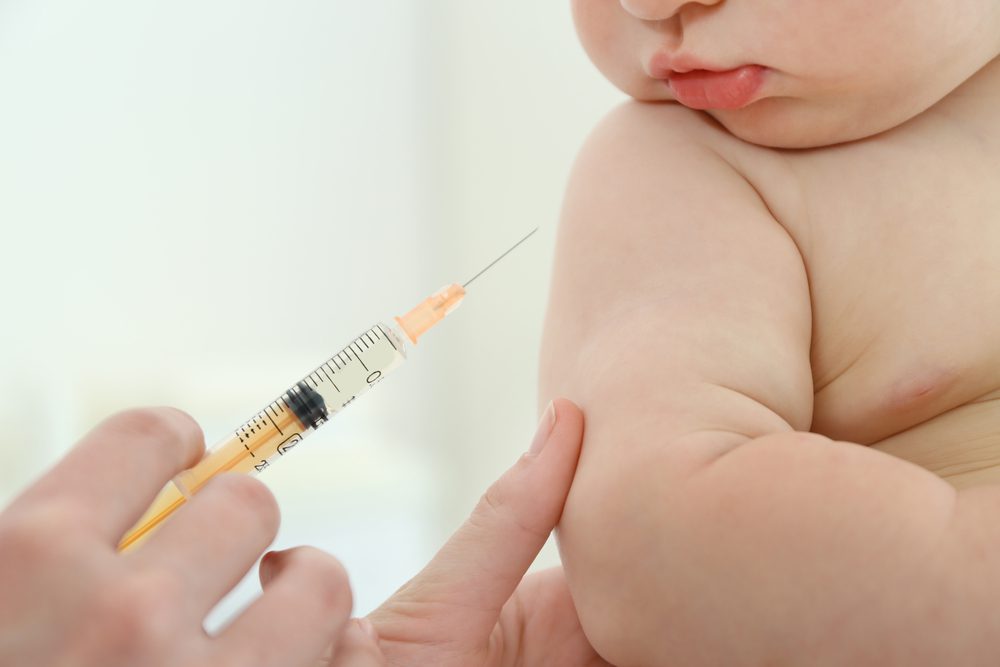
The inevitable has arrived. COVID-19 vaccines are now approved for children ages 5-11.

An announcement that was met with far less flare than earlier vaccine related announcements. Perhaps we have become numb to them. More likely, we always knew this announcement would come. And we were able to patiently wait for what we knew would inevitably arrive.

This is telling in and of itself, and says much about where we are as a society this far into the pandemic. By now we know the drill, we know what to anticipate, and we know how decisions are made and policies announced.

First there will be the release of clinical data. Some study conducted in another country on a controlled patient population with data that always seems to be better than the last study. Then there will be waves of articles pontificating upon the data. Journalists posing as scientists contriving preconceived notions about the data relative to their preexisting perspectives of all things pandemic. Finally the announcements will come – some subcommittee within the FDA or CDC faux-deliberating upon the data to determine what we already know to be the most obvious decision.

The process has been repeated so often that by now it feels predictably canned. No one is surprised anymore, the disillusionment has fully formed.

But what is concerning, given the pediatric patient population affected by this announcement, is that no one seems to question the data anymore. We simply move along with it, merrily following the process. But a close examination of the data reveals some concerns.

In the Pfizer study evaluating children ages 5-11, the dose of the vaccine was reduce by one third. While it is common to reduce vaccine doses for pediatric populations, there is little in the way of explaining how the dose reduction was calculated. In fact, most articles seem content with repeating the justification provided by Pfizer: “The 10 μg dose was carefully selected as the preferred dose for safety, tolerability and immunogenicity in children 5 to <12 years of age”.

This is science-speak for ‘it felt right so we just went with it’.

Second, the patient population studied was not controlled for previous COVID-19 exposure. The trial indiscriminately enrolled children with or without prior evidence of SARS-CoV-2 infections. This means we do not know how many children inoculated in the study were exposed to COVID-19 beforehand.

Immune systems in children are naïve and reactive, which may lead to a higher than anticipated rate of side effects – and reveals a critical limitation in the study. Most of the children in the United States who will receive the vaccine – at the discretion of their parents of course – have not been exposed to COVID-19.

The data may not accurately represent the true complication rates in the United States because the patient populations in the trial and in America are different. Those studied in the trial had children already exposed to COVID-19, and therefore would have had more predictable responses to the vaccines.

While we do not anticipate a significant number of severe complications, we do believe there will be a greater than anticipated amount of mild complications from the vaccines, simply due to the reactive nature of naive immune systems.

This is why the vaccine dose was lowered. But Immunologists in the United States are in uncharted territory when adjusting the dose of the pediatric vaccine. It is a balance that hinges predominantly on the vaccine’s effectiveness relative to its side effect rates.

Since we are dealing with a patient population that has predominantly naïve, reactive immune systems, it becomes more difficult to anticipate the side effects – and therefore, more difficult to calibrate an effective dose.

More likely than not, the dose is on the lower end of the therapeutic spectrum. Vaccine manufacturers know the impact complications from the vaccine have had in the media. They would rather offer less effective vaccines with lower doses than a higher dose with greater immunogenicity – but with greater side effect risks.

This calls into question the original purpose of vaccinating children. If we are simply offering the vaccine at a lower dose because it feels right, then we are applying the same intuitive logic people use when deciding to get vaccinated. And if intuition is the basis for these decisions, then what is the value of data?

The circular logic belies the underlying irrationality we have come to accept at this stage in the pandemic. Vaccinating children is important, as no parent should have to endure a child being hospitalized with COVID-19, but are we really making decisions as well as we could be?

We seem to be making a decision from data that do not apply to the American pediatric population, that used vaccines tapered to a lower dose without anything more than a jargon-rich explanation, that will now impact decisions made by millions of young families across the country.

And like all pandemic decisions, each individual decision will be made intuitively, irrespective of the data. Those families that planned to get their kids vaccinated will move forward, while those that never intended to will not. The individual decisions were already predetermined just like the policy announcement.

In the coming months we should expect vaccine approval for children ages 5 and under. The data is already here. In fact, it is in the same study used to approve the vaccine for children ages 5-11.

So it is only a matter of time before the first wave of articles comes out, warming us to the notion of vaccinating yet another segment of the pediatric population.

We know the drill. We have seen it plenty of times before.

ShareTweet
Daily Remedy

Daily Remedy

Dr. Jay K Joshi serves as the editor-in-chief of Daily Remedy. He is a serial entrepreneur and sought after thought-leader for matters related to healthcare innovation and medical jurisprudence. He has published articles on a variety of healthcare topics in both peer-reviewed journals and trade publications. His legal writings include amicus curiae briefs prepared for prominent federal healthcare cases.

Leave a Reply Cancel reply

Your email address will not be published. Required fields are marked *

Videos

In this episode, the host discusses the significance of large language models (LLMs) in healthcare, their applications, and the challenges they face. The conversation highlights the importance of simplicity in model design and the necessity of integrating patient feedback to enhance the effectiveness of LLMs in clinical settings.

Takeaways
LLMs are becoming integral in healthcare.
They can help determine costs and service options.
Hallucination in LLMs can lead to misinformation.
LLMs can produce inconsistent answers based on input.
Simplicity in LLMs is often more effective than complexity.
Patient behavior should guide LLM development.
Integrating patient feedback is crucial for accuracy.
Pre-training models with patient input enhances relevance.
Healthcare providers must understand LLM limitations.
The best LLMs will focus on patient-centered care.

Chapters

00:00 Introduction to LLMs in Healthcare
05:16 The Importance of Simplicity in LLMs
The Future of LLMs in HealthcareDaily Remedy
YouTube Video U1u-IYdpeEk
Subscribe

2027 Medicare Advantage & Part D Advance Notice

Clinical Reads

BIIB080 in Mild Alzheimer’s Disease: What a Phase 1b Exploratory Clinical Analysis Can—and Cannot—Tell Us

BIIB080 in Mild Alzheimer’s Disease: What a Phase 1b Exploratory Clinical Analysis Can—and Cannot—Tell Us

by Daily Remedy
February 15, 2026
0

Can lowering tau biology translate into a clinically meaningful slowing of decline in people with early symptomatic Alzheimer’s disease? That is the practical question behind BIIB080, an intrathecal antisense therapy designed to reduce production of tau protein by targeting the tau gene transcript. In a phase 1b program originally designed for safety and dosing, investigators later examined cognitive, functional, and global outcomes as exploratory endpoints. The clinical question matters because current disease-modifying options primarily target amyloid, while tau pathology tracks...

Read more

Join Our Newsletter!

Twitter Updates

Tweets by TheDailyRemedy

Popular

  • The Information Epidemic: How Digital Health Misinformation Is Rewiring Clinical Risk

    The Information Epidemic: How Digital Health Misinformation Is Rewiring Clinical Risk

    0 shares
    Share 0 Tweet 0
  • Prevention Is Having a Moment and a Measurement Problem

    0 shares
    Share 0 Tweet 0
  • Child Health Is Now a Platform Issue

    0 shares
    Share 0 Tweet 0
  • Behavioral Health Is Now a Network Phenomenon

    0 shares
    Share 0 Tweet 0
  • The Breach Is the Diagnosis: Cybersecurity Has Become a Clinical Risk Variable

    0 shares
    Share 0 Tweet 0
  • 628 Followers

Daily Remedy

Daily Remedy offers the best in healthcare information and healthcare editorial content. We take pride in consistently delivering only the highest quality of insight and analysis to ensure our audience is well-informed about current healthcare topics - beyond the traditional headlines.

Daily Remedy website services, content, and products are for informational purposes only. We do not provide medical advice, diagnosis, or treatment. All rights reserved.

Important Links

  • Support Us
  • About Us
  • Contact us
  • Privacy Policy
  • Terms and Conditions

Join Our Newsletter!

  • Survey
  • Podcast
  • About Us
  • Contact us

© 2026 Daily Remedy

No Result
View All Result
  • Home
  • Articles
  • Podcasts
  • Surveys
  • Courses
  • About Us
  • Contact us
  • Support Us
  • Official Learner

© 2026 Daily Remedy
