












Wednesday, January 21, 2026
ISSN 2765-8767
  • Survey
  • Podcast
  • Write for Us
  • My Account
  • Log In
Daily Remedy
  • Home
  • Articles
  • Podcasts
    Your Body, Your Health Care: A Conversation with Dr. Jeffrey Singer

    Your Body, Your Health Care: A Conversation with Dr. Jeffrey Singer

    July 1, 2025

    The cost structure of hospitals nearly doubles

    July 1, 2025
    Navigating the Medical Licensing Maze

    The Fight Against Healthcare Fraud: Dr. Rafai’s Story

    April 8, 2025
    Navigating the Medical Licensing Maze

    Navigating the Medical Licensing Maze

    April 4, 2025
    The Alarming Truth About Health Insurance Denials

    The Alarming Truth About Health Insurance Denials

    February 3, 2025
    Telehealth in Turmoil

    The Importance of NIH Grants

    January 31, 2025
  • Surveys

    Surveys

    Patient Survey: Understanding Healthcare Consumerism

    Patient Survey: Understanding Healthcare Consumerism

    January 18, 2026
    Public Confidence in Proposed Changes to U.S. Vaccine Policy

    Public Confidence in Proposed Changes to U.S. Vaccine Policy

    January 3, 2026

    Survey Results

    Can you tell when your provider does not trust you?

    Can you tell when your provider does not trust you?

    January 18, 2026
    Do you believe national polls on health issues are accurate

    National health polls: trust in healthcare system accuracy?

    May 8, 2024
    Which health policy issues matter the most to Republican voters in the primaries?

    Which health policy issues matter the most to Republican voters in the primaries?

    May 14, 2024
    How strongly do you believe that you can tell when your provider does not trust you?

    How strongly do you believe that you can tell when your provider does not trust you?

    May 7, 2024
  • Courses
  • About Us
  • Contact us
  • Support Us
  • Official Learner
No Result
View All Result
  • Home
  • Articles
  • Podcasts
    Your Body, Your Health Care: A Conversation with Dr. Jeffrey Singer

    Your Body, Your Health Care: A Conversation with Dr. Jeffrey Singer

    July 1, 2025

    The cost structure of hospitals nearly doubles

    July 1, 2025
    Navigating the Medical Licensing Maze

    The Fight Against Healthcare Fraud: Dr. Rafai’s Story

    April 8, 2025
    Navigating the Medical Licensing Maze

    Navigating the Medical Licensing Maze

    April 4, 2025
    The Alarming Truth About Health Insurance Denials

    The Alarming Truth About Health Insurance Denials

    February 3, 2025
    Telehealth in Turmoil

    The Importance of NIH Grants

    January 31, 2025
  • Surveys

    Surveys

    Patient Survey: Understanding Healthcare Consumerism

    Patient Survey: Understanding Healthcare Consumerism

    January 18, 2026
    Public Confidence in Proposed Changes to U.S. Vaccine Policy

    Public Confidence in Proposed Changes to U.S. Vaccine Policy

    January 3, 2026

    Survey Results

    Can you tell when your provider does not trust you?

    Can you tell when your provider does not trust you?

    January 18, 2026
    Do you believe national polls on health issues are accurate

    National health polls: trust in healthcare system accuracy?

    May 8, 2024
    Which health policy issues matter the most to Republican voters in the primaries?

    Which health policy issues matter the most to Republican voters in the primaries?

    May 14, 2024
    How strongly do you believe that you can tell when your provider does not trust you?

    How strongly do you believe that you can tell when your provider does not trust you?

    May 7, 2024
  • Courses
  • About Us
  • Contact us
  • Support Us
  • Official Learner
No Result
View All Result
Daily Remedy
No Result
View All Result
Home Contrarian

Healthcare is Woke

Daily Remedy by Daily Remedy
August 8, 2021
in Contrarian
0

In the Spring of 2020, The American Journal of Surgery published an article that was decidedly not about surgery. Titled, “Anti-Asian sentiment in the United States – COVID-19 and history”, it was an article written by one of the journal’s editors discussing anti-Asian sentiment in the United States, both from a historical context and from the perspective of the COVID-19 pandemic.

A year later, editors of the journal reaffirm their conviction towards healthcare justice and social equity by writing:


“In the spring of 2020, we, the members of the editorial board of the American Journal of Surgery, committed to using our collective voices to publicly address and call for action against racism and social injustices in our society.

One year later, it is now heartbreakingly clear that we must continuously speak up and openly address ongoing injustices and hate. This week, 8 Americans, including 6 Asian Americans, were killed solely based on their race/ethnicity. Since the pandemic started, the Stop AAPI (Asian American Pacific Islander) Hate coalition has received nearly 4000 reports of anti-Asian harassment, ranging from verbal harassment to physical violence,“… the fear and uncertainty inherent to novel infectious disease, the presumptive origin of COVID-19, and the perpetual foreigner stereotype make Asian Americans especially vulnerable to racism and disease scapegoating.”

We again pledge to continue to publicly address injustices at all levels, to work to ensure that the American Journal of Surgery represents the diverse voices of the surgical community and encourages an open discourse in health inequities and research.

We stand in solidarity and we will not be silent.”


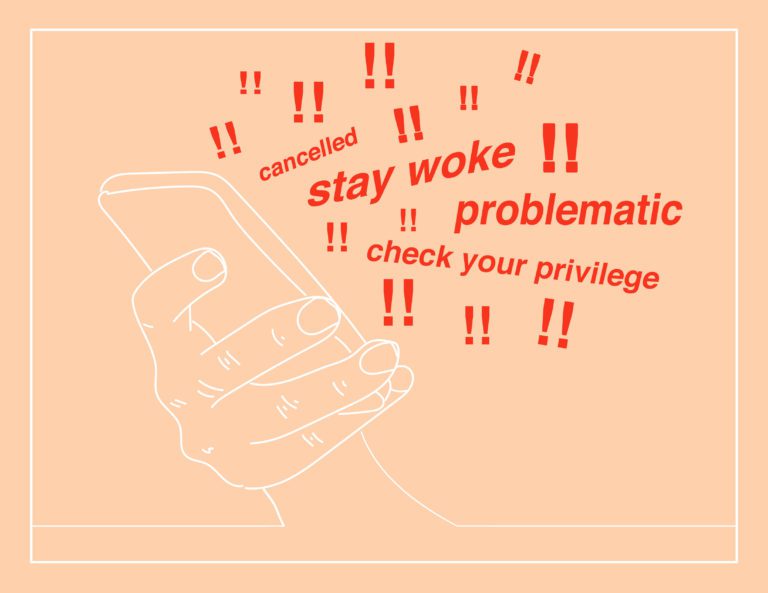
Healthcare is woke.

And that may not be a bad thing.

Healthcare has a long tradition of public service. The Oath of Maimonides, which most medical students swear upon, was written by the Jewish physician Markus Herz, advocating Maimonides’ commitment to public service as much as to clinical care.

Something physicians in America have taken up in recent decades – leading the country through many healthcare challenges.

Arguably the most famous of which is the discovery of the polio vaccine, the first major disease to be nearly eradicated with a vaccine. While we largely see Dr. Jonas Salk as a folk hero, and the polio vaccine as a testament to American ingenuity, we forget the many issues that came after a vaccine was discovered.

We forget the batches of vaccines that led to numerous deaths. The cold war competition between Dr. Salk’s vaccine that consisted of multiple injections compared to Dr. Sabin’s oral vaccine. We forget that we initially opted for Dr. Salk’s vaccine because it was developed faster, but eventually adopted Dr. Sabin’s vaccine because it was easier to administer – and safer.

The initial vaccine, while effective and no doubt saved lives, proved to have too many risks – limiting overall adoption. Risks that could have been discovered if development was not rushed nor politicized into an arms race between competing physicians – if instead, we had adopted a more pragmatic approach of selective release, pivoting and adapting, and concluding with a larger scale release.

While Dr. Salk is lauded as a hero, his real legacy is much more complicated.

Just like another prominent physician who advanced healthcare in this country, Dr. Stanford Emerson Chaillé.

Known as the father of American hygiene, Dr. Chaillé gained fame as the head of the Havana Yellow Fever Commission of 1879, organized to study the disease following the dreadful 1878 plague in New Orleans. His studies analyzing the blood of yellow fever victims provided the links necessary to discover that the mosquito was the cause of the disease.

Once a national figurehead, Dr. Chaillé was a spokesman for the establishment of public sanitation services that we continue to enjoy today – advocating for community sewers and drainage systems, street paving, pure water supplies, and, of course, mosquito control. He was instrumental in the establishment of the National Board of Health, the forerunner of the U.S. Department of Health and Human Services.

He also served in the Confederate Army during the Civil War.

Both men are undoubtedly luminaries in American healthcare. But both men have enough of a checkered past to raise the same issues which many facing the ire of woke culture have experienced.

The integration of liberal policies into healthcare will undoubtedly improve healthcare. We need to address healthcare inequity and the underlying causes limiting healthcare access far better than we do today.

But the integration of liberal policies is a mixed bag, rife with the inevitable polarization of healthcare concerning issues that should be left apolitical.

A tendency epitomized in how we see Dr. Anthony Fauci. Of late, he has become more statesman than physician, perceived more in political terms than in clinical terms. A tendency we find throughout American history whenever healthcare becomes politicized.

As the Spanish flu ravaged the country, there was a lot of denial. Healthcare policy experts began to advise the country, and similarly, the experts began to lose credibility – just like we see today.

Today the perception of Dr. Fauci is largely drawn along political lines. He is lauded by Democrats and chastised by Republications. His messaging contains an inevitable veneer of politicization – to the point that nothing he says is apolitical.

So when Dr. Fauci speaks, it is not science that is speaking.

Which becomes a problem should all of healthcare swing this way.

As the saying goes, the medium is the message. And as healthcare becomes woke, it will be perceived through the politicized lens of woke culture – until that is exclusively how healthcare is seen.

Woke culture has raised issues not previously addressed in healthcare – that sorely need to be addressed and improved upon.

But it also comes with an inevitable politicization. A tendency that has appealed to many, but one that has also antagonized others. Possibly creating as many problems as it will resolve.

Raising the question, now when healthcare speaks, who is the speaker?

ShareTweet
Daily Remedy

Daily Remedy

Dr. Jay K Joshi serves as the editor-in-chief of Daily Remedy. He is a serial entrepreneur and sought after thought-leader for matters related to healthcare innovation and medical jurisprudence. He has published articles on a variety of healthcare topics in both peer-reviewed journals and trade publications. His legal writings include amicus curiae briefs prepared for prominent federal healthcare cases.

Leave a Reply Cancel reply

Your email address will not be published. Required fields are marked *

Videos

Summary

In this episode of the Daily Remedy Podcast, the host delves into the evolving landscape of healthcare consumerism as we approach 2026. The discussion highlights how patients are increasingly becoming empowered consumers, driven by the rising costs and complexities of healthcare in America. The host emphasizes that this shift is not merely about convenience but about patients demanding transparency, trust, and agency in their healthcare decisions. With advancements in technology, particularly AI, patients are now equipped to compare prices, switch providers, and even self-diagnose, fundamentally altering the traditional patient-provider dynamic.

The conversation further explores the implications of this shift, noting that patients are seeking predictable pricing and upfront cost estimates, which are becoming essential in their healthcare experience. The host also discusses the role of technology in facilitating this change, enabling a more fluid relationship between patients and healthcare providers. As healthcare consumerism matures, the episode raises critical questions about the future of patient engagement and the collaborative model of care that is emerging, where decision-making is shared rather than dictated by healthcare professionals alone.

Takeaways

Patients are becoming empowered consumers in healthcare.
Healthcare consumerism is maturing into a demand for transparency and trust.
Technology is enabling patients to become strong economic actors.
Patients want predictable pricing and upfront cost estimates.
The shift towards collaborative decision-making is changing the healthcare landscape.

Chapters

00:00 Introduction to Healthcare Consumerism
01:46 The Rise of Patient Empowerment
04:31 Technology's Role in Healthcare Transformation
07:16 The Shift Towards Collaborative Decision-Making
09:44 Conclusion and Future Outlook
Healthcare Consumerism 2026: A New Era of Patient Empowerment
YouTube Video dcz8FQlhAog
Subscribe

Real Food Initiative

Clinical Reads

Analysis of the DHHS “Real Food” Initiative

Analysis of the DHHS “Real Food” Initiative

by Daily Remedy
January 18, 2026
0

EXECUTIVE SUMMARY The Department of Health and Human Services has launched a transformative public health initiative through the RealFood.gov platform, introducing revised Dietary Guidelines for Americans that represent a fundamental departure from decades of nutritional policy. This initiative, branded as "Eat Real Food," repositions whole, minimally processed foods as the cornerstone of American nutrition while explicitly challenging the role of ultra-processed foods in the national diet. The initiative arrives amid a stark public health landscape where 50% of Americans have...

Read more

Twitter Updates

Tweets by DailyRemedy1

Newsletter

Start your Daily Remedy journey

Cultivate your knowledge of current healthcare events and ensure you receive the most accurate, insightful healthcare news and editorials.

*we hate spam as much as you do

Popular

  • A Two Headed Monster - State Attorneys General and the Drug Enforcement Agency

    A Two Headed Monster – State Attorneys General and the Drug Enforcement Agency

    3 shares
    Share 0 Tweet 0
  • Modeling Patient Irrationality

    0 shares
    Share 0 Tweet 0
  • The CDC Consists Mostly of Remote Workers

    0 shares
    Share 0 Tweet 0
  • National Opioid Settlement Injunction

    1 shares
    Share 0 Tweet 0
  • My Plight as an Abandoned Pain Patient

    0 shares
    Share 0 Tweet 0
  • 628 Followers

Daily Remedy

Daily Remedy offers the best in healthcare information and healthcare editorial content. We take pride in consistently delivering only the highest quality of insight and analysis to ensure our audience is well-informed about current healthcare topics - beyond the traditional headlines.

Daily Remedy website services, content, and products are for informational purposes only. We do not provide medical advice, diagnosis, or treatment. All rights reserved.

Important Links

  • Support Us
  • About Us
  • Contact us
  • Privacy Policy
  • Terms and Conditions

Newsletter

Start your Daily Remedy journey

Cultivate your knowledge of current healthcare events and ensure you receive the most accurate, insightful healthcare news and editorials.

*we hate spam as much as you do

  • Survey
  • Podcast
  • About Us
  • Contact us

© 2026 Daily Remedy

No Result
View All Result
  • Home
  • Articles
  • Podcasts
  • Surveys
  • Courses
  • About Us
  • Contact us
  • Support Us
  • Official Learner

© 2026 Daily Remedy

Start your Daily Remedy journey

Cultivate your knowledge of current healthcare events and ensure you receive the most accurate, insightful healthcare news and editorials.

*we hate spam as much as you do
