













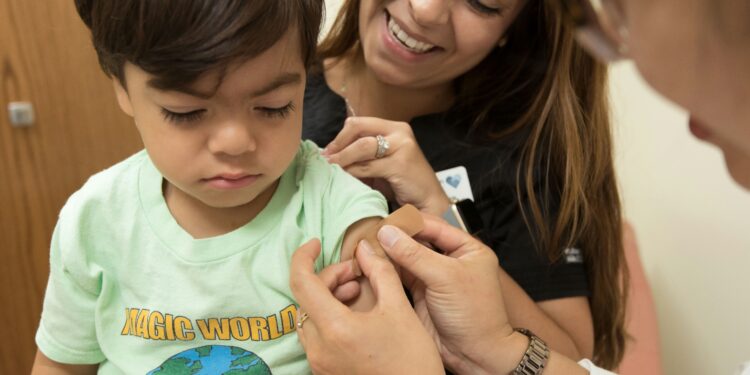
There I was, six years old, walking next to mom down 3rd Avenue, crossing 125th street, heading south to the complex of three large buildings that stood imposing on the horizon. We were headed to the free clinic.
I don’t know a kid that likes going to the doctor, but it was only dutiful sonship that kept me from bolting. After wading past unhoused people, catcalling thugs, drug users and streets filled with sundry detritus and paraphernalia, we arrived at the place: peeling paint, rickety elevator, obscenely loud waiting room and a long wait to see Dr. Benjamin.
Maybe because I grew up in a cult and didn’t interact with many people outside it, the doctor visit took on a special importance. I’m not sure. I do know that I felt awkward and nervous as I coughed and got stethoscoped. Measles, mumps, rubella, right in the arm or the ass, sometimes by a good tech, sometimes by a sadist. I had the deepest ambivalence toward the clinic and to this day I can’t pass that block without feeling like a 6 year old kid.
It’s really embarrassing, but the next doctor visit I remember was around 14 years old, when I (again heading south on 3rd Avenue in Harlem) was racing my friend Charyse. With a half-block lead, I totally started to gloat, sprinted across the street to the finish line and decided to celebrate my victory with a flourish. I jumped and grabbed the handle of the “don’t walk” sign. My speed helped me over-rotate, lose my grip and land on a fire hydrant with the primary point of impact being my head.
I opened my eyes to see my friends standing all around me, and I popped right up. They were so stressed out, and I couldn’t understand why. After all, I’d just fallen and gotten up. They refused to let me walk, slowly explaining to me that I’d been unconscious and convulsing for several minutes (the body’s response to severe head trauma).
I thought I felt fine and wanted us to leave, but across the street, parked on the sidewalk by the “human services” building was an ambulance. My friends walked me over there, they strapped me down, and I started crying, yelling, fighting not to be taken to the hospital. I didn’t know how much it would cost, but I knew it was more than my mom could afford.
At Mount Sinai Medical Center, they gave me a CAT scan, kept me strapped down for hours with a head and neck brace. I was miserable and distraught with guilt. Later the cult took an offering to pay for the bills, singling us out with the unbearable burden of being the very visible recipients of everyone’s largesse. I never really forgave myself for forcing my mom into that position, which I understood would have subtle and prolonged consequences.
Even more embarrassing, a year or so after this, I was unable to sleep because of an increasing pain in my back. It grew to almost be unbearable. I crawled out of bed, hunched to the side to go to the bathroom and screamed for my mom when I saw blood come out as urine. I can still remember the baffling wrongness of seeing red when expecting translucent yellow.
The worst part was I’m sure this was my fault, too. Like many teenage boys, I had discovered a wonderful new pastime. Hygiene was never my strong-suit, and going to bed in dried effluvium is almost certainly what caused me to get a urinary tract infection.
The solution for this was a trip to the clinic near our house in South Jamaica, Queens, on Guy Brewer Boulevard. I got a prescription for antibiotics which I had to take and eventually the pain eased and things got back to normal. The pain of that experience though, and the shame of it, stuck around for quite some time.
Speaking of antibiotics, there was a point, in prison, year 2 of a 10 year stretch, where I had been living with a broken and rotting wisdom tooth. I tried every technique for pain management: gargling with salt packets stolen from the mess hall, tea, Tylenol, pressure applied to my jaw. I would get massive headaches that made my life miserable. My bunkie offered remedies based in West Indian culture and our limited access to supplies of anything, really.
But finally, the day came, a full year after I’d put in a request for emergency dental services they opened the cell and took both my bunkie and I out. Somehow they’d booked us both for a road trip to a prison 100 miles away to get dental done. We were headed to Attica.
100 miles in handcuffs and ankle shackles while fighting lightning strike nerve pain to your brain is not a fun adventure. Getting to the facility, waiting and finally entering the dental chair under the gentle hands of a six-foot-nine former pro football player-turned-dentist simply defies description.
Perhaps the only saving grace of the trip was that I was good friends with my bunkie and so the gallows humor, inside jokes, and raw conversation material we generated that day held us for several months, like stocking up on rations.
Still, I have to give credit to the football player dentist. Even though he didn’t actually wait for the Novocain to kick in, when he took the fancy pliers and locked on the fragmented remains of my tooth. I was glad that he had the biceps of a linebacker. He yanked it out in one pull and it was a clean, albeit bloody, extraction.
What is the point of this whole article, you ask? For the last 6 years, literally ending today, I’ve had really good health insurance. Aetna. Top-o-the-line professional stuff. Part of it even came from my check every month. Now in my mid-forties with aches and warning signs all over my body, it would definitely have been a good time to go get a checkup. After all, I had been paying for it!
But I have not gone. The last time I remember going to the doctor was as a 20-something professional. I had to get a checkup from a general practitioner in order to get the life insurance policy my girlfriend at the time wanted us to get. (I’m still not sure what happened to that policy! Gimme my money!) This was at an NYU medical center at the edge of the Financial District in Manhattan. I walked in, he asked me some questions, each one feeling like a couched judgment. I wanted out every second of that visit, and I was convinced he could care less about my wellbeing. I was sad and suicidal, did I think I could tell him?
No.
Or the times I’ve called Quest Diagnostics to get a last minute STD suite of tests, watching them fill vial after vial with my bright red life-force. Doing this because the girl who just broke up with me to get back with her ex called me panicked, and accusing me of “giving her something.” Meeting her in Washington Square Park, armed with the results and an air of gloating dipped in longing, “It wasn’t me, sweetheart.”
I HATE DOCTORS. I hate it, and I know I need a colonoscopy. I made a deal with my late sixties dad that we’d both consider getting one. This was a milestone. When tomorrow comes, and I’m back on Obamacare or Medicaid or whatever they call this ridiculous state stuff (which they penalize you for if you don’t have, apparently?) it’ll allow me to put it off until something gets me really sick and kills me.
But I know I should go. I should trust these institutionalized protectors of health to listen to me, see me as a person, put my best interest at heart. But the fact is, I can’t. I see them as arms of a system designed to dehumanize people. The dissociative looks on the underpaid PAs faces, the armed security in the ER, the bills that will break your life. I’d rather just not.
And every once in a while, I run across the metaphorical equivalent of a doctor with the ability to care about the size of a pro-football player’s bicep, and it makes me reconsider my fears, shame, and sad memories. Maybe one day I’ll let them strap me down again. I do a pain filled happy-dance (ankle, knee, hip). Not today.



