






Sunday, February 22, 2026
ISSN 2765-8767
  • Survey
  • Podcast
  • Write for Us
  • My Account
  • Log In
Daily Remedy
  • Home
  • Articles
  • Podcasts
    Debunking Myths About GLP-1 Medications

    Debunking Myths About GLP-1 Medications

    February 16, 2026
    The Future of LLMs in Healthcare

    The Future of LLMs in Healthcare

    January 26, 2026
    The Future of Healthcare Consumerism

    The Future of Healthcare Consumerism

    January 22, 2026
    Your Body, Your Health Care: A Conversation with Dr. Jeffrey Singer

    Your Body, Your Health Care: A Conversation with Dr. Jeffrey Singer

    July 1, 2025

    The cost structure of hospitals nearly doubles

    July 1, 2025
    Navigating the Medical Licensing Maze

    The Fight Against Healthcare Fraud: Dr. Rafai’s Story

    April 8, 2025
  • Surveys

    Surveys

    How Confident Are You in RFK Jr.’s Health Leadership?

    How Confident Are You in RFK Jr.’s Health Leadership?

    February 16, 2026
    AI in Healthcare Decision-Making

    AI in Healthcare Decision-Making

    February 1, 2026

    Survey Results

    Can you tell when your provider does not trust you?

    Can you tell when your provider does not trust you?

    January 18, 2026
    Do you believe national polls on health issues are accurate

    National health polls: trust in healthcare system accuracy?

    May 8, 2024
    Which health policy issues matter the most to Republican voters in the primaries?

    Which health policy issues matter the most to Republican voters in the primaries?

    May 14, 2024
    How strongly do you believe that you can tell when your provider does not trust you?

    How strongly do you believe that you can tell when your provider does not trust you?

    May 7, 2024
  • Courses
  • About Us
  • Contact us
  • Support Us
  • Official Learner
No Result
View All Result
  • Home
  • Articles
  • Podcasts
    Debunking Myths About GLP-1 Medications

    Debunking Myths About GLP-1 Medications

    February 16, 2026
    The Future of LLMs in Healthcare

    The Future of LLMs in Healthcare

    January 26, 2026
    The Future of Healthcare Consumerism

    The Future of Healthcare Consumerism

    January 22, 2026
    Your Body, Your Health Care: A Conversation with Dr. Jeffrey Singer

    Your Body, Your Health Care: A Conversation with Dr. Jeffrey Singer

    July 1, 2025

    The cost structure of hospitals nearly doubles

    July 1, 2025
    Navigating the Medical Licensing Maze

    The Fight Against Healthcare Fraud: Dr. Rafai’s Story

    April 8, 2025
  • Surveys

    Surveys

    How Confident Are You in RFK Jr.’s Health Leadership?

    How Confident Are You in RFK Jr.’s Health Leadership?

    February 16, 2026
    AI in Healthcare Decision-Making

    AI in Healthcare Decision-Making

    February 1, 2026

    Survey Results

    Can you tell when your provider does not trust you?

    Can you tell when your provider does not trust you?

    January 18, 2026
    Do you believe national polls on health issues are accurate

    National health polls: trust in healthcare system accuracy?

    May 8, 2024
    Which health policy issues matter the most to Republican voters in the primaries?

    Which health policy issues matter the most to Republican voters in the primaries?

    May 14, 2024
    How strongly do you believe that you can tell when your provider does not trust you?

    How strongly do you believe that you can tell when your provider does not trust you?

    May 7, 2024
  • Courses
  • About Us
  • Contact us
  • Support Us
  • Official Learner
No Result
View All Result
Daily Remedy
No Result
View All Result
Home Trends

The Near-Sighted Generation

Myopia, indoor light exposure, and the recalibration of environmental risk in pediatric vision health

Edebwe Thomas by Edebwe Thomas
February 22, 2026
in Uncategorized
0

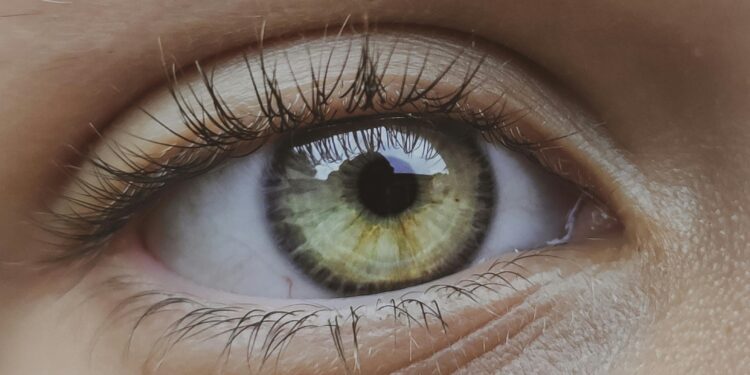
Myopia prevalence has risen dramatically over the past several decades, particularly in East Asia but increasingly across North America and Europe. Projections published in Ophthalmology estimate that by 2050, nearly half the global population may be myopic (https://www.aaojournal.org/article/S0161-6420(16)00025-7/fulltext). The dominant narrative has long implicated screen exposure and near work as principal drivers. Yet emerging research shifts attention toward a quieter variable: diminished exposure to bright outdoor light.

Studies conducted in Australia, Singapore, and China have consistently observed lower myopia incidence among children who spend more time outdoors. Investigations summarized in journals such as The Lancet Child & Adolescent Health suggest that high-intensity outdoor light may stimulate dopamine release in the retina, modulating axial elongation of the eye (https://www.thelancet.com/journals/lanchi/article/PIIS2352-4642(20)30090-3/fulltext). The mechanism is still being refined, but the epidemiologic signal is robust: brighter environments correlate with slower myopic progression.

The implication is counterintuitive. Screens may be a proxy rather than the primary culprit.

Indoor environments—even those with abundant windows—rarely replicate the luminance intensity of outdoor daylight. Classrooms and homes typically operate at light levels far below what retinal physiology may require to regulate growth patterns. The CDC and other public health bodies emphasize screen moderation for numerous developmental reasons, yet lighting intensity has received comparatively less regulatory scrutiny.

For physician-executives and healthcare planners, the myopia surge is not merely refractive inconvenience. High myopia increases lifetime risk of retinal detachment, myopic maculopathy, and glaucoma. The economic burden extends beyond eyeglasses into specialty ophthalmologic care and potential surgical intervention. As prevalence increases, so too does downstream risk accumulation.

Counterintuitively, the cost structure of myopia management may expand even as corrective technologies improve. Orthokeratology lenses, low-dose atropine drops, and specialty contact lenses designed to slow axial elongation represent emerging interventions. Clinical trials published in JAMA Ophthalmology have demonstrated modest efficacy for pharmacologic control (https://jamanetwork.com/journals/jamaophthalmology/fullarticle/2770732). Yet widespread adoption introduces new reimbursement complexities. Preventive ophthalmology occupies a gray zone between elective correction and disease mitigation.

The environmental hypothesis also reframes prevention strategy. If dim indoor light contributes significantly to myopic progression, urban design and school policy enter the conversation. Outdoor recess duration, classroom lighting standards, and urban density intersect with pediatric ophthalmology. Public health solutions become infrastructural rather than behavioral.

There are second-order educational implications. Increasing outdoor exposure during school hours may compete with academic instruction time. Policymakers balancing standardized test performance metrics against long-term vision health confront subtle trade-offs. The near-sighted generation is shaped not solely by screens but by architecture.

Investors have recognized the opportunity embedded in epidemiology. Companies producing myopia-control lenses and pharmacologic drops attract capital aligned with demographic inevitability. The World Health Organization has identified uncorrected refractive error as a leading cause of vision impairment globally (https://www.who.int/news-room/fact-sheets/detail/blindness-and-visual-impairment). As prevalence rises, so too does market size.

Yet focusing exclusively on therapeutic expansion risks obscuring preventive leverage. Bright outdoor exposure costs less than pharmaceutical regimens. However, prevention lacks proprietary revenue streams. The incentive gradient tilts toward treatment.

The social distribution of risk complicates the narrative further. Urban children with limited access to safe outdoor spaces may experience higher exposure to indoor lighting conditions. Socioeconomic gradients intersect with architectural constraints. Environmental determinants of health extend into ophthalmology.

For clinicians, patient counseling may evolve subtly. Advising families to increase outdoor activity shifts emphasis away from screen prohibition toward environmental enrichment. The nuance matters. Blaming screens simplifies causality; acknowledging luminance intensity demands structural adjustment.

Regulatory response remains measured. Lighting standards in schools are governed primarily by building codes rather than health agencies. Translating ophthalmologic findings into architectural policy requires cross-sector coordination rarely achieved swiftly.

The myopia epidemic illustrates a broader phenomenon in public health: risk factors often reside not in the most visible behavior but in the surrounding conditions. Screens are conspicuous; light intensity is ambient.

The eye adapts to its environment. When that environment narrows, so may vision.

The corrective lens industry will expand. Whether the built environment adjusts alongside it remains uncertain.

Blurred distance is becoming common. The question is whether clarity can be restored not only optically, but architecturally.


ShareTweet
Edebwe Thomas

Edebwe Thomas

Edebwe Thomas explores the dynamic relationship between science, health, and society through insightful, accessible storytelling.

Leave a Reply Cancel reply

Your email address will not be published. Required fields are marked *

Videos

This conversation focuses on debunking myths surrounding GLP-1 medications, particularly the misinformation about their association with pancreatic cancer. The speaker emphasizes the importance of understanding clinical study designs, especially the distinction between observational studies and randomized controlled trials. The discussion highlights the need for patients to critically evaluate the sources of information regarding medication side effects and to empower themselves in their healthcare decisions.

Takeaways
GLP-1 medications are not linked to pancreatic cancer.
Peer-reviewed studies debunk misinformation about GLP-1s.
Anecdotal evidence is not reliable for general conclusions.
Observational studies have limitations in generalizability.
Understanding study design is crucial for evaluating claims.
Symptoms should be discussed in the context of clinical conditions.
Not all side effects reported are relevant to every patient.
Observational studies can provide valuable insights but are context-specific.
Patients should critically assess the relevance of studies to their own experiences.
Engagement in discussions about specific studies can enhance understanding

Chapters
00:00
Debunking GLP-1 Medication Myths
02:56
Understanding Clinical Study Designs
05:54
The Role of Observational Studies in Healthcare
Debunking Myths About GLP-1 Medications
YouTube Video DM9Do_V6_sU
Subscribe

2027 Medicare Advantage & Part D Advance Notice

Clinical Reads

BIIB080 in Mild Alzheimer’s Disease: What a Phase 1b Exploratory Clinical Analysis Can—and Cannot—Tell Us

BIIB080 in Mild Alzheimer’s Disease: What a Phase 1b Exploratory Clinical Analysis Can—and Cannot—Tell Us

by Daily Remedy
February 15, 2026
0

Can lowering tau biology translate into a clinically meaningful slowing of decline in people with early symptomatic Alzheimer’s disease? That is the practical question behind BIIB080, an intrathecal antisense therapy designed to reduce production of tau protein by targeting the tau gene transcript. In a phase 1b program originally designed for safety and dosing, investigators later examined cognitive, functional, and global outcomes as exploratory endpoints. The clinical question matters because current disease-modifying options primarily target amyloid, while tau pathology tracks...

Read more

Join Our Newsletter!

Twitter Updates

Tweets by TheDailyRemedy

Popular

  • The Prevention Gap in Dementia Care

    The Prevention Gap in Dementia Care

    0 shares
    Share 0 Tweet 0
  • Healthcare Natural Rights

    0 shares
    Share 0 Tweet 0
  • The Staffing Equation That Doesn’t Balance

    0 shares
    Share 0 Tweet 0
  • Heat Safety Tips Every Pregnant Mother Should Know

    0 shares
    Share 0 Tweet 0
  • Healthcare in Space

    1 shares
    Share 0 Tweet 0
  • 628 Followers

Daily Remedy

Daily Remedy offers the best in healthcare information and healthcare editorial content. We take pride in consistently delivering only the highest quality of insight and analysis to ensure our audience is well-informed about current healthcare topics - beyond the traditional headlines.

Daily Remedy website services, content, and products are for informational purposes only. We do not provide medical advice, diagnosis, or treatment. All rights reserved.

Important Links

  • Support Us
  • About Us
  • Contact us
  • Privacy Policy
  • Terms and Conditions

Join Our Newsletter!

  • Survey
  • Podcast
  • About Us
  • Contact us

© 2026 Daily Remedy

No Result
View All Result
  • Home
  • Articles
  • Podcasts
  • Surveys
  • Courses
  • About Us
  • Contact us
  • Support Us
  • Official Learner

© 2026 Daily Remedy