







Monday, March 23, 2026
ISSN 2765-8767
  • Survey
  • Podcast
  • Write for Us
  • My Account
  • Log In
Daily Remedy
  • Home
  • Articles
  • Podcasts
    The Hidden Costs Employers Don’t See in Traditional Health Plans

    The Hidden Costs Employers Don’t See in Traditional Health Plans

    March 22, 2026
    The Impact of COVID-19 on Patient Trust

    The Impact of COVID-19 on Patient Trust

    March 3, 2026
    Debunking Myths About GLP-1 Medications

    Debunking Myths About GLP-1 Medications

    February 16, 2026
    The Future of LLMs in Healthcare

    The Future of LLMs in Healthcare

    January 26, 2026
    The Future of Healthcare Consumerism

    The Future of Healthcare Consumerism

    January 22, 2026
    Your Body, Your Health Care: A Conversation with Dr. Jeffrey Singer

    Your Body, Your Health Care: A Conversation with Dr. Jeffrey Singer

    July 1, 2025
  • Surveys

    Surveys

    Public Sentiment on the Future of Peptides and Hormone Therapies in U.S. Medicine

    Public Sentiment on the Future of Peptides and Hormone Therapies in U.S. Medicine

    March 17, 2026
    Perceptions of Viral Wellness Practices on Social Media: A Likert-Scale Survey for Informed Readers

    Perceptions of Viral Wellness Practices on Social Media: A Likert-Scale Survey for Informed Readers

    March 1, 2026

    Survey Results

    Can you tell when your provider does not trust you?

    Can you tell when your provider does not trust you?

    January 18, 2026
    Do you believe national polls on health issues are accurate

    National health polls: trust in healthcare system accuracy?

    May 8, 2024
    Which health policy issues matter the most to Republican voters in the primaries?

    Which health policy issues matter the most to Republican voters in the primaries?

    May 14, 2024
    How strongly do you believe that you can tell when your provider does not trust you?

    How strongly do you believe that you can tell when your provider does not trust you?

    May 7, 2024
  • Courses
  • About Us
  • Contact us
  • Support Us
  • Official Learner
No Result
View All Result
  • Home
  • Articles
  • Podcasts
    The Hidden Costs Employers Don’t See in Traditional Health Plans

    The Hidden Costs Employers Don’t See in Traditional Health Plans

    March 22, 2026
    The Impact of COVID-19 on Patient Trust

    The Impact of COVID-19 on Patient Trust

    March 3, 2026
    Debunking Myths About GLP-1 Medications

    Debunking Myths About GLP-1 Medications

    February 16, 2026
    The Future of LLMs in Healthcare

    The Future of LLMs in Healthcare

    January 26, 2026
    The Future of Healthcare Consumerism

    The Future of Healthcare Consumerism

    January 22, 2026
    Your Body, Your Health Care: A Conversation with Dr. Jeffrey Singer

    Your Body, Your Health Care: A Conversation with Dr. Jeffrey Singer

    July 1, 2025
  • Surveys

    Surveys

    Public Sentiment on the Future of Peptides and Hormone Therapies in U.S. Medicine

    Public Sentiment on the Future of Peptides and Hormone Therapies in U.S. Medicine

    March 17, 2026
    Perceptions of Viral Wellness Practices on Social Media: A Likert-Scale Survey for Informed Readers

    Perceptions of Viral Wellness Practices on Social Media: A Likert-Scale Survey for Informed Readers

    March 1, 2026

    Survey Results

    Can you tell when your provider does not trust you?

    Can you tell when your provider does not trust you?

    January 18, 2026
    Do you believe national polls on health issues are accurate

    National health polls: trust in healthcare system accuracy?

    May 8, 2024
    Which health policy issues matter the most to Republican voters in the primaries?

    Which health policy issues matter the most to Republican voters in the primaries?

    May 14, 2024
    How strongly do you believe that you can tell when your provider does not trust you?

    How strongly do you believe that you can tell when your provider does not trust you?

    May 7, 2024
  • Courses
  • About Us
  • Contact us
  • Support Us
  • Official Learner
No Result
View All Result
Daily Remedy
No Result
View All Result
Home Contrarian

The Glycemic Mirror

Continuous glucose monitoring is migrating from disease management tool to lifestyle instrument, raising questions about physiological relevance and behavioral consequence.

Ashley Rodgers by Ashley Rodgers
March 23, 2026
in Uncategorized
0

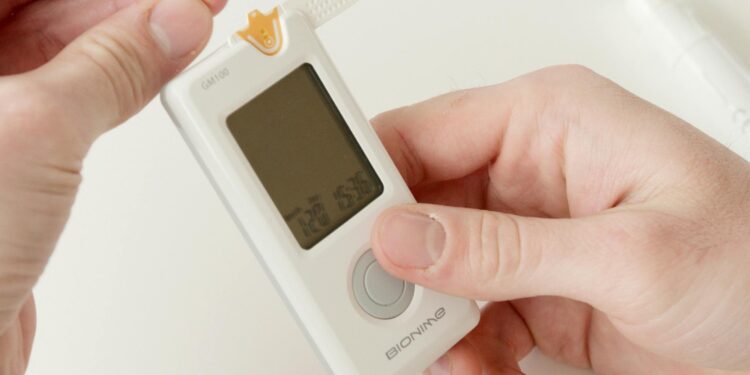
Search interest in continuous glucose monitoring for non-diabetics, metabolic flexibility optimization, wearable biosensors, and real-time nutrition feedback has surged across consumer health forums, investor briefings, and clinical discussion platforms over the past two weeks. The momentum reflects more than technological diffusion from endocrinology into wellness culture. It signals a deeper transformation in how physiological variability is interpreted — not simply as information to guide treatment, but as data to refine identity, discipline behavior, and justify new healthcare consumption patterns. Continuous glucose monitoring, once a niche instrument of disease stabilization, is evolving into a mirror through which the metabolically healthy scrutinize themselves.

Measurement precedes meaning.

The physiological premise underlying CGM expansion into non-diabetic populations appears superficially straightforward: real-time glycemic feedback might enable dietary adjustments that improve long-term metabolic resilience. Investors have been quick to extrapolate this premise into scalable preventive platforms — subscription-based metabolic coaching, algorithmic meal scoring, performance optimization ecosystems. Yet the empirical landscape remains unsettled. For individuals without dysglycemia, the clinical significance of transient postprandial glucose excursions remains ambiguous. Behavioral modification may occur. Durable outcome shifts are harder to demonstrate.

Healthcare systems must decide how seriously to take signals that lack established therapeutic thresholds.

Physicians increasingly encounter patients presenting with CGM-derived charts, requesting interpretation of minute fluctuations. A modest spike following carbohydrate intake becomes a perceived risk event. Overnight variability invites speculation about stress physiology or hormonal imbalance. The consultation evolves into a probabilistic negotiation about whether such data warrant intervention. Traditional diagnostic categories offer limited guidance. The clinician becomes translator between algorithmic visualization and biological nuance.

Second-order effects ripple through health psychology.

Continuous monitoring can sharpen awareness of dietary cause-and-effect relationships, reinforcing beneficial habits for some users. For others, it fosters vigilance bordering on preoccupation. Food transforms from cultural ritual into metabolic experiment. The pleasure of eating may yield to performance anxiety about maintaining “stable curves.” Behavioral economists might describe this as loss aversion transposed onto physiology — a heightened sensitivity to perceived negative deviations that outweighs appreciation of overall health stability.

Healthcare investors view CGM adoption through the lens of engagement economics.

Devices that encourage frequent user interaction generate valuable data streams and subscription retention. Platform differentiation hinges less on sensor accuracy — increasingly commoditized — than on narrative construction. Users are told they are optimizing longevity, preventing invisible decline, or gaining elite performance advantage. These narratives drive market growth even when evidence linking real-time glucose modulation to meaningful clinical endpoints remains preliminary.

Pharmaceutical and diagnostic industries observe this trend with cautious curiosity.

Expanded CGM usage could accelerate earlier identification of prediabetic patterns, increasing demand for lifestyle interventions and potentially pharmacologic therapies. Conversely, widespread monitoring might reveal the benign nature of many glycemic fluctuations, tempering enthusiasm for aggressive treatment. The direction of causality remains uncertain. Markets respond to anticipation as much as to proof.

Policy frameworks lag behind technological enthusiasm.

Regulatory agencies must determine whether CGMs marketed for wellness purposes require the same evidentiary standards as devices used in disease management. Reimbursement debates loom if preventive monitoring demonstrates population-level benefits. At present, most non-diabetic adoption occurs through out-of-pocket expenditure, reinforcing socioeconomic gradients in access to metabolic self-surveillance. Preventive aspiration risks becoming a consumer luxury.

Clinical culture adapts unevenly.

Endocrinologists familiar with CGM utility in diabetes express both intrigue and skepticism regarding broader application. Primary care physicians face increasing demand for metabolic interpretation training. Medical education curricula may eventually incorporate wearable data literacy as core competency. Yet time constraints within traditional visit structures complicate meaningful engagement with high-resolution physiologic datasets.

There is also the phenomenon of physiological overfitting.

Individuals may tailor dietary behavior to minimize short-term glucose variability without considering broader nutritional adequacy. A food producing minimal glycemic excursion may still lack essential micronutrients or contribute to other metabolic risks. Reductionist focus on a single biomarker can distort holistic health strategy. Precision tools, paradoxically, may encourage narrow thinking.

From a macroeconomic perspective, CGM proliferation illustrates how preventive technology can expand healthcare consumption among previously low-utilizing populations.

Healthy individuals who once interacted with medical systems sporadically now generate continuous data requiring interpretation, platform maintenance, and ancillary services. The healthcare market grows not solely by treating illness but by cultivating interest in optimization. This dynamic aligns with broader trends in longevity culture and subscription medicine. Preventive engagement becomes recurring revenue.

Insurance markets are beginning to experiment cautiously.

Some payers pilot programs offering CGMs to high-risk but non-diabetic populations, hoping early behavioral feedback will delay disease onset. Outcome evaluation remains preliminary. If cost savings fail to materialize within actuarial horizons, enthusiasm may wane. Preventive interventions must compete with immediate fiscal pressures. The politics of long-term investment complicate adoption.

Clinicians navigating patient enthusiasm must balance openness to innovation with commitment to evidence proportionality.

Dismissal risks alienating engaged individuals motivated to improve health. Overvalidation risks reinforcing anxiety and unnecessary intervention cascades. Professional judgment evolves into calibration of uncertainty tolerance — a skill rarely emphasized in training yet increasingly central to practice.

Technological ecosystems surrounding CGMs are expanding rapidly.

Integration with fitness trackers, sleep analytics, and stress monitoring platforms promises composite metabolic insight. Artificial intelligence systems generate dietary recommendations based on individualized glycemic responses. Venture funding flows toward companies capable of synthesizing these data streams into actionable coaching. Whether such synthesis translates into measurable healthspan extension remains speculative.

There is also the matter of narrative contagion.

Social media communities amplify anecdotal success stories — dramatic energy improvements, weight loss attributed to glycemic awareness, perceived cognitive clarity. These narratives shape public perception more powerfully than controlled trials. Healthcare markets respond to cultural momentum. Clinical caution struggles to compete with experiential enthusiasm.

Ethical considerations surface subtly.

When metabolic optimization becomes normative within certain socioeconomic strata, those who decline monitoring may be perceived as neglectful of preventive responsibility. Employers could eventually incorporate glycemic data into wellness incentive structures. Autonomy intersects with expectation. Surveillance infrastructure expands incrementally rather than through explicit mandate.

Healthcare delivery organizations contemplating integration of CGM-informed preventive programs must evaluate operational readiness.

Data management capacity, clinician training, patient education resources — all require investment. Return on investment depends on sustained engagement and demonstrable outcome improvement. Early adopters may gain reputational advantage. They also assume exposure to evolving evidence landscapes.

From a philosophical perspective, continuous glucose monitoring among the metabolically healthy reflects a broader societal impulse: the desire to render invisible risk visible and therefore manageable.

Measurement confers a sense of agency. It also reframes ordinary physiological fluctuation as potential problem. The psychological burden of perpetual vigilance may not be evenly distributed. Some individuals thrive under feedback-rich environments. Others experience diminished quality of life.

None of this negates the genuine promise CGMs hold in transforming diabetes care and potentially informing preventive strategy. The question is whether expanding their use to populations without clear disease risk represents prudent anticipation or premature medicalization. The answer will likely vary across contexts, shaped by cultural norms, economic incentives, and evolving scientific understanding.

The sensor adheres silently to the skin. Numbers update. Curves rise and fall. Somewhere between insight and obsession, between prevention and performance, modern healthcare continues its quiet migration into the intimate rhythms of daily metabolism.

ShareTweet
Ashley Rodgers

Ashley Rodgers

Ashley Rodgers is a writer specializing in health, wellness, and policy, bringing a thoughtful and evidence-based voice to critical issues.

Leave a Reply Cancel reply

Your email address will not be published. Required fields are marked *

Videos

summary

This episode explores deceptive pricing strategies in the GLP-1 medication market, highlighting how healthcare consumerism influences patient decisions and how to recognize and protect against misleading practices.

 key  topics

Deceptive pricing strategies in healthcare
The role of brand perception and pricing manipulation
The concept of drip pricing and hidden costs
The rise of healthcare consumerism and patient agency
Strategies for patients to identify and avoid deceptive practices

Chapters

00:00 The Evolution of the GLP-1 Telemedicine Market
01:12 How Pricing Is Obscured and Perceived Discounts Are Created
02:11 TrumpRx: Coupon Aggregator or Discount Store?
03:12 Why Price Deception Thrives in Healthcare
04:12 The Membership Fee Illusion and Hidden Costs
05:10 Brand Recognition and Drip Pricing Strategies
06:17 The Impact of Brand and Anchor Pricing on Perceived Value
07:16 The Role of Price Drip Strategies in Healthcare Pricing
08:15 The Rise of Healthcare Consumerism and Patient Agency
09:14 How to Protect Yourself from Deceptive Pricing Practices
10:09 Conclusion: Empowering Patients in a Complex Pricing Landscape
Unmasking Deceptive Pricing in Healthcare: What Patients Need to Know
YouTube Video zZgo1nLZVrY
Subscribe

Policy Shift in Peptide Regulation

Clinical Reads

GLP-1 Drugs Have Moved Past Weight Loss. Medicine Has Not Fully Caught Up.

Glucagon-Like Peptide–Based Therapies and Longevity: Clinical Implications from Emerging Evidence

by Daily Remedy
March 1, 2026
0

Glucagon-like peptide–based therapies are increasingly used for weight management and glycemic control, but their potential impact on long-term survival remains uncertain. The clinical question addressed in this report is whether treatment with glucagon-like peptide receptor agonists is associated with reductions in all-cause mortality and age-related morbidity beyond their established metabolic effects. This question matters because these agents are now prescribed across broad patient populations, including individuals without diabetes, and long-term exposure may influence cardiovascular, oncologic, and neurodegenerative outcomes. Understanding whether...

Read more

Join Our Newsletter!

Twitter Updates

Tweets by TheDailyRemedy

Popular

  • The Grey Market of Weight Loss: How Compounded GLP-1 Medications Continue Despite FDA Crackdowns

    The Grey Market of Weight Loss: How Compounded GLP-1 Medications Continue Despite FDA Crackdowns

    0 shares
    Share 0 Tweet 0
  • Retatrutide and the Acceleration of Metabolic Medicine

    0 shares
    Share 0 Tweet 0
  • Healthcare Laws are Oaths

    0 shares
    Share 0 Tweet 0
  • Metabolic Risk as Corporate Strategy

    0 shares
    Share 0 Tweet 0
  • Common Ailments Explained

    0 shares
    Share 0 Tweet 0
  • 628 Followers

Daily Remedy

Daily Remedy offers the best in healthcare information and healthcare editorial content. We take pride in consistently delivering only the highest quality of insight and analysis to ensure our audience is well-informed about current healthcare topics - beyond the traditional headlines.

Daily Remedy website services, content, and products are for informational purposes only. We do not provide medical advice, diagnosis, or treatment. All rights reserved.

Important Links

  • Support Us
  • About Us
  • Contact us
  • Privacy Policy
  • Terms and Conditions

Join Our Newsletter!

  • Survey
  • Podcast
  • About Us
  • Contact us

© 2026 Daily Remedy

No Result
View All Result
  • Home
  • Articles
  • Podcasts
  • Surveys
  • Courses
  • About Us
  • Contact us
  • Support Us
  • Official Learner

© 2026 Daily Remedy