













Friday, February 20, 2026
ISSN 2765-8767
  • Survey
  • Podcast
  • Write for Us
  • My Account
  • Log In
Daily Remedy
  • Home
  • Articles
  • Podcasts
    Debunking Myths About GLP-1 Medications

    Debunking Myths About GLP-1 Medications

    February 16, 2026
    The Future of LLMs in Healthcare

    The Future of LLMs in Healthcare

    January 26, 2026
    The Future of Healthcare Consumerism

    The Future of Healthcare Consumerism

    January 22, 2026
    Your Body, Your Health Care: A Conversation with Dr. Jeffrey Singer

    Your Body, Your Health Care: A Conversation with Dr. Jeffrey Singer

    July 1, 2025

    The cost structure of hospitals nearly doubles

    July 1, 2025
    Navigating the Medical Licensing Maze

    The Fight Against Healthcare Fraud: Dr. Rafai’s Story

    April 8, 2025
  • Surveys

    Surveys

    How Confident Are You in RFK Jr.’s Health Leadership?

    How Confident Are You in RFK Jr.’s Health Leadership?

    February 16, 2026
    AI in Healthcare Decision-Making

    AI in Healthcare Decision-Making

    February 1, 2026

    Survey Results

    Can you tell when your provider does not trust you?

    Can you tell when your provider does not trust you?

    January 18, 2026
    Do you believe national polls on health issues are accurate

    National health polls: trust in healthcare system accuracy?

    May 8, 2024
    Which health policy issues matter the most to Republican voters in the primaries?

    Which health policy issues matter the most to Republican voters in the primaries?

    May 14, 2024
    How strongly do you believe that you can tell when your provider does not trust you?

    How strongly do you believe that you can tell when your provider does not trust you?

    May 7, 2024
  • Courses
  • About Us
  • Contact us
  • Support Us
  • Official Learner
No Result
View All Result
  • Home
  • Articles
  • Podcasts
    Debunking Myths About GLP-1 Medications

    Debunking Myths About GLP-1 Medications

    February 16, 2026
    The Future of LLMs in Healthcare

    The Future of LLMs in Healthcare

    January 26, 2026
    The Future of Healthcare Consumerism

    The Future of Healthcare Consumerism

    January 22, 2026
    Your Body, Your Health Care: A Conversation with Dr. Jeffrey Singer

    Your Body, Your Health Care: A Conversation with Dr. Jeffrey Singer

    July 1, 2025

    The cost structure of hospitals nearly doubles

    July 1, 2025
    Navigating the Medical Licensing Maze

    The Fight Against Healthcare Fraud: Dr. Rafai’s Story

    April 8, 2025
  • Surveys

    Surveys

    How Confident Are You in RFK Jr.’s Health Leadership?

    How Confident Are You in RFK Jr.’s Health Leadership?

    February 16, 2026
    AI in Healthcare Decision-Making

    AI in Healthcare Decision-Making

    February 1, 2026

    Survey Results

    Can you tell when your provider does not trust you?

    Can you tell when your provider does not trust you?

    January 18, 2026
    Do you believe national polls on health issues are accurate

    National health polls: trust in healthcare system accuracy?

    May 8, 2024
    Which health policy issues matter the most to Republican voters in the primaries?

    Which health policy issues matter the most to Republican voters in the primaries?

    May 14, 2024
    How strongly do you believe that you can tell when your provider does not trust you?

    How strongly do you believe that you can tell when your provider does not trust you?

    May 7, 2024
  • Courses
  • About Us
  • Contact us
  • Support Us
  • Official Learner
No Result
View All Result
Daily Remedy
No Result
View All Result
Home Featured

PT Water Therapy

New uses for the kiddie pool

Twinkle VanFleet by Twinkle VanFleet
March 6, 2024
in Featured
0
PT Water Therapy

Getty Images

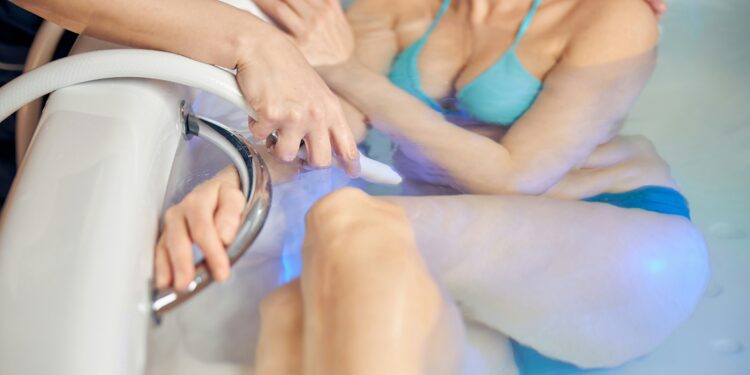
The use of a kiddie pool for water PT during the warmer months and summertime has proven to be an invaluable and essential component of my healing journey. Some may find this approach unconventional, but the undeniable benefits it provides are truly remarkable. By simply floating in the pool, I am able to alleviate the burning sensations caused by my nerve damage, offering a much-needed reprieve from the constant pain and discomfort I experience. Although the pool may not enable me to engage in traditional swimming or weightless water walking, the act of floating my limbs in the water works wonders in reducing strain on my arms and legs.

The dimensions of the pool also play a crucial role in my therapeutic experience. It must be wide enough for me to comfortably lay back and relax, ensuring that I can fully immerse myself in the healing properties of the water. Throughout my journey, I have used various types of pools, each providing unique benefits tailored to my specific needs. From shallow children’s pools to deeper lagoon pools, each variation serves its purpose in helping manage my symptoms and promoting healthy circulation in my body.

To enhance the therapeutic effects of the water PT, I often add Epsom salts to the pool. This creates a soothing experience that further aids in relaxation and healing. Additionally, incorporating aromatherapy with scents like lavender or chamomile contributes to an overall sense of well-being and complements the soothing effects of the water. These small rituals not only soothe the body but also calm the mind, providing a holistic approach to managing pain and discomfort.

It’s important to note that while physical exercise is typically essential for overall health, it can pose challenges for those dealing with chronic pain or disabilities. Therefore, finding alternative methods like water PT in a kiddie pool has been a game-changer for me. It has allowed me to engage in a form of exercise that is gentle on my body while still providing immense benefits for my overall well-being. In conclusion, the use of a kiddie pool for water PT has become an invaluable tool in my healing journey, allowing me to find relief from pain, promote circulation, and achieve a sense of relaxation and well-being that I wouldn’t have otherwise thought possible.

The pool has become a crucial part of my life, serving as both a physical and mental sanctuary. It allows me to stay active and maintain my mobility without worsening any existing conditions. I cherish the pool as a safe space where I can find peace and tranquility. Here, I am able to set goals for my ongoing healing journey and take moments to reflect on how far I have come.

Unfortunately, during the winter months when the pool is not accessible, I have had to find alternative methods to stay active. That’s when I discovered Music Movement Therapy, a form of exercise that helps me remain engaged and active. Despite the limitations imposed by my injuries, I have found ways to keep moving and maintain a sense of rhythm and flow in my daily life.

It is crucial to acknowledge that each person’s journey toward healing is unique, and there is no one-size-fits-all approach. What works for me may not work for someone else, and that is perfectly fine. The key is to discover what brings relief and comfort to each individual. Whether it’s a kiddie pool, chair exercises, or simple stretches in bed, finding an activity that brings solace is paramount.

Every day presents its own set of obstacles in my life with chronic pain and disabilities. However, through perseverance and determination, I am continuously navigating these challenges. It may be a slow process, but I am committed to taking small steps towards better health and well-being.

To some, the idea of using a kiddie pool may seem insignificant, but to me, it symbolizes resilience, hope, and the unwavering spirit of never giving up. It represents the strength to overcome obstacles and continue on a path towards healing. Ultimately, it is these small victories and the constant pursuit of finding what works for me that keep me going, even in the face of adversity.


ShareTweet
Twinkle VanFleet

Twinkle VanFleet

Twinkle VanFleet is the Vice President of Operations at Stronger Than Pain and a former Medtronic Ambassador at Medtronic, Inc. She lives in Elk Grove, California.

Leave a Reply Cancel reply

Your email address will not be published. Required fields are marked *

Videos

This conversation focuses on debunking myths surrounding GLP-1 medications, particularly the misinformation about their association with pancreatic cancer. The speaker emphasizes the importance of understanding clinical study designs, especially the distinction between observational studies and randomized controlled trials. The discussion highlights the need for patients to critically evaluate the sources of information regarding medication side effects and to empower themselves in their healthcare decisions.

Takeaways
GLP-1 medications are not linked to pancreatic cancer.
Peer-reviewed studies debunk misinformation about GLP-1s.
Anecdotal evidence is not reliable for general conclusions.
Observational studies have limitations in generalizability.
Understanding study design is crucial for evaluating claims.
Symptoms should be discussed in the context of clinical conditions.
Not all side effects reported are relevant to every patient.
Observational studies can provide valuable insights but are context-specific.
Patients should critically assess the relevance of studies to their own experiences.
Engagement in discussions about specific studies can enhance understanding

Chapters
00:00
Debunking GLP-1 Medication Myths
02:56
Understanding Clinical Study Designs
05:54
The Role of Observational Studies in Healthcare
Debunking Myths About GLP-1 Medications
YouTube Video DM9Do_V6_sU
Subscribe

2027 Medicare Advantage & Part D Advance Notice

Clinical Reads

BIIB080 in Mild Alzheimer’s Disease: What a Phase 1b Exploratory Clinical Analysis Can—and Cannot—Tell Us

BIIB080 in Mild Alzheimer’s Disease: What a Phase 1b Exploratory Clinical Analysis Can—and Cannot—Tell Us

by Daily Remedy
February 15, 2026
0

Can lowering tau biology translate into a clinically meaningful slowing of decline in people with early symptomatic Alzheimer’s disease? That is the practical question behind BIIB080, an intrathecal antisense therapy designed to reduce production of tau protein by targeting the tau gene transcript. In a phase 1b program originally designed for safety and dosing, investigators later examined cognitive, functional, and global outcomes as exploratory endpoints. The clinical question matters because current disease-modifying options primarily target amyloid, while tau pathology tracks...

Read more

Join Our Newsletter!

Twitter Updates

Tweets by TheDailyRemedy

Popular

  • The Prevention Gap in Dementia Care

    The Prevention Gap in Dementia Care

    0 shares
    Share 0 Tweet 0
  • Healthcare Natural Rights

    0 shares
    Share 0 Tweet 0
  • Healthcare in Space

    1 shares
    Share 0 Tweet 0
  • Heat Safety Tips Every Pregnant Mother Should Know

    0 shares
    Share 0 Tweet 0
  • What is the 411 on the New 988 Hotline?

    0 shares
    Share 0 Tweet 0
  • 628 Followers

Daily Remedy

Daily Remedy offers the best in healthcare information and healthcare editorial content. We take pride in consistently delivering only the highest quality of insight and analysis to ensure our audience is well-informed about current healthcare topics - beyond the traditional headlines.

Daily Remedy website services, content, and products are for informational purposes only. We do not provide medical advice, diagnosis, or treatment. All rights reserved.

Important Links

  • Support Us
  • About Us
  • Contact us
  • Privacy Policy
  • Terms and Conditions

Join Our Newsletter!

  • Survey
  • Podcast
  • About Us
  • Contact us

© 2026 Daily Remedy

No Result
View All Result
  • Home
  • Articles
  • Podcasts
  • Surveys
  • Courses
  • About Us
  • Contact us
  • Support Us
  • Official Learner

© 2026 Daily Remedy