












Sunday, February 22, 2026
ISSN 2765-8767
  • Home
  • Courses
  • About Us
  • Contact us
  • Support Us
  • Home
  • Courses
  • About Us
  • Contact us
  • Support Us

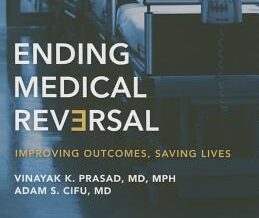
A conversation with Dr. Cifu, author of Ending Medical Reversal

We discuss Dr. Cifu’s book, Ending Medical Reversal, which discusses why we enact healthcare policies based on weak evidence or outright erroneous beliefs. We delve into policy reversals discussed in the book and those seen during the pandemic.

To purchase his book, co-authored with Dr. Vinay Prasad, please select the link below:

https://jhupbooks.press.jhu.edu/title/ending-medical-reversal

We also encourage you to read his article discussing the recent Aspirin policy reversal coming from the USPSTF:

https://www.medpagetoday.com/opinion/vinay-prasad/95281

Daily Remedy

Daily Remedy

Dr. Jay K Joshi serves as the editor-in-chief of Daily Remedy. He is a serial entrepreneur and sought after thought-leader for matters related to healthcare innovation and medical jurisprudence. He has published articles on a variety of healthcare topics in both peer-reviewed journals and trade publications. His legal writings include amicus curiae briefs prepared for prominent federal healthcare cases.

Leave a Reply

Your email address will not be published. Required fields are marked *

Videos

2027 Medicare Advantage & Part D Advance Notice

BIIB080 in Mild Alzheimer’s Disease: What a Phase 1b Exploratory Clinical Analysis Can—and Cannot—Tell Us

BIIB080 in Mild Alzheimer’s Disease: What a Phase 1b Exploratory Clinical Analysis Can—and Cannot—Tell Us

Can lowering tau biology translate into a clinically meaningful slowing of decline in people with early symptomatic Alzheimer’s disease? That is the practical question behind BIIB080, an intrathecal antisense therapy designed to reduce production of tau protein by targeting the tau gene transcript. In a phase 1b program originally designed for safety and dosing, investigators later examined cognitive, functional, and global outcomes as exploratory endpoints. The clinical question matters because current disease-modifying options primarily target amyloid, while tau pathology tracks...

Read more

Join Our Newsletter!

