












Tuesday, February 3, 2026
ISSN 2765-8767
  • Survey
  • Podcast
  • Write for Us
  • My Account
  • Log In
Daily Remedy
  • Home
  • Articles
  • Podcasts
    The Future of LLMs in Healthcare

    The Future of LLMs in Healthcare

    January 26, 2026
    The Future of Healthcare Consumerism

    The Future of Healthcare Consumerism

    January 22, 2026
    Your Body, Your Health Care: A Conversation with Dr. Jeffrey Singer

    Your Body, Your Health Care: A Conversation with Dr. Jeffrey Singer

    July 1, 2025

    The cost structure of hospitals nearly doubles

    July 1, 2025
    Navigating the Medical Licensing Maze

    The Fight Against Healthcare Fraud: Dr. Rafai’s Story

    April 8, 2025
    Navigating the Medical Licensing Maze

    Navigating the Medical Licensing Maze

    April 4, 2025
  • Surveys

    Surveys

    AI in Healthcare Decision-Making

    AI in Healthcare Decision-Making

    February 1, 2026
    Patient Survey: Understanding Healthcare Consumerism

    Patient Survey: Understanding Healthcare Consumerism

    January 18, 2026

    Survey Results

    Can you tell when your provider does not trust you?

    Can you tell when your provider does not trust you?

    January 18, 2026
    Do you believe national polls on health issues are accurate

    National health polls: trust in healthcare system accuracy?

    May 8, 2024
    Which health policy issues matter the most to Republican voters in the primaries?

    Which health policy issues matter the most to Republican voters in the primaries?

    May 14, 2024
    How strongly do you believe that you can tell when your provider does not trust you?

    How strongly do you believe that you can tell when your provider does not trust you?

    May 7, 2024
  • Courses
  • About Us
  • Contact us
  • Support Us
  • Official Learner
No Result
View All Result
  • Home
  • Articles
  • Podcasts
    The Future of LLMs in Healthcare

    The Future of LLMs in Healthcare

    January 26, 2026
    The Future of Healthcare Consumerism

    The Future of Healthcare Consumerism

    January 22, 2026
    Your Body, Your Health Care: A Conversation with Dr. Jeffrey Singer

    Your Body, Your Health Care: A Conversation with Dr. Jeffrey Singer

    July 1, 2025

    The cost structure of hospitals nearly doubles

    July 1, 2025
    Navigating the Medical Licensing Maze

    The Fight Against Healthcare Fraud: Dr. Rafai’s Story

    April 8, 2025
    Navigating the Medical Licensing Maze

    Navigating the Medical Licensing Maze

    April 4, 2025
  • Surveys

    Surveys

    AI in Healthcare Decision-Making

    AI in Healthcare Decision-Making

    February 1, 2026
    Patient Survey: Understanding Healthcare Consumerism

    Patient Survey: Understanding Healthcare Consumerism

    January 18, 2026

    Survey Results

    Can you tell when your provider does not trust you?

    Can you tell when your provider does not trust you?

    January 18, 2026
    Do you believe national polls on health issues are accurate

    National health polls: trust in healthcare system accuracy?

    May 8, 2024
    Which health policy issues matter the most to Republican voters in the primaries?

    Which health policy issues matter the most to Republican voters in the primaries?

    May 14, 2024
    How strongly do you believe that you can tell when your provider does not trust you?

    How strongly do you believe that you can tell when your provider does not trust you?

    May 7, 2024
  • Courses
  • About Us
  • Contact us
  • Support Us
  • Official Learner
No Result
View All Result
Daily Remedy
No Result
View All Result
Home Innovations & Investing

Musk, Twitter, & Healthcare

Daily Remedy by Daily Remedy
May 1, 2022
in Innovations & Investing
0
Musk, Twitter, & Healthcare

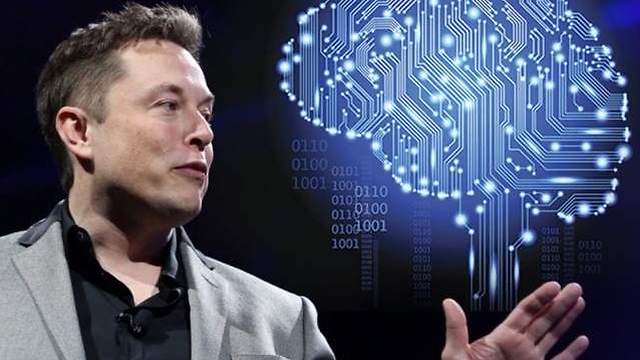
Neuralink

Elon Musk purchased Twitter. The political world is now ablaze. But there is another world that should be just as alarmed, that of healthcare, where Musk’s purchase will have a far greater effect.

Most do not see Musk as a healthcare entrepreneur, but he has been laying inroads for years. Most notably through his company, Neuralink, which has the ambitious and somewhat dystopian goal of, “developing ultra high bandwidth brain-machine interfaces to connect humans and computers”.

Most see this as another vanity project for a man known for his outsized ego as much as his outsized entrepreneurial success. But on closer look, the acquisition of Twitter seems presciently strategic – when we consider coupling the Twitter platform with Neuralink’s brain chips. After all, what is Twitter but a brain-machine interface that we navigate through our phones?

It makes sense that Musk sought to acquire rather than maintain shareholder control. It is not the control of the platform he seeks, but that of the cybernetic infrastructure. Twitter provides the software coding and an international user base for Musk to achieve his ultimate vision for Neuralink. Musk has already implanted Neuralink chips into primates with preliminary success. It does not take much to move from monkeys to men and women.

Musk also has the device manufacturing capabilities; which he created through a partnership with Medtronic through his company SpaceX. The only thing holding him back, the one limiting factor, was the software infrastructure connecting users.

Twitter solves that need. It already serves as the Freudian ‘Id’ for most of the world. Musk simply intends to transfer Twitter from our fingertips to inside our brains. So whatever premium he paid for Twitter was well worth the price.

While we can only speculate right now, it is likely that in two years Musk would have assumed control of Twitter and integrated Twitter and Neuralink. Sure, there will be some mishaps, some setbacks, but overall Musk will be successful in this just like he has been for nearly all his endeavors. And there will be hordes of Musk fans lining up to be pilot users. Twitter will be literally in the minds of an ever spastic, inattentive public.

What happens now? Well, discourse – as a whole – on Twitter will continue as normal. We will see the same intellectual debates intermixed with insults and jabs, and a splash of attention grabbing sensationalism.

But Musk will quickly place his attention on the many healthcare debates that rage on Twitter. Just follow the hashtags, Medtwitter, to see the vibrant healthcare discussions on Twitter and its impact. Twitter influences how people learn about healthcare issues, and subsequently how they discuss it.

In effect, Twitter influences our understanding of healthcare. Something Musk understands far better than most would realize. And it seems this is the value Musk seeks to unleash in acquiring Twitter.

Musk does not look at healthcare the way other business entrepreneurs do. He does not just seek to disrupt healthcare; he seeks to curate how we understand it – which requires a more fundamental understanding of medicine. Something Musk possesses.

Musk co-wrote a COVID-19 study that tracked the viral infections and antibodies in his SpaceX employees. It was then published in February 2021 in a Nature imprint, Nature Communications.

Most would assume a high-flying entrepreneur would contract an academic institution or a clinical research organization to conduct a study and write its conclusions – but not Musk.

Instead, he had SpaceX executives collaborate with in-house medical researchers to launch an antibody testing program in early 2020, at the beginning of the pandemic. SpaceX employees then volunteered to participate in the study and underwent monthly blood tests from mid-April to June 2020. The conclusions were hardly revealing, and confirmed much of what we already knew – that previous infections confer natural immunity – but what is more remarkable is that Musk conducted the study internally at SpaceX.

He will take a similar research-oriented approach to whatever entity forms out of the merger of Twitter and Neuralink. Musk could theoretically use the two entities to study how Twitter conversations affect patient behavior. He could trace conversations transpiring over the platform, identify who is participating in trending tweets, and glean insights on their behavior long term.

Does a particular tweet lead to improved patient outcomes? Improved dieting? Or improved medication compliance?

We have long said that words reflect thoughts, and changing how we speak can influence how we think. Musk has the opportunity to prove this. He can correlate Twitter data with individual Neuralink responses and then integrate patient datasets from healthcare providers and payer systems to identify meaningful trends that appear in regions where certain tweets are trending.

Never have we had the infrastructure to trace thoughts, decisions, and outcomes in medicine. It is both scary yet tantalizing in its application.

The benefits could be immense. Musk could trace how patients internalize medical decisions that are harmful to their overall health – and identify conversations or neural inputs that would curb that behavior.

But such integration can also be quite dystopian. It all depends on who is overseeing it all. And with Musk, like all things Musk, it is at once beautifully complex and dreadfully scary.


ShareTweet
Daily Remedy

Daily Remedy

Dr. Jay K Joshi serves as the editor-in-chief of Daily Remedy. He is a serial entrepreneur and sought after thought-leader for matters related to healthcare innovation and medical jurisprudence. He has published articles on a variety of healthcare topics in both peer-reviewed journals and trade publications. His legal writings include amicus curiae briefs prepared for prominent federal healthcare cases.

Comments 0

  1. Brian Lynch says:
    3 years ago

    Excellent

    Reply

Leave a Reply Cancel reply

Your email address will not be published. Required fields are marked *

Videos

In this episode, the host discusses the significance of large language models (LLMs) in healthcare, their applications, and the challenges they face. The conversation highlights the importance of simplicity in model design and the necessity of integrating patient feedback to enhance the effectiveness of LLMs in clinical settings.

Takeaways
LLMs are becoming integral in healthcare.
They can help determine costs and service options.
Hallucination in LLMs can lead to misinformation.
LLMs can produce inconsistent answers based on input.
Simplicity in LLMs is often more effective than complexity.
Patient behavior should guide LLM development.
Integrating patient feedback is crucial for accuracy.
Pre-training models with patient input enhances relevance.
Healthcare providers must understand LLM limitations.
The best LLMs will focus on patient-centered care.

Chapters

00:00 Introduction to LLMs in Healthcare
05:16 The Importance of Simplicity in LLMs
The Future of LLMs in HealthcareDaily Remedy
YouTube Video U1u-IYdpeEk
Subscribe

AI Regulation and Deployment Is Now a Core Healthcare Issue

Clinical Reads

Ambient Artificial Intelligence Clinical Documentation: Workflow Support with Emerging Governance Risk

Ambient Artificial Intelligence Clinical Documentation: Workflow Support with Emerging Governance Risk

by Daily Remedy
February 1, 2026
0

Health systems are increasingly deploying ambient artificial intelligence tools that listen to clinical encounters and automatically generate draft visit notes. These systems are intended to reduce documentation burden and allow clinicians to focus more directly on patient interaction. At the same time, they raise unresolved questions about patient consent, data handling, factual accuracy, and legal responsibility for machine‑generated records. Recent policy discussions and legal actions suggest that adoption is moving faster than formal oversight frameworks. The practical clinical question is...

Read more

Join Our Newsletter!

Twitter Updates

Tweets by TheDailyRemedy

Popular

  • GLP-1 Drugs Have Moved Past Weight Loss. Medicine Has Not Fully Caught Up.

    Interoperability Is No Longer a Technical Debate. It Is a Power Debate.

    0 shares
    Share 0 Tweet 0
  • Semaglutide: Keeps Getting Better

    1 shares
    Share 0 Tweet 0
  • The Quiet Revolution in the Exam Room: AI Tools That Change Work, Not Headlines

    0 shares
    Share 0 Tweet 0
  • How Insurers Taught Patients to Shop

    0 shares
    Share 0 Tweet 0
  • Rise of Cash Pay Drugs

    1 shares
    Share 0 Tweet 0
  • 628 Followers

Daily Remedy

Daily Remedy offers the best in healthcare information and healthcare editorial content. We take pride in consistently delivering only the highest quality of insight and analysis to ensure our audience is well-informed about current healthcare topics - beyond the traditional headlines.

Daily Remedy website services, content, and products are for informational purposes only. We do not provide medical advice, diagnosis, or treatment. All rights reserved.

Important Links

  • Support Us
  • About Us
  • Contact us
  • Privacy Policy
  • Terms and Conditions

Join Our Newsletter!

  • Survey
  • Podcast
  • About Us
  • Contact us

© 2026 Daily Remedy

No Result
View All Result
  • Home
  • Articles
  • Podcasts
  • Surveys
  • Courses
  • About Us
  • Contact us
  • Support Us
  • Official Learner

© 2026 Daily Remedy