












Thursday, March 5, 2026
ISSN 2765-8767
  • Survey
  • Podcast
  • Write for Us
  • My Account
  • Log In
Daily Remedy
  • Home
  • Articles
  • Podcasts
    The Impact of COVID-19 on Patient Trust

    The Impact of COVID-19 on Patient Trust

    March 3, 2026
    Debunking Myths About GLP-1 Medications

    Debunking Myths About GLP-1 Medications

    February 16, 2026
    The Future of LLMs in Healthcare

    The Future of LLMs in Healthcare

    January 26, 2026
    The Future of Healthcare Consumerism

    The Future of Healthcare Consumerism

    January 22, 2026
    Your Body, Your Health Care: A Conversation with Dr. Jeffrey Singer

    Your Body, Your Health Care: A Conversation with Dr. Jeffrey Singer

    July 1, 2025

    The cost structure of hospitals nearly doubles

    July 1, 2025
  • Surveys

    Surveys

    Perceptions of Viral Wellness Practices on Social Media: A Likert-Scale Survey for Informed Readers

    Perceptions of Viral Wellness Practices on Social Media: A Likert-Scale Survey for Informed Readers

    March 1, 2026
    How Confident Are You in RFK Jr.’s Health Leadership?

    How Confident Are You in RFK Jr.’s Health Leadership?

    February 16, 2026

    Survey Results

    Can you tell when your provider does not trust you?

    Can you tell when your provider does not trust you?

    January 18, 2026
    Do you believe national polls on health issues are accurate

    National health polls: trust in healthcare system accuracy?

    May 8, 2024
    Which health policy issues matter the most to Republican voters in the primaries?

    Which health policy issues matter the most to Republican voters in the primaries?

    May 14, 2024
    How strongly do you believe that you can tell when your provider does not trust you?

    How strongly do you believe that you can tell when your provider does not trust you?

    May 7, 2024
  • Courses
  • About Us
  • Contact us
  • Support Us
  • Official Learner
No Result
View All Result
  • Home
  • Articles
  • Podcasts
    The Impact of COVID-19 on Patient Trust

    The Impact of COVID-19 on Patient Trust

    March 3, 2026
    Debunking Myths About GLP-1 Medications

    Debunking Myths About GLP-1 Medications

    February 16, 2026
    The Future of LLMs in Healthcare

    The Future of LLMs in Healthcare

    January 26, 2026
    The Future of Healthcare Consumerism

    The Future of Healthcare Consumerism

    January 22, 2026
    Your Body, Your Health Care: A Conversation with Dr. Jeffrey Singer

    Your Body, Your Health Care: A Conversation with Dr. Jeffrey Singer

    July 1, 2025

    The cost structure of hospitals nearly doubles

    July 1, 2025
  • Surveys

    Surveys

    Perceptions of Viral Wellness Practices on Social Media: A Likert-Scale Survey for Informed Readers

    Perceptions of Viral Wellness Practices on Social Media: A Likert-Scale Survey for Informed Readers

    March 1, 2026
    How Confident Are You in RFK Jr.’s Health Leadership?

    How Confident Are You in RFK Jr.’s Health Leadership?

    February 16, 2026

    Survey Results

    Can you tell when your provider does not trust you?

    Can you tell when your provider does not trust you?

    January 18, 2026
    Do you believe national polls on health issues are accurate

    National health polls: trust in healthcare system accuracy?

    May 8, 2024
    Which health policy issues matter the most to Republican voters in the primaries?

    Which health policy issues matter the most to Republican voters in the primaries?

    May 14, 2024
    How strongly do you believe that you can tell when your provider does not trust you?

    How strongly do you believe that you can tell when your provider does not trust you?

    May 7, 2024
  • Courses
  • About Us
  • Contact us
  • Support Us
  • Official Learner
No Result
View All Result
Daily Remedy
No Result
View All Result
Home Financial Markets

Hearing Aids for the Masses

Daily Remedy by Daily Remedy
August 21, 2022
in Financial Markets
0
Hearing Aids For the Masses

In capitalism, we see consumerism as only a good thing. But sometimes, having a choice leads to only bad decisions. This is why healthcare can never fully embrace consumerism. Consumer choice makes for bad patient decisions.

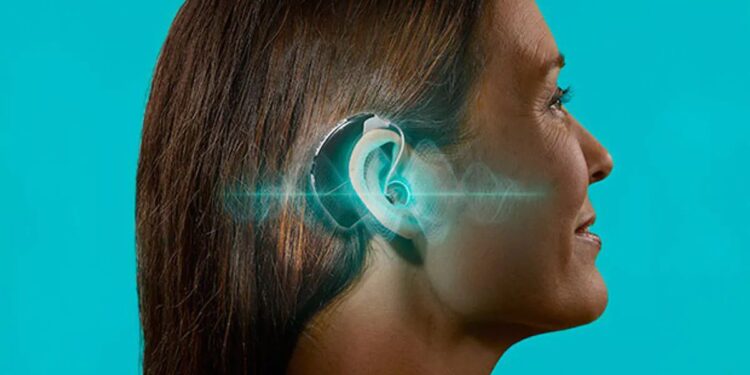
We will see this play out later this year, when select hearing aids become available over the counter as soon as October 2022.

It began back in 2021, when President Joe Biden issued an executive order making hearing aids directly available. After a review by the Food and Drug Agency and a period of public commentary, the federal government formally approved the order.

As of now, it will only apply to hearing aids for those with mild to moderate hearing impairment, though that is a sizeable proportion of the hearing impaired population.

The goal is to lower the average price of hearing aids by introducing market principles of consumerism. The hope is consumer electronic companies will get into this space, which is currently dominated by a select number of hearing aid manufacturers: including ReSound, Sonova, and William Demant.

Recent history suggests otherwise. A few companies have already tried offering over the counter hearing aids, and they were unsuccessful. This includes premium audio equipment manufacturer, Bose, which received FDA clearance in 2018 for the first over the counter hearing aid. But in early 2022, the company stopped making hearing aids and instead struck a partnership with South Africa-based Lexie Hearing to sell a consumer hearing aid, “powered by Bose.”

It would seem like a curious time to create a partnership when the market has finally opened to direct sales to patients. Most predict the hearing aid market will behave in a traditionally consumer oriented way that we attribute to other consumer electronic goods, which means people will presumably buy more hearing aids than before.

Market dynamics will play out, no doubt. But the type of consumerism that will manifest may prove harmful to the patient.

Consider the smart phone: the greatest invention in past decades. It has become both a necessary tool and a status symbol. It makes for an odd combination that can be best seen in the mix of consumers who buy it.

For the minimum wage worker, these phones are quite expensive. For the well off, well, it is just another expense. But disparity matters in this context, because the draw for the smart phone is less dependent on its price, and more on the willingness to buy, more specifically, the drive for status. So people of all socioeconomic class buy expensive smart phones, regardless of how much or how little it accounts for their income.

The fervor for status negates any decision making based on the economic utility gleaned through the phone’s value. People would rather purchase a phone that gives them status instead of a phone based on the utility it provides.

We must heed this important lesson when we promote healthcare consumerism to address economic disparity in healthcare. For patients who purchase a phone, the appeal for status creates price inelasticity, which means the market is not defined by pricing pressure.

Hearing aids may very well follow this model. The first indicator that hearing aids will be a status oriented, price inelastic market will be the number of successful distribution channels that emerge. Bose’s partnership with Lexie Hearing suggests we may have fewer distribution channels than anticipated, which mirrors the smart phone market. It suggests price will have little effect on hearing aid sales.

Distribution channels are often overlooked because they do not have an easily observable influence on consumer markets like status, but they distinguish healthcare markets.

We think the push for consumerism will flood the market with many distribution channels, but only a few will win out. This is because patients are not consumers. And for patients, price is not a driver of purchasing behavior.

Patients will not purchase hearing aids at Best Buy like they would a computer mouse. They will purchase them through select distribution channels that are recommended by a trusted medical provider or a close acquaintance. The few distribution channels that earn a reputation as the trusted source for quality hearing aids will win out. The rest will close shop soon enough.

Status and trust are the dynamics that influence healthcare consumerism. It is no different from explaining why patients go to more expensive hospitals affiliated with large academic medical centers instead of local community hospitals.

When hearing aids become available, we will see similar patterns of behavior. Many new entrants will come into the market, hoping to capture some market share through lower prices and discounts. They will lose. The players that will win are the ones who sell premium hearing aids and invest heavily in building trust and status.

Once hearing aids become a status symbol, we will see the worst of healthcare consumerism. Soon we will see the moral hazards. And we suspect we will see a rise in diagnoses for mild to moderate hearing impairment – not because hearing aids are more accessible or affordable, but because they are expensive and trendy.

This is healthcare consumerism. We think we will see the best of market dynamics. Rather, we will see the worst of patient behavior.

Remember, it is impossible to align the many individual patient incentives through any one policy. Patients do not respond to the intended effects of a policy, they respond to the moral hazards within it.


ShareTweet
Daily Remedy

Daily Remedy

Dr. Jay K Joshi serves as the editor-in-chief of Daily Remedy. He is a serial entrepreneur and sought after thought-leader for matters related to healthcare innovation and medical jurisprudence. He has published articles on a variety of healthcare topics in both peer-reviewed journals and trade publications. His legal writings include amicus curiae briefs prepared for prominent federal healthcare cases.

Leave a Reply Cancel reply

Your email address will not be published. Required fields are marked *

Videos

In this episode of the Daily Remedy Podcast, Tiffany Ryder discusses her insights on healthcare messaging, the impact of COVID-19 on patient trust, and the importance of transparency in health policy. She emphasizes the need for clear communication in the face of divisiveness and explores the complexities surrounding the estrogen debate. Additionally, Tiffany highlights positive developments in health policy and the necessity of effectively conveying these changes to the public.

Tiffany Ryder is a political commentator and public health policy thought leader who publishes the Substack newsletter Signal and Noise: https://signalandnoise.online/


Chapters

00:00 Introduction to Healthcare Conversations
02:58 Signal and Noise: Understanding Healthcare Communication
05:56 The Storytelling Problem in Healthcare
08:58 Navigating Political Divisiveness in Health Policy
11:55 The Role of Media in Health Policy
15:03 Bias in Health Reporting
17:56 Estrogen and Health Policy: A Case Study
24:00 Positive Developments in Health Policy
27:03 Looking Ahead: Future of Health Policy
31:49 Communicating Health Policy Effectively
The Impact of COVID-19 on Patient Trust
YouTube Video ujzgl7HDlsw
Subscribe

2027 Medicare Advantage & Part D Advance Notice

Clinical Reads

GLP-1 Drugs Have Moved Past Weight Loss. Medicine Has Not Fully Caught Up.

Glucagon-Like Peptide–Based Therapies and Longevity: Clinical Implications from Emerging Evidence

by Daily Remedy
March 1, 2026
0

Glucagon-like peptide–based therapies are increasingly used for weight management and glycemic control, but their potential impact on long-term survival remains uncertain. The clinical question addressed in this report is whether treatment with glucagon-like peptide receptor agonists is associated with reductions in all-cause mortality and age-related morbidity beyond their established metabolic effects. This question matters because these agents are now prescribed across broad patient populations, including individuals without diabetes, and long-term exposure may influence cardiovascular, oncologic, and neurodegenerative outcomes. Understanding whether...

Read more

Join Our Newsletter!

Twitter Updates

Tweets by TheDailyRemedy

Popular

  • When Prognosis Becomes Probabilistic

    When Prognosis Becomes Probabilistic

    0 shares
    Share 0 Tweet 0
  • Healthcare Trends

    0 shares
    Share 0 Tweet 0
  • Gaming Therapy

    0 shares
    Share 0 Tweet 0
  • The Fasting Correction

    0 shares
    Share 0 Tweet 0
  • Healthcare Journalists are Suffering

    0 shares
    Share 0 Tweet 0
  • 628 Followers

Daily Remedy

Daily Remedy offers the best in healthcare information and healthcare editorial content. We take pride in consistently delivering only the highest quality of insight and analysis to ensure our audience is well-informed about current healthcare topics - beyond the traditional headlines.

Daily Remedy website services, content, and products are for informational purposes only. We do not provide medical advice, diagnosis, or treatment. All rights reserved.

Important Links

  • Support Us
  • About Us
  • Contact us
  • Privacy Policy
  • Terms and Conditions

Join Our Newsletter!

  • Survey
  • Podcast
  • About Us
  • Contact us

© 2026 Daily Remedy

No Result
View All Result
  • Home
  • Articles
  • Podcasts
  • Surveys
  • Courses
  • About Us
  • Contact us
  • Support Us
  • Official Learner

© 2026 Daily Remedy