













Friday, February 20, 2026
ISSN 2765-8767
  • Survey
  • Podcast
  • Write for Us
  • My Account
  • Log In
Daily Remedy
  • Home
  • Articles
  • Podcasts
    Debunking Myths About GLP-1 Medications

    Debunking Myths About GLP-1 Medications

    February 16, 2026
    The Future of LLMs in Healthcare

    The Future of LLMs in Healthcare

    January 26, 2026
    The Future of Healthcare Consumerism

    The Future of Healthcare Consumerism

    January 22, 2026
    Your Body, Your Health Care: A Conversation with Dr. Jeffrey Singer

    Your Body, Your Health Care: A Conversation with Dr. Jeffrey Singer

    July 1, 2025

    The cost structure of hospitals nearly doubles

    July 1, 2025
    Navigating the Medical Licensing Maze

    The Fight Against Healthcare Fraud: Dr. Rafai’s Story

    April 8, 2025
  • Surveys

    Surveys

    How Confident Are You in RFK Jr.’s Health Leadership?

    How Confident Are You in RFK Jr.’s Health Leadership?

    February 16, 2026
    AI in Healthcare Decision-Making

    AI in Healthcare Decision-Making

    February 1, 2026

    Survey Results

    Can you tell when your provider does not trust you?

    Can you tell when your provider does not trust you?

    January 18, 2026
    Do you believe national polls on health issues are accurate

    National health polls: trust in healthcare system accuracy?

    May 8, 2024
    Which health policy issues matter the most to Republican voters in the primaries?

    Which health policy issues matter the most to Republican voters in the primaries?

    May 14, 2024
    How strongly do you believe that you can tell when your provider does not trust you?

    How strongly do you believe that you can tell when your provider does not trust you?

    May 7, 2024
  • Courses
  • About Us
  • Contact us
  • Support Us
  • Official Learner
No Result
View All Result
  • Home
  • Articles
  • Podcasts
    Debunking Myths About GLP-1 Medications

    Debunking Myths About GLP-1 Medications

    February 16, 2026
    The Future of LLMs in Healthcare

    The Future of LLMs in Healthcare

    January 26, 2026
    The Future of Healthcare Consumerism

    The Future of Healthcare Consumerism

    January 22, 2026
    Your Body, Your Health Care: A Conversation with Dr. Jeffrey Singer

    Your Body, Your Health Care: A Conversation with Dr. Jeffrey Singer

    July 1, 2025

    The cost structure of hospitals nearly doubles

    July 1, 2025
    Navigating the Medical Licensing Maze

    The Fight Against Healthcare Fraud: Dr. Rafai’s Story

    April 8, 2025
  • Surveys

    Surveys

    How Confident Are You in RFK Jr.’s Health Leadership?

    How Confident Are You in RFK Jr.’s Health Leadership?

    February 16, 2026
    AI in Healthcare Decision-Making

    AI in Healthcare Decision-Making

    February 1, 2026

    Survey Results

    Can you tell when your provider does not trust you?

    Can you tell when your provider does not trust you?

    January 18, 2026
    Do you believe national polls on health issues are accurate

    National health polls: trust in healthcare system accuracy?

    May 8, 2024
    Which health policy issues matter the most to Republican voters in the primaries?

    Which health policy issues matter the most to Republican voters in the primaries?

    May 14, 2024
    How strongly do you believe that you can tell when your provider does not trust you?

    How strongly do you believe that you can tell when your provider does not trust you?

    May 7, 2024
  • Courses
  • About Us
  • Contact us
  • Support Us
  • Official Learner
No Result
View All Result
Daily Remedy
No Result
View All Result
Home Perspectives

Cooking With a Chronic Illness

A few tricks of the trade

Twinkle VanFleet by Twinkle VanFleet
February 28, 2024
in Perspectives
0
Cooking With a Chronic Illness

Kevin McCutcheon

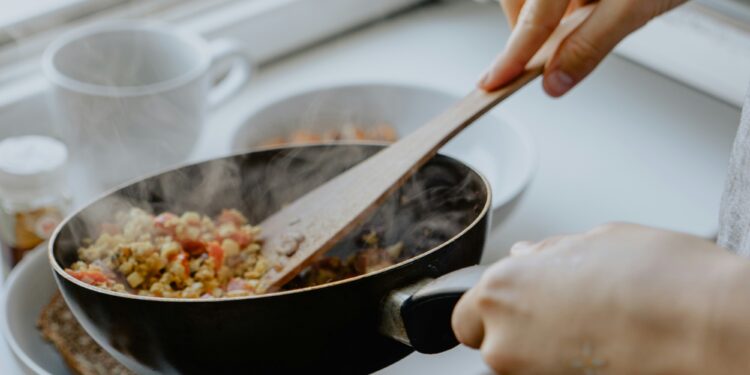
A Crockpot is my favorite cooking tool that helps me manage dinners for my husband and me. It’s an assistive gadget. Many years ago when we were still raising our children, I took advantage of an electric skillet. It was deep enough to slow cook a roast or even a whole chicken in. I’d add vegetables and potatoes just as I do in the crockpot. It was convenient as one could also cook breakfast in it, or grilled sandwiches, as an example.

These days, Insta pots are popular. People love them! While I have one, I haven’t become accustomed to using it and have only attempted it once. The Air Fryer, however, I find helpful, as well, and appreciate any grease draining as food is cooking. It’s healthier and generally simple to dispose of the drippings. Microwave ovens are still common. I only acquired another recently after a few years without one. It’s always nice for reheating, especially tea and coffee. A kitchen stool is always nearby for sitting to relieve strain on my legs.

When using the crockpot, I start our dinner in the morning. I’ll be able to season any meat and leave it be for hours, if necessary. This process of crockpotting saves time for other things I need to accomplish that day. It also allows me to rest a flare away when I’m having a physically rough time of it. You can carry over left overs, or freeze for heat and serve meals. Shoutout to my crockpot for always having my back.

On my better days when weight bearing isn’t as much of an obstacle, I batch cook. This is tremendously helpful for days when accomplishing dinners is a difficult task. A lot of people eat out or need to buy pre made food from grocery stores. We don’t do this. It’s neither affordable nor healthy.

When I batch cook, I’ll make a large pot of spaghetti sauce. A good basic sauce of ground beef, onion, garlic, tomatoes, crushed tomatoes, and tomato paste. While this food isn’t entirely healthy, and contains canned tomatoes, I do keep it homemade, otherwise, on a regular basis. I’ll then freeze the sauce in sections and have 4-6 nights of thaw, heat and serve preparations.

I also cook and freeze meat balls in batches. These can be added to pasta from spaghetti sauce types to Swedish or stroganoff flavors or meatball sub sandwiches. Since I’m counting carbs, I have them plain or drizzle them with a mixture of sour cream and au jus with pepper and a pinch of Himalayan or sea salt. I can also wrap them in low carb tortillas or bread.

If you’re unable to make sauce yourself, you can add hamburger or meatballs to a can or jar of premade store bought sauce and make it a more flavorful dinner. I’ve done this myself. The sugar content in the sauce is much higher so if you’re diabetic, be aware.

Soups can also be cooked and stored in the freezer decently for up to 3 months. I re-season it when reheating as taste becomes diluted from freezer ice that can form in the process. It’s not as good, but it’s edible.

I know how difficult it is to manage cooking. The difficulties inspired me to figure out a way to accomplish it. My husband and I are both caregivers for one another’s illnesses. He has coronary heart disease, heart failure and diabetes. He’s had 4 heart attacks with a quadruple bypass after his second. He works full time.

Cooking can be a chore for many living with chronic illness when physical exertion and discomforts are part of everyday life. Preparing and cooking can exasperate pain and it certainly has for me. It’s important to develop a routine and process that works best for you and your family.

By embracing adaptability, seeking assistance when needed, and prioritizing self-care, you can transform cooking from a chore into a rewarding and nourishing experience. Remember, your well-being is paramount, and finding joy in the kitchen can be a powerful way to care for both your body and spirit.


ShareTweet
Twinkle VanFleet

Twinkle VanFleet

Twinkle VanFleet is the Vice President of Operations at Stronger Than Pain and a former Medtronic Ambassador at Medtronic, Inc. She lives in Elk Grove, California.

Leave a Reply Cancel reply

Your email address will not be published. Required fields are marked *

Videos

This conversation focuses on debunking myths surrounding GLP-1 medications, particularly the misinformation about their association with pancreatic cancer. The speaker emphasizes the importance of understanding clinical study designs, especially the distinction between observational studies and randomized controlled trials. The discussion highlights the need for patients to critically evaluate the sources of information regarding medication side effects and to empower themselves in their healthcare decisions.

Takeaways
GLP-1 medications are not linked to pancreatic cancer.
Peer-reviewed studies debunk misinformation about GLP-1s.
Anecdotal evidence is not reliable for general conclusions.
Observational studies have limitations in generalizability.
Understanding study design is crucial for evaluating claims.
Symptoms should be discussed in the context of clinical conditions.
Not all side effects reported are relevant to every patient.
Observational studies can provide valuable insights but are context-specific.
Patients should critically assess the relevance of studies to their own experiences.
Engagement in discussions about specific studies can enhance understanding

Chapters
00:00
Debunking GLP-1 Medication Myths
02:56
Understanding Clinical Study Designs
05:54
The Role of Observational Studies in Healthcare
Debunking Myths About GLP-1 Medications
YouTube Video DM9Do_V6_sU
Subscribe

2027 Medicare Advantage & Part D Advance Notice

Clinical Reads

BIIB080 in Mild Alzheimer’s Disease: What a Phase 1b Exploratory Clinical Analysis Can—and Cannot—Tell Us

BIIB080 in Mild Alzheimer’s Disease: What a Phase 1b Exploratory Clinical Analysis Can—and Cannot—Tell Us

by Daily Remedy
February 15, 2026
0

Can lowering tau biology translate into a clinically meaningful slowing of decline in people with early symptomatic Alzheimer’s disease? That is the practical question behind BIIB080, an intrathecal antisense therapy designed to reduce production of tau protein by targeting the tau gene transcript. In a phase 1b program originally designed for safety and dosing, investigators later examined cognitive, functional, and global outcomes as exploratory endpoints. The clinical question matters because current disease-modifying options primarily target amyloid, while tau pathology tracks...

Read more

Join Our Newsletter!

Twitter Updates

Tweets by TheDailyRemedy

Popular

  • The Prevention Gap in Dementia Care

    The Prevention Gap in Dementia Care

    0 shares
    Share 0 Tweet 0
  • Healthcare Natural Rights

    0 shares
    Share 0 Tweet 0
  • Healthcare in Space

    1 shares
    Share 0 Tweet 0
  • Heat Safety Tips Every Pregnant Mother Should Know

    0 shares
    Share 0 Tweet 0
  • The Staffing Equation That Doesn’t Balance

    0 shares
    Share 0 Tweet 0
  • 628 Followers

Daily Remedy

Daily Remedy offers the best in healthcare information and healthcare editorial content. We take pride in consistently delivering only the highest quality of insight and analysis to ensure our audience is well-informed about current healthcare topics - beyond the traditional headlines.

Daily Remedy website services, content, and products are for informational purposes only. We do not provide medical advice, diagnosis, or treatment. All rights reserved.

Important Links

  • Support Us
  • About Us
  • Contact us
  • Privacy Policy
  • Terms and Conditions

Join Our Newsletter!

  • Survey
  • Podcast
  • About Us
  • Contact us

© 2026 Daily Remedy

No Result
View All Result
  • Home
  • Articles
  • Podcasts
  • Surveys
  • Courses
  • About Us
  • Contact us
  • Support Us
  • Official Learner

© 2026 Daily Remedy