














Saturday, March 28, 2026
ISSN 2765-8767
  • Survey
  • Podcast
  • Write for Us
  • My Account
  • Log In
Daily Remedy
  • Home
  • Articles
  • Podcasts
    The Hidden Costs Employers Don’t See in Traditional Health Plans

    The Hidden Costs Employers Don’t See in Traditional Health Plans

    March 22, 2026
    The Impact of COVID-19 on Patient Trust

    The Impact of COVID-19 on Patient Trust

    March 3, 2026
    Debunking Myths About GLP-1 Medications

    Debunking Myths About GLP-1 Medications

    February 16, 2026
    The Future of LLMs in Healthcare

    The Future of LLMs in Healthcare

    January 26, 2026
    The Future of Healthcare Consumerism

    The Future of Healthcare Consumerism

    January 22, 2026
    Your Body, Your Health Care: A Conversation with Dr. Jeffrey Singer

    Your Body, Your Health Care: A Conversation with Dr. Jeffrey Singer

    July 1, 2025
  • Surveys

    Surveys

    Public Sentiment on the Future of Peptides and Hormone Therapies in U.S. Medicine

    Public Sentiment on the Future of Peptides and Hormone Therapies in U.S. Medicine

    March 17, 2026
    Perceptions of Viral Wellness Practices on Social Media: A Likert-Scale Survey for Informed Readers

    Perceptions of Viral Wellness Practices on Social Media: A Likert-Scale Survey for Informed Readers

    March 1, 2026

    Survey Results

    Can you tell when your provider does not trust you?

    Can you tell when your provider does not trust you?

    January 18, 2026
    Do you believe national polls on health issues are accurate

    National health polls: trust in healthcare system accuracy?

    May 8, 2024
    Which health policy issues matter the most to Republican voters in the primaries?

    Which health policy issues matter the most to Republican voters in the primaries?

    May 14, 2024
    How strongly do you believe that you can tell when your provider does not trust you?

    How strongly do you believe that you can tell when your provider does not trust you?

    May 7, 2024
  • Courses
  • About Us
  • Contact us
  • Support Us
  • Official Learner
No Result
View All Result
  • Home
  • Articles
  • Podcasts
    The Hidden Costs Employers Don’t See in Traditional Health Plans

    The Hidden Costs Employers Don’t See in Traditional Health Plans

    March 22, 2026
    The Impact of COVID-19 on Patient Trust

    The Impact of COVID-19 on Patient Trust

    March 3, 2026
    Debunking Myths About GLP-1 Medications

    Debunking Myths About GLP-1 Medications

    February 16, 2026
    The Future of LLMs in Healthcare

    The Future of LLMs in Healthcare

    January 26, 2026
    The Future of Healthcare Consumerism

    The Future of Healthcare Consumerism

    January 22, 2026
    Your Body, Your Health Care: A Conversation with Dr. Jeffrey Singer

    Your Body, Your Health Care: A Conversation with Dr. Jeffrey Singer

    July 1, 2025
  • Surveys

    Surveys

    Public Sentiment on the Future of Peptides and Hormone Therapies in U.S. Medicine

    Public Sentiment on the Future of Peptides and Hormone Therapies in U.S. Medicine

    March 17, 2026
    Perceptions of Viral Wellness Practices on Social Media: A Likert-Scale Survey for Informed Readers

    Perceptions of Viral Wellness Practices on Social Media: A Likert-Scale Survey for Informed Readers

    March 1, 2026

    Survey Results

    Can you tell when your provider does not trust you?

    Can you tell when your provider does not trust you?

    January 18, 2026
    Do you believe national polls on health issues are accurate

    National health polls: trust in healthcare system accuracy?

    May 8, 2024
    Which health policy issues matter the most to Republican voters in the primaries?

    Which health policy issues matter the most to Republican voters in the primaries?

    May 14, 2024
    How strongly do you believe that you can tell when your provider does not trust you?

    How strongly do you believe that you can tell when your provider does not trust you?

    May 7, 2024
  • Courses
  • About Us
  • Contact us
  • Support Us
  • Official Learner
No Result
View All Result
Daily Remedy
No Result
View All Result
Home Uncertainty & Complexity

Can Multiple Viruses Infect You?

What if every germ hit you at the exact same time?

Joseph Larkin III by Joseph Larkin III
March 28, 2024
in Uncertainty & Complexity
0
Can Multiple Viruses Infect You

Osarugue Igbinoba

Curious Kids is a series for children of all ages. If you have a question you’d like an expert to answer, send it to [email protected].


What would happen if all the diseases in the world hit us at the exact same time? – Gabriella, age 12, Irving, Texas
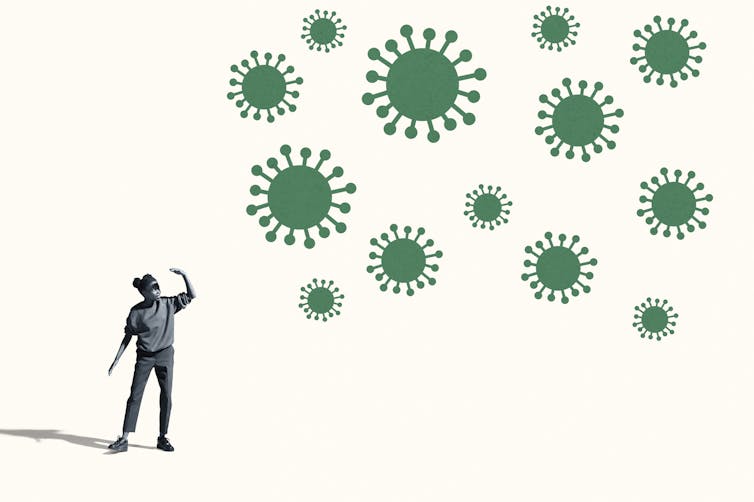

Multiple Viruses
Multiple Viruses

When I was younger, I would watch “Batman” on my black-and-white television after school. Usually, Batman would face either the Joker, the Penguin, the Puzzler, Catwoman or any one of his usual opponents. However, on some occasions, Batman would have to face them all at the same time.

What would happen if, like Batman, the immune system had to face all of its rivals at once?

I am an immunologist who teaches the fundamentals of immunology to college undergraduates. My research generally focuses on factors that regulate immune responses and prevent autoimmune diseases – conditions where the immune system attacks your own body. As a scientist studying how we build immunity against pathogens such as the virus that causes COVID-19, understanding how the immune system combats multiple threats at the same time is immensely important to me.

There’s no reason why you can’t come down with strep throat at the same time as when you have a cold. In fact, sometimes fighting off one enemy can leave a hole in your defenses that another opportunistic pathogen can take advantage of.

BAM! Understanding the rivals

The first point to consider is what your immune system protects you from. The potential bad guys include cancer cells and dangerous microorganisms – including bacteria, viruses, fungi and more – that cause infections. The immune system must also be careful not to damage healthy cells and beneficial microorganisms that live on and inside you.

You interact with thousands of microorganisms with every breath of air you take. Is the immune system facing off against all of them? Sort of.

Microscope images of two T regulatory cells wrapped around an antigen-presenting cell
T regulatory cells (red) determine whether an immune response should be mounted.
NIAID/Flickr, CC BY

It takes a tremendous amount of energy to fight a battle once a rival gains a foothold within your blood or tissues, so your immune system works to prevent it from getting in the body in the first place. Your skin, snot, saliva and tears form a critical first line of defense. This is why burn victims who lose too much skin often die from overwhelming infection – their defensive barriers are too compromised and pathogens pour in.

The immune system greatly prefers catching a microbe in snot and blowing it out of your nose, or giving you time to wash it off the skin of your hands, over having to wage a cellular war. Gathering an army of immune cells to fight pathogens takes a lot of energy and makes you feel awful.

For example, the immune system increases your body temperature to make it an uncomfortable place for microorganisms to live and grow, but that fever can also make you want to lie down for days.

BOOM! Where are their weaknesses?

When Batman faced multiple opponents, he would find a weakness shared by all of the opponents and target it to foil their plans. The immune system uses the exact same strategy.

Certain microbes are considered pathogens largely because they are in the wrong place – such as inside your body instead of on your skin – and causing damage. Pathogens have specific parts on their surfaces called pathogen associated molecular patterns, or PAMPs.

Very importantly, your body doesn’t make PAMPS. This means if your immune system comes across a PAMP, it knows it isn’t supposed to be there and will mount an attack. Because the same PAMP is present on many different pathogens, a strategy to combat one PAMP can defeat many pathogens.

There are molecules in cells all over your body that can recognize PAMPS and destroy anything those PAMPS are on. It’s as though your immune system set up booby traps that can only attack your enemies.

Many of those booby traps are toll-like receptors. This family of molecules is located on the surface and inside of many of your cells. Once microbes contact these booby traps, they trigger an alarm that warn other cells of potential danger. In technical terms, this alarm is called inflammation.

SPLAT! Raising an army of defenders

Whereas Batman would need to think of a new strategy to combat the Joker, the Penguin and Catwoman, your immune system devised a plan long ago.

When the virus that causes COVID-19 emerged in 2019, it was something people’s immune systems likely had never seen before. However, some people already had immune cells that could target components of the virus. How is that possible?

The immune system makes many immune cells that are specific to antigens, or unique and recognizable parts of cancers and microorganisms, it hasn’t encountered before. This occurs through a process where pieces of your DNA randomly recombine to form unique immune cell receptors. The DNA in each of these immune cells is different from the DNA in any other cell in your body. Researchers believe that each person can generate at least a trillion different combinations of immune receptors, which is more than the number of pathogens an average person would ever face in their lifetime overall.

Your immune system can churn out billions of unique antibodies.

Although the immune system makes a lot of immune cells, most of them aren’t used because you’re not exposed to the antigen they’re made to recognize. However, when an immune cell recognizes an antigen, it rapidly makes many copies of itself. Since pathogens can also multiply rapidly, clonal selection allows you to rapidly raise an army to fight them.

Usually this strategy works well with one or two coinfections, such as if you have the common cold and an eye infection at the same time. But what if you were infected with a trillion pathogens at the same time? It would take a tremendous amount of energy and time to build an appropriate army against each microorganism all at once. Unfortunately, the immune system likely would be overwhelmed by this challenge, and you would probably die.

Fortunately, your immune system – like Batman – usually figures out the best way to shift a battle against rivals to its favor, pulling out a victory in the final minutes of the episode.


Hello, curious kids! Do you have a question you’d like an expert to answer? Ask an adult to send your question to [email protected]. Please tell us your name, age and the city where you live.

And since curiosity has no age limit – adults, let us know what you’re wondering, too. We won’t be able to answer every question, but we will do our best.

Joseph Larkin III, Associate Professor of Microbiology and Cell Science, University of Florida

This article is republished from The Conversation under a Creative Commons license. Read the original article.


Source: The Conversation
ShareTweet
Joseph Larkin III

Joseph Larkin III

Associate Professor of Microbiology and Cell Science, University of Florida

Leave a Reply Cancel reply

Your email address will not be published. Required fields are marked *

Videos

Most employers are unknowingly steering their health plans toward higher costs and reduced control — until they understand how fiduciary missteps and anti-competitive contracts bleed their budgets dry. Katie Talento, a recognized health policy leader, reveals how shifting the network paradigm can save millions by emphasizing independent providers, direct contracting, and innovative tiering models.

Grounded in real-world case studies like Harris Rosen’s community-driven initiative, this episode dives deep into practical strategies to realign incentives—focusing on primary care, specialty care, and transparent vendor relationships. You'll discover how traditional carrier networks are often Trojan horses, locking employers into costly, opaque arrangements that undermine fiduciary duties. Katie breaks down simple yet powerful reforms: owning your data, eliminating conflicts of interest, and outlawing anti-competitive contract clauses.

We explore how a post-network framework—where patients are free to choose providers without restrictive network barriers—can massively reduce costs and improve health outcomes. You'll learn why independent, locally owned providers are vital to rebuilding trust, reducing unnecessary procedures, and reinvesting savings into the community. This conversation offers clarity on the unseen legal landmines employers face and actionable ways to craft health plans built on transparency, independence, and aligned incentives.

Perfect for HR pros, benefits advisors, physicians, and employer leaders committed to transforming healthcare from the ground up. If you’re tired of broken healthcare models draining your budget and frustrating your staff, this episode will empower you to take control by understanding and reshaping the very foundations of employer-sponsored health. Discover the blueprint for smarter, fairer, and more sustainable benefits.

Visit katytalento.com or allbetter.health to connect directly and explore how these innovations can work for your organization. Your path toward a healthier, more cost-effective future starts here.

Chapters

00:00 Introduction to Employer-Sponsored Health Plans
02:50 Understanding ERISA and Fiduciary Responsibilities
06:08 The Misalignment of Clinical and Financial Interests
08:54 Enforcement and Legal Implications for Employers
11:49 Redefining Networks: The Post-Network Framework
25:34 Navigating Healthcare Contracts and Cash Payments
27:31 Understanding Employer Health Plan Structures
28:04 The Role of Benefits Advisors in Health Plans
30:45 Governance and Data Ownership in Health Plans
37:05 Case Study: The Rosen Hotels' Health Model
41:33 Incentivizing Healthy Choices in Healthcare
47:22 Empowering Primary Care and Independent Providers
The Hidden Costs Employers Don’t See in Traditional Health Plans
YouTube Video xhks7YbmBoY
Subscribe

Policy Shift in Peptide Regulation

Clinical Reads

GLP-1 Drugs Have Moved Past Weight Loss. Medicine Has Not Fully Caught Up.

Glucagon-Like Peptide–Based Therapies and Longevity: Clinical Implications from Emerging Evidence

by Daily Remedy
March 1, 2026
0

Glucagon-like peptide–based therapies are increasingly used for weight management and glycemic control, but their potential impact on long-term survival remains uncertain. The clinical question addressed in this report is whether treatment with glucagon-like peptide receptor agonists is associated with reductions in all-cause mortality and age-related morbidity beyond their established metabolic effects. This question matters because these agents are now prescribed across broad patient populations, including individuals without diabetes, and long-term exposure may influence cardiovascular, oncologic, and neurodegenerative outcomes. Understanding whether...

Read more

Join Our Newsletter!

Twitter Updates

Tweets by TheDailyRemedy

Popular

  • The Grey Market of Weight Loss: How Compounded GLP-1 Medications Continue Despite FDA Crackdowns

    The Grey Market of Weight Loss: How Compounded GLP-1 Medications Continue Despite FDA Crackdowns

    0 shares
    Share 0 Tweet 0
  • From Patient Advocate to Subject Matter Expert

    2 shares
    Share 0 Tweet 0
  • The Intimacy Economy

    0 shares
    Share 0 Tweet 0
  • The Market Failure Inside the Petri Dish

    0 shares
    Share 0 Tweet 0
  • The Glycemic Mirror

    0 shares
    Share 0 Tweet 0
  • 628 Followers

Daily Remedy

Daily Remedy offers the best in healthcare information and healthcare editorial content. We take pride in consistently delivering only the highest quality of insight and analysis to ensure our audience is well-informed about current healthcare topics - beyond the traditional headlines.

Daily Remedy website services, content, and products are for informational purposes only. We do not provide medical advice, diagnosis, or treatment. All rights reserved.

Important Links

  • Support Us
  • About Us
  • Contact us
  • Privacy Policy
  • Terms and Conditions

Join Our Newsletter!

  • Survey
  • Podcast
  • About Us
  • Contact us

© 2026 Daily Remedy

No Result
View All Result
  • Home
  • Articles
  • Podcasts
  • Surveys
  • Courses
  • About Us
  • Contact us
  • Support Us
  • Official Learner

© 2026 Daily Remedy
