













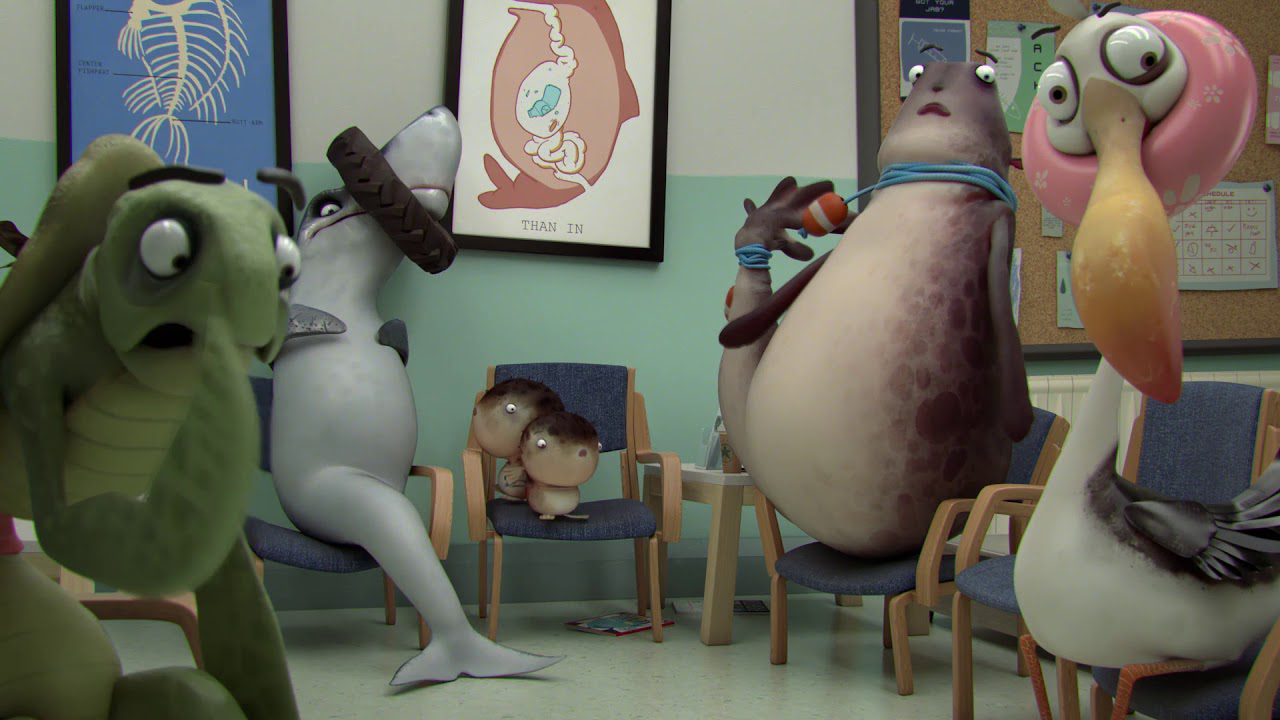
People are funny. They come in all shapes and sizes. They are like symbols really. Symbolic, schematic blueprints that, if you look closely enough, you can see quite clearly.
I see them all the time in my office, from patient to patient, day after day.
There is this one patient, I call her patient cube because she is rigid, boxy, and firm to the point of obstinance. She refuses, adamantly, to get a mammogram. No matter how hard I try to convince her – be it with data, anecdotes, or just plain persuasion – she simply does not budge. And if I broach the subject at the wrong angle, I find myself facing the sharp end of one of her corners. Believe me, it is not an enjoyable experience being cornered by your patients. So I learned, over time, how to talk to her, get her to show her best side, overcome any trepidation from receiving a mammogram, and face the reality that regular screenings are necessary.
Another patient I call patient parrot, because he squawks, regurgitates, and repeats things without even thinking. I do not mind it much, I enjoy discussing his health. But sometimes he asks questions just for the sake of asking questions. After discussing his lab work, three times in a row, I realized his questions are less about knowing and more about dwelling over something he will never truly know. He asks why his potassium levels are abnormally high, and if that is clinically significant, not because he cares about potassium physiology and diet, but because he is paranoid that he may be displaying certain hidden, insidious symptoms that may be due to potassium abnormalities. In that way, he is like a conspiracy theorist of sorts. But like with any paranoia, a little knowledge goes a long way. So now when he asks away, question after question, I answer them in a way that reflects the questions back – asking why they are being asked and providing any and all paperwork to address the inevitable follow-ups. But most of the time, for patient parrot, just knowing something is better than the chasm of not knowing anything. And if he just wants an answer for the sake of an answer, a times I will oblige – just do not tell him that.
I call this one patient, patient walnut, for one reason when I first met her, but now I call her patient walnut for entirely different reason, now that I know her. At first she was a tough nut to crack, hard and rigid. She would challenge my guidance and ask for evidence to verify my treatment plan – which at first I took as an affront. Why is my patient challenging me? But after meeting her demands – in her eyes, rising to the challenge – I earned her respect and eventually her trust. She no longer challenges me, but still asks the customary how and why questions – which I enjoy answering. That is why I still call her patient walnut, because these types of conversations are quite good for me. So whenever a patient wants to learn why we do what we do, or know what we know, I always answer pleasantly, because we can all benefit by refreshing our medical knowledge. Even if the questions are a bit tough.
But sometimes that can backfire, as I learned from patient fox, who is quite intelligent, but seems to have a mischievous streak, always hiding a trick or two up his sleeve. When he asks a question, it is not out of a sense of wanting to know, but out of wanting to know if I know – and his questions come laced with a nuanced double speak. He does not really want to know why his blood chemistry changes with his poor diet, he wants to know if I can explain it to his satisfaction. And over time, after learning his game, I learned how to answer. Rather than attempt to meet the veritable burden of persuasion, I redirect the conversation, and put the onus of answering squarely in his hands. I hand him a medical textbook or an academic journal article that discusses the pathology underlying his blood work – and casually mention we can discuss the text or the article when he is ready.
Suddenly the questions stop, and he becomes quite compliant – no longer asking questions to question my knowledge. A strategy I would advise for anyone struggling with their own patient fox. Learn to discern the purpose behind the questions, and direct the answer in a way that reaches the underlying intent behind the question – so you can provide a truly comprehensive response, in the truest sense.
Not all the symbols come from the way my patients ask questions, some come from the way they act.
The one I call patient ostrich loves to bury her head in the sand. Whether it is out of denial or outright ignorance, it always takes a while for her to understand the importance of maintaining her health. It takes her three years to get an annual pap smear, six months to get her monthly hormone panel, and nine weeks to reply to a weekly phone call. And no matter how many times I impress the value of regular follow-ups, she shrugs it off with a casual indifference. But eventually she comes around. And I have learned that with her, persistence pays off, so I expend a little more energy than usual to make sure she remains compliant, and use a little more persuasion than usual to make sure she fully understands.
Then there is patient iceberg, who always moves too slowly for me – always on his way but never quite there – and never seems to get his medications on track. Either his blood pressure will spike too high or his sugars will remain too elevated – never seems to have it all working at once. But the more I dig in, trying to figure out what is really going on, the deeper the core problem seems to go. At times it may be the delays in his paycheck, or his transportation availability. But when I look at it from the surface, all I find is a non-compliant patient – always one foot in and one foot out. But like all icebergs, the exposed peak never reveals what is hiding underneath – and a superficial overview would easily miss the depth of the economic problems that have become his medical problems.
And of course, I always enjoy seeing patient elephant, who never seems to forget. If I ask for medical records, say from an emergency room visit, he will always have it, sometimes arriving before he does. With ready access and rapid turnarounds to records, reports, and results, our patient visits are exceptionally efficient. And I sense he appreciates that too. He provides whatever I need whenever I need it, which allows me to diagnose, treat, and refer however I need to, as promptly as possible. I never need to worry about patient elephant, so reliable, so dependable – always keeping me on my toes.
On the other hand, patient octopus is a different story. She is a unique mix of emotion and intelligence, though definitely not emotionally intelligent – as I would describe it – rather, I would describe her as complex. She never seems to care what I say, until she realizes that I care about her health. And despite the genuine affection I display, even to this day, whenever I see her, she remains complex. But now I can crack her puzzle, piecing together the complex patterns of personality and presenting symptoms. Something she has keenly noted, and quietly appreciates, though she would never admit it. And on it goes with her – decipher the pattern and treat the conditions. Some might find that annoying, but I appreciate it for what it is, and for who she is. I take all the time needed to figure her out, the way she wants to be figured.
You might say I am quite the funny one – looking at my patients in such a way.
But you would be wrong.
Because people communicate in symbols, of which words are only a small part of. And to understand, truly understand, who your patients are and how to treat them, you have to understand how your patients communicate, in all the ways they communicate.
You will find it is quite the schematic.



