












Saturday, January 31, 2026
ISSN 2765-8767
  • Survey
  • Podcast
  • Write for Us
  • My Account
  • Log In
Daily Remedy
  • Home
  • Articles
  • Podcasts
    The Future of LLMs in Healthcare

    The Future of LLMs in Healthcare

    January 26, 2026
    The Future of Healthcare Consumerism

    The Future of Healthcare Consumerism

    January 22, 2026
    Your Body, Your Health Care: A Conversation with Dr. Jeffrey Singer

    Your Body, Your Health Care: A Conversation with Dr. Jeffrey Singer

    July 1, 2025

    The cost structure of hospitals nearly doubles

    July 1, 2025
    Navigating the Medical Licensing Maze

    The Fight Against Healthcare Fraud: Dr. Rafai’s Story

    April 8, 2025
    Navigating the Medical Licensing Maze

    Navigating the Medical Licensing Maze

    April 4, 2025
  • Surveys

    Surveys

    Patient Survey: Understanding Healthcare Consumerism

    Patient Survey: Understanding Healthcare Consumerism

    January 18, 2026
    Public Confidence in Proposed Changes to U.S. Vaccine Policy

    Public Confidence in Proposed Changes to U.S. Vaccine Policy

    January 3, 2026

    Survey Results

    Can you tell when your provider does not trust you?

    Can you tell when your provider does not trust you?

    January 18, 2026
    Do you believe national polls on health issues are accurate

    National health polls: trust in healthcare system accuracy?

    May 8, 2024
    Which health policy issues matter the most to Republican voters in the primaries?

    Which health policy issues matter the most to Republican voters in the primaries?

    May 14, 2024
    How strongly do you believe that you can tell when your provider does not trust you?

    How strongly do you believe that you can tell when your provider does not trust you?

    May 7, 2024
  • Courses
  • About Us
  • Contact us
  • Support Us
  • Official Learner
No Result
View All Result
  • Home
  • Articles
  • Podcasts
    The Future of LLMs in Healthcare

    The Future of LLMs in Healthcare

    January 26, 2026
    The Future of Healthcare Consumerism

    The Future of Healthcare Consumerism

    January 22, 2026
    Your Body, Your Health Care: A Conversation with Dr. Jeffrey Singer

    Your Body, Your Health Care: A Conversation with Dr. Jeffrey Singer

    July 1, 2025

    The cost structure of hospitals nearly doubles

    July 1, 2025
    Navigating the Medical Licensing Maze

    The Fight Against Healthcare Fraud: Dr. Rafai’s Story

    April 8, 2025
    Navigating the Medical Licensing Maze

    Navigating the Medical Licensing Maze

    April 4, 2025
  • Surveys

    Surveys

    Patient Survey: Understanding Healthcare Consumerism

    Patient Survey: Understanding Healthcare Consumerism

    January 18, 2026
    Public Confidence in Proposed Changes to U.S. Vaccine Policy

    Public Confidence in Proposed Changes to U.S. Vaccine Policy

    January 3, 2026

    Survey Results

    Can you tell when your provider does not trust you?

    Can you tell when your provider does not trust you?

    January 18, 2026
    Do you believe national polls on health issues are accurate

    National health polls: trust in healthcare system accuracy?

    May 8, 2024
    Which health policy issues matter the most to Republican voters in the primaries?

    Which health policy issues matter the most to Republican voters in the primaries?

    May 14, 2024
    How strongly do you believe that you can tell when your provider does not trust you?

    How strongly do you believe that you can tell when your provider does not trust you?

    May 7, 2024
  • Courses
  • About Us
  • Contact us
  • Support Us
  • Official Learner
No Result
View All Result
Daily Remedy
No Result
View All Result
Home Uncertainty & Complexity

Hidden Flaw in Observational Studies

Time is never time alone

Daily Remedy by Daily Remedy
February 2, 2024
in Uncertainty & Complexity
0
Hidden Flaw in Observational Studies

Luke Chesser

Observational studies play a crucial role in the field of research, providing researchers with the opportunity to collect data and establish correlations between variables in a real-life setting. They offer a glimpse into the natural behaviors and interactions of individuals or groups, offering valuable insights that can inform future decisions and interventions. However, it is important to acknowledge that such studies are not infallible and possess inherent limitations and vulnerabilities that should be taken into account.

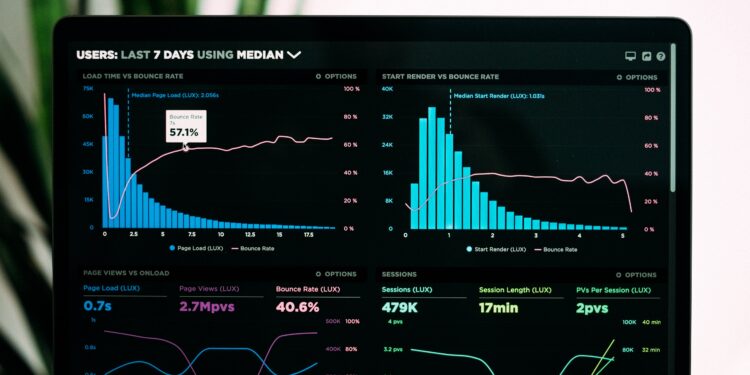
One common manipulation technique that can be applied to observational studies involves altering the time horizon of the gathered data. This means that researchers may selectively choose to include or exclude specific time periods that are most favorable to their desired results. By doing so, they can potentially create a biased representation of reality and distort the true relationships between variables.

Manipulating the time horizon of a study refers to selectively choosing the timeframe over which data is collected and analyzed. By doing so, researchers can cherry-pick data that supports their desired outcome or hypothesis, while ignoring or downplaying data that may contradict their findings. This can lead to biased results and a skewed interpretation of the data.

Imagine a study examining the impact of a new educational program on student achievement. If researchers selectively choose to include only the time period when students are most engaged and motivated, while excluding the times when their enthusiasm wanes, the results may falsely indicate a stronger positive correlation between the program and achievement. Such manipulation of the time horizon compromises the integrity and reliability of the study findings, rendering them less accurate and potentially misleading.

Knowingly altering the time horizon of observational studies is a grave transgression, not only from an ethical standpoint but also because it severely compromises the credibility of research within the scientific community. In order to maintain integrity and foster trust, it is vital for researchers to strictly adhere to transparent and rigorous methodologies. This involves collecting data over a sufficiently long duration, without omitting any inconvenient or contradictory periods. By doing so, researchers can guarantee the objectivity and validity of their study, thereby enabling more reliable and accurate conclusions and recommendations. The importance of upholding these standards cannot be overstated, as it not only ensures the credibility of the scientific community but also helps to advance knowledge and contribute to the betterment of society as a whole.

For example, imagine a study examining the relationship between smoking and lung cancer. If the researchers only look at data for a short time period, such as one year, they may find a weak correlation between smoking and lung cancer. However, if the researchers expand the time horizon to ten years, they may find a much stronger correlation, as the long-term effects of smoking become more apparent. By selectively choosing a shorter time period, the researchers can manipulate the results to downplay the harmful effects of smoking.

Another way in which the time horizon can be manipulated is by selectively choosing the start and end dates for data collection. For instance, if a study examines the impact of a new drug on patient outcomes, researchers may choose to start collecting data after the initial side effects of the drug have subsided, in order to paint a more positive picture of its efficacy. By omitting this crucial information, they manipulate the results to make the drug appear safer and more effective than it actually is.

In order to mitigate the potential manipulation of observational studies through the manipulation of the time horizon, it is important to conduct studies over longer periods of time and collect data consistently and comprehensively. Additionally, researchers should be transparent about their study methodology, including the time period selected for analysis, in order to increase the credibility and reliability of their findings.

Observational studies are a valuable research tool, but they are not immune to manipulation. In selectively choosing the timeframe over which data is collected and analyzed, researchers are able to manipulate the results to support their desired outcome. To minimize this manipulation, studies should be conducted over longer periods of time and data should be collected consistently and transparently. Only then can we trust the validity and reliability of the findings from observational studies.


ShareTweet
Daily Remedy

Daily Remedy

Dr. Jay K Joshi serves as the editor-in-chief of Daily Remedy. He is a serial entrepreneur and sought after thought-leader for matters related to healthcare innovation and medical jurisprudence. He has published articles on a variety of healthcare topics in both peer-reviewed journals and trade publications. His legal writings include amicus curiae briefs prepared for prominent federal healthcare cases.

Leave a Reply Cancel reply

Your email address will not be published. Required fields are marked *

Videos

In this episode, the host discusses the significance of large language models (LLMs) in healthcare, their applications, and the challenges they face. The conversation highlights the importance of simplicity in model design and the necessity of integrating patient feedback to enhance the effectiveness of LLMs in clinical settings.

Takeaways
LLMs are becoming integral in healthcare.
They can help determine costs and service options.
Hallucination in LLMs can lead to misinformation.
LLMs can produce inconsistent answers based on input.
Simplicity in LLMs is often more effective than complexity.
Patient behavior should guide LLM development.
Integrating patient feedback is crucial for accuracy.
Pre-training models with patient input enhances relevance.
Healthcare providers must understand LLM limitations.
The best LLMs will focus on patient-centered care.

Chapters

00:00 Introduction to LLMs in Healthcare
05:16 The Importance of Simplicity in LLMs
The Future of LLMs in HealthcareDaily Remedy
YouTube Video U1u-IYdpeEk
Subscribe

Large Language Models in Healthcare

Clinical Reads

What the Most-Cited LLM-in-Medicine Papers Reveal—and What They Miss

What the Most-Cited LLM-in-Medicine Papers Reveal—and What They Miss

by Daily Remedy
January 25, 2026
0

In just over two years, papers on large language models (LLMs) in medicine have accumulated nearly fifteen thousand citations, creating an academic canon that is already shaping funding decisions, regulatory conversations, and clinical experimentation. This study dissects the 100 most-cited LLM-in-medicine papers to show who is driving the field, which applications dominate attention, and where the evidence remains dangerously thin. What emerges is a picture of rapid intellectual consolidation—paired with a widening gap between technical promise and clinical reality. The...

Read more

Join Our Newsletter!

Twitter Updates

Tweets by TheDailyRemedy

Popular

  • GLP-1 Drugs Have Moved Past Weight Loss. Medicine Has Not Fully Caught Up.

    GLP-1 Drugs Have Moved Past Weight Loss. Medicine Has Not Fully Caught Up.

    0 shares
    Share 0 Tweet 0
  • Why Investors Now Care About Patient Experience

    0 shares
    Share 0 Tweet 0
  • The Quiet Revolution in the Exam Room: AI Tools That Change Work, Not Headlines

    0 shares
    Share 0 Tweet 0
  • Semaglutide: Keeps Getting Better

    1 shares
    Share 0 Tweet 0
  • Public Health Experts Unable to Stop Gun Violence

    1 shares
    Share 0 Tweet 0
  • 628 Followers

Daily Remedy

Daily Remedy offers the best in healthcare information and healthcare editorial content. We take pride in consistently delivering only the highest quality of insight and analysis to ensure our audience is well-informed about current healthcare topics - beyond the traditional headlines.

Daily Remedy website services, content, and products are for informational purposes only. We do not provide medical advice, diagnosis, or treatment. All rights reserved.

Important Links

  • Support Us
  • About Us
  • Contact us
  • Privacy Policy
  • Terms and Conditions

Join Our Newsletter!

  • Survey
  • Podcast
  • About Us
  • Contact us

© 2026 Daily Remedy

No Result
View All Result
  • Home
  • Articles
  • Podcasts
  • Surveys
  • Courses
  • About Us
  • Contact us
  • Support Us
  • Official Learner

© 2026 Daily Remedy
