












Saturday, April 11, 2026
ISSN 2765-8767
  • Survey
  • Podcast
  • Write for Us
  • My Account
  • Log In
Daily Remedy
  • Home
  • Articles
  • Podcasts
    The Hidden Costs Employers Don’t See in Traditional Health Plans

    The Hidden Costs Employers Don’t See in Traditional Health Plans

    March 22, 2026
    The Impact of COVID-19 on Patient Trust

    The Impact of COVID-19 on Patient Trust

    March 3, 2026
    Debunking Myths About GLP-1 Medications

    Debunking Myths About GLP-1 Medications

    February 16, 2026
    The Future of LLMs in Healthcare

    The Future of LLMs in Healthcare

    January 26, 2026
    The Future of Healthcare Consumerism

    The Future of Healthcare Consumerism

    January 22, 2026
    Your Body, Your Health Care: A Conversation with Dr. Jeffrey Singer

    Your Body, Your Health Care: A Conversation with Dr. Jeffrey Singer

    July 1, 2025
  • Surveys

    Surveys

    Understanding of Clinical Evidence in Peptide and Hormone Use

    Understanding of Clinical Evidence in Peptide and Hormone Use

    March 30, 2026
    Public Sentiment on the Future of Peptides and Hormone Therapies in U.S. Medicine

    Public Sentiment on the Future of Peptides and Hormone Therapies in U.S. Medicine

    March 17, 2026

    Survey Results

    Can you tell when your provider does not trust you?

    Can you tell when your provider does not trust you?

    January 18, 2026
    Do you believe national polls on health issues are accurate

    National health polls: trust in healthcare system accuracy?

    May 8, 2024
    Which health policy issues matter the most to Republican voters in the primaries?

    Which health policy issues matter the most to Republican voters in the primaries?

    May 14, 2024
    How strongly do you believe that you can tell when your provider does not trust you?

    How strongly do you believe that you can tell when your provider does not trust you?

    May 7, 2024
  • Courses
  • About Us
  • Contact us
  • Support Us
  • Official Learner
No Result
View All Result
  • Home
  • Articles
  • Podcasts
    The Hidden Costs Employers Don’t See in Traditional Health Plans

    The Hidden Costs Employers Don’t See in Traditional Health Plans

    March 22, 2026
    The Impact of COVID-19 on Patient Trust

    The Impact of COVID-19 on Patient Trust

    March 3, 2026
    Debunking Myths About GLP-1 Medications

    Debunking Myths About GLP-1 Medications

    February 16, 2026
    The Future of LLMs in Healthcare

    The Future of LLMs in Healthcare

    January 26, 2026
    The Future of Healthcare Consumerism

    The Future of Healthcare Consumerism

    January 22, 2026
    Your Body, Your Health Care: A Conversation with Dr. Jeffrey Singer

    Your Body, Your Health Care: A Conversation with Dr. Jeffrey Singer

    July 1, 2025
  • Surveys

    Surveys

    Understanding of Clinical Evidence in Peptide and Hormone Use

    Understanding of Clinical Evidence in Peptide and Hormone Use

    March 30, 2026
    Public Sentiment on the Future of Peptides and Hormone Therapies in U.S. Medicine

    Public Sentiment on the Future of Peptides and Hormone Therapies in U.S. Medicine

    March 17, 2026

    Survey Results

    Can you tell when your provider does not trust you?

    Can you tell when your provider does not trust you?

    January 18, 2026
    Do you believe national polls on health issues are accurate

    National health polls: trust in healthcare system accuracy?

    May 8, 2024
    Which health policy issues matter the most to Republican voters in the primaries?

    Which health policy issues matter the most to Republican voters in the primaries?

    May 14, 2024
    How strongly do you believe that you can tell when your provider does not trust you?

    How strongly do you believe that you can tell when your provider does not trust you?

    May 7, 2024
  • Courses
  • About Us
  • Contact us
  • Support Us
  • Official Learner
No Result
View All Result
Daily Remedy
No Result
View All Result
Home News

Narratives on the Opioid Crisis

'Just the facts' doesn't work when we lack objective truths

Daily Remedy by Daily Remedy
March 23, 2023
in News
0
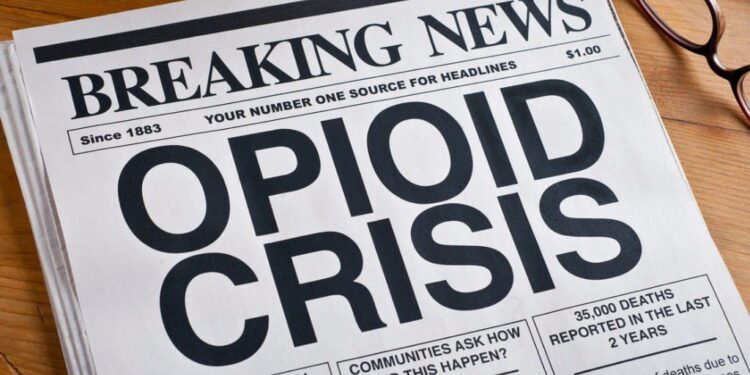
Narratives on the Opioid Crisis

Creative Commons

There are many models that explain journalistic technique. Most of them begin with the refrain – the most important information comes first. Accordingly, I begin with a quotation by Friedrich Nietzsche: “All things are subject to interpretation. Whichever interpretation prevails at a given time is a function of power and not truth.”

This quotation alone summarizes many articles that cover the overdose crisis. Therefore, it’s the most important. It explains why we struggle to cover the opioid crisis. Journalism relies on facts. The foundation of the field is a balanced portrayal of facts. One story, two sides, two sets of facts, all explained as objectively as possible.

In the opioid crisis, however, there are no facts, no objectively definable truths. There are only perspectives. We can’t even agree on the data underlying core assumptions.

Take one of the more pervasive disagreements: addiction rates following the use of prescription opioids. Some have it at 20 percent, others at 3 percent. Those who believe the opioid crisis began with physicians overprescribing opioid support studies that tout the larger number. Those who believe the crisis began out of a confluence of trends – a growing number of pain patients and a trend toward heroin as the drug of choice for drug abusers – tout for the smaller number.

We fixate on such numbers. And we ceaselessly argue over which is right. But ultimately, they’re numbers devoid of context. Just ask any chronic pain patient, or a patient struggling with substance use dependency: those numbers mean nothing. They’re a thin veneer of data covering what is otherwise a fundamentally subjective experience.

Think of the pain scale. Remember being asked or overhearing someone being asked: what is your level of pain on a scale from one to ten? How is that anything but subjective? And in continuing that logic, let’s not forget how that number would be subsequently interpreted by a treating provider. In short order, we have two subjective points of assessment. On it goes – every interaction, a subjective assessment, to which we ascribe a proverbial data point, just to make it feel like we’re being objective.

We’re not – like we’re not applying a valid journalistic framework when we use specious data to craft a journalistic narrative. There are no sides to the opioid crisis. We are just beginning to understand addiction absent its moralistic façade, in solely medical terms.

So if we still lack a basic understanding of the opioid crisis, of what value is the journalistic framework in analyzing it? You can’t write about something you don’t understand. In this vein, I’ve constructed three back-of-the-envelope rules to help journalists make sense of the opioid crisis and frame the journalistic narrative around a complex, not yet defined concept.

  1. Chronic pain and addiction are uniquely experiential because they are subjective. Data is less reliable than in other medical disciplines.
  2. Most clinical studies in these two fields lack consistency in design or are biased in their methodologies. Avoid using multiple studies to derive one conclusion.
  3. Instead of identifying a single narrative, learn to think in a contrarian way when you piece together the elements of the story. The lack of a cohesive narrative is sometimes the most accurate story.

ShareTweet
Daily Remedy

Daily Remedy

Dr. Jay K Joshi serves as the editor-in-chief of Daily Remedy. He is a serial entrepreneur and sought after thought-leader for matters related to healthcare innovation and medical jurisprudence. He has published articles on a variety of healthcare topics in both peer-reviewed journals and trade publications. His legal writings include amicus curiae briefs prepared for prominent federal healthcare cases.

Comments 0

  1. Judith says:
    3 years ago

    Dr. Joshi,

    I tried to send a message, via the contact us link, however, am experiencing errors. So I am hoping to at least get the message to you here. I wanted to say as someone who stumbled across your case a few months back that I absolutely, 100%, without a shadow of a doubt, believe your narrative. That aside, I also want to tell you THANK YOU! Thank you so very much for the work you are doing, it is so desperately needed and will help bring an end to this cruel era. You, sir, are an outstanding human being and an excellent doctor! I wish we had more of your caliber. Thank you!

    Reply
  2. Kaitlin Santana says:
    3 years ago

    This is really interesting, You’re a very skilled blogger. I’ve joined your feed and look forward to seeking more of your magnificent post. Also, I’ve shared your site in my social networks!

    Reply
  3. Marjorie Belsky says:
    3 years ago

    I agree. and in addition to the commentary above ” Opiate crisis” is misleading. Do we mean street drugs, or do we mean prescription drugs? What is the definition of overprescribing? Does this mean with intent? Does it mean the patient was diverting? Where did the data come from? The PMP – prescription database. is often a government source for “overprescribing”. The PMP uses a private algorithm formulated by third parties and contracted by the government. We don’t know what goes into the algorithm other than testimony from employees of these companies who have testified to criminal histories of patients, physician assets, distance traveled to pharmacies, the number of pharmacies utilized by patients, and the type of insurance. (Qlarent). That would not be a reasonable definition of overprescribing to a physician. In fact, these parameters create bias. (Jennifer Oliva 2022 Hasting Law Journal). Further how about privacy laws in gathering the data? The PMP violates many of them. ( too many to discuss here) Let’s use data that doesn’t violate individuals’ privacy and hide behind the word ” aggregate”. How about accuracy in the data entries? There is no transparency and no oversight. It’s time to move on from the catchphrase “opiate crisis” for journalists.

    Reply
  4. Jaida Moon says:
    3 years ago

    Well, there are kind of two sides.
    .
    It’s perhaps most important to realize that one side is carefully and maliciously crafting studies and data based on nothing but very clear, and obvious, cherry-picked falsehoods.

    It’s most important to know that one side has actual science in their quiver, and the other has purposefully inflammatory and blatantly false claims in theirs. The entire anti-opioid community is willingly pushing very fragile patients to the edge, they are complicit in the wholesale torture of an entire population of patients.

    AND NO ONE CARES.

    No one is doing a damn thing to help us. I’m in this rapidly sinking boat, too. I’d wish very few ppl to be in my place (a certain Kolodny comes to mind).

    Fact: the only opioid crisis is illicit fentanyl.
    Fact: pain patients are dying and desperate for help.
    Fact: no one is helping
    Fact: the “other side” is a group of duplicitous liars that are destroying the field of medicine.

    Help us.

    Reply
  5. John Sandherr says:
    3 years ago

    Drs don’t treat pain out of fear some believe the false narrative. My meds have been cut by 80% now because of Work comp insurance and they require me to be at 0 by June. My PM Dr says it’s not her job to fight with them even after a judge declared my medication level is up to my Dr. I was told I’m just one patient & my Dr doesn’t have time to waste on me. Now I just sit in a chair all day.

    Reply
  6. Lightning says:
    3 years ago

    JKJ: “We are just beginning to understand addiction absent its moralistic façade, in solely medical terms.”

    Your consistently excellent and incisive thinking is a welcome breath of fresh air amidst the deepening throes of dark ages of pain management arising out of scientifically baseless moral crusades against people who use drugs, conducted under the deliberate subterfuge of a faux-medical junk-science mask, engendering and sustaining an entirely socially destructive crucible of abstrusely justified yet perniciously strategic subjective pseudo-psychiatric declarations endlessly waging war upon the human condition in a century-old morally and financially bankrupt inhumane barbaric endless war of intentionally crafted futility – designed to provide fame and monetary wealth for dubiously entitled privileged “moral entrepreneurs” at the expense and the literal demise of sacrificial “pharmakoi”.

    “… the question of addiction … implicates more than simply a scientific theory which forms the basis of a discourse of addiction. At stake in a discourse on addiction is an economy of control (individual and collective) and its history of conquest. … So long as morality factors into the equation, addiction is not simply a scientific concept. … scientific theories of addiction are based on a concept whose religious, State, economic bases rationalize the marginalization of substances … The problem of a moral basis for a scientific concept of addiction is not only that it is a highly uncontrollable variable, … but the prescription of morals are also subject to forms of power that produce social distinctions in order to further colonize social spaces by marginalizing the ‘undesirable’ and promoting the ideal. … the classification of ‘addiction’ followed a desire to eradicate (colonize) a population of people or drugs. Therefore, while there continue to be ongoing clinical researches – in neuroscience, biology, psychology, chemistry, sociology – in search for the perfect theory of addiction, the concept of addiction invariably lies beyond the sciences. … Anyone can believe that there is a nature to such a thing as addiction, but a discourse’s relation to power confers legitimization and truth to the concept. … Whether something is legal or illegal, prohibited or promoted, does not reflect a natural (universal) essence, but rather a power over the body and the word. … social processes delineate the primary nature of drug/user relationship which characterizes addiction [as well as] how forces of colonization re-purpose rituals to serve colonial ideals. … the impositions of morality and higher social forces have made addiction a social tool and a concept irreconcilable with scientific theories.”

    Source: “Addiction: the colonization of rituals”; Matthew Prokopiw, University of Western Ontario (2015):
    https://ir.lib.uwo.ca/etd/3059

    Reply
  7. Sally Young says:
    3 years ago

    Thank you. I’m a retired nurse. I just wanted to speak out for the people who work in healthcare. Watching patients suffer is part of the reality of healthcare .We try to help people get better and make them feel better. Sometimes, when you have done all you can, you offer them something for pain. It’s hard to know that we can no longer give them a medication that once helped them. I hope we can do better.

    Reply

Leave a Reply Cancel reply

Your email address will not be published. Required fields are marked *

Videos

Most employers are unknowingly steering their health plans toward higher costs and reduced control — until they understand how fiduciary missteps and anti-competitive contracts bleed their budgets dry. Katie Talento, a recognized health policy leader, reveals how shifting the network paradigm can save millions by emphasizing independent providers, direct contracting, and innovative tiering models.

Grounded in real-world case studies like Harris Rosen’s community-driven initiative, this episode dives deep into practical strategies to realign incentives—focusing on primary care, specialty care, and transparent vendor relationships. You'll discover how traditional carrier networks are often Trojan horses, locking employers into costly, opaque arrangements that undermine fiduciary duties. Katie breaks down simple yet powerful reforms: owning your data, eliminating conflicts of interest, and outlawing anti-competitive contract clauses.

We explore how a post-network framework—where patients are free to choose providers without restrictive network barriers—can massively reduce costs and improve health outcomes. You'll learn why independent, locally owned providers are vital to rebuilding trust, reducing unnecessary procedures, and reinvesting savings into the community. This conversation offers clarity on the unseen legal landmines employers face and actionable ways to craft health plans built on transparency, independence, and aligned incentives.

Perfect for HR pros, benefits advisors, physicians, and employer leaders committed to transforming healthcare from the ground up. If you’re tired of broken healthcare models draining your budget and frustrating your staff, this episode will empower you to take control by understanding and reshaping the very foundations of employer-sponsored health. Discover the blueprint for smarter, fairer, and more sustainable benefits.

Visit katytalento.com or allbetter.health to connect directly and explore how these innovations can work for your organization. Your path toward a healthier, more cost-effective future starts here.

Chapters

00:00 Introduction to Employer-Sponsored Health Plans
02:50 Understanding ERISA and Fiduciary Responsibilities
06:08 The Misalignment of Clinical and Financial Interests
08:54 Enforcement and Legal Implications for Employers
11:49 Redefining Networks: The Post-Network Framework
25:34 Navigating Healthcare Contracts and Cash Payments
27:31 Understanding Employer Health Plan Structures
28:04 The Role of Benefits Advisors in Health Plans
30:45 Governance and Data Ownership in Health Plans
37:05 Case Study: The Rosen Hotels' Health Model
41:33 Incentivizing Healthy Choices in Healthcare
47:22 Empowering Primary Care and Independent Providers
The Hidden Costs Employers Don’t See in Traditional Health Plans
YouTube Video xhks7YbmBoY
Subscribe

Policy Shift in Peptide Regulation

Clinical Reads

Semaglutide and the Expansion Problem: When One Trial Becomes a Platform

Semaglutide and the Expansion Problem: When One Trial Becomes a Platform

by Daily Remedy
March 30, 2026
0

Semaglutide has moved beyond its original indication and now sits at the center of a widening set of clinical questions: cardiovascular risk, kidney disease progression, and even neurodegeneration. The question is no longer whether the drug lowers glucose or reduces weight—it does—but how far those effects extend across systems, and whether evidence from one population can be translated into another without distortion. Large, well-powered trials have produced consistent signals, yet those signals are now being applied in contexts that were...

Read more

Join Our Newsletter!

Twitter Updates

Tweets by TheDailyRemedy

Popular

  • Make the Patient Encounter a Conversation

    Make the Patient Encounter a Conversation

    1 shares
    Share 0 Tweet 0
  • 7 Shocking Reasons Why You’re Your Best Advocate

    0 shares
    Share 0 Tweet 0
  • Mechanism vs Evidence

    0 shares
    Share 0 Tweet 0
  • Retatrutide: The Weight Loss Drug Everyone Wants—But Can’t Officially Get

    1 shares
    Share 0 Tweet 0
  • The Quiet Geography of H5N1

    0 shares
    Share 0 Tweet 0
  • 628 Followers

Daily Remedy

Daily Remedy offers the best in healthcare information and healthcare editorial content. We take pride in consistently delivering only the highest quality of insight and analysis to ensure our audience is well-informed about current healthcare topics - beyond the traditional headlines.

Daily Remedy website services, content, and products are for informational purposes only. We do not provide medical advice, diagnosis, or treatment. All rights reserved.

Important Links

  • Support Us
  • About Us
  • Contact us
  • Privacy Policy
  • Terms and Conditions

Join Our Newsletter!

  • Survey
  • Podcast
  • About Us
  • Contact us

© 2026 Daily Remedy

No Result
View All Result
  • Home
  • Articles
  • Podcasts
  • Surveys
  • Courses
  • About Us
  • Contact us
  • Support Us
  • Official Learner

© 2026 Daily Remedy

