












Sunday, February 15, 2026
ISSN 2765-8767
  • Survey
  • Podcast
  • Write for Us
  • My Account
  • Log In
Daily Remedy
  • Home
  • Articles
  • Podcasts
    The Future of LLMs in Healthcare

    The Future of LLMs in Healthcare

    January 26, 2026
    The Future of Healthcare Consumerism

    The Future of Healthcare Consumerism

    January 22, 2026
    Your Body, Your Health Care: A Conversation with Dr. Jeffrey Singer

    Your Body, Your Health Care: A Conversation with Dr. Jeffrey Singer

    July 1, 2025

    The cost structure of hospitals nearly doubles

    July 1, 2025
    Navigating the Medical Licensing Maze

    The Fight Against Healthcare Fraud: Dr. Rafai’s Story

    April 8, 2025
    Navigating the Medical Licensing Maze

    Navigating the Medical Licensing Maze

    April 4, 2025
  • Surveys

    Surveys

    AI in Healthcare Decision-Making

    AI in Healthcare Decision-Making

    February 1, 2026
    Patient Survey: Understanding Healthcare Consumerism

    Patient Survey: Understanding Healthcare Consumerism

    January 18, 2026

    Survey Results

    Can you tell when your provider does not trust you?

    Can you tell when your provider does not trust you?

    January 18, 2026
    Do you believe national polls on health issues are accurate

    National health polls: trust in healthcare system accuracy?

    May 8, 2024
    Which health policy issues matter the most to Republican voters in the primaries?

    Which health policy issues matter the most to Republican voters in the primaries?

    May 14, 2024
    How strongly do you believe that you can tell when your provider does not trust you?

    How strongly do you believe that you can tell when your provider does not trust you?

    May 7, 2024
  • Courses
  • About Us
  • Contact us
  • Support Us
  • Official Learner
No Result
View All Result
  • Home
  • Articles
  • Podcasts
    The Future of LLMs in Healthcare

    The Future of LLMs in Healthcare

    January 26, 2026
    The Future of Healthcare Consumerism

    The Future of Healthcare Consumerism

    January 22, 2026
    Your Body, Your Health Care: A Conversation with Dr. Jeffrey Singer

    Your Body, Your Health Care: A Conversation with Dr. Jeffrey Singer

    July 1, 2025

    The cost structure of hospitals nearly doubles

    July 1, 2025
    Navigating the Medical Licensing Maze

    The Fight Against Healthcare Fraud: Dr. Rafai’s Story

    April 8, 2025
    Navigating the Medical Licensing Maze

    Navigating the Medical Licensing Maze

    April 4, 2025
  • Surveys

    Surveys

    AI in Healthcare Decision-Making

    AI in Healthcare Decision-Making

    February 1, 2026
    Patient Survey: Understanding Healthcare Consumerism

    Patient Survey: Understanding Healthcare Consumerism

    January 18, 2026

    Survey Results

    Can you tell when your provider does not trust you?

    Can you tell when your provider does not trust you?

    January 18, 2026
    Do you believe national polls on health issues are accurate

    National health polls: trust in healthcare system accuracy?

    May 8, 2024
    Which health policy issues matter the most to Republican voters in the primaries?

    Which health policy issues matter the most to Republican voters in the primaries?

    May 14, 2024
    How strongly do you believe that you can tell when your provider does not trust you?

    How strongly do you believe that you can tell when your provider does not trust you?

    May 7, 2024
  • Courses
  • About Us
  • Contact us
  • Support Us
  • Official Learner
No Result
View All Result
Daily Remedy
No Result
View All Result
Home Perspectives

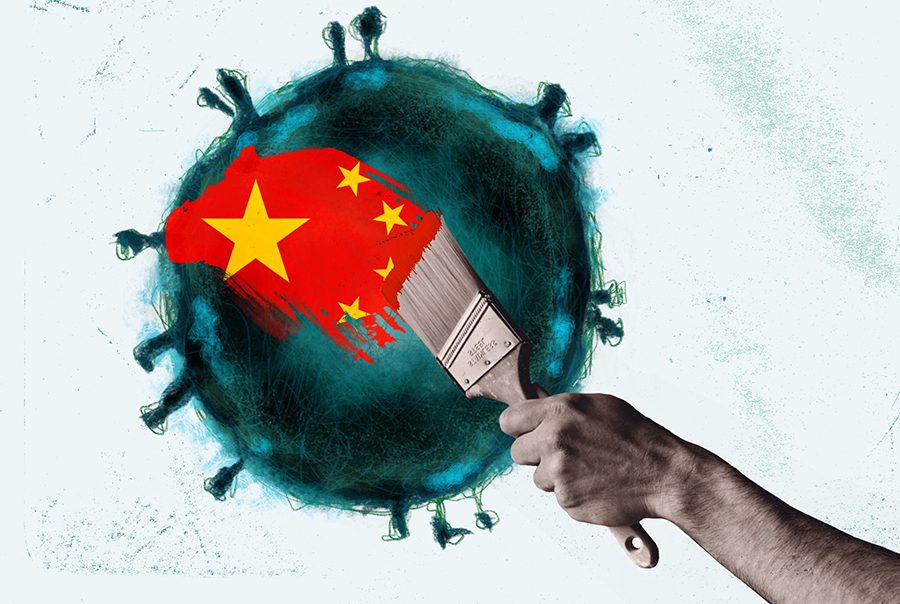
Calling the Coronavirus the ‘Chinese Virus’ Matters

Daily Remedy by Daily Remedy
February 19, 2022
in Perspectives
0
Calling the corona virus the chinese virus matters

Brad Bushman, The Ohio State University

No one wants their geographic region to be associated with a deadly disease. Unfortunately, this has happened in the past with diseases such as “German measles,” “Spanish flu” and “Asiatic cholera.”

It happens today, too, even though the World Health Organization advises against naming pathogens for places to “minimize unnecessary negative effects on nations, economies and people.” By Feb. 11, 2020, the WHO had announced that the official name for the novel coronavirus just starting its spread around the world would be severe acute respiratory syndrome coronavirus 2 – or SARS-CoV-2. The illness it caused would be called COVID-19, short for Coronavirus Disease of 2019.

Yet some politicians, conservative journalists and others persisted in calling the COVID-19 virus the “Chinese virus,” or some variant of this term, such as the “China virus,” “Wuhan virus” (after the Chinese city that first reported the virus), “Chinese flu” and “Kung flu.”

Does it matter?

Hateful behavior against Asians in the U.S. and many other countries rose after the start of the pandemic. According to the FBI, anti-Asian hate crimes increased by 73% in 2020.

Social scientists like me are investigating the kinds of repercussions racialized framing – like calling the coronavirus “Chinese” – can have.

Reading just one article had an impact

The way media frame, depict and describe events can have a profound influence on the public’s perception of those events. Researchers have found that audiences are prone to interpret media stories in the context of their biases, especially in relation to racial groups.

My colleagues Lanier Frush Holt, Sophie Kjærvik and I found that simply reading one media article calling the coronavirus the “Chinese virus” made people more likely to blame China for the pandemic.

We randomly split a diverse sample of 614 American adults into two groups. One read a fabricated news article that labeled the coronavirus as the “Chinese virus.” The other read an identical article except for labeling the coronavirus as the “COVID-19 virus.”

There were important differences in how the articles were perceived. For instance, Democrats and more liberal individuals judged the “Chinese virus” article much more negatively than did Republicans and more conservative individuals. But overall, we found that participants who read the “Chinese virus” article were 8.5% more likely to agree with the statement “China is responsible for the current global pandemic” than were those who read the “COVID-19 virus” article.

The effect of reading that one article with “Chinese virus” language was not huge, and we wouldn’t expect it to be. The attitudes and beliefs that people brought with them before they read the story had a greater influence on their likelihood to blame China for the pandemic than did the framing language. But the fact that reading a single “Chinese virus” article did have an impact on readers with a range of political leanings shows the power of labeling a disease for a geographic region.

Naming does the framing

Other researchers have also found connections between the “Chinese virus” label and anti-Asian sentiments.

One study linked then-president Donald Trump’s tweet on March 16, 2020, that referred to “the Chinese Virus” with a rise in anti-Asian hashtags.

When pressed on his repeated use of the term “Chinese virus,” Trump told reporters at a news briefing: “It’s not racist at all. … It’s from China. That’s why. It comes from China. I want to be accurate.”

When researchers studied 1.2 million hashtags on Twitter in March 2020, they found that approximately 1 in 5 hashtags used in tweets along with #covid19 were anti-Asian, whereas half of the hashtags used alongside #chinesevirus were. “Chinese virus” wasn’t just an innocent statement of reality, as Trump seemed to contend. It was often paired with racist sentiment.

As racially stigmatizing language like “Chinese virus” increased in the media in March 2020, so did the belief that Asian Americans are less “American” than their white counterparts.

Another study found that exposure to conspiracy theories and misinformation linking China to the spread and creation of the coronavirus was correlated with an increase in anti-Chinese sentiment and xenophobia.

Use of terms like “Chinese virus” by the media and political leaders is unlikely to change a person’s beliefs or attitudes. But it can trigger negative stereotypes that can heighten prejudice and possibly even incite incidents of hate.

Just as biomedical researchers try to understand how pathogens spread through a population, social scientists are working to understand the spread of hate and prejudice. Unfortunately, in the case of the COVID-19 pandemic and anti-Asian bias, only a brief exposure to racially charged language can have negative impacts.

[Research into coronavirus and other news from science Subscribe to The Conversation’s new science newsletter.]

Brad Bushman, Professor of Communication and Rinehart Chair of Mass Communication, The Ohio State University

This article is republished from The Conversation under a Creative Commons license. Read the original article.


ShareTweet
Daily Remedy

Daily Remedy

Dr. Jay K Joshi serves as the editor-in-chief of Daily Remedy. He is a serial entrepreneur and sought after thought-leader for matters related to healthcare innovation and medical jurisprudence. He has published articles on a variety of healthcare topics in both peer-reviewed journals and trade publications. His legal writings include amicus curiae briefs prepared for prominent federal healthcare cases.

Leave a Reply Cancel reply

Your email address will not be published. Required fields are marked *

Videos

In this episode, the host discusses the significance of large language models (LLMs) in healthcare, their applications, and the challenges they face. The conversation highlights the importance of simplicity in model design and the necessity of integrating patient feedback to enhance the effectiveness of LLMs in clinical settings.

Takeaways
LLMs are becoming integral in healthcare.
They can help determine costs and service options.
Hallucination in LLMs can lead to misinformation.
LLMs can produce inconsistent answers based on input.
Simplicity in LLMs is often more effective than complexity.
Patient behavior should guide LLM development.
Integrating patient feedback is crucial for accuracy.
Pre-training models with patient input enhances relevance.
Healthcare providers must understand LLM limitations.
The best LLMs will focus on patient-centered care.

Chapters

00:00 Introduction to LLMs in Healthcare
05:16 The Importance of Simplicity in LLMs
The Future of LLMs in HealthcareDaily Remedy
YouTube Video U1u-IYdpeEk
Subscribe

2027 Medicare Advantage & Part D Advance Notice

Clinical Reads

BIIB080 in Mild Alzheimer’s Disease: What a Phase 1b Exploratory Clinical Analysis Can—and Cannot—Tell Us

BIIB080 in Mild Alzheimer’s Disease: What a Phase 1b Exploratory Clinical Analysis Can—and Cannot—Tell Us

by Daily Remedy
February 15, 2026
0

Can lowering tau biology translate into a clinically meaningful slowing of decline in people with early symptomatic Alzheimer’s disease? That is the practical question behind BIIB080, an intrathecal antisense therapy designed to reduce production of tau protein by targeting the tau gene transcript. In a phase 1b program originally designed for safety and dosing, investigators later examined cognitive, functional, and global outcomes as exploratory endpoints. The clinical question matters because current disease-modifying options primarily target amyloid, while tau pathology tracks...

Read more

Join Our Newsletter!

Twitter Updates

Tweets by TheDailyRemedy

Popular

  • The Information Epidemic: How Digital Health Misinformation Is Rewiring Clinical Risk

    The Information Epidemic: How Digital Health Misinformation Is Rewiring Clinical Risk

    0 shares
    Share 0 Tweet 0
  • Prevention Is Having a Moment and a Measurement Problem

    0 shares
    Share 0 Tweet 0
  • Child Health Is Now a Platform Issue

    0 shares
    Share 0 Tweet 0
  • Behavioral Health Is Now a Network Phenomenon

    0 shares
    Share 0 Tweet 0
  • The Breach Is the Diagnosis: Cybersecurity Has Become a Clinical Risk Variable

    0 shares
    Share 0 Tweet 0
  • 628 Followers

Daily Remedy

Daily Remedy offers the best in healthcare information and healthcare editorial content. We take pride in consistently delivering only the highest quality of insight and analysis to ensure our audience is well-informed about current healthcare topics - beyond the traditional headlines.

Daily Remedy website services, content, and products are for informational purposes only. We do not provide medical advice, diagnosis, or treatment. All rights reserved.

Important Links

  • Support Us
  • About Us
  • Contact us
  • Privacy Policy
  • Terms and Conditions

Join Our Newsletter!

  • Survey
  • Podcast
  • About Us
  • Contact us

© 2026 Daily Remedy

No Result
View All Result
  • Home
  • Articles
  • Podcasts
  • Surveys
  • Courses
  • About Us
  • Contact us
  • Support Us
  • Official Learner

© 2026 Daily Remedy