












Sunday, February 15, 2026
ISSN 2765-8767
  • Survey
  • Podcast
  • Write for Us
  • My Account
  • Log In
Daily Remedy
  • Home
  • Articles
  • Podcasts
    The Future of LLMs in Healthcare

    The Future of LLMs in Healthcare

    January 26, 2026
    The Future of Healthcare Consumerism

    The Future of Healthcare Consumerism

    January 22, 2026
    Your Body, Your Health Care: A Conversation with Dr. Jeffrey Singer

    Your Body, Your Health Care: A Conversation with Dr. Jeffrey Singer

    July 1, 2025

    The cost structure of hospitals nearly doubles

    July 1, 2025
    Navigating the Medical Licensing Maze

    The Fight Against Healthcare Fraud: Dr. Rafai’s Story

    April 8, 2025
    Navigating the Medical Licensing Maze

    Navigating the Medical Licensing Maze

    April 4, 2025
  • Surveys

    Surveys

    AI in Healthcare Decision-Making

    AI in Healthcare Decision-Making

    February 1, 2026
    Patient Survey: Understanding Healthcare Consumerism

    Patient Survey: Understanding Healthcare Consumerism

    January 18, 2026

    Survey Results

    Can you tell when your provider does not trust you?

    Can you tell when your provider does not trust you?

    January 18, 2026
    Do you believe national polls on health issues are accurate

    National health polls: trust in healthcare system accuracy?

    May 8, 2024
    Which health policy issues matter the most to Republican voters in the primaries?

    Which health policy issues matter the most to Republican voters in the primaries?

    May 14, 2024
    How strongly do you believe that you can tell when your provider does not trust you?

    How strongly do you believe that you can tell when your provider does not trust you?

    May 7, 2024
  • Courses
  • About Us
  • Contact us
  • Support Us
  • Official Learner
No Result
View All Result
  • Home
  • Articles
  • Podcasts
    The Future of LLMs in Healthcare

    The Future of LLMs in Healthcare

    January 26, 2026
    The Future of Healthcare Consumerism

    The Future of Healthcare Consumerism

    January 22, 2026
    Your Body, Your Health Care: A Conversation with Dr. Jeffrey Singer

    Your Body, Your Health Care: A Conversation with Dr. Jeffrey Singer

    July 1, 2025

    The cost structure of hospitals nearly doubles

    July 1, 2025
    Navigating the Medical Licensing Maze

    The Fight Against Healthcare Fraud: Dr. Rafai’s Story

    April 8, 2025
    Navigating the Medical Licensing Maze

    Navigating the Medical Licensing Maze

    April 4, 2025
  • Surveys

    Surveys

    AI in Healthcare Decision-Making

    AI in Healthcare Decision-Making

    February 1, 2026
    Patient Survey: Understanding Healthcare Consumerism

    Patient Survey: Understanding Healthcare Consumerism

    January 18, 2026

    Survey Results

    Can you tell when your provider does not trust you?

    Can you tell when your provider does not trust you?

    January 18, 2026
    Do you believe national polls on health issues are accurate

    National health polls: trust in healthcare system accuracy?

    May 8, 2024
    Which health policy issues matter the most to Republican voters in the primaries?

    Which health policy issues matter the most to Republican voters in the primaries?

    May 14, 2024
    How strongly do you believe that you can tell when your provider does not trust you?

    How strongly do you believe that you can tell when your provider does not trust you?

    May 7, 2024
  • Courses
  • About Us
  • Contact us
  • Support Us
  • Official Learner
No Result
View All Result
Daily Remedy
No Result
View All Result
Home Uncertainty & Complexity

Why Decision Makers Make Wrong Decisions

Daily Remedy by Daily Remedy
January 25, 2022
in Uncertainty & Complexity
0
Why Decision Makers Make Wrong Decisions

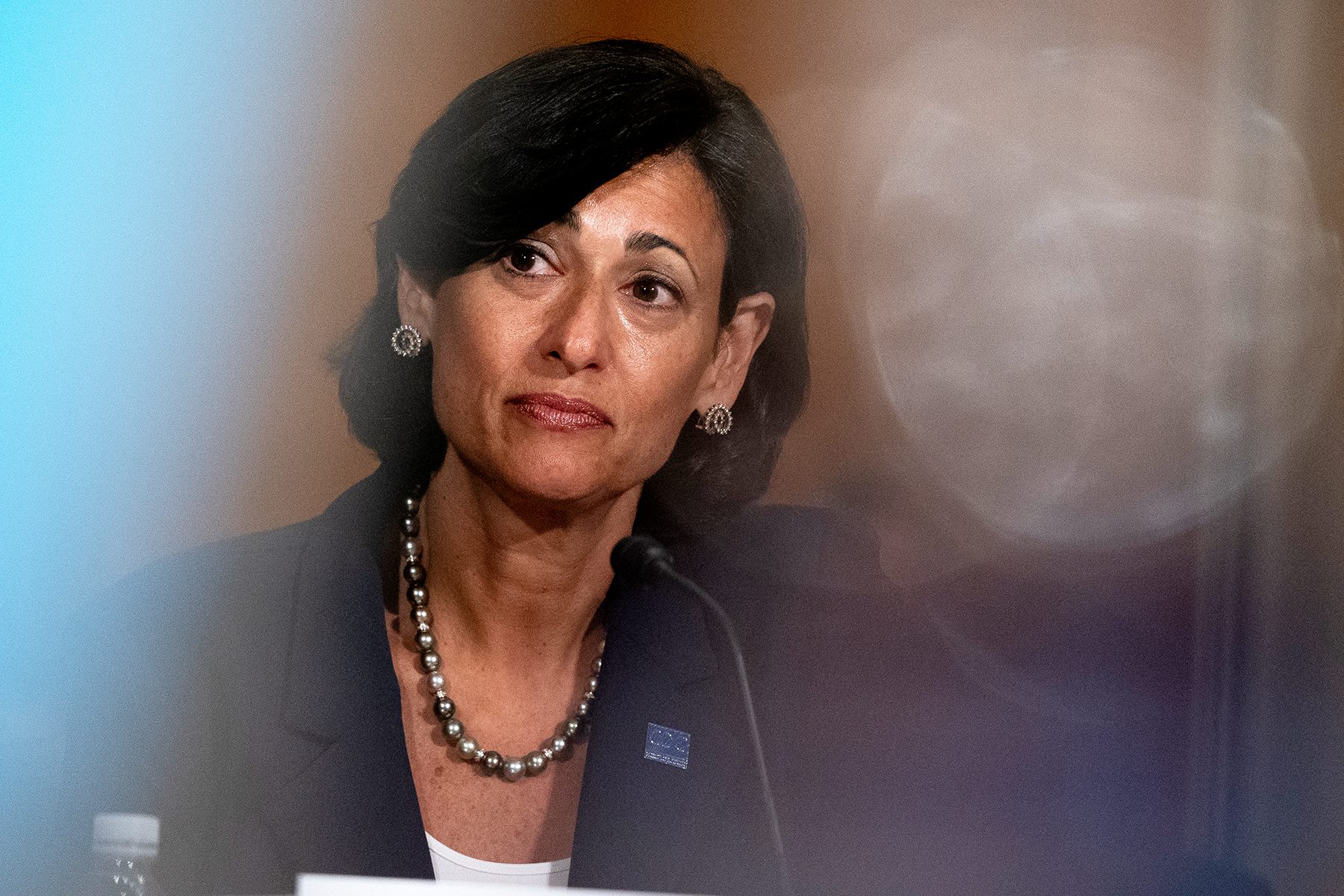
The last few weeks have been rough for the CDC. After a series of questionable policy changes and communication gaffes, the organization is reeling to restore its authority.

The CDC finds itself burdened by a figurative albatross around its neck as it attempts to navigate through the latter stages of the pandemic while keep afloat its sinking credibility.

But Director Dr. Rochelle Walensky is not going gentle into that good night. She has been a regular fixture on news channels communicating the goals of the CDC and discussing the merits underlying its policy changes.

She exudes confidence through her words and projects a steady hand. Her demeanor is akin to that of a world class leader. She eloquently articulates the organization’s goals and defines metrics for success with clearly defined contingencies. Of any traditional definition of leadership, she fits the mold.

This is the problem.

The CDC does not need a traditional leader right now. These are not traditional times by any stretch of the imagination. What the organization needs is the ability to establish public confidence in the unknown and make people comfortable with uncertainty.

This is counterintuitive to traditional leadership practices. A leader is someone who creates a vision for others to follow, who sets clear goals with a deliberate process of achieving them.

But the pandemic is not a corporate conglomerate or a federal agency. There are no defined goals. The pandemic is uncertainty incarnate. Chaos is standard operating practice.

The CDC should instead lean into the uncertainty. Convey what it knows and does not know while setting clear parameters between the two. Reach out to the public in a way that is genuine. People naturally reciprocate genuine compassion. Nothing has to be articulated. No policy has to be set. The mere act of connecting and listening is more powerful than any announcement, no matter how assuring.

But the allure of confidence and the desire to project good news in the short term has led the CDC down a winding course of messaging pivots and policy reversals. This is a failure of leadership. Dr. Walensky tries to be a traditional leader in a time when we must buck convention and embrace the void of uncertainty.

The more she tries to exude confidence, communicating whatever may be the current CDC policy of the day, the more she discredits herself when justifying the inevitable policy changes that will arise in the future.

Trust is an opportunity cost. Whatever trust a leader obtains cannot be replenished indefinitely. Trust is a limited resource that must be allocated sparingly and used judiciously.

The CDC cannot ask the public to trust it one day with one policy, and then expect to retain the same level of trust the next day with a different policy. Trust is finite and the CDC has long eroded its trust reserves.

But its leadership continues to pursue the same foolhardy course, exuding confidence when there is nothing to be confident in and asking for buy-in when it remains unclear what the public is buying into.

We need CDC leaders to acknowledge the uncertainty in which policies are made and share how they balance all the unknowns when making a decision. The one thing the public knows is that there remains more uncertainty than certainty, even this late into the pandemic. The CDC should acknowledge as much. But leadership continues to project a false sense of confidence when making decisions.

They believe the appearance of confidence makes them strong leaders when in reality the admission of uncertainty would make them trusted leaders.

This is why policy leaders continue to make wrong decisions and stand behind erroneous policies. They cannot forego the notion that a leader must be confident and have all the answers. And when you guess the answer to a question you do not know, you are likely to guess incorrectly.

But if you acknowledge what you do not know, the rampant uncertainty, you may not have an answer, but then you will have something far more important.

You will have trust.

ShareTweet
Daily Remedy

Daily Remedy

Dr. Jay K Joshi serves as the editor-in-chief of Daily Remedy. He is a serial entrepreneur and sought after thought-leader for matters related to healthcare innovation and medical jurisprudence. He has published articles on a variety of healthcare topics in both peer-reviewed journals and trade publications. His legal writings include amicus curiae briefs prepared for prominent federal healthcare cases.

Comments 0

  1. Brian Lynch says:
    3 years ago

    You have to be vulnerable which is a hard sell.

    Reply

Leave a Reply Cancel reply

Your email address will not be published. Required fields are marked *

Videos

In this episode, the host discusses the significance of large language models (LLMs) in healthcare, their applications, and the challenges they face. The conversation highlights the importance of simplicity in model design and the necessity of integrating patient feedback to enhance the effectiveness of LLMs in clinical settings.

Takeaways
LLMs are becoming integral in healthcare.
They can help determine costs and service options.
Hallucination in LLMs can lead to misinformation.
LLMs can produce inconsistent answers based on input.
Simplicity in LLMs is often more effective than complexity.
Patient behavior should guide LLM development.
Integrating patient feedback is crucial for accuracy.
Pre-training models with patient input enhances relevance.
Healthcare providers must understand LLM limitations.
The best LLMs will focus on patient-centered care.

Chapters

00:00 Introduction to LLMs in Healthcare
05:16 The Importance of Simplicity in LLMs
The Future of LLMs in HealthcareDaily Remedy
YouTube Video U1u-IYdpeEk
Subscribe

2027 Medicare Advantage & Part D Advance Notice

Clinical Reads

BIIB080 in Mild Alzheimer’s Disease: What a Phase 1b Exploratory Clinical Analysis Can—and Cannot—Tell Us

BIIB080 in Mild Alzheimer’s Disease: What a Phase 1b Exploratory Clinical Analysis Can—and Cannot—Tell Us

by Daily Remedy
February 15, 2026
0

Can lowering tau biology translate into a clinically meaningful slowing of decline in people with early symptomatic Alzheimer’s disease? That is the practical question behind BIIB080, an intrathecal antisense therapy designed to reduce production of tau protein by targeting the tau gene transcript. In a phase 1b program originally designed for safety and dosing, investigators later examined cognitive, functional, and global outcomes as exploratory endpoints. The clinical question matters because current disease-modifying options primarily target amyloid, while tau pathology tracks...

Read more

Join Our Newsletter!

Twitter Updates

Tweets by TheDailyRemedy

Popular

  • The Information Epidemic: How Digital Health Misinformation Is Rewiring Clinical Risk

    The Information Epidemic: How Digital Health Misinformation Is Rewiring Clinical Risk

    0 shares
    Share 0 Tweet 0
  • Child Health Is Now a Platform Issue

    0 shares
    Share 0 Tweet 0
  • Prevention Is Having a Moment and a Measurement Problem

    0 shares
    Share 0 Tweet 0
  • Behavioral Health Is Now a Network Phenomenon

    0 shares
    Share 0 Tweet 0
  • The Breach Is the Diagnosis: Cybersecurity Has Become a Clinical Risk Variable

    0 shares
    Share 0 Tweet 0
  • 628 Followers

Daily Remedy

Daily Remedy offers the best in healthcare information and healthcare editorial content. We take pride in consistently delivering only the highest quality of insight and analysis to ensure our audience is well-informed about current healthcare topics - beyond the traditional headlines.

Daily Remedy website services, content, and products are for informational purposes only. We do not provide medical advice, diagnosis, or treatment. All rights reserved.

Important Links

  • Support Us
  • About Us
  • Contact us
  • Privacy Policy
  • Terms and Conditions

Join Our Newsletter!

  • Survey
  • Podcast
  • About Us
  • Contact us

© 2026 Daily Remedy

No Result
View All Result
  • Home
  • Articles
  • Podcasts
  • Surveys
  • Courses
  • About Us
  • Contact us
  • Support Us
  • Official Learner

© 2026 Daily Remedy

