












Sunday, February 15, 2026
ISSN 2765-8767
  • Survey
  • Podcast
  • Write for Us
  • My Account
  • Log In
Daily Remedy
  • Home
  • Articles
  • Podcasts
    The Future of LLMs in Healthcare

    The Future of LLMs in Healthcare

    January 26, 2026
    The Future of Healthcare Consumerism

    The Future of Healthcare Consumerism

    January 22, 2026
    Your Body, Your Health Care: A Conversation with Dr. Jeffrey Singer

    Your Body, Your Health Care: A Conversation with Dr. Jeffrey Singer

    July 1, 2025

    The cost structure of hospitals nearly doubles

    July 1, 2025
    Navigating the Medical Licensing Maze

    The Fight Against Healthcare Fraud: Dr. Rafai’s Story

    April 8, 2025
    Navigating the Medical Licensing Maze

    Navigating the Medical Licensing Maze

    April 4, 2025
  • Surveys

    Surveys

    AI in Healthcare Decision-Making

    AI in Healthcare Decision-Making

    February 1, 2026
    Patient Survey: Understanding Healthcare Consumerism

    Patient Survey: Understanding Healthcare Consumerism

    January 18, 2026

    Survey Results

    Can you tell when your provider does not trust you?

    Can you tell when your provider does not trust you?

    January 18, 2026
    Do you believe national polls on health issues are accurate

    National health polls: trust in healthcare system accuracy?

    May 8, 2024
    Which health policy issues matter the most to Republican voters in the primaries?

    Which health policy issues matter the most to Republican voters in the primaries?

    May 14, 2024
    How strongly do you believe that you can tell when your provider does not trust you?

    How strongly do you believe that you can tell when your provider does not trust you?

    May 7, 2024
  • Courses
  • About Us
  • Contact us
  • Support Us
  • Official Learner
No Result
View All Result
  • Home
  • Articles
  • Podcasts
    The Future of LLMs in Healthcare

    The Future of LLMs in Healthcare

    January 26, 2026
    The Future of Healthcare Consumerism

    The Future of Healthcare Consumerism

    January 22, 2026
    Your Body, Your Health Care: A Conversation with Dr. Jeffrey Singer

    Your Body, Your Health Care: A Conversation with Dr. Jeffrey Singer

    July 1, 2025

    The cost structure of hospitals nearly doubles

    July 1, 2025
    Navigating the Medical Licensing Maze

    The Fight Against Healthcare Fraud: Dr. Rafai’s Story

    April 8, 2025
    Navigating the Medical Licensing Maze

    Navigating the Medical Licensing Maze

    April 4, 2025
  • Surveys

    Surveys

    AI in Healthcare Decision-Making

    AI in Healthcare Decision-Making

    February 1, 2026
    Patient Survey: Understanding Healthcare Consumerism

    Patient Survey: Understanding Healthcare Consumerism

    January 18, 2026

    Survey Results

    Can you tell when your provider does not trust you?

    Can you tell when your provider does not trust you?

    January 18, 2026
    Do you believe national polls on health issues are accurate

    National health polls: trust in healthcare system accuracy?

    May 8, 2024
    Which health policy issues matter the most to Republican voters in the primaries?

    Which health policy issues matter the most to Republican voters in the primaries?

    May 14, 2024
    How strongly do you believe that you can tell when your provider does not trust you?

    How strongly do you believe that you can tell when your provider does not trust you?

    May 7, 2024
  • Courses
  • About Us
  • Contact us
  • Support Us
  • Official Learner
No Result
View All Result
Daily Remedy
No Result
View All Result
Home Contrarian

Afghan Shock on Healthcare

Daily Remedy by Daily Remedy
September 6, 2021
in Contrarian
0

We often explain chaos theory through the butterfly effect, which states a small change can have large consequences later.

Something appearing small and insignificant somewhere or in some point in time can prove immensely consequential later or somewhere else. We have movies about it. We often reference it casually. But we miss it when it appears right in front of us.

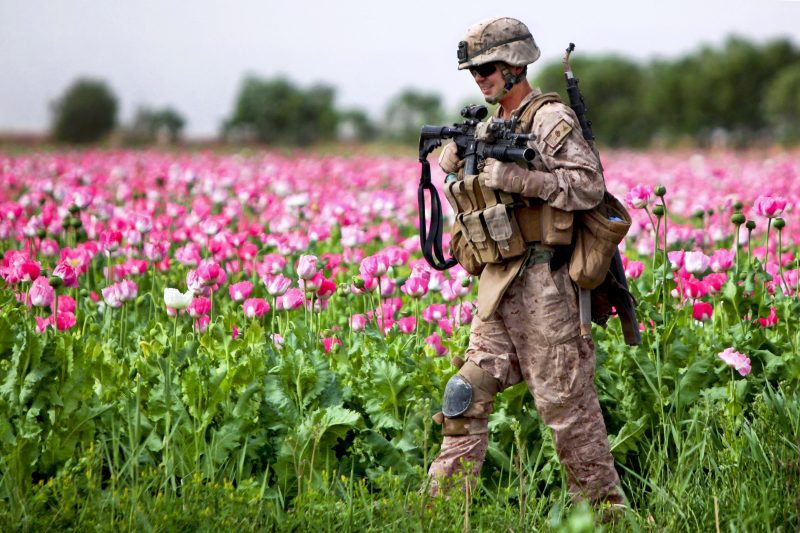
Namely, the abrupt departure of the United States from Afghanistan – an event that will impact healthcare domestically for years to come and in ways we have yet to fully understand.

Afghanistan is the world leader in opium production. According to the United Nations Office on Drugs and Crime (UNODC), Afghanistan accounted for 85% of global opium production in 2020.

Now with the United States and its NATO allies gone, the country is run by the Taliban, an Islamic regional power we have trained since the Cold War and currently have a complicated relationship with – to put it mildly.

Initially the Taliban forbade the growth of opium. But in recent decades, the Taliban supported opium growth, even developing sophisticated production and distribution supply chains internationally.

The UNODC reports that Afghan poppy cultivation drifted upward since we began suppressing opium production in 2005 as part of our broader war on drugs.

Regardless of what we tried, Afghanistan remained the primary supplier of the world’s opium and heroin. In fact, our efforts to suppress production actually shifted production towards the Taliban.

The organization then increased opium production and used heroin sales as a revenue stream to support its military efforts. According to the United States Institute of Peace (USIP), a federal institution, we knew as early as 2009 that Afghan politics centered on opium production. And in the last two decades, much of our war efforts in the country centered on negotiating the production and distribution of opium with the Taliban and other regional military powers.

Since we are now gone, we no longer have influence over the supply of opium. This means we have little in the way of curtailing heroin production. Policy experts assume the Taliban will accelerate opium production.

But a RAND report from July 2021 casts doubt on that notion. The curiously prescient report discusses how a sharp decline in Afghan opium production would affect the Afghan economy, suggesting it would produce a humanitarian crisis and foment terrorist activities.

But the report does not suggest our recent withdrawal would lead to a decline. Rather, the authors suggest the increasing demand for fentanyl internationally would prompt a reduced demand for opium.

Fentanyl is a synthetic opiate, manufactured mostly in China or in Mexico with supplies from China. It is more potent and cheaper than opium, because it does not have the same labor costs. With cheaper costs, fentanyl is sold more cheaply on the market.

As a result, much of the heroin currently in the United States is laced with significant amounts of fentanyl. The recent wave of deaths attributed to the opioid epidemic is mostly due to the increased availability of fentanyl.

With the rise in cheap fentanyl, coupled with now unchecked market conditions in Afghanistan, we can only assume the price of heroin will decrease. The Taliban does not have the ability to manufacture fentanyl, and relies heavily on sales from heroin to support its government.

It would be naïve to expect the Taliban, which has invested so heavily in opium production, to simply stop now that the United States has left. Instead, we should assume the Taliban will continue to rely on heroin as a major export. The stability of the Taliban’s government depends on it.

The only way Taliban-produced heroin can compete against fentanyl is by lowering its price. And the only way to lower price is through an increase in supply – which means we can expect opium production in Afghanistan to increase in the coming years, because of the rise in fentanyl, contrary to the RAND report’s conclusion.

This means the United States will be flooded with high quantities and cheaper prices of both heroin and fentanyl. Previously fentanyl was used to lace heroin. Now we can expect more dynamic mixtures of the two drugs.

New combinations or formularies of drugs lead to more overdoses because the drug consuming market has not yet grown accustomed to them. And in the process of acclimating to the new drugs, people will overdose. We saw this with the introduction of crack cocaine in urban America, and with the introduction of vaping in America’s youth.

And we will see this in the years to come with new mixtures of heroin and fentanyl.

Inevitably the government will intensify its efforts to curtail the supply, but the government will continue to falter – because the opioid epidemic cannot be solved through supply-focused intervention.

This is what makes the epidemic unique. On a broad scale the epidemic follows traditional principles of supply and demand. But individually, these principles break down because addiction medicine and addictive behavior cannot be understood rationally or economically. It is a medical disease.

The solution to the epidemic comes out of policies that recognize this dichotomy. But many federal institutions, such as the Drug Enforcement Agency (DEA), refuse to adjust their approach to the opioid epidemic.

They continue to see the opioid epidemic in terms of supply and demand. They criticize de-criminalization by arguing that legalizing drugs would simply flood the market with even cheaper illicit drugs.

This may be true at a broad policy level. But it is not true at an individual level. Those with substance use dependencies or outright addictions will purchase drugs that optimize their high-to-risk ratio. The greater the high relative to the risk, the more likely the drug will be consumed.

Risk comes in many forms. There is financial risk, coming from basic costs of living and other financial expenses. But there is also legal risk, derived from the criminal consequences of consuming drugs that most addicts or patients with a substance dependency prefer to avoid – even at higher financial costs.

Most addiction specialists know that patients with substance dependencies balance risk financially and legally. But federal institutions seem to believe only financial risks matter.

Hence we find a discrepancy in how the clinical and legal worlds perceive the opioid epidemic. We have a unique opportunity to resolve this by examining the recent events in Afghanistan – observe the changes in Afghan opium production and prices post-withdrawal relative to the changes in opioid-based mortality and overdose-related hospitalizations in the United States.

Study the correlative factors between opium production and price internationally, and traditional metrics we use to measure the opioid epidemic. This would elucidate the specific impact of the Afghan opioid trade on the opioid epidemic in the United States.

And more importantly, demonstrate how supply changes, and the commensurate differences in drug prices affect individual behavior among those who consume illicit substances.

We should look the recent events in Afghanistan as a systemic shock to healthcare, and look for discrepancies in the clinical metrics that would indicate stronger or weaker correlations than previously assumed.

We can then understand how addicts perceive risk, and glean whether decriminalization truly lowers the price of illicit drugs.

Such analysis can dispel the prevailing, but false notions that have defined our understanding of the opioid epidemic. And once we properly understand this epidemic, we can finally enact the right solutions.


ShareTweet
Daily Remedy

Daily Remedy

Dr. Jay K Joshi serves as the editor-in-chief of Daily Remedy. He is a serial entrepreneur and sought after thought-leader for matters related to healthcare innovation and medical jurisprudence. He has published articles on a variety of healthcare topics in both peer-reviewed journals and trade publications. His legal writings include amicus curiae briefs prepared for prominent federal healthcare cases.

Comments 0

  1. Pingback: » Could treating chronic pain help fund terrorism ? PHARMACIST STEVE

Leave a Reply Cancel reply

Your email address will not be published. Required fields are marked *

Videos

In this episode, the host discusses the significance of large language models (LLMs) in healthcare, their applications, and the challenges they face. The conversation highlights the importance of simplicity in model design and the necessity of integrating patient feedback to enhance the effectiveness of LLMs in clinical settings.

Takeaways
LLMs are becoming integral in healthcare.
They can help determine costs and service options.
Hallucination in LLMs can lead to misinformation.
LLMs can produce inconsistent answers based on input.
Simplicity in LLMs is often more effective than complexity.
Patient behavior should guide LLM development.
Integrating patient feedback is crucial for accuracy.
Pre-training models with patient input enhances relevance.
Healthcare providers must understand LLM limitations.
The best LLMs will focus on patient-centered care.

Chapters

00:00 Introduction to LLMs in Healthcare
05:16 The Importance of Simplicity in LLMs
The Future of LLMs in HealthcareDaily Remedy
YouTube Video U1u-IYdpeEk
Subscribe

AI Regulation and Deployment Is Now a Core Healthcare Issue

Clinical Reads

Ambient Artificial Intelligence Clinical Documentation: Workflow Support with Emerging Governance Risk

Ambient Artificial Intelligence Clinical Documentation: Workflow Support with Emerging Governance Risk

by Daily Remedy
February 1, 2026
0

Health systems are increasingly deploying ambient artificial intelligence tools that listen to clinical encounters and automatically generate draft visit notes. These systems are intended to reduce documentation burden and allow clinicians to focus more directly on patient interaction. At the same time, they raise unresolved questions about patient consent, data handling, factual accuracy, and legal responsibility for machine‑generated records. Recent policy discussions and legal actions suggest that adoption is moving faster than formal oversight frameworks. The practical clinical question is...

Read more

Join Our Newsletter!

Twitter Updates

Tweets by TheDailyRemedy

Popular

  • The Information Epidemic: How Digital Health Misinformation Is Rewiring Clinical Risk

    The Information Epidemic: How Digital Health Misinformation Is Rewiring Clinical Risk

    0 shares
    Share 0 Tweet 0
  • Prevention Is Having a Moment and a Measurement Problem

    0 shares
    Share 0 Tweet 0
  • Child Health Is Now a Platform Issue

    0 shares
    Share 0 Tweet 0
  • Behavioral Health Is Now a Network Phenomenon

    0 shares
    Share 0 Tweet 0
  • The Breach Is the Diagnosis: Cybersecurity Has Become a Clinical Risk Variable

    0 shares
    Share 0 Tweet 0
  • 628 Followers

Daily Remedy

Daily Remedy offers the best in healthcare information and healthcare editorial content. We take pride in consistently delivering only the highest quality of insight and analysis to ensure our audience is well-informed about current healthcare topics - beyond the traditional headlines.

Daily Remedy website services, content, and products are for informational purposes only. We do not provide medical advice, diagnosis, or treatment. All rights reserved.

Important Links

  • Support Us
  • About Us
  • Contact us
  • Privacy Policy
  • Terms and Conditions

Join Our Newsletter!

  • Survey
  • Podcast
  • About Us
  • Contact us

© 2026 Daily Remedy

No Result
View All Result
  • Home
  • Articles
  • Podcasts
  • Surveys
  • Courses
  • About Us
  • Contact us
  • Support Us
  • Official Learner

© 2026 Daily Remedy
