







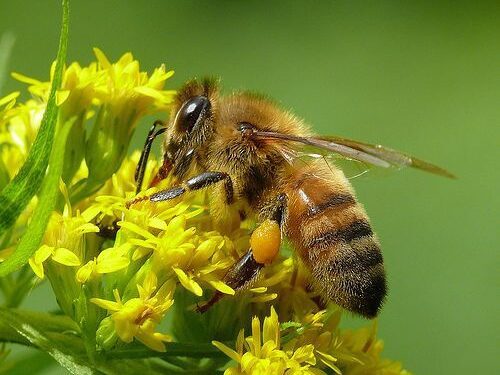
Each spring, invisible clouds drift across large sections of the United States, triggering one of the most predictable—and underestimated—public health events of the year.
In the Southern and Midwestern regions of the country, seasonal pollen surges associated with trees such as mountain cedar, oak, and elm generate millions of cases of allergic rhinitis, sinus inflammation, and secondary respiratory symptoms. Online searches for terms like “cedar fever,” sinus pressure remedies, and seasonal allergy management spike dramatically during these months, reflecting a recurring cycle of environmental exposure and physiological response. Epidemiological analyses from organizations such as the American College of Allergy, Asthma & Immunology, summarized through resources like https://acaai.org/allergies/allergic-conditions/seasonal-allergies/, suggest that allergic rhinitis now affects tens of millions of Americans annually.
Yet seasonal allergies rarely receive sustained policy attention.
The condition sits in an unusual position within healthcare discourse: clinically ubiquitous yet rarely dramatic enough to attract the urgency associated with acute disease. Physicians encounter it daily. Employers experience its consequences through lost productivity. Patients experience it through weeks or months of congestion, fatigue, and sleep disruption. But because allergic rhinitis rarely produces catastrophic outcomes, its cumulative burden often disappears inside larger healthcare statistics.
That burden is not trivial.
Studies examining workforce productivity consistently show measurable reductions in cognitive performance and work efficiency during peak allergy seasons. Sleep disruption, antihistamine side effects, and chronic sinus irritation all contribute to what economists sometimes describe as “subclinical productivity loss.” The phenomenon is difficult to quantify precisely, yet its scale becomes visible when pollen counts surge across large geographic regions simultaneously.
The biological mechanism appears deceptively simple.
Seasonal allergies arise from immune responses to airborne pollen proteins, which trigger inflammatory cascades in the nasal mucosa and upper respiratory tract. Yet the simplicity of the trigger obscures the complexity of the response. Environmental exposure varies dramatically across geography, climate patterns, and local vegetation. Climate scientists increasingly note that warming temperatures may lengthen pollen seasons in some regions, a pattern discussed in environmental health research such as analyses published through the Environmental Protection Agency at https://www.epa.gov/climate-indicators/climate-change-indicators-ragweed-pollen-season.
The result is a shifting environmental baseline.
Regions historically associated with short, predictable allergy seasons now experience longer periods of airborne allergen exposure. Patients who once managed symptoms with occasional antihistamine use may find themselves navigating months of intermittent inflammation. Clinicians increasingly encounter cases in which seasonal allergic rhinitis blurs into chronic sinus disease.
Public behavior often responds faster than clinical guidance.
Search trends reveal widespread interest in home remedies—saline irrigation, dietary adjustments, herbal supplements, and air filtration strategies. Some of these approaches have modest physiological plausibility; others circulate largely through anecdotal networks. The impulse toward self-management reflects a pragmatic reality: seasonal allergies are frequent enough that patients often experiment with interventions outside formal medical settings.
Pharmaceutical therapy remains the clinical foundation.
Antihistamines, intranasal corticosteroids, leukotriene inhibitors, and allergen immunotherapy continue to form the core of evidence-based management. Yet even here, trade-offs appear. First-generation antihistamines impair cognitive performance. Intranasal steroids require consistent adherence to achieve optimal benefit. Immunotherapy programs demand months or years of sustained treatment.
Meanwhile the environmental drivers remain beyond the clinic’s reach.
Urban development patterns influence pollen exposure by altering plant distributions within metropolitan landscapes. Air pollution interacts with pollen particles, sometimes intensifying allergic responses. Climate variability alters the timing and intensity of pollen release across ecosystems. Seasonal allergies therefore occupy a curious intersection between immunology and environmental science.
Healthcare systems experience the consequences indirectly.
Primary care visits increase during peak pollen months. Urgent care clinics report surges in patients with sinus pressure and respiratory irritation. Antibiotic prescribing occasionally rises despite the viral or allergic origin of many symptoms—a pattern examined in research on respiratory infection misclassification published through journals such as https://jamanetwork.com.
The clinical signal therefore extends beyond allergies themselves.
Seasonal allergy surges interact with broader healthcare utilization patterns, influencing diagnostic decisions and prescribing behavior. When respiratory symptoms become widespread, distinguishing allergic inflammation from viral infection becomes more difficult in everyday clinical practice.
Employers and insurers encounter a different dimension of the problem.
Allergic rhinitis rarely produces catastrophic healthcare costs, but it generates recurring expenditures across enormous patient populations. Over-the-counter medication purchases, physician visits, and workplace productivity losses accumulate quietly over time. For large employer health plans, the cumulative economic footprint of seasonal allergies rivals that of some chronic diseases.
Yet the policy response remains diffuse.
Seasonal allergies fall between institutional categories. They are partly environmental, partly immunological, partly occupational, and partly behavioral. No single policy lever meaningfully alters their prevalence.
Each spring therefore becomes a familiar experiment in population physiology.
Trees release pollen according to ecological rhythms largely indifferent to human schedules. Millions of immune systems respond in predictable ways. Physicians manage symptoms while researchers examine environmental trends that may slowly reshape the intensity and duration of these seasonal cycles.
The phenomenon rarely dominates public health headlines.
But it quietly affects how millions of people experience the arrival of spring.