
Friday, March 13, 2026
ISSN 2765-8767
  • Survey
  • Podcast
  • Write for Us
  • My Account
  • Log In
Daily Remedy
  • Home
  • Articles
  • Podcasts
    The Impact of COVID-19 on Patient Trust

    The Impact of COVID-19 on Patient Trust

    March 3, 2026
    Debunking Myths About GLP-1 Medications

    Debunking Myths About GLP-1 Medications

    February 16, 2026
    The Future of LLMs in Healthcare

    The Future of LLMs in Healthcare

    January 26, 2026
    The Future of Healthcare Consumerism

    The Future of Healthcare Consumerism

    January 22, 2026
    Your Body, Your Health Care: A Conversation with Dr. Jeffrey Singer

    Your Body, Your Health Care: A Conversation with Dr. Jeffrey Singer

    July 1, 2025

    The cost structure of hospitals nearly doubles

    July 1, 2025
  • Surveys

    Surveys

    Perceptions of Viral Wellness Practices on Social Media: A Likert-Scale Survey for Informed Readers

    Perceptions of Viral Wellness Practices on Social Media: A Likert-Scale Survey for Informed Readers

    March 1, 2026
    How Confident Are You in RFK Jr.’s Health Leadership?

    How Confident Are You in RFK Jr.’s Health Leadership?

    February 16, 2026

    Survey Results

    Can you tell when your provider does not trust you?

    Can you tell when your provider does not trust you?

    January 18, 2026
    Do you believe national polls on health issues are accurate

    National health polls: trust in healthcare system accuracy?

    May 8, 2024
    Which health policy issues matter the most to Republican voters in the primaries?

    Which health policy issues matter the most to Republican voters in the primaries?

    May 14, 2024
    How strongly do you believe that you can tell when your provider does not trust you?

    How strongly do you believe that you can tell when your provider does not trust you?

    May 7, 2024
  • Courses
  • About Us
  • Contact us
  • Support Us
  • Official Learner
No Result
View All Result
  • Home
  • Articles
  • Podcasts
    The Impact of COVID-19 on Patient Trust

    The Impact of COVID-19 on Patient Trust

    March 3, 2026
    Debunking Myths About GLP-1 Medications

    Debunking Myths About GLP-1 Medications

    February 16, 2026
    The Future of LLMs in Healthcare

    The Future of LLMs in Healthcare

    January 26, 2026
    The Future of Healthcare Consumerism

    The Future of Healthcare Consumerism

    January 22, 2026
    Your Body, Your Health Care: A Conversation with Dr. Jeffrey Singer

    Your Body, Your Health Care: A Conversation with Dr. Jeffrey Singer

    July 1, 2025

    The cost structure of hospitals nearly doubles

    July 1, 2025
  • Surveys

    Surveys

    Perceptions of Viral Wellness Practices on Social Media: A Likert-Scale Survey for Informed Readers

    Perceptions of Viral Wellness Practices on Social Media: A Likert-Scale Survey for Informed Readers

    March 1, 2026
    How Confident Are You in RFK Jr.’s Health Leadership?

    How Confident Are You in RFK Jr.’s Health Leadership?

    February 16, 2026

    Survey Results

    Can you tell when your provider does not trust you?

    Can you tell when your provider does not trust you?

    January 18, 2026
    Do you believe national polls on health issues are accurate

    National health polls: trust in healthcare system accuracy?

    May 8, 2024
    Which health policy issues matter the most to Republican voters in the primaries?

    Which health policy issues matter the most to Republican voters in the primaries?

    May 14, 2024
    How strongly do you believe that you can tell when your provider does not trust you?

    How strongly do you believe that you can tell when your provider does not trust you?

    May 7, 2024
  • Courses
  • About Us
  • Contact us
  • Support Us
  • Official Learner
No Result
View All Result
Daily Remedy
No Result
View All Result
Home Perspectives

The CDC Magically Ended the Pandemic

Daily Remedy by Daily Remedy
June 4, 2022
in Perspectives
0
The CDC Magically Ended the Pandemic

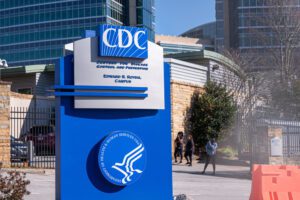
With a flick of the wrist, the CDC unveiled its latest magic trick – miraculously ending the pandemic.

Last week the CDC published new, “community level” metrics that focus on three trends: new COVID-19 hospitalizations, hospital capacity, and new COVID-19 cases, which it publicly lists on its website for each county alongside the corresponding COVID-19 risk levels.

According to these new metrics, only about 28 percent of Americans live in a county where they need to wear masks indoors, up from 99 percent of the population merely a few weeks ago. The CDC attributes this stark jump to a change in the metrics measured. Previously the CDC focused on transmission rates. Now they focus on the newly minted community level metrics.
The CDC Magically Ended the Pandemic

In changing the focus of the data, they changed the recommendations, and effectively ushered in the end of the pandemic. This would appear as welcomed news for those who longed for a merciful end to a pandemic that has long since become endemic. But unlike the rapid turnaround by the CDC, we should not be so quick to judge.

For months, epidemiologists who study viral transmission have called for a change in the metrics measured. Based on studies of other viral pandemics, we know that once a significant portion of the population attains natural immunity, or vaccine-acquired immunity, or both, measuring the risk of a virus through its transmission is no longer an effective measure of its clinical and economic effects on society.

Yet we continued to monitor only transmission rates, seemingly keen on maintaining the most risk adverse stance to the pandemic possible, until being risk adverse proved to be a risk unto itself. Had we utilized other metrics earlier, that the CDC seems to have only recently discovered, we could have adjusted our response to COVID-19 in a more coordinated manner. We would have identified communities on the brink of COVID endemicity months in advance, and lifted economic restrictions in a more step-wise manner, slowly adjusting the restrictions relative to a dynamically decreasing risk.

The CDC Magically Ended the Pandemic

For most Americans, the pandemic is defined by the masks they are compelled to wear. In removing them, we remove the last vestigial symbols of a pandemic well on its way into the annals of history. And like most things in life, when it leaves our collective conscious, we no longer remain aware of it – out of sight, out of mind.

The CDC fears this may lead the public to let its guard down preliminarily and get caught off guard, should an unforeseen viral mutation reignite the worst of the pandemic. This may be a valid concern. But rather than attempt to explain as much to the public, the CDC simply assumed the public would not understand, and therefore put forth the most risk adverse position as long as possible, until that position was no longer tenable.

By not respecting the intelligence of the public, the CDC in turn lost credibility. This is the nature of reciprocity, how you treat others reflects how they treat you. More fundamentally, this is what happens when we presume that we are following the science when actually we are following an interpretation of it. And when we treat data as an interpretation, the data in turn no longer remain a credible source of information.

The CDC Magically Ended the Pandemic

The CDC as well as numerous other public and private organizations have been monitoring these community metrics since the beginning of COVID-19. The very phrase, “flatten the curve”, alludes to measuring hospitalization rates relative to hospital capacity constraints. These purportedly novel metrics are nothing new. In fact, they are as old as the pandemic itself.

But by convincing the public it now uses new metrics, the CDC created the appearance that the pandemic has suddenly become less risky than before. In reality, the pandemic has been waning for months.

And like most magic tricks, it is the illusion that captivates the public.

ShareTweet
Daily Remedy

Daily Remedy

Dr. Jay K Joshi serves as the editor-in-chief of Daily Remedy. He is a serial entrepreneur and sought after thought-leader for matters related to healthcare innovation and medical jurisprudence. He has published articles on a variety of healthcare topics in both peer-reviewed journals and trade publications. His legal writings include amicus curiae briefs prepared for prominent federal healthcare cases.

Leave a Reply Cancel reply

Your email address will not be published. Required fields are marked *

Videos

In this episode of the Daily Remedy Podcast, Tiffany Ryder discusses her insights on healthcare messaging, the impact of COVID-19 on patient trust, and the importance of transparency in health policy. She emphasizes the need for clear communication in the face of divisiveness and explores the complexities surrounding the estrogen debate. Additionally, Tiffany highlights positive developments in health policy and the necessity of effectively conveying these changes to the public.

Tiffany Ryder is a political commentator and public health policy thought leader who publishes the Substack newsletter Signal and Noise: https://signalandnoise.online/


Chapters

00:00 Introduction to Healthcare Conversations
02:58 Signal and Noise: Understanding Healthcare Communication
05:56 The Storytelling Problem in Healthcare
08:58 Navigating Political Divisiveness in Health Policy
11:55 The Role of Media in Health Policy
15:03 Bias in Health Reporting
17:56 Estrogen and Health Policy: A Case Study
24:00 Positive Developments in Health Policy
27:03 Looking Ahead: Future of Health Policy
31:49 Communicating Health Policy Effectively
The Impact of COVID-19 on Patient Trust
YouTube Video ujzgl7HDlsw
Subscribe

2027 Medicare Advantage & Part D Advance Notice

Clinical Reads

GLP-1 Drugs Have Moved Past Weight Loss. Medicine Has Not Fully Caught Up.

Glucagon-Like Peptide–Based Therapies and Longevity: Clinical Implications from Emerging Evidence

by Daily Remedy
March 1, 2026
0

Glucagon-like peptide–based therapies are increasingly used for weight management and glycemic control, but their potential impact on long-term survival remains uncertain. The clinical question addressed in this report is whether treatment with glucagon-like peptide receptor agonists is associated with reductions in all-cause mortality and age-related morbidity beyond their established metabolic effects. This question matters because these agents are now prescribed across broad patient populations, including individuals without diabetes, and long-term exposure may influence cardiovascular, oncologic, and neurodegenerative outcomes. Understanding whether...

Read more

Join Our Newsletter!

Twitter Updates

Tweets by TheDailyRemedy

Popular

  • If the Wealthy Live to 120

    If the Wealthy Live to 120

    0 shares
    Share 0 Tweet 0
  • We May Soon Have a Nitazene Crisis

    0 shares
    Share 0 Tweet 0
  • Invisible Backbone: How International Nurses Day Exposed a Global Care Crisis

    0 shares
    Share 0 Tweet 0
  • Medicine & Law Cannot Get Along

    0 shares
    Share 0 Tweet 0
  • When Appetite Becomes Optional

    0 shares
    Share 0 Tweet 0
  • 628 Followers

Daily Remedy

Daily Remedy offers the best in healthcare information and healthcare editorial content. We take pride in consistently delivering only the highest quality of insight and analysis to ensure our audience is well-informed about current healthcare topics - beyond the traditional headlines.

Daily Remedy website services, content, and products are for informational purposes only. We do not provide medical advice, diagnosis, or treatment. All rights reserved.

Important Links

  • Support Us
  • About Us
  • Contact us
  • Privacy Policy
  • Terms and Conditions

Join Our Newsletter!

  • Survey
  • Podcast
  • About Us
  • Contact us

© 2026 Daily Remedy

No Result
View All Result
  • Home
  • Articles
  • Podcasts
  • Surveys
  • Courses
  • About Us
  • Contact us
  • Support Us
  • Official Learner

© 2026 Daily Remedy