








A new kind of literacy is spreading through the public: people can read their own physiologic dashboards. They discuss REM sleep, heart rate variability, glucose spikes, and microbiome diversity with the familiarity once reserved for blood pressure and cholesterol. This cultural change is not superficial. It alters how people interpret symptoms, when they seek care, and what they expect clinicians to address. It also produces confusion, because self-tracking data can feel clinical even when it is only loosely validated. The central challenge is not that self-tracking exists. The challenge is that it is often interpreted without context.
Why self-tracking became mainstream
Three forces drove the shift. First, wearables became cheap and socially normalized. Second, algorithms improved signal processing, which made the outputs feel coherent and meaningful. Third, wellness culture framed self-tracking as personal responsibility, which resonates in societies that often blame individuals for structural health risks.
Market research reflects the broader trend. McKinsey’s analysis of wellness consumer segments describes how wellness has become a daily personalized practice for many younger adults, rather than an occasional purchase, as outlined in its Future of Wellness trends survey. Self-tracking tools fit that worldview because they provide daily feedback loops and measurable goals.
The accuracy problem: trends are useful, precision is not guaranteed
Many self-tracking metrics are proxies. Heart rate is often measured reasonably well. Sleep stages and “stress” scores are more interpretive. A Nature analysis of wearable sleep stage accuracy demonstrates that consumer devices can struggle to match gold-standard polysomnography, as discussed in Nature’s review of wearable sleep accuracy. A user can still gain value from tracking sleep timing and consistency. The risk arises when a device’s sleep stage label is treated as a clinical diagnosis.
The same applies to heart rate variability, a metric often used as a proxy for autonomic balance and recovery. HRV is sensitive to posture, breathing, hydration, and measurement context. A single daily HRV number can be meaningful in trend form, yet misleading when interpreted as a moral score.
Regulation clarifies product categories, yet user expectations blur them
The FDA’s updated guidance on general wellness products aims to clarify which low risk products fall under a flexible compliance policy. The guidance, described on the FDA’s General Wellness policy page, emphasizes the distinction between general wellness claims and disease-related claims. Reporting on the guidance has highlighted the FDA’s intent to limit regulation of health and fitness wearables that avoid medical claims, as noted in Reuters coverage of the FDA guidance.
This legal boundary does not automatically shape consumer interpretation. People treat dashboards as medical truth because the presentation feels authoritative. A policy distinction between “wellness” and “medical device” can be invisible to a user who sees a red alert on their wrist.
Continuous glucose monitoring will widen the self-tracking universe
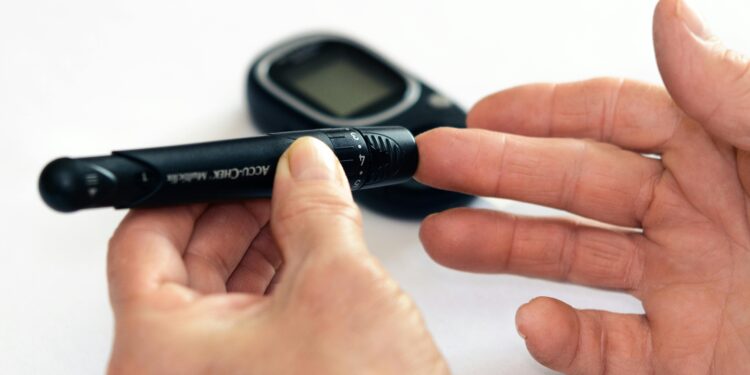
OTC CGMs may have the largest cultural impact. The FDA’s clearance of the first OTC CGM system, described in its press announcement on OTC CGM, allows people without insulin-dependent diabetes to monitor glucose trends. This can support metabolic awareness, identify early dysglycemia, and encourage dietary adjustments.
It can also fuel dietary rigidity. A person may remove entire food groups based on transient spikes that are physiologically normal. Social media sometimes treats any spike as a failure. A clinically grounded approach emphasizes pattern recognition over single events: how sleep deprivation affects glucose, how mixed meals blunt peaks, how exercise changes postprandial curves. Without that framing, CGM data becomes a daily stressor rather than a preventive tool.
Gut health: the trend that mixes science with overselling
Gut health discourse is everywhere, often framed through microbiome tests, probiotics, and elimination diets. The microbiome is scientifically important, yet consumer interpretations often exceed the evidence. Many microbiome assays provide relative abundance data that is difficult to translate into actionable clinical recommendations. People then move toward restrictive diets that may reduce dietary diversity, which can be counterproductive.
The correct clinical posture is constructive skepticism. Clinicians can acknowledge that diet, fiber, and overall dietary patterns influence gut function, while avoiding claims that a single supplement can “fix” a complex ecosystem. Self-tracking data, including symptom diaries and dietary patterns, can still support meaningful clinical conversations about irritable bowel symptoms and food triggers, provided they remain grounded.
Sleep optimization: useful until it becomes orthosomnia
Sleep tracking can support better routines: consistent bedtimes, reduced late caffeine, and attention to sleep hygiene. Yet it can also produce a phenomenon sometimes described as orthosomnia, where anxiety about sleep data worsens sleep. A person who wakes after a normal sleep cycle and sees a low score may feel impaired, even if they would have felt fine otherwise. The score becomes a suggestion that the day will be poor, and suggestion can become self-fulfilling.
Clinicians can counter this by treating sleep data as one input, emphasizing subjective restfulness, daytime function, and longer-term trends rather than nightly fluctuations.
How clinicians can use self-tracking without endorsing every dashboard
Self-tracking data can be clinically useful as a conversation starter. A patient’s sleep timing, step counts, and glucose trends can reveal patterns. Clinicians can help interpret the data, identify plausible signals, and correct misinterpretations. The goal is not to dismiss tracking, nor to validate it uncritically. The goal is to translate it into actionable and psychologically sustainable behaviors.
A practical clinical approach includes three steps. First, clarify the patient’s goal, such as improving energy, losing weight, reducing anxiety, or optimizing athletic recovery. Second, identify which metrics are most relevant and reliable for that goal. Third, establish an interpretation rule, such as focusing on weekly averages, using thresholds that avoid overreaction, and pairing metrics with symptoms and labs when appropriate.
The contrarian conclusion: self-tracking is useful when it is humble
Self-tracking can improve prevention by making habits visible. It can also create noise and anxiety when it claims precision it cannot deliver. The difference is interpretive humility. Data should inform decisions, not dictate identity. Wearables can support healthier routines when users treat them as instruments with error profiles, rather than as judges.
Self-tracking has become a form of health literacy. The next step is teaching interpretation, because literacy without interpretation becomes another way to misunderstand the body.