












Sunday, February 15, 2026
ISSN 2765-8767
  • Survey
  • Podcast
  • Write for Us
  • My Account
  • Log In
Daily Remedy
  • Home
  • Articles
  • Podcasts
    The Future of LLMs in Healthcare

    The Future of LLMs in Healthcare

    January 26, 2026
    The Future of Healthcare Consumerism

    The Future of Healthcare Consumerism

    January 22, 2026
    Your Body, Your Health Care: A Conversation with Dr. Jeffrey Singer

    Your Body, Your Health Care: A Conversation with Dr. Jeffrey Singer

    July 1, 2025

    The cost structure of hospitals nearly doubles

    July 1, 2025
    Navigating the Medical Licensing Maze

    The Fight Against Healthcare Fraud: Dr. Rafai’s Story

    April 8, 2025
    Navigating the Medical Licensing Maze

    Navigating the Medical Licensing Maze

    April 4, 2025
  • Surveys

    Surveys

    AI in Healthcare Decision-Making

    AI in Healthcare Decision-Making

    February 1, 2026
    Patient Survey: Understanding Healthcare Consumerism

    Patient Survey: Understanding Healthcare Consumerism

    January 18, 2026

    Survey Results

    Can you tell when your provider does not trust you?

    Can you tell when your provider does not trust you?

    January 18, 2026
    Do you believe national polls on health issues are accurate

    National health polls: trust in healthcare system accuracy?

    May 8, 2024
    Which health policy issues matter the most to Republican voters in the primaries?

    Which health policy issues matter the most to Republican voters in the primaries?

    May 14, 2024
    How strongly do you believe that you can tell when your provider does not trust you?

    How strongly do you believe that you can tell when your provider does not trust you?

    May 7, 2024
  • Courses
  • About Us
  • Contact us
  • Support Us
  • Official Learner
No Result
View All Result
  • Home
  • Articles
  • Podcasts
    The Future of LLMs in Healthcare

    The Future of LLMs in Healthcare

    January 26, 2026
    The Future of Healthcare Consumerism

    The Future of Healthcare Consumerism

    January 22, 2026
    Your Body, Your Health Care: A Conversation with Dr. Jeffrey Singer

    Your Body, Your Health Care: A Conversation with Dr. Jeffrey Singer

    July 1, 2025

    The cost structure of hospitals nearly doubles

    July 1, 2025
    Navigating the Medical Licensing Maze

    The Fight Against Healthcare Fraud: Dr. Rafai’s Story

    April 8, 2025
    Navigating the Medical Licensing Maze

    Navigating the Medical Licensing Maze

    April 4, 2025
  • Surveys

    Surveys

    AI in Healthcare Decision-Making

    AI in Healthcare Decision-Making

    February 1, 2026
    Patient Survey: Understanding Healthcare Consumerism

    Patient Survey: Understanding Healthcare Consumerism

    January 18, 2026

    Survey Results

    Can you tell when your provider does not trust you?

    Can you tell when your provider does not trust you?

    January 18, 2026
    Do you believe national polls on health issues are accurate

    National health polls: trust in healthcare system accuracy?

    May 8, 2024
    Which health policy issues matter the most to Republican voters in the primaries?

    Which health policy issues matter the most to Republican voters in the primaries?

    May 14, 2024
    How strongly do you believe that you can tell when your provider does not trust you?

    How strongly do you believe that you can tell when your provider does not trust you?

    May 7, 2024
  • Courses
  • About Us
  • Contact us
  • Support Us
  • Official Learner
No Result
View All Result
Daily Remedy
No Result
View All Result
Home Uncertainty & Complexity

Of Thoughts and Language

Daily Remedy by Daily Remedy
November 28, 2021
in Uncertainty & Complexity
0
Of Thoughts and Language

Healthcare is not warfare, but we see literal allusions to war throughout healthcare.

When we visit the emergency department, we are initially triaged, a term alluding to a wartime healthcare system first developed by the French during the Napoleonic wars to tend for those wounded in battle.

During the onset of the COVID-19 pandemic, when then Surgeon General Dr. Jerome Adams urged all of healthcare to defer elective procedures and surgeries to treat those who were immediately infected with COVID-19, he called it a Pearl Harbor moment.

We cannot escape the literal militarization of healthcare. The word play is everywhere. Whenever some public health issue emerges or acutely worsens, policy experts declare some figurative war, as though heightened aggression is the solution.

We had the war against infectious diseases. We have the war against drugs.

The first led to an abundance of antibiotics in healthcare, to where we now have multi-drug resistant infections killing hundreds of thousands of people per year.

The second led to the criminalization of mental health conditions and a culture of medical McCarthyism in healthcare, to where we now have the highest number of overdose deaths in a year.

Clearly we are losing these figurative wars. But the real battle is not against some external enemy that we contrive in our minds, it is against our own minds.

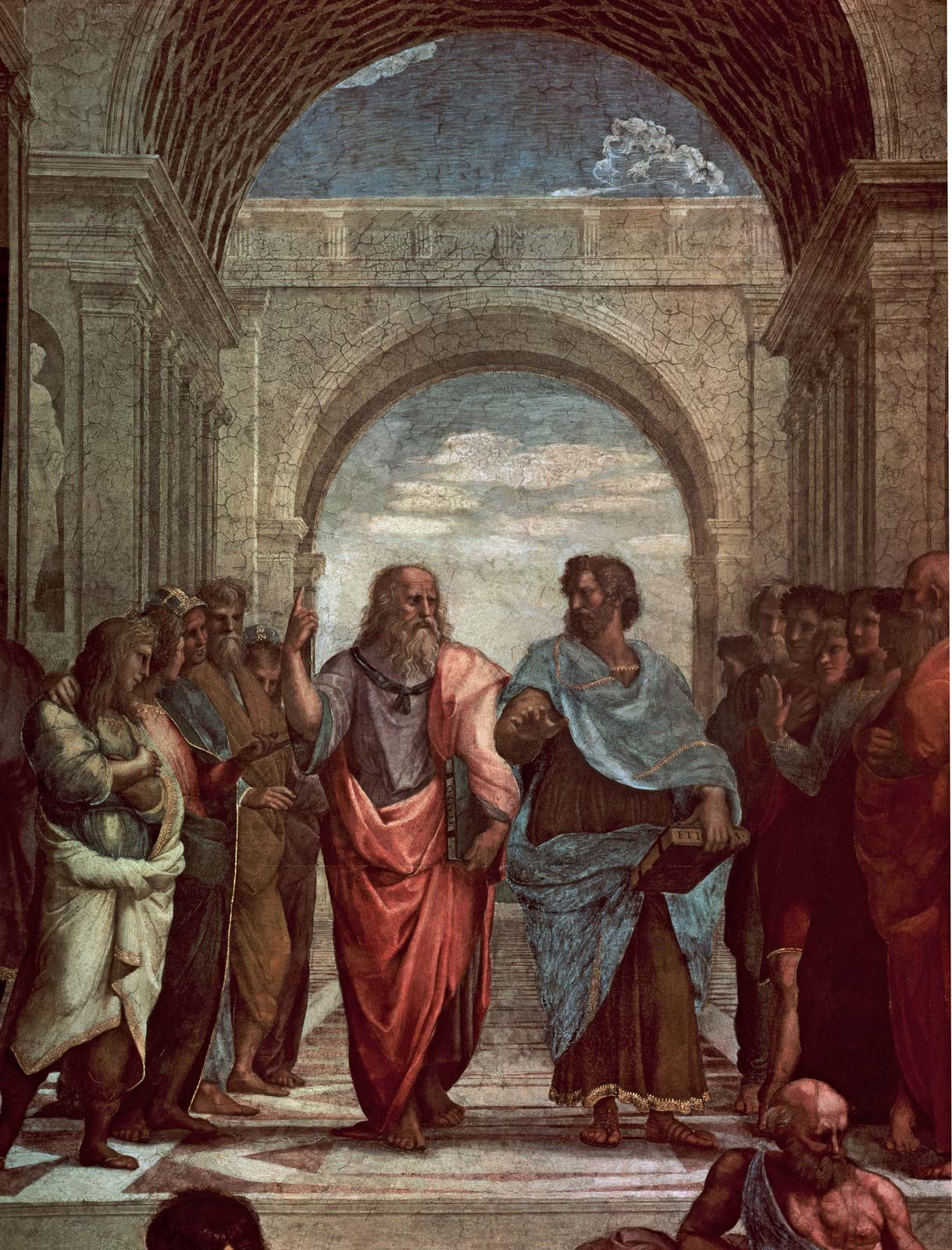
This is why language matters – how we think, we talk and how we talk, we think. Aristotle first noted this circular pattern between the thoughts we hold and the words we speak. And it has since been corroborated by Linguistics experts in recent decades.

Yet it has only recently been acknowledged as a problem in healthcare. In October 2021, the AMA Center for Health Equity and the Association of American Medical Colleges, through its Center for Health Justice, released a new health equity guide to language: “Advancing Health Equity: A Guide to Language, Narrative, and Concepts”

The guide provides suggestions and points of emphasis for physicians and healthcare providers when communicating with patients or vulnerable peoples in society. It emphasizes compassion in communication and a certain sensibility when speaking with someone who may be sensitive to verbal abuse or harmful labeling.

But this is not how many viewed the report. Many professional pontificators condemned the report as another instance of liberal excess in healthcare, decrying the report as a loss of free speech and as some form of harm against patients and healthcare providers who enjoy speaking in more blunt terms.

But free speech is different from structured speech. Just like effective communication takes into account both the speaker and the listener. Those who criticize the report try to simplify medicine into catch phrases and buzzwords. They cannot understand the nuanced difference in referring to someone who is experiencing homelessness to someone who is homeless.

These are also the same people who continue to declare figurative wars in healthcare.

When we fail to understand the complex nature of healthcare behavior and language, we tend to simplify healthcare. And when we simplify it, we create false equivalencies in our mind.

The real power of language in healthcare is not in how we speak, but in how we think. When we declare war on bacteria or on drugs, we know that we are not engaging in direct warfare in the traditional sense. But we implicitly become more aggressive. And that assumed understanding impacts our decisions.

We are less likely to provide equivalent quality of care to a discriminated minority than to a Caucasian male. Yet hardly anyone would declare healthcare as an institution or the physicians practicing medicine as racists. But we see persisting racial disparities in healthcare – anecdotally at an individual level and broadly through healthcare outcome metrics.

When we structure healthcare language, we structure how we think. When we optimize the patterns of thinking, we make better clinical decisions. The relationship is nuanced and difficult for many outside of healthcare to understand.

But those who practice medicine or are active in healthcare policy know that implicit biases in healthcare emerge from subtle patterns of thinking, below the level of conscious awareness. They are hard to address because they are hard to find.

But they become easier to discern when we actively structure how we speak.

ShareTweet
Daily Remedy

Daily Remedy

Dr. Jay K Joshi serves as the editor-in-chief of Daily Remedy. He is a serial entrepreneur and sought after thought-leader for matters related to healthcare innovation and medical jurisprudence. He has published articles on a variety of healthcare topics in both peer-reviewed journals and trade publications. His legal writings include amicus curiae briefs prepared for prominent federal healthcare cases.

Leave a Reply Cancel reply

Your email address will not be published. Required fields are marked *

Videos

In this episode, the host discusses the significance of large language models (LLMs) in healthcare, their applications, and the challenges they face. The conversation highlights the importance of simplicity in model design and the necessity of integrating patient feedback to enhance the effectiveness of LLMs in clinical settings.

Takeaways
LLMs are becoming integral in healthcare.
They can help determine costs and service options.
Hallucination in LLMs can lead to misinformation.
LLMs can produce inconsistent answers based on input.
Simplicity in LLMs is often more effective than complexity.
Patient behavior should guide LLM development.
Integrating patient feedback is crucial for accuracy.
Pre-training models with patient input enhances relevance.
Healthcare providers must understand LLM limitations.
The best LLMs will focus on patient-centered care.

Chapters

00:00 Introduction to LLMs in Healthcare
05:16 The Importance of Simplicity in LLMs
The Future of LLMs in HealthcareDaily Remedy
YouTube Video U1u-IYdpeEk
Subscribe

AI Regulation and Deployment Is Now a Core Healthcare Issue

Clinical Reads

Ambient Artificial Intelligence Clinical Documentation: Workflow Support with Emerging Governance Risk

Ambient Artificial Intelligence Clinical Documentation: Workflow Support with Emerging Governance Risk

by Daily Remedy
February 1, 2026
0

Health systems are increasingly deploying ambient artificial intelligence tools that listen to clinical encounters and automatically generate draft visit notes. These systems are intended to reduce documentation burden and allow clinicians to focus more directly on patient interaction. At the same time, they raise unresolved questions about patient consent, data handling, factual accuracy, and legal responsibility for machine‑generated records. Recent policy discussions and legal actions suggest that adoption is moving faster than formal oversight frameworks. The practical clinical question is...

Read more

Join Our Newsletter!

Twitter Updates

Tweets by TheDailyRemedy

Popular

  • The Information Epidemic: How Digital Health Misinformation Is Rewiring Clinical Risk

    The Information Epidemic: How Digital Health Misinformation Is Rewiring Clinical Risk

    0 shares
    Share 0 Tweet 0
  • Prevention Is Having a Moment and a Measurement Problem

    0 shares
    Share 0 Tweet 0
  • Child Health Is Now a Platform Issue

    0 shares
    Share 0 Tweet 0
  • Behavioral Health Is Now a Network Phenomenon

    0 shares
    Share 0 Tweet 0
  • The Breach Is the Diagnosis: Cybersecurity Has Become a Clinical Risk Variable

    0 shares
    Share 0 Tweet 0
  • 628 Followers

Daily Remedy

Daily Remedy offers the best in healthcare information and healthcare editorial content. We take pride in consistently delivering only the highest quality of insight and analysis to ensure our audience is well-informed about current healthcare topics - beyond the traditional headlines.

Daily Remedy website services, content, and products are for informational purposes only. We do not provide medical advice, diagnosis, or treatment. All rights reserved.

Important Links

  • Support Us
  • About Us
  • Contact us
  • Privacy Policy
  • Terms and Conditions

Join Our Newsletter!

  • Survey
  • Podcast
  • About Us
  • Contact us

© 2026 Daily Remedy

No Result
View All Result
  • Home
  • Articles
  • Podcasts
  • Surveys
  • Courses
  • About Us
  • Contact us
  • Support Us
  • Official Learner

© 2026 Daily Remedy

