












Saturday, February 14, 2026
ISSN 2765-8767
  • Survey
  • Podcast
  • Write for Us
  • My Account
  • Log In
Daily Remedy
  • Home
  • Articles
  • Podcasts
    The Future of LLMs in Healthcare

    The Future of LLMs in Healthcare

    January 26, 2026
    The Future of Healthcare Consumerism

    The Future of Healthcare Consumerism

    January 22, 2026
    Your Body, Your Health Care: A Conversation with Dr. Jeffrey Singer

    Your Body, Your Health Care: A Conversation with Dr. Jeffrey Singer

    July 1, 2025

    The cost structure of hospitals nearly doubles

    July 1, 2025
    Navigating the Medical Licensing Maze

    The Fight Against Healthcare Fraud: Dr. Rafai’s Story

    April 8, 2025
    Navigating the Medical Licensing Maze

    Navigating the Medical Licensing Maze

    April 4, 2025
  • Surveys

    Surveys

    AI in Healthcare Decision-Making

    AI in Healthcare Decision-Making

    February 1, 2026
    Patient Survey: Understanding Healthcare Consumerism

    Patient Survey: Understanding Healthcare Consumerism

    January 18, 2026

    Survey Results

    Can you tell when your provider does not trust you?

    Can you tell when your provider does not trust you?

    January 18, 2026
    Do you believe national polls on health issues are accurate

    National health polls: trust in healthcare system accuracy?

    May 8, 2024
    Which health policy issues matter the most to Republican voters in the primaries?

    Which health policy issues matter the most to Republican voters in the primaries?

    May 14, 2024
    How strongly do you believe that you can tell when your provider does not trust you?

    How strongly do you believe that you can tell when your provider does not trust you?

    May 7, 2024
  • Courses
  • About Us
  • Contact us
  • Support Us
  • Official Learner
No Result
View All Result
  • Home
  • Articles
  • Podcasts
    The Future of LLMs in Healthcare

    The Future of LLMs in Healthcare

    January 26, 2026
    The Future of Healthcare Consumerism

    The Future of Healthcare Consumerism

    January 22, 2026
    Your Body, Your Health Care: A Conversation with Dr. Jeffrey Singer

    Your Body, Your Health Care: A Conversation with Dr. Jeffrey Singer

    July 1, 2025

    The cost structure of hospitals nearly doubles

    July 1, 2025
    Navigating the Medical Licensing Maze

    The Fight Against Healthcare Fraud: Dr. Rafai’s Story

    April 8, 2025
    Navigating the Medical Licensing Maze

    Navigating the Medical Licensing Maze

    April 4, 2025
  • Surveys

    Surveys

    AI in Healthcare Decision-Making

    AI in Healthcare Decision-Making

    February 1, 2026
    Patient Survey: Understanding Healthcare Consumerism

    Patient Survey: Understanding Healthcare Consumerism

    January 18, 2026

    Survey Results

    Can you tell when your provider does not trust you?

    Can you tell when your provider does not trust you?

    January 18, 2026
    Do you believe national polls on health issues are accurate

    National health polls: trust in healthcare system accuracy?

    May 8, 2024
    Which health policy issues matter the most to Republican voters in the primaries?

    Which health policy issues matter the most to Republican voters in the primaries?

    May 14, 2024
    How strongly do you believe that you can tell when your provider does not trust you?

    How strongly do you believe that you can tell when your provider does not trust you?

    May 7, 2024
  • Courses
  • About Us
  • Contact us
  • Support Us
  • Official Learner
No Result
View All Result
Daily Remedy
No Result
View All Result
Home Perspectives

It’s the Virosphere, Stupid

Daily Remedy by Daily Remedy
July 17, 2022
in Perspectives
0
It's the Virosphere, Stupid

Humans became the dominant species not because of any physical attribute, but because we believe in things that do not exist in nature.

We believe in nations and we create cultures. We do things which are logical and sometimes illogical. When we burn women at the pyre because we think they possess magical powers, we are succumbing to our irrational instincts. But it is the same mindset that leads us to create laws that govern society. Unfortunately, one cannot exist without the other.

So it makes sense that we saw a flurry of logical and illogical beliefs during the COVID pandemic. We saw how science interacts with mistrust. We saw conspiracy theories with just enough drops of truth to meet all the Gladwellian characteristics of virality. And we saw major milestones in vaccine development meet with unprecedented levels of vaccine hesitancy.

Now, at the tail end of a journey lasting well over two years, where the lines between pandemic and endemic have blurred into pandemic parlance, we see another curious phenomenon emerge – abnormal behavior from a host of viruses unrelated to corona virus.

By now we have heard of Monkeypox, the anachronistic name for an endemic Central African virus that has found its way around the world. Its spread has garnered media attention largely because its name contains tinges of colonial era racism and it is mostly spread through sexual contact among gay men.

But beneath the media hoopla is a disquieting truth: Monkeypox normally never travels outside of its region. In fact, the World Health Organization categorizes it as an endemic virus precisely because it is so localized.

Monkeypox is hardly the only virus in recent days to behave oddly. Hepatitis A has silently promulgated its own miniature outbreak across the United States, infecting infants and children with more severe forms of hepatitis compared to previous years. As of July 2022, the Centers for Disease Control and Prevention has listed eighteen states as experiencing an outbreak of Hepatitis A.

Though the total number of cases is not in excess of what we have seen pre-COVID, the mode of spread is unique. Hepatitis A usually spreads through contaminated food and water. Now we are seeing the virus spread through close contact alone, and appearing alongside another viral species, Adenovirus.

Adenovirus is a common non-influenza, flu-like virus with its own seasonal variance. It can cause serious infections in immune-compromised patients, but it rarely causes hepatitis. And when it does, we have not normally reported it alongside other viral species.

Yet another virus that targets children is also experiencing an uptick in cases, Respiratory Syncytial Virus, or RSV. Normally reserved for winter, it has been infecting children throughout the summer across the globe, from Australia to Louisiana.

And just a few days ago, the CDC issued a warning for a novel class of viruses, called Human Parechovirus, which presents with a myriad of conditions, ranging from life-threatening sepsis to traditional flu-like symptoms.

None of this has received the attention it normally would have if not for COVID and its never-ending array of mutations and variants. The two latest variants, BA.4 and BA.5, have evaded existing immune protections derived from previous infections and vaccinations, leading to a rise in breakthrough infections.

While health journalists are doing their best to keep the public’s attention on the risks COVID continues to present with, few can overcome the pervasive fatigue that has beset the public. But, though the world may be ready to move on, these viruses are not. And we would be well-served to keep studying and discussing them in the halls of science and in public discourse.

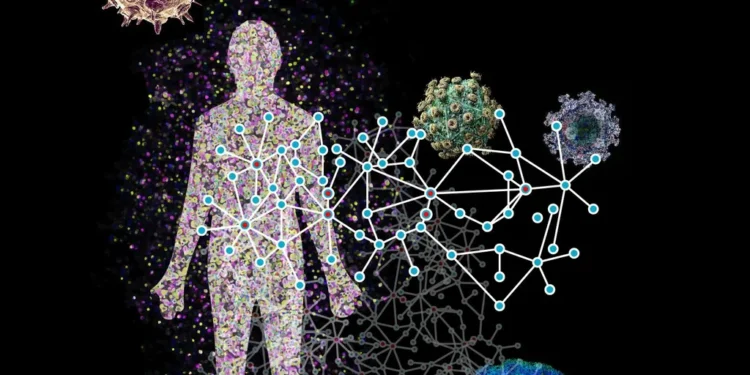
In that vein, to better understand recent viral patterns and contextualize the many novelties seen in recent months, it might be time to discuss the virosphere. When we think of viruses, we think of parasites. But the comparison creates a biased lens that shades our perspective of viruses and viral behavior as a whole. If we adjust how we look at viruses, as a global – and possibly galactic – nexus of genetic material, then we may appreciate the rise in aberrant viral behavior.

Eight percent of our genetic structure is viral in origin. This means we have interacted with viruses since our genetic structure emerged from the dawn of life. Viruses are replicator bodies. They are pools of genetic materials that form symbiotic relationships with replicator hosts – you and me – to perpetuate their genetic material. And if in the process of perpetuation a mutation or two appears, well, that is part of the plan.

In this light, viruses are not so much parasites causing illnesses in their host, but are perpetuating genetic material that holds value for all of life. Indeed, many of the proteins in our brain come from genetic material that is eerily similar to what is found in HIV viruses.

Instead of typecasting each of these viruses as tiny terrors, let us reframe our perspective on viruses. Not at vectors of disease, but as replicators of genetic material. They can appear as large as bacteria or as just a few lines of genetic coding. But they all possess genetic material that is valuable in some content. And we have yet to understand the full extent of genetic diversity within the virosphere.

But we can only advance our thinking if we forgo illogical beliefs of the past. Viruses are not diseases in the traditional sense, like bacteria or fungus. They are solely purveyors of genetic material. If we alter our perception of viruses, we can effectively address how to co-exist with them.

We may learn how viruses influence each other. How one replicator affects other replicators, which affects the replicator-host relationship; or more bluntly, how the rise of one viral species affects the behaviors of other viruses, which affects their relationship with us. We may learn more about our own genetic code and the concept of mutations at a genetic level.

Right now, our perspectives on viruses are as illogical and fanciful as those who sought to burn women. Nobody ever questioned the concept of magic or witchcraft. But over time, they proved to be nothing more than things we simply made up.

Just like our current perceptions of viruses. We see them as something bad, as an evil – even as a moral failing – when we should see them for what they are, as replicators of genetic material. It is high time we eliminate the many confounding layers of conspiratorial beliefs and politicized science.

There is a time and place for illogical beliefs, to believe in things that do not exist in nature. But this is not such a time. Now is the time we shed ourselves of these antiquated beliefs and see viruses in their broader context, as replicators within a broader virosphere of genetic material.

It may be necessary for humans to do so if we want to retain our position of dominance.

ShareTweet
Daily Remedy

Daily Remedy

Dr. Jay K Joshi serves as the editor-in-chief of Daily Remedy. He is a serial entrepreneur and sought after thought-leader for matters related to healthcare innovation and medical jurisprudence. He has published articles on a variety of healthcare topics in both peer-reviewed journals and trade publications. His legal writings include amicus curiae briefs prepared for prominent federal healthcare cases.

Leave a Reply Cancel reply

Your email address will not be published. Required fields are marked *

Videos

In this episode, the host discusses the significance of large language models (LLMs) in healthcare, their applications, and the challenges they face. The conversation highlights the importance of simplicity in model design and the necessity of integrating patient feedback to enhance the effectiveness of LLMs in clinical settings.

Takeaways
LLMs are becoming integral in healthcare.
They can help determine costs and service options.
Hallucination in LLMs can lead to misinformation.
LLMs can produce inconsistent answers based on input.
Simplicity in LLMs is often more effective than complexity.
Patient behavior should guide LLM development.
Integrating patient feedback is crucial for accuracy.
Pre-training models with patient input enhances relevance.
Healthcare providers must understand LLM limitations.
The best LLMs will focus on patient-centered care.

Chapters

00:00 Introduction to LLMs in Healthcare
05:16 The Importance of Simplicity in LLMs
The Future of LLMs in HealthcareDaily Remedy
YouTube Video U1u-IYdpeEk
Subscribe

AI Regulation and Deployment Is Now a Core Healthcare Issue

Clinical Reads

Ambient Artificial Intelligence Clinical Documentation: Workflow Support with Emerging Governance Risk

Ambient Artificial Intelligence Clinical Documentation: Workflow Support with Emerging Governance Risk

by Daily Remedy
February 1, 2026
0

Health systems are increasingly deploying ambient artificial intelligence tools that listen to clinical encounters and automatically generate draft visit notes. These systems are intended to reduce documentation burden and allow clinicians to focus more directly on patient interaction. At the same time, they raise unresolved questions about patient consent, data handling, factual accuracy, and legal responsibility for machine‑generated records. Recent policy discussions and legal actions suggest that adoption is moving faster than formal oversight frameworks. The practical clinical question is...

Read more

Join Our Newsletter!

Twitter Updates

Tweets by TheDailyRemedy

Popular

  • The Information Epidemic: How Digital Health Misinformation Is Rewiring Clinical Risk

    The Information Epidemic: How Digital Health Misinformation Is Rewiring Clinical Risk

    0 shares
    Share 0 Tweet 0
  • Prevention Is Having a Moment and a Measurement Problem

    0 shares
    Share 0 Tweet 0
  • Health Technology Assessment Is Moving Upstream

    0 shares
    Share 0 Tweet 0
  • Behavioral Health Is Now a Network Phenomenon

    0 shares
    Share 0 Tweet 0
  • The Breach Is the Diagnosis: Cybersecurity Has Become a Clinical Risk Variable

    0 shares
    Share 0 Tweet 0
  • 628 Followers

Daily Remedy

Daily Remedy offers the best in healthcare information and healthcare editorial content. We take pride in consistently delivering only the highest quality of insight and analysis to ensure our audience is well-informed about current healthcare topics - beyond the traditional headlines.

Daily Remedy website services, content, and products are for informational purposes only. We do not provide medical advice, diagnosis, or treatment. All rights reserved.

Important Links

  • Support Us
  • About Us
  • Contact us
  • Privacy Policy
  • Terms and Conditions

Join Our Newsletter!

  • Survey
  • Podcast
  • About Us
  • Contact us

© 2026 Daily Remedy

No Result
View All Result
  • Home
  • Articles
  • Podcasts
  • Surveys
  • Courses
  • About Us
  • Contact us
  • Support Us
  • Official Learner

© 2026 Daily Remedy

